Citing sources, The Washington Post reported earlier this week that at least 45 MQ-9 Reapers have been shot down or crashed since Operation Epic Fury began on 28 February 2026.
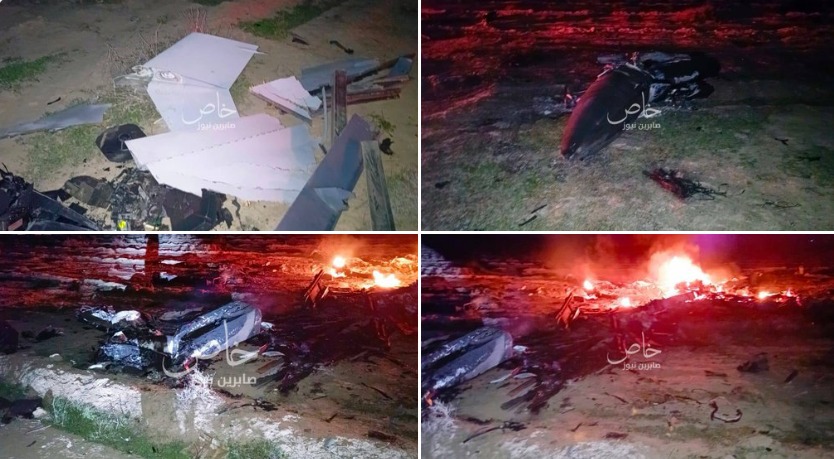
A day after the report, the US may have lost another MQ-9 drone near the Strait of Hormuz, a key route of energy shipments that has been choked by Iran since the US and Israel launched military operations against the Islamic Republic.
The photos of the wreckage are circulating on social media, with reports attributing the shoot-down to the Islamic Revolutionary Guard Corps (IRGC) over Hormozgan province.
The revised tally of losses now stands at 46, and about 144 are remaining, if the Washington Post report is to be believed.
The EurAsian Times could not independently verify the claims. However, if corroborated, this would indicate that losses have doubled since a US Congressional report from May 2026 stated that the USAF had lost 24 MQ-9 drones in the conflict.
Moreover, losses appear to have risen sharply in about a month, as a US defense official said in early July that Iran had downed roughly 30 Reapers. This could be attributed to the resumption of hostilities between the two sides over control of the Strait of Hormuz.
While several Reapers were reportedly downed by enemy fire or attacked on the ground, others crashed due to a loss of communication between the drone and its operator.
Interestingly, these claims follow Iran’s public display of an MQ-9 drone alongside an Israeli Hermes-900 and the wreckage of an F-15E fighter downed by the IRGC, as the EurAsian Times reported.
The overall math seems even more troubling when Reaper losses to Houthi fire are added to the list of losses in West Asia.
For example, the Yemen-based, Iran-backed group claimed downing 15–20 MQ-9 Reapers during the American campaign between 2023 and 2025. Independent reporting indicated that at least seven of those drones were lost in the brief span from 15 March to 23 April 2025 alone.
Despite the losses, the Chief of Staff of the US Air Force (USAF), Gen. Kenneth S. Wilsbach, endorsed the Reapers as the MVP [Most Valuable Player] of the Iran war.
The USAF top boss essentially attributed the heavy Reaper losses in the Iran War to their extensive deployment on the battlefield to hit high-value targets in heavily protected areas.“No other platform is even close to the MQ-9” when it comes to the number of strikes against Iran, Wilsbach said at the time, emphasizing how the autonomous aircraft had achieved the feat without putting its pilots at risk.
“It’s an unmanned platform, so we get a lot of utility out of them, and don’t put our folks at risk,” he added.
MQ-9 drones have played a critical role in both strike and ISR (Intelligence, Reconnaissance, and Surveillance) missions throughout the high-intensity conflict. They were used to conduct numerous simultaneous flyovers above Iran, pursued mobile “dynamic” targets, carried out precision attacks, supplied other platforms with real-time targeting data, and helped in supporting the ground troops.
However, as hostilities faded, the focus turned to non-kinetic surveillance, particularly in the vicinity of the Strait of Hormuz and Iranian ports that the US has blocked.
This includes continuous maritime domain awareness and surveillance of Iranian naval activity, and the provision of early warning and situational awareness over strategically sensitive areas near Qeshm Island, Hormozgan province, and related approaches.
That sustained presence is the most likely explanation for the continued losses.
Each Reaper drone costs between $30 million and $50 million, putting the loss to taxpayers at more than $1.3 billion. This has caused quite an uproar, since the US government has been on the back foot amid reports of munition shortages in the Iran war.
Earlier, reports suggested that the Pentagon had used nearly all of its long-range precision munitions and air defense interceptors.
US President Donald Trump lashed out earlier this month and denied reports that the US is suffering a munitions shortage, threatening a jail sentence “for those suspected of leaking information.” However, with a peace deal elusive, the administration faces tough questions about the mounting losses, and Reaper losses are likely to further intensify the Pentagon’s troubles.
MQ-9 Reaper Drones: Useful But Vulnerable
The MQ-9 Reaper was designed as a hunter-killer UAV that fuses long-endurance intelligence, surveillance, and reconnaissance (ISR) with the ability to deliver lethal strikes against mobile targets.
With an endurance of around 27 hours and a range of about 1,600 kilometers, MQ-9 Reapers can stay on station for extended periods of time. This ongoing presence provides constant “eyes in the sky” for missions like convoy protection, overwatch, combat search and rescue, target development, close air support, and terminal guidance.
Further, the MQ-9 Reaper can carry a variety of deadly armaments, including AGM-114 Hellfire missiles, GBU-12/GBU-49 laser-guided bombs, and GBU-38/GBU-54 Joint Direct Attack armaments (JDAM), thanks to its payload capacity of roughly 1,746 kilograms.
The drone has been modified to enhance its effectiveness against adversaries and remain relevant in contemporary combat. For instance, it is equipped with the Multi-Spectral Targeting System (MTS-B), which uses electro-optical/infrared (EO/IR) cameras, rangefinders, and laser designators to detect targets at long range.
This means that the drone can detect small, fast-moving aerial targets, like other drones, even tho its sensors are intended for ground surveillance rather than high-speed air intercepts.
Its Multi-Spectral Targeting System (MTS-B)—electro-optical/infrared cameras, rangefinders, and laser designators—along with synthetic aperture radar gives it precise targeting capability even against dynamic targets.
CENTCOM videos from the conflict showed Reapers lasing targets for bombs dropped by manned Air Force and Navy aircraft. In at least one reported case, a Reaper also provided armed overwatch during the rescue of an F-15E crew member, engaging Iranian personnel assessed as a threat within three kilometers of the downed airman.
These strengths, however, do not compensate for the platform’s vulnerabilities in a high-threat combat environment such as Iran’s.
The Reaper was primarily designed for low-threat situations and counterterrorism operations. It has few self-defense capabilities and flies somewhat slowly, frequently at medium to low altitudes to improve sensor performance. These features make it an easy target for Iran’s denser, multilayered integrated air defense network.
IRGC’s layered air defense network includes Russian S-300 systems, the indigenously developed Bavar-373, Khordad, and other radar-guided surface-to-air missiles (SAMs), as well as killer drones, as previously explained by the EurAsian Times.
During the war, southern Iranian coastline regions and the Strait of Hormuz became important operational zones. The drones were forced to fly in restricted, well-defended airspace where Iranian sensors and weapons could more easily identify and confront them due to ongoing maritime surveillance, blockade enforcement, and overwatch missions.
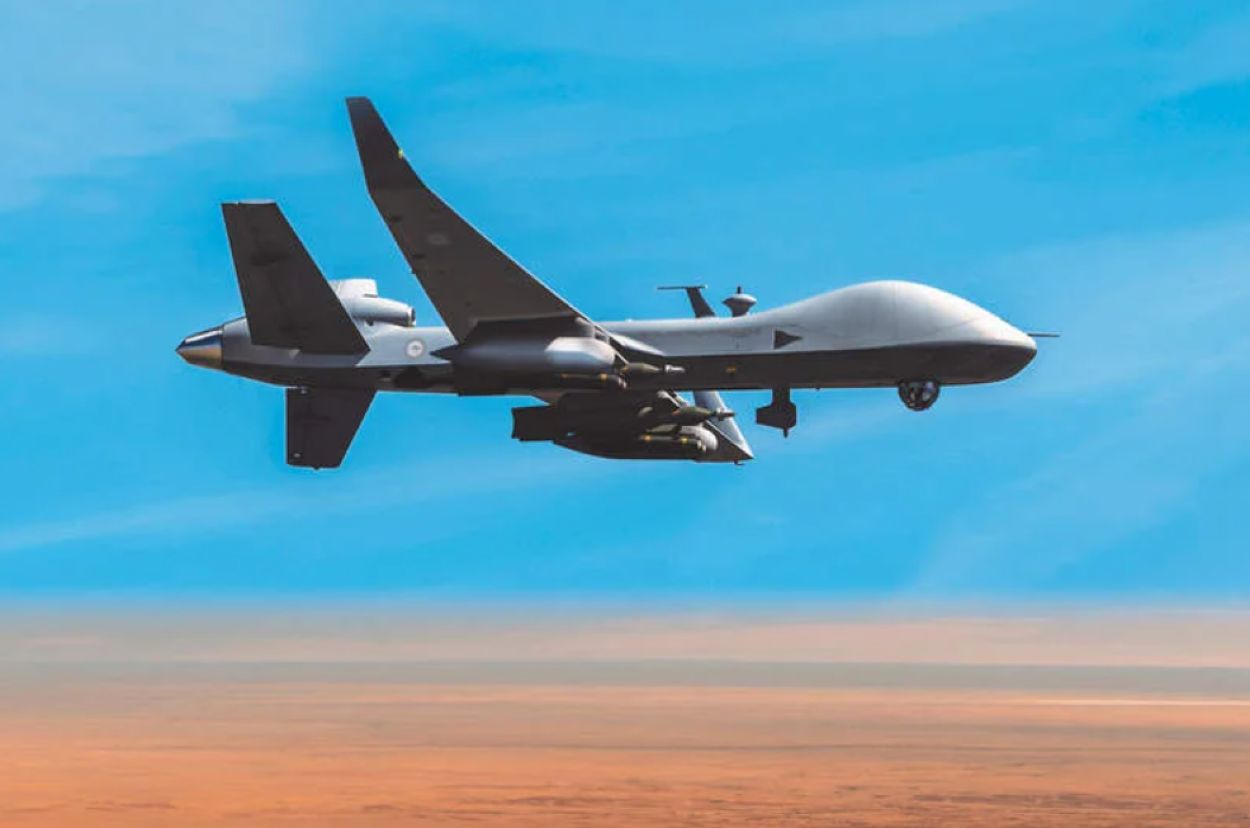
The Reaper has a large radar cross-section, making it easy for radar systems to detect and track. It also lacks the strong onboard electronic countermeasures, high maneuverability, or sophisticated low-observability features of manned fighters.
If that were not enough, heavy reliance on satellite communications (and GPS) makes it susceptible to electronic warfare—jamming, spoofing, or disruption of data links—which can lead to loss of control, return-to-base behavior, or crashes. Some reported losses have been linked to communications failures, as noted by the WaPo report.
The combination of high unit cost and limited survivability has underscored a hard lesson: expensive, high-endurance platforms optimized for permissive environments struggle in protracted, high-intensity attrition warfare. The USAF has already begun defining requirements for a cheaper successor that offers greater mission flexibility and can be produced rapidly at scale. A lower price point would allow the service to buy larger numbers and accept higher attrition rates in combat.
As for the mounting losses, the USAF has yet to acknowledge the bleeding state of its Reaper fleet.
- Contact the author at sakshi.tiwari13 (at) outlook.com
- Follow EurAsian Times on Google News