US-India bilateral relations evolved dramatically after 2000, driven by shared concerns over global terrorism and China’s unprecedented rise.
The U.S. is India’s largest export market, accounting for roughly 20 percent of total Indian goods exports, amounting to nearly $97–$100 billion annually, despite recent tensions with the Trump administration over trade and tariffs. The U.S. is India’s single largest destination for defense exports. Exports to the U.S. largely consist of advanced sub-systems, components, and aero-structures.
In 2005, the two sides signed a 10-year defense framework pact (renewed in 2015 and 2025) to boost military exercises, co-production, and defense trade.
The Logistics Exchange Memorandum of Agreement authorizes reciprocal access to military logistics and supplies. The Communications Compatibility and Security Agreement facilitated secure, interoperable communication between the militaries of both nations.
The Industrial Security Agreement (ISA 2019) facilitated the sharing of classified defense technology between private and public contractors. The U.S. recognized India with a unique status, “Major Defense Partner (2016).
In 2018, India was elevated to Strategic Trade Authorization Tier-1 (STA-1 Status), granting license-free access to a wide pool of dual-use and military technology. The Security of Supply Arrangement (SOSA) is a legally non-binding agreement (2024) which commits both nations to provide reciprocal priority support for defense-related goods and services during emergencies, peacetime, or conflicts.
Then there was the QUAD alliance, which aimed to counterbalance China in the Indo-Pacific region. The Indo-US Nuclear Deal of 2008 ended three decades of India’s global nuclear isolation, and enabled civil-nuclear trade.
The Initiative on Critical and Emerging Technology (iCET 2023) deepened cooperation in AI, quantum computing, semiconductors, and defense space systems.
USA: Lead Importer of Indian Manufactured Aero-Structures & Components
India is emerging as a hub for aerospace manufacturing, exporting roughly $2 billion in aircraft components. American aerospace giants like Boeing source over $1.25 billion of parts yearly, driven by production backlogs and the country’s booming engineering talent.
Capacity constraints across U.S. and European manufacturing hubs have forced OEMs to diversify supply chains.
Major American aircraft aero-structures manufactured in India include F-16 aircraft wings, complete AH-64 Apache helicopter fuselages; CH-47 Chinook helicopter crown and tail-cone structures; vertical fin structures, fan cowls, and subcomponents for Boeing 737; complex composite floor beams for Boeing 787-9 Dreamliner; and P-8I Neptune composite panels for power/mission equipment cabinets and auxiliary power unit (APU) door fairings.
An Indian company produces tactical transport parts and structural assemblies for the global C-130 supply chain.
Sikorsky S-92 helicopter cabins are manufactured in India through a joint venture between Tata Advanced Systems Limited (TASL) and Sikorsky Aircraft Corporation. Located in Hyderabad, this facility produces fully indigenous cabins and over 5,000 precision components, which are then shipped to the United States for final aircraft assembly.
From 900 NUKES to ZERO: How Trump’s Pressure Could Push South Korea to Build Its Own Nuclear Bomb
Tier-1 providers supply various sheet metal parts, detailed parts, and assemblies. The key domestic players like Tata Group, Dynamatic Technologies, Azad Engineering, Mahindra Aerostructures, and Jeh Aerospace build core structural components and sub-assemblies.
Manufacturing has shifted from small, simple parts to complex, multi-meter aero-structures and sub-systems processed from super-alloys and high-grade aluminum. The Indian aerospace components market is projected to surge from $1.5 billion up to $4 billion by FY29 at a 28 percent CAGR.
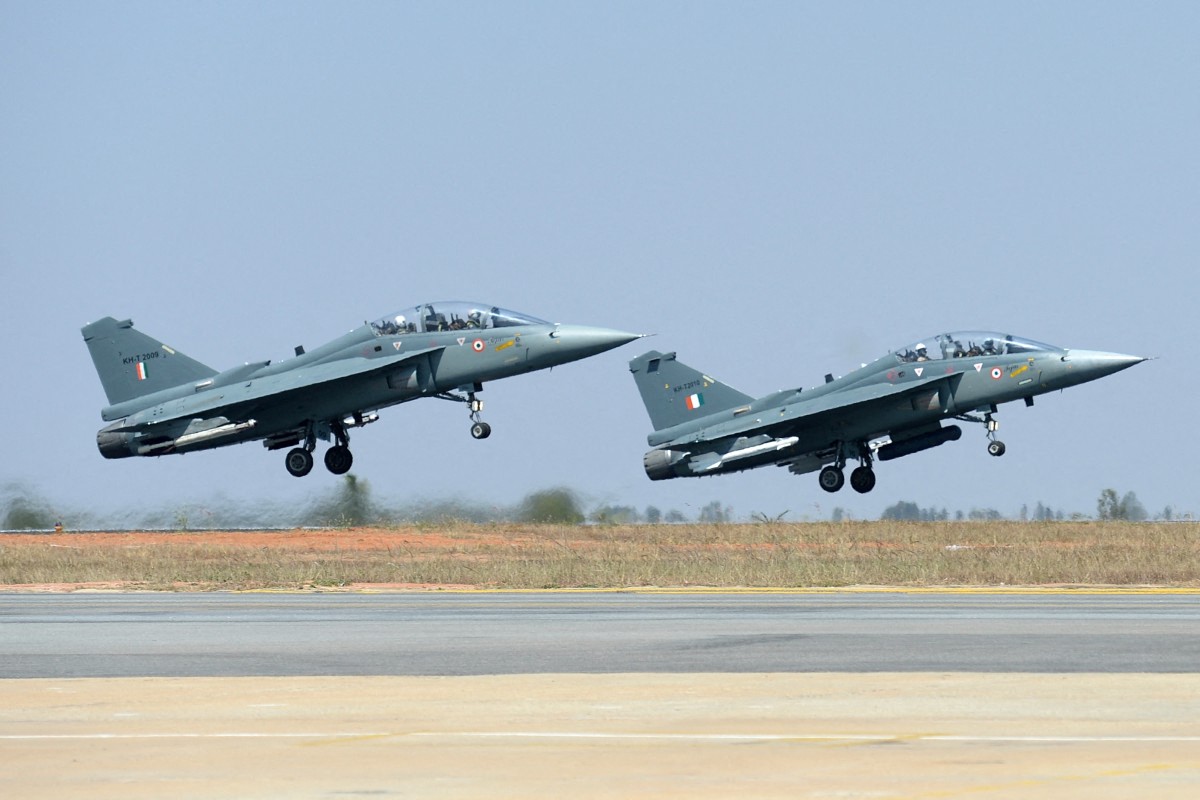
HAL’s GE 404 Contracts for Mk1A
General Electric delivered a total of 65 F404 engines (including initial test variants and the production F404-IN20 to Hindustan Aeronautics Limited (HAL) to support the development, flight testing, and induction of the initial 40 LCA Tejas Mk1 aircraft for the Indian Air Force (IAF).
HAL signed a roughly $716 million contract for 99 F404-GE-IN20 engines in 2021for the initial 83 Tejas Mk1A. The engines have been trickling in at a slow rate due to reported supply chain issues. Only 7 engines were delivered as of July 2026, with GE promising an accelerated delivery of 20 to 22 more units by the end of 2026. This has forced HAL to invoke contractual penalty clauses.
HAL ordered an additional 113 engines for nearly $1 billion in November 2025 after the IAF signed a deal for 97 more Mk1As. The engines will be supplied between 2027 and 2032.
GE-414 Engine and Major Issues
The General Electric F414 is an American afterburning turbofan engine in the 22,000-pound (98 kN) thrust class. The F414 originated from GE’s widely used F404 turbofan, enlarged and improved for use in the Boeing F/A-18E/F Super Hornet.
It is renowned for exceptional reliability and is heavily exported for twin- and single-engine 4.5th-generation fighters. F414 variants power the Saab JAS-39E/F Gripen and the South Korean KAI KF-21 Boramae.
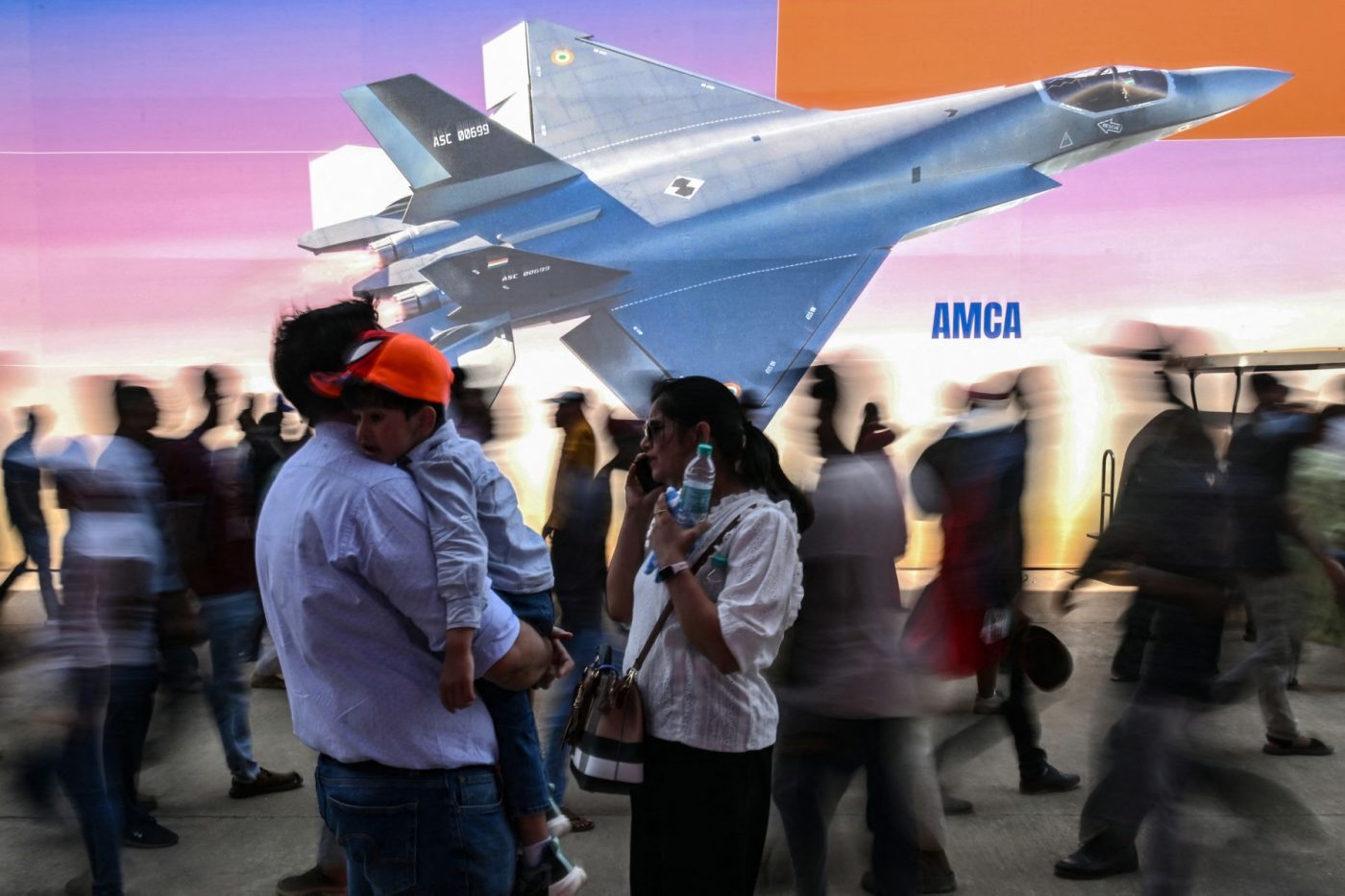
F414-GE-INS6 is the variant selected for use on HAL Tejas Mk2. It is also proposed for HAL TEDBF and initial variants of the Advanced Medium Combat Aircraft (AMCA). Interestingly, GE 414 is among the top engines of its class in terms of performance.
For enhanced performance without redesigning the airframe, GE Aerospace offers upgraded variants of the F414.
F414-GE-39E is specifically tailored for the Saab JAS 39E Gripen, focusing on increased thrust and fuel efficiency without increasing the engine’s external dimensions. F414 Enhanced Performance Engine offers up to 26,400 lbf (116 kN) of thrust, delivering a 20 percent power boost over the standard model.
The GE F414 deal with India is plagued by skyrocketing costs and production demands. While India and the U.S. previously agreed on a technology transfer for the engine, negotiations have hit a major roadblock over prices, causing uncertainty for India’s indigenous fighter projects.
Initial estimates had placed the cost of each F414 engine around ₹70 to ₹80 crore. However, during negotiations, GE Aerospace quoted prices nearly three times higher, at about ₹200 crore per unit.
Alongside engine costs, GE reportedly sought an investment exceeding $800 million to establish a dedicated assembly and manufacturing line in India.
While the broad technical agreement, which featured a massive 80 percent transfer of technology, was previously finalized, the finer economic and logistical details of producing, servicing, and sustaining these engines locally have now become a major sticking point.
Because the AMCA and Tejas Mk-2 airframes have already been designed around the exact dimensions and specs of the GE F414, switching to an entirely different engine at this late stage would require costly, time-consuming structural and software adaptations and testing.
The combination of elevated unit costs and lengthy commercial negotiations threatens the development and induction timelines of these aircraft, which are desperately needed to maintain and regain the IAF squadron strength.
Due to the standoff, Indian defense agencies (DRDO and ADA) have started exploring alternative engine routes like Safran (France) and Rolls-Royce (UK).
With the GE 404 engine already powering the LCA Mk1 and Mk1A, has India put all its eggs in an unreliable American basket?
India’s Aero-Engine Road Map Ahead
Only the USA, UK, France, Russia, and China make aero-engines themselves. Japan, South Korea, and Germany make aero-engines jointly with U.S. manufacturers. The technologies are guarded, and no one shares them with the non-haves.
The GE engine delays and questions on the level of technology transfer, India, the fourth most powerful military and the fastest-growing large economy, has decided to go for the indigenous aero-engine route.
India’s aero-engine strategy focuses on achieving self-reliance. It aims to revive domestic initiatives like the Kaveri 2.0 and Dry Kaveri via the Gas Turbine Research Establishment (GTRE), while pursuing high-thrust co-development with major global aerospace firms like France’s Safran and the UK’s Rolls-Royce to power the AMCA fighter.
Kaveri 2.0 is targeted to generate 90–100 kN of thrust and serve as a mid-life upgrade path for light combat platforms. A non-afterburning variant Kaveri Derivative Engine (KDE) will be adapted to power indigenous unmanned combat aerial vehicles like the Ghatak drone.
Industry bodies like SIDM propose building a national 120 kN core engine ecosystem to cater to both military and single-aisle civil aviation.
GTRE and French Safran are partnering to focus on a 120 kN-class engine with a growth path to 140 kN, emphasizing intellectual property transfer for future Indian aircraft fleets. India’s Reliance Industries and Rolls-Royce are partnering to co-develop a 120 kN-class combat engine core, with localized Indian ownership and an expanded supply chain.
“Catch Me if You Can”: When IAF’s Foxbat Thundered Over Islamabad and PAF’s F-16s Couldn’t Touch
India will rely on GE F404 and co-produced F414 engines for initial Tejas Mk-1A and Mk-2 variants while long-term domestic high-thrust testing matures.
No American Fighter Aircraft in India’s Current Plans
India’s current fighter aircraft fleet includes Su-30MKI, Mirage-2000, MiG-29, Jaguars, Rafale, and Tejas Mk1. India has committed to 180 LCA Mk1A.
The IAF has projected a requirement for 120 to 130 Tejas Mark 2 fighter jets, and subsequent orders could push the total procurement higher toward 200.
The IAF wants 120 to 150 aircraft (roughly seven squadrons) of the indigenous AMCA, with the possibility of expanding the overall fleet size to 250 over time.
India seems to be pushing ahead with 114 make-in-India Rafale as part of their Multi-Role Fighter Aircraft (MRFA) requirement. Three American aircraft were in the MRFA contention: Lockheed Martin’s F-21, Boeing F/A-18E/F Super Hornet, and F-15EX Eagle II.
India has shown no interest in American fifth-generation aircraft, the Lockheed Martin F-35 Lightning II. Also, the USA is not ready to offer the aircraft to any country operating the Russian S-400 air defense system.
It is clear that no American fighter aircraft is in India’s current plans.
However, U.S. systems are an important part of India’s jets. The LCA Tejas Mk1A incorporates some major foreign-sourced systems including GE Aerospace F404-IN20 aero-engine (United States), Elta EL/M-2052 Active Electronically Scanned Array (AESA) fire control radar (Israel Aerospace Industries / Elta Systems, Israel), Elisra Electronic Warfare Suite / Self-Protection Jammer (Elbit Systems / Elisra, Israel), and Martin-Baker IN16G zero-zero ejection seat (UK).
AMCA Remains Relatively Free of U.S. Technologies
Other than the initial aero-engines, AMCA is relatively free of U.S. sub-systems. The core airframe design, flight control software, structural composites, and primary sensor suites (GaN-based AESA radar) of the AMCA are developed indigenously or through alternative European partnerships, making it largely free of major direct U.S. hardware.
However, a modern fighter relies on global supply chains for microelectronics, commercial off-the-shelf computer silicon components, and specific subsystem sub-tier parts. While major tactical systems are sovereign, claiming a strict 100 percent absence of any global or minor U.S.-origin micro-components is difficult for any modern complex aerospace project.
India has chosen the private-sector route for AMCA, and the final selected consortia will have to consider the technologies in the long term. Import authorization for all strategically important components and technologies will require government approval.
Reluctance for American Fighter Aircraft
India’s reticence to induct American combat jets stems from a deep-rooted trust deficit due to unreliable supply chains, strict end-user monitoring, and reluctance to share technology.
Recent friction over delivery delays for GE aero-engines, high lifecycle costs, and a preference for strategic autonomy have reinforced New Delhi’s decision to bypass high-end U.S. fighters.
American defense sales come with rigid end-user agreements and centralized maintenance control, which can limit India’s freedom to deploy or independently repair aircraft during, for instance, a potential clash with China or Pakistan.
Recent tensions and escalating costs have already underscored the risks of banking on Americans. Washington remains structurally restricted from sharing core source codes, manufacturing expertise, and intellectual property, conflicting with India’s Aatmanirbhar Bharat (Self-Reliant India) initiative.
To Summarise
The U.S. has entered India’s military aviation ecosystem through deliveries of C-17 Globemaster III strategic heavy airlift, C-130J Super Hercules, maritime patrol aircraft P-8I Poseidon, AH-64E Apache attack helicopters, CH-47F Chinook heavy-lift helicopters, MH-60R Seahawk multi-role maritime helicopters, and MQ-9B SeaGuardian/Predator high-altitude, long-endurance (HALE) drones.
All the aircraft have been relevant and have added to India’s military might.
The Lockheed Martin C-130J Super Hercules, offered through a partnership with Tata Advanced Systems Limited (TASL), is a primary contender in the IAF’s roughly ₹1 lakh crore Medium Transport Aircraft (MTA) program to procure 60 to 80 airlifters.
Washington enforces uncompromising legal, technical, and logistical restrictions on foreign operators of American fighter jets, primarily through ITAR (International Traffic in Arms Regulations) and FMS (Foreign Military Sales) contracts. While the U.S. does not have a physical “kill switch” to remotely disable jets mid-flight, it could refuse vital upgrades, including software, that could leave India’s jets “high and dry.”
Pakistan and Turkey have already tasted the “American Medicine” with their F-16s.
For Pakistan, F-16 sales were strictly restricted to counterterrorism and defense, forbidding unauthorized forward deployments, third-party technology transfers, or offensive conventional use against neighbors like India without Washington’s prior approval. Now, the IAF does not want to be restrained by such clauses, especially when Indian PM Narendra Modi has given the military the green light to hit terror targets, even across the border.
Clearly, India is avoiding buying American fighter aircraft to preserve its strategic autonomy, avoid the rigid legal constraints of the United States military framework, and restrictive end-use monitoring.
Additionally, the Indian Air Force has had great success with French-origin warplanes like the Mirage 2000 and Rafale. Indian Air Force officials and veterans see no reason to overlook potent aircraft like the Rafale in favor of the F-21 (the upgraded F-16). For the F-15EX, which Boeing pitched to India, the IAF already operates “heavy-duty” Su-30 MKIs and doesn’t need a similar aircraft.
The U.S. has soft-pitched the ‘stealth’ F-35, but with heavy restrictions and no technology transfer, India has shown little interest in the 5th-gen Aircraft.
For now, it appears the Lockheed C-130J may beat competitors to win the IAF MTA contract, but Lockheed’s other aircraft, the F-21 and F-35, are far away from entering the Indian fighter jet ecosystem.
- Air Marshal Anil Chopra (Retired) is an Indian Air Force veteran, fighter test pilot, and ex-director-general of the Center for Air Power Studies. He has been decorated with gallantry and distinguished service medals during his 40-year tenure in the IAF.
- He can be reached on X: @Chopsyturvey
- Follow EurAsian Times on Google News