The geopolitics of West Asia is a heady cocktail in which the friend of my friend could well be my enemy.
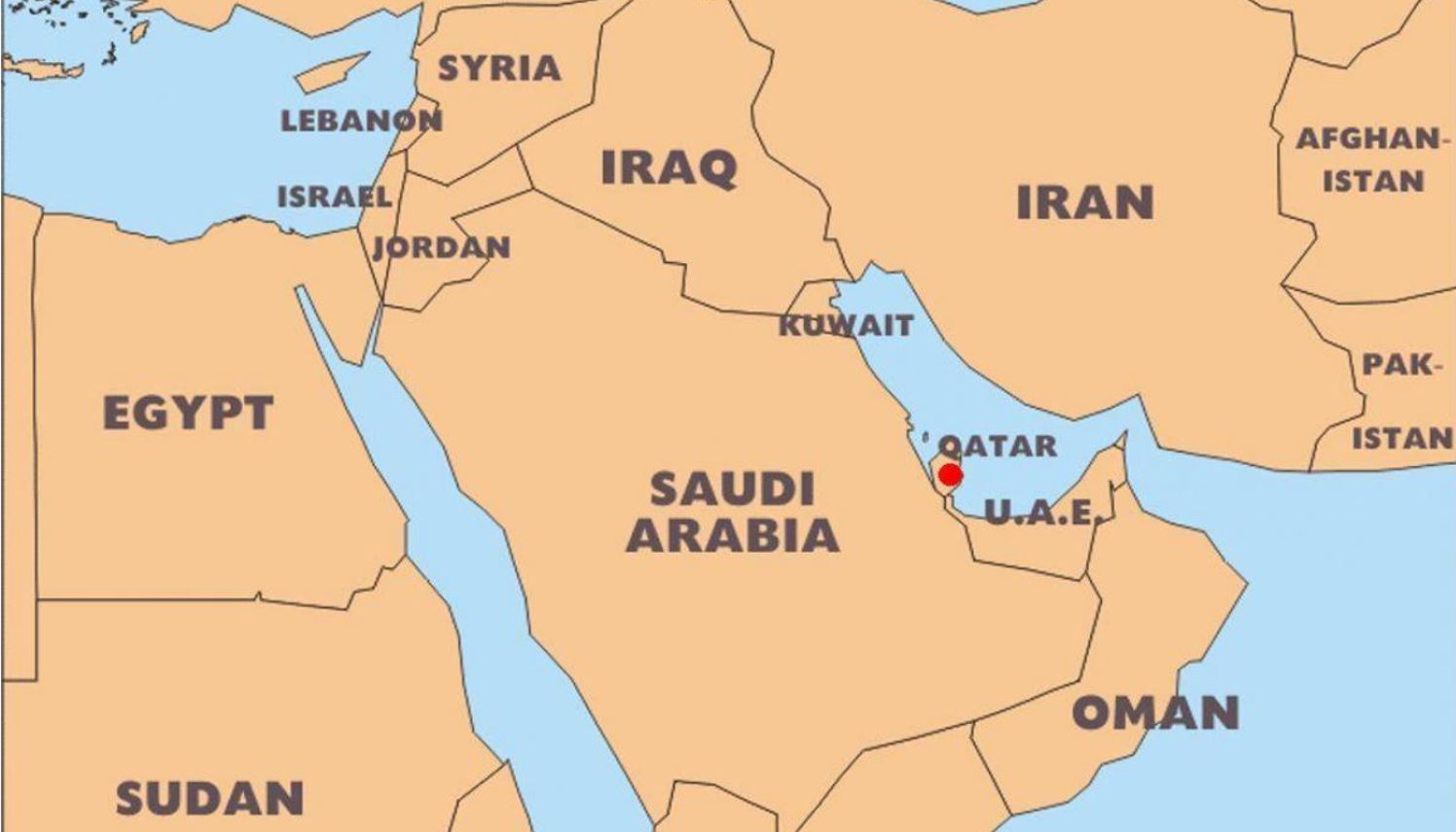
In the latest illustration of this paradox, Israel – Washington’s closest strategic partner in the region – is threatening Qatar, a key US ally that hosts the largest US military base in the region and recently received an explicit US security guarantee.
Nearly ten months after President Trump signed an executive order pledging to treat any armed attack on Qatar as a threat to the US and to take all necessary measures, including military ones, to defend it, former Israeli Prime Minister Naftali Bennett has accused Doha of funding Iran’s Islamic Revolutionary Guard Corps (IRGC).
Bennett declared that if he returns to the premiership this fall, he will immediately designate Qatar an “enemy state”. National elections will be held in Israel on October 27.
“If I am elected prime minister, I will immediately declare Qatar an enemy state,” Bennett vowed on July 27 at the Institute for National Security Studies conference.
Bennett further said that while serving as prime minister, he had been shown intelligence indicating that Doha also funded Iran’s IRGC, adding that Prime Minister Netanyahu was also aware of the intelligence, the Times of Israel reported.
He described Qatar as “a violent antisemitic cancer that sends its metastases throughout the West, even into the office of the prime minister of Israel, with the aim of destroying Israel.”
The comment was a reference to the so-called Qatargate scandal that has roiled Prime Minister Benjamin Netanyahu’s office for more than a year, after it came to light that several of the premier’s top aides were being paid by Doha for public relations work, at the same time the Arab emirate was hosting Hamas terror group leaders and mediating talks with it for the release of Israeli hostages held captive in the Gaza Strip.
“The leaders of Qatar have a goal of eliminating Israel, period,” Bennett stressed. “There are people who call it a ‘complicated state’ – it’s not complicated; after October 7, nothing is complicated here. Qatar is an enemy. It’s simple.”
Qatar, Bennett continued, has invested for some 25 years in a “powerful global influence operation that may have caused Israel very major damage.”
Notably, public opinion in many Western countries, including in the US, has swung dramatically against Israel in the last two years.
For instance, New York City had a Jewish mayor continuously for 28 years before Zohran Mamdani took office on January 1, 2026. Mamdani has repeatedly and explicitly accused Israel of committing genocide in Gaza.
This is significant as New York City had over 11% Jewish population, perhaps the largest concentration of Jewish people outside of Israel.
He also made a reference to rising anti-Israel sentiment in US universities.
“Today, in universities in the United States, Qatar has invested billions to go in and educate the young generation,” he said. “And so the students there are educated in ‘From the river to the sea.'”
This is a popular slogan in US universities that calls for the elimination of the state of Israel and implies that from the Jordan River to the Mediterranean Sea, the whole land belongs to Palestine.
Bennett seems to be blaming Qatar’s petrodollars for this dramatic turn in Israel’s image.
He also said that Qatar was directly funding Hamas.
“And I’ll tell you something else – Qatar funded, directly, Hamas,” he said, adding that Qatar additionally funded the al-Nusra Front, an Al Qaeda-affiliated organization that was active in the Syrian civil war.
Bennett’s allegations were rejected by Qatar.
The Qatari Embassy in Washington accused him of “spreading disinformation about Qatar in an attempt to further his own political ambitions.”
“As we have stated previously, Israeli disinformation campaigns will not deter Qatar from continuing its constructive role in pursuing peace and security, both in the region and internationally,” it said.
Regardless of the truth of Bennett’s allegations, Qatar’s alleged support for Hamas and its anti-Israel stance becoming a campaign issue in the country’s national elections could spell trouble for Doha, which already faced Israeli airstrikes in September last year.
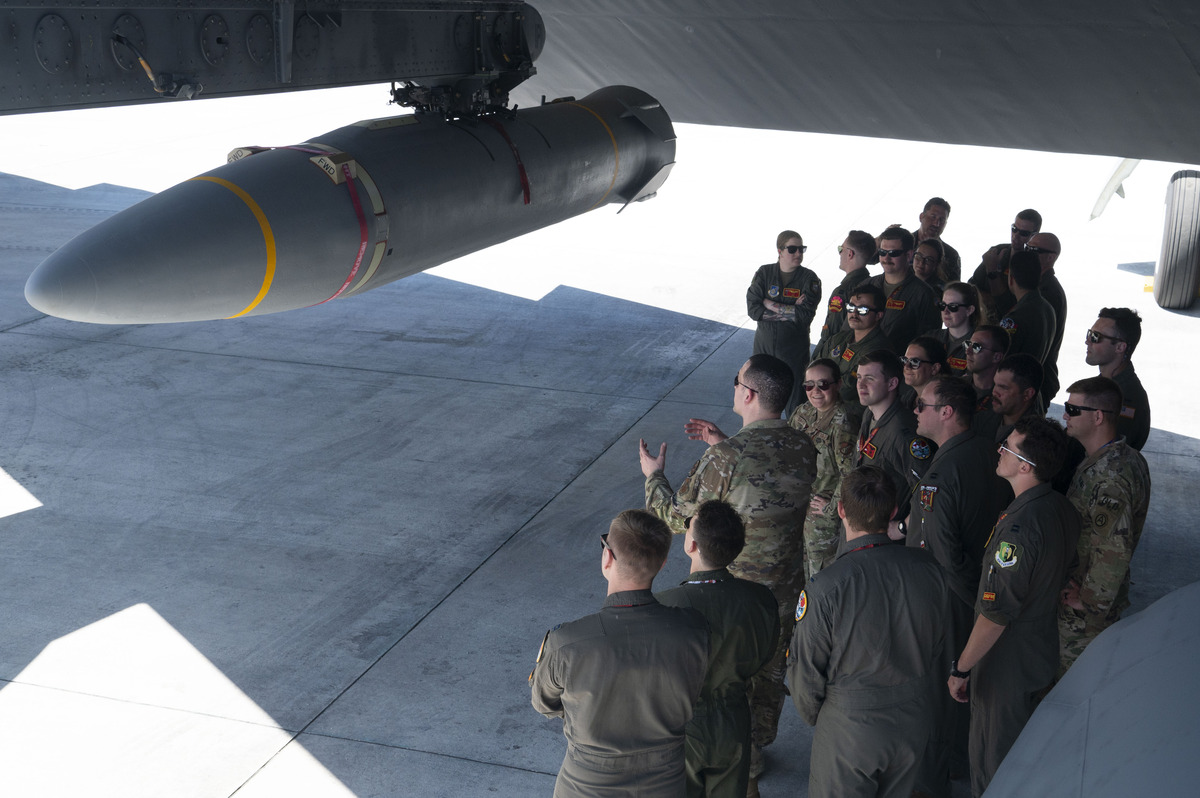
On September 9, 2025, Israel carried out an airstrike in Doha, Qatar, targeting senior Hamas leaders. This was Israel’s first known military strike inside Qatar, a key US ally in the region. Qatar’s Al Udeid Air Base is America’s largest military base in the Middle East, which hosts approximately 10,000 US soldiers.
Besides, it will further complicate the complex web of alliances in the Middle East, which is already going through one of its most turbulent phases since 2023.
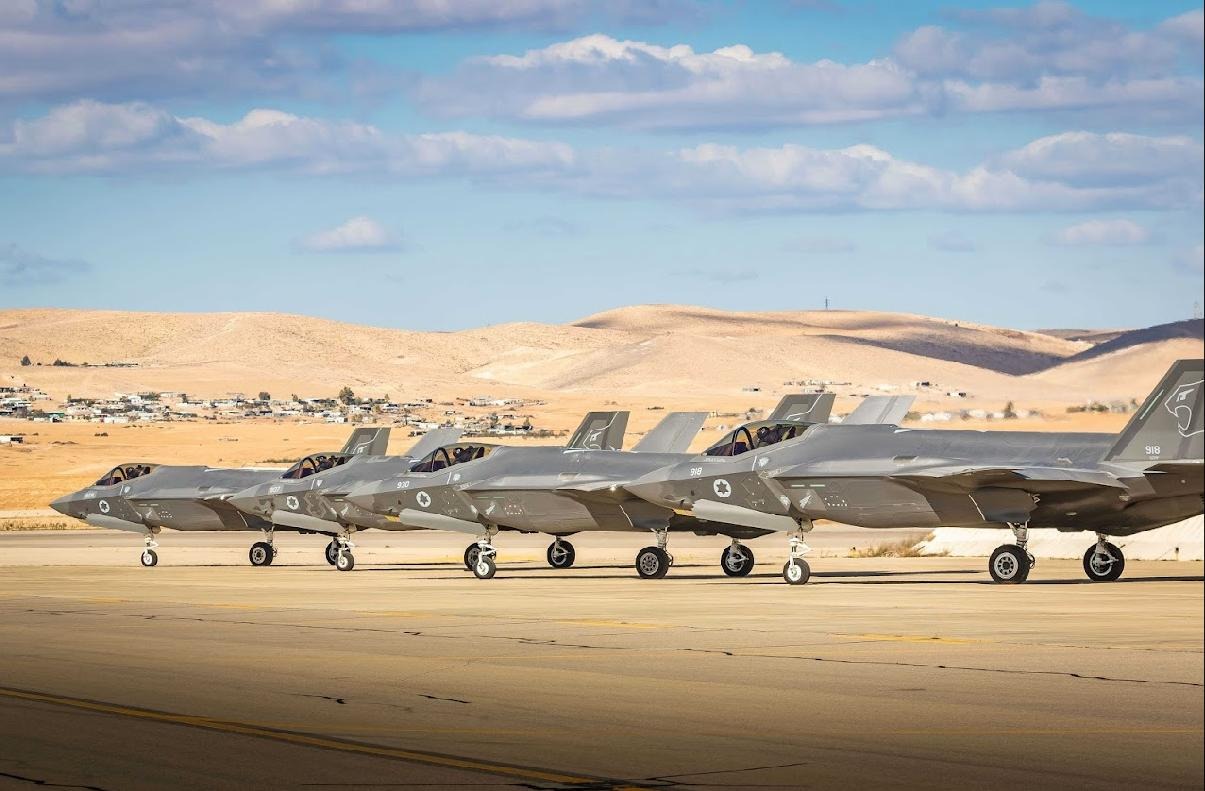
Ever since the Hamas terror attacks in Israel in October 2023, Israel has attacked six countries, including Palestine, Lebanon, Syria, Qatar, Yemen, and Iran. While Israel has often had brief wars and skirmishes against the first three (Palestine, Lebanon, and Syria), it attacked Yemen, Qatar, and Iran for the first time.
Meanwhile, the US and Iran have been at war since February this year. In response, Iran has attacked almost all countries in the region that host US troops, including the UAE, Kuwait, Bahrain, Jordan, Saudi Arabia, Iraq, and Israel.
Following the rare Israeli airstrikes in Qatar, Doha signed a new security pact with the US, in which Washington explicitly pledged Qatar’s security.
“The United States shall regard any armed attack on the territory, sovereignty, or critical infrastructure of the State of Qatar as a threat to the peace and security of the United States,” it said, adding, in the event of such an attack, the United States shall take all lawful and appropriate measures — including diplomatic, economic, and, if necessary, military — to defend the interests of the United States and of the State of Qatar and to restore peace and stability.
If Israel officially declares Qatar an enemy state, then two of America’s closest allies in the region will be facing each other. Ironically, the US has two different defense treaties with both Doha and Jerusalem.
While the US has committed to protect Qatar, Washington also has a Qualitative Military Edge (QME) policy for Israel.
Under this policy, the US has committed to ensure that Israel maintains a decisive technological and qualitative military superiority over any potential conventional military threat in the Middle East, including against Qatar.
Openly hostile relations between Doha and Jerusalem can become a hot potato for Washington.
Meanwhile, Qatar is already managing seemingly contradictory and mutually antagonistic relationships with various countries and non-state actors.
It is a close US ally but has also hosted Taliban and Hamas leadership for years.
Doha also maintains a close relationship with Tehran.
Though Qatar hosts the largest US military base in the region, during the war, it also pursued secret discussions and informal arrangements with Iran.
According to the Washington Post, Qatar allegedly proposed shutting down its monumental Ras Laffan gas facility to spike global energy prices and pressure the US and Israel to end the war quickly, conditional on Iran sparing the infrastructure from strikes.
Also, Israel is not the only country that has accused Doha of promoting religious extremism.
In the past, Saudi Arabia has repeatedly accused Qatar of supporting the Muslim Brotherhood, which is a banned organization in many Gulf countries.
In 2014, Saudi Arabia, the UAE, and Bahrain even withdrew their ambassadors from Doha, citing Qatar’s alleged interference in their internal affairs and support for the Muslim Brotherhood.
In 2017, Saudi Arabia and other Gulf countries, including the UAE, Bahrain, and Egypt, also declared an aerial and naval blockade of Qatar, accusing Doha of “adopting various terrorist and sectarian groups… including the Muslim Brotherhood,” along with Hamas, ISIS, and al-Qaeda.
For now, Qatar has managed to walk a diplomatic tightrope by delicately navigating its relationships with all these countries, as well as with non-state actors.
However, openly hostile relations with Israel could further complicate the situation, not only for Qatar, but for the US as well.
It will be interesting to see what attitude Israel’s new government, due after the October elections, adopts towards Qatar and how it will affect the heady cocktail of geopolitical relations in the Middle East.
- Sumit Ahlawat has over a decade of experience in news media. He has worked with Press Trust of India, Times Now, Zee News, Economic Times, and Microsoft News. He holds a Master’s Degree in International Media and Modern History from the University of Sheffield, UK.
- He can be reached at ahlawat.sumit85 (at) gmail.com