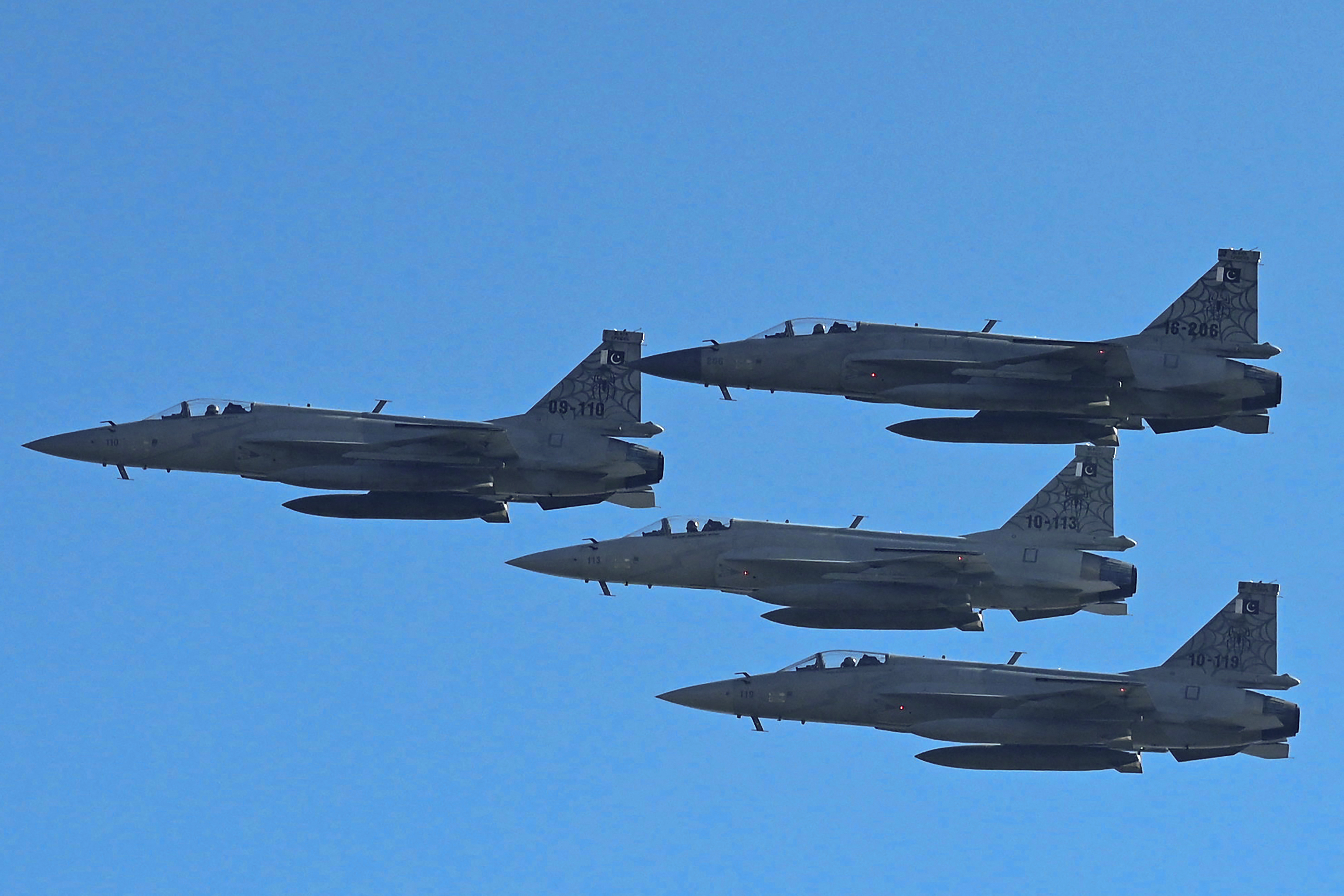
Washington is banking on Pakistan to help end the Iran war, despite Islamabad sending its fighter jets and troops to Saudi Arabia under the mutual defense agreement.
US Secretary of State Marco Rubio, who is expected to visit New Delhi for the QUAD summit, expressed hope for progress in ending the war with Iran. “I believe the Pakistanis will be traveling to Tehran today. So hopefully that’ll advance this further,” Rubio told reporters.
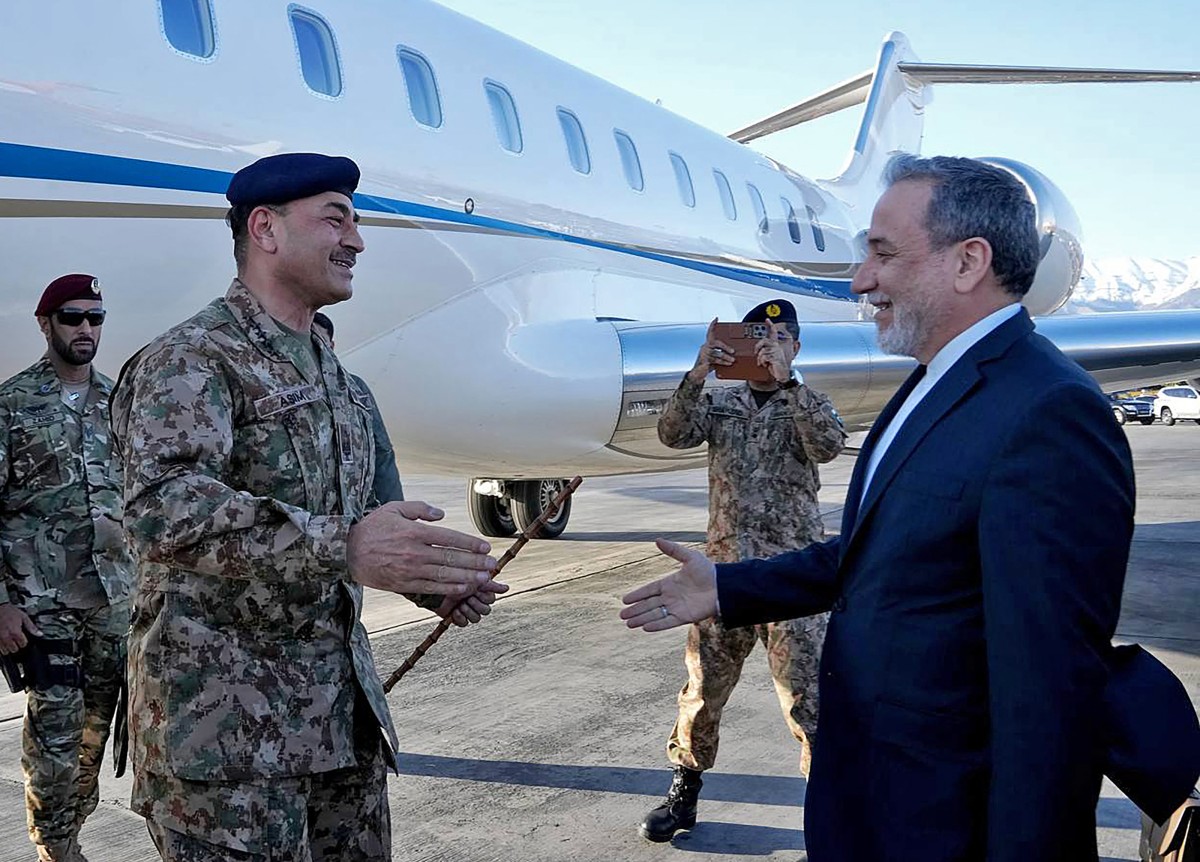
Pakistan’s interior minister Mohsin Naqvi, considered close to Pakistan’s powerful army chief Asim Munir, visited Iran for the second time in a week. Iranian media reported, citing unnamed sources, that Munir could himself visit Tehran as early as Thursday, but there was no comment from Pakistani authorities.
“It’s right on the borderline, believe me,” Trump told reporters Wednesday. “If we don’t get the right answers, it goes very quickly. We’re all ready to go.” He said a deal could come “very quickly” or “in a few days”, but warned Tehran would have to provide “100 percent good answers”.
“Double Birden” on Pakistan
Pakistan’s diplomatic tightrope, balancing its obligations to Saudi Arabia under the Strategic Mutual Defense Agreement (SDMA) while serving as the principal mediator in the Iran War, has grown even more treacherous.
In April, the Kingdom of Saudi Arabia announced the arrival of a Pakistani military force at King Abdulaziz Air Base under the SMDA signed last September.
In a statement carried by the state-owned Saudi Press Agency, Riyadh said the deployment included fighter and support aircraft from the Pakistan Air Force, aimed at strengthening joint military coordination and enhancing operational readiness between the two countries.
At that time, it was assumed that Pakistan had deployed a token military force in Saudi Arabia to fulfill its obligations under the SDMA, while not risking its newfound international fame and geopolitical spotlight by serving as a mediator in the Iran-US War.
However, the full scale of Pakistan’s deployment in Saudi Arabia has only recently become apparent, and it goes far beyond a token defensive force.
According to reports, Pakistan has deployed a full squadron of around 16 aircraft, mostly JF-17 fighters; two full squadrons of drones; an HQ-9 air defense system; and as many as 8,000 soldiers.
The deployment, the full scale of which is reported for the first time, was confirmed by three security officials and two government sources to Reuters, all of whom described it as a substantial, combat-capable force intended to support Saudi Arabia’s military if the kingdom comes under further attack.
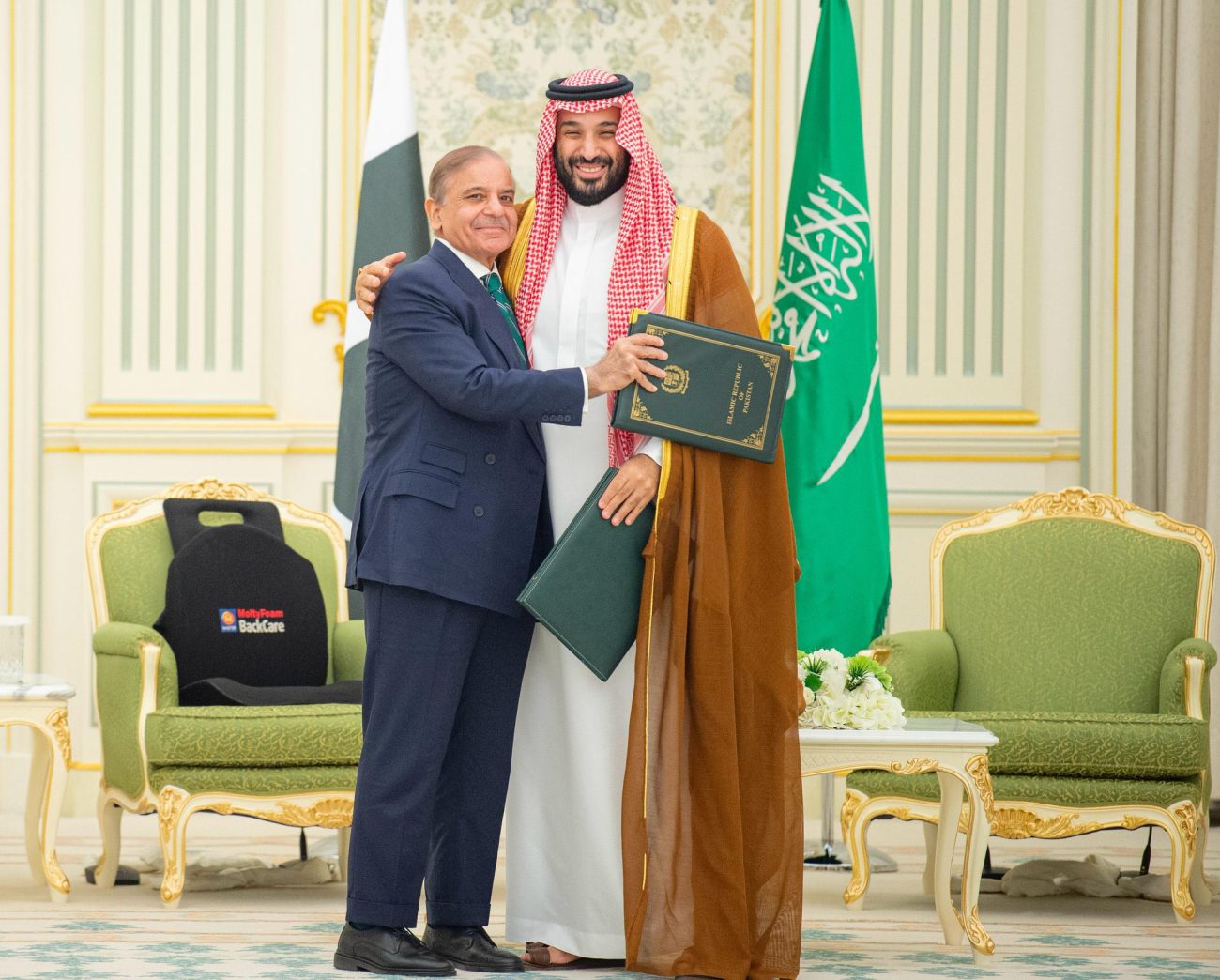
This large-scale military deployment falls under the provisions of the SDMA signed by Saudi Arabia and Pakistan in 2025. While substantial parts of the agreement remain confidential, it explicitly provides for both countries to help each other militarily if either is attacked.
While not explicitly stated, some Pakistani leaders, including Defense Minister Khwaja Asif, had suggested that the agreement extend Pakistan’s nuclear umbrella protection to Saudi Arabia.
One of the government sources, who has seen the text of the confidential defense pact, told Reuters that the agreement allows up to 80,000 Pakistani troops, and even warships, to be deployed to Saudi Arabia to help secure the kingdom’s borders alongside Saudi forces.
The military deployment in Saudi Arabia will be funded by Riyadh, in accordance with the agreement’s terms.
The scale and composition of the deployment – combat aircraft, drones, air defenses, and thousands of troops – suggest Pakistan has sent far more than a symbolic or advisory mission, the sources said.
Furthermore, it was reported last week that Saudi Arabia launched numerous unpublicized strikes on Iran in retaliation for attacks carried out inside the kingdom.
Earlier, it was assumed that Saudi Arabia and other Gulf countries, such as the UAE, absorbed dozens of Iranian drone and missile attacks deep inside their territories without responding militarily to Tehran. However, it is now becoming clearer by the day that both Saudi Arabia and the UAE have launched retaliatory strikes on Iran.
Therefore, if the fragile ceasefire breaks and Iran launches further drone strikes on Saudi oil infrastructure, then in all probability, Riyadh will also respond militarily, just like it reportedly did the last time. However, unlike last time, Saudi Arabia might not see any incentive in keeping its retaliatory strikes on Iran secret.
This, however, puts Pakistan in a classic Catch-22 position.
If the war escalates, and Riyadh demands that the Pakistani military assets deployed in the country participate in defensive as well as offensive operations against Iran, how will Islamabad respond?
Pakistan shares over 900 km of border with Iran in its restive Balochistan province. Besides, Pakistan is home to the world’s second-largest Shia community after Iran. Pakistan’s Shia community numbers nearly 26 million, and Islamabad’s participation in offensive operations against Iran could fuel discontent against the Pakistani military.
At the same time, Saudi Arabia remains one of Pakistan’s principal financial supporters, and not complying with Riyadh could cut off crucial financial aid, which is a lifeline for the Pakistani economy, which is barely avoiding bankruptcy.
Meanwhile, on May 17, three drones entered Saudi airspace from Iraqi territory. While the investigation is ongoing, Iranian-backed militias are known to be operating from Iraq.
Given the scale of the Pakistani military deployment in Saudi Arabia and Riyadh’s financial support, it will be hard for the Pakistani military to refuse to participate in offensive operations. However, this is exactly what the Pakistani military may look to avoid: disturbances on its Western border with Iran and rising discontent in its Shia population.
Notwithstanding the impressive scale of Pakistan’s military deployment in Saudi Arabia, including 8,000 troops, air defense units, two squadrons of drones, and one squadron of fighter jets, the Pakistani military officials are themselves convinced that the nature of the Pakistani Army’s deployment in Saudi Arabia is purely and exclusively defensive in nature.
For instance, a former three-star Pakistani general cautioned that Pakistan’s window to serve as both a mediator and a Saudi military ally was narrow.
“Pakistan can hold both roles only if [any military] deployment remains strictly defensive, time-bound, and transparently limited. The moment the theatre shifts to offensive operations, or the perception of offensive coordination emerges, the dual role collapses,” he told Al Jazeera, speaking on condition of anonymity.
Similarly, Muhammad Faisal, South Asia security researcher at the University of Technology Sydney, described the Pakistan Air Force (PAF) deployment as “defensive in nature” and reassuring to Saudi Arabia.
A Pakistani official told Reuters that the Pakistani Military in Iran was “not there to attack anyone.”
These quotes show that most Pakistani security and defense experts are quite clear that the deployment of troops and fighter jets to Saudi Arabia will be exclusively defensive.
However, the question is, can Pakistan maintain this defensive stance even if the war escalates, Saudi Arabia decides to respond militarily, and there is immense pressure from Riyadh to deliver on the SDMA by engaging in offensive operations against Iran?
It was easy to deploy troops and fighter aircraft in Saudi Arabia, but the real test of the SDMA will be whether Islamabad is willing to attack its Western neighbor, Iran, to please the Saudis.
Deployment Issues?
Meanwhile, there is another popular theory that suggests that the Pakistan military’s extensive deployment in Saudi Arabia is already causing some discomfort among the country’s military elites. While Pakistan and Saudi Arabia have long enjoyed close defense ties, the scope of defense cooperation has expanded significantly over the past year under General Asim Munir.
While signing the SDMA with Riyadh in September 2025, Islamabad did not anticipate that its military might find itself in a position to conduct offensive operations against Iran.
Until the deployment was symbolic, it remained a low-risk show of solidarity under the mutual defense pact — a deterrent signal to Tehran without crossing into direct combat.
However, the prospect that the Pakistani military might be under pressure to engage in retaliatory or pre-emptive strikes against Iran has caused serious debate within the Pakistani military elites.
According to the theory, the recent leak of the top-secret diplomatic cable that fueled former Prime Minister Imran Khan’s claims that his 2022 ouster was orchestrated by the US and Pakistan’s military leadership to the news site DropSite is a manifestation of this rising discontent with Munir’s leadership within the Pakistan military.
While Imran Khan was ousted from power in April 2022, and the diplomatic cable was sent nearly one month prior to his removal (in March 2022), the leak of that cipher now raises questions about the timing.
It is clear that the leak could have come only from within the Pakistan military.
So the question is, why would the Pakistan military leak a sensitive cipher that portrays former Prime Minister Imran Khan as a hero and casts the Army in a bad light? Furthermore, why did the leak come at this moment?
It is well known that Asim Munir benefited most from Imran Khan’s ouster. He was promoted to the rank of Pakistan Army Chief in November 2022, nearly six months after Imran Khan’s ouster. In 2025, while Imran Khan was still in jail, Gen Munir was promoted to the rank of Field Marshal.
The Drop Site story also reveals that Saudi Arabia has been interested in a mutual defense agreement with Pakistan since at least 2019, but Prime Minister Imran Khan refused to sign it. The agreement was finally signed in 2025, after Khan had been imprisoned and Munir was the Field Marshal, ruling the country with the help of a “puppet” Prime Minister he had allegedly helped put in office after rigging the 2024 national election.
The theory suggests that the leak aimed to undercut Munir’s position by casting him as an American stooge who colluded with the US to oust a popularly elected Prime Minister, put him into prison, and capture power for himself, and the timing suggests it could be linked to rising discontent against his decision to put the Pakistan military in a position where it might be forced to take offensive action against Iran.
It will be interesting to see how Pakistan balances its delicate position in the coming days.
- Sumit Ahlawat has over a decade of experience in news media. He has worked with Press Trust of India, Times Now, Zee News, Economic Times, and Microsoft News. He holds a Master’s Degree in International Media and Modern History from the University of Sheffield, UK.
- VIEWS PERSONAL OF THE AUTHOR.
- He can be reached at ahlawat.sumit85 (at) gmail.com