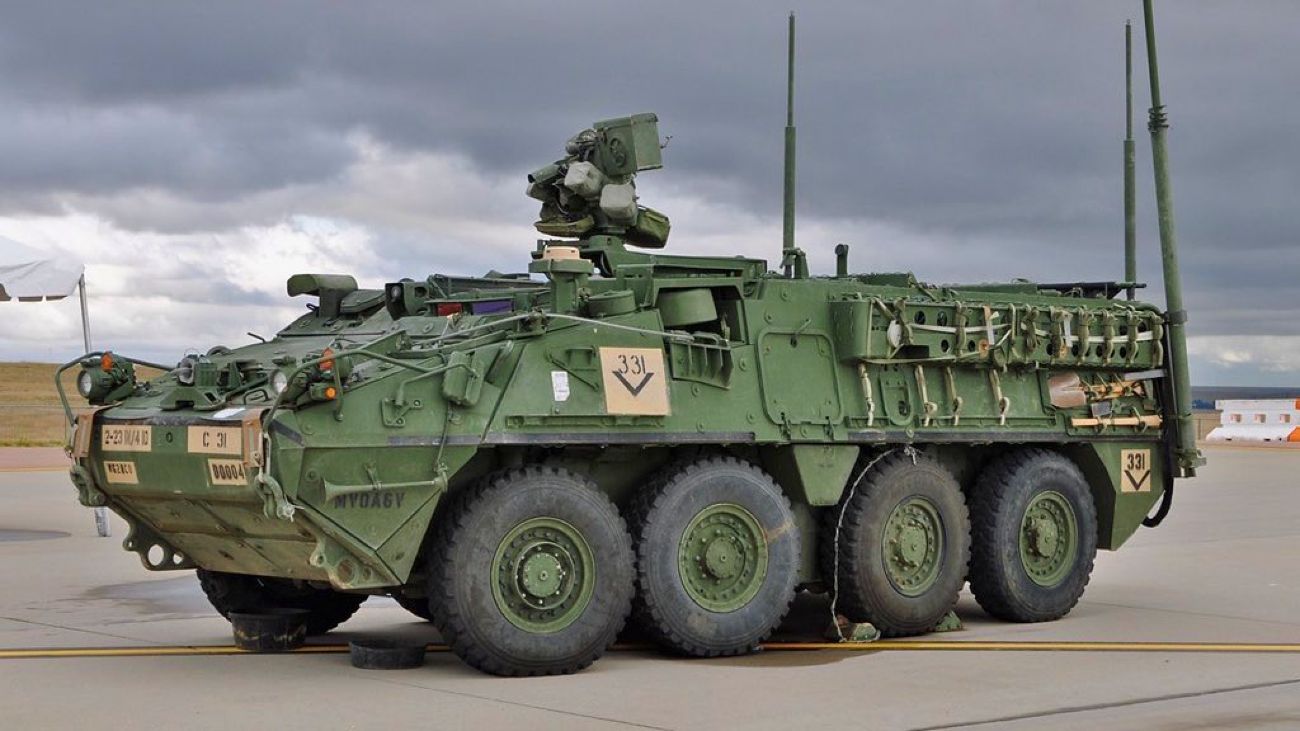
The Indian government has reportedly decided not to proceed with the acquisition of the Stryker armored vehicle, news that would cheer scores of defense enthusiasts and proponents of Make in India initiatives.
For over a year, India has been negotiating the purchase of P-8 (I) Poseidon with the United States amid cost concerns. The original State Department approval in 2021 estimated the six aircraft and related equipment at about $2.42 billion. However, by mid-2025, the projected cost rose to around $3.5–4 billion, a nearly 50% increase, mainly due to global supply chain disruptions affecting Boeing’s production.
The cost has been considered excessive by the Indian side, leading to a holdup in signing a deal until now. Nonetheless, India is finally proceeding with the purchase of six P-8I Poseidon Maritime Reconnaissance aircraft from the United States via the Foreign Military Sales (FMS) route.
The Defense Acquisition Council (DAC) of the Indian Ministry of Defense (MoD) gave a green light to the purchase in February 2026. The note for the Cabinet Committee on Security, chaired by Prime Minister Narendra Modi, should be ready by May, as reported by Times Now, citing highly placed sources.
“We have been waiting for a long while. We have also been negotiating with them, but the costs are what they are. And they (Boeing) are selling them to others at roughly the same price. So, there is nothing that can really be done. The supply-chain issues are very much there,” the source was quoted as saying in the report. Further, a high-ranking official told the publication, “We are going for them as there is no equivalent aircraft, no aircraft that can do so many things at the same time.”
However, there is one system that India has willingly given up on: the Stryker armored vehicle, whose acquisition has been under discussion for years. Citing sources, the report stated that the potential acquisition of Stryker is off the table as the Indian Armed Forces weren’t keen on it.
Indian MoD’s Flirting With The Stryker
As previously reported by the EurAsian Times, the US had been aggressively advocating for India to purchase the armored vehicle. In fact, it even approved technology proposals last year to help India set up manufacturing units to produce the vehicle locally.
During his visit to India earlier, the former US National Security Advisor Jake Sullivan courted New Delhi by emphasizing that the clearance of the technology would make India the first global producer of Stryker combat vehicles.
Responding positively to the offer at the time, the Indian Defense Ministry proposed a three-phase plan for the project: initial procurement through US Foreign Military Sales, joint production in India, and future co-development of tailored variants.
By August 2025, reports suggested that India had halted the procurement of major US weapons, including the Stryker, after the Donald Trump administration imposed an additional 25% tariff on Indian goods.
Although the Indian Ministry of Defense (MoD) denied there was a blanket pause in procurement, the prospect of a deal has since remained in limbo.
In January 2026, India’s Army Chief, General Upendra Dwivedi, said that the service was considering the American armored infantry combat vehicle, the Stryker, as part of its procurement focused on the northern border with China. However, he also slipped in a key detail, stating that the service would switch to an Indian alternative if one existed.
“Stryker is one of the options we are looking at. Because we need a platform, we should be able to utilize it very well in the northern front,” he said at the time. “And it should have all the capabilities in terms of protection, in terms of firepower, in terms of mobility. So, if there is an Indian option to it, we would prefer to go for the Indian option. If not, then definitely we are looking at other options also. Stryker is also one of those.”
If true, this would bring jubilation to the Indian defense community, which has been critical of India’s interest in the Stryker when potent Indian alternatives, such as the WhAP (Wheeled Armored Platform), exist.
WhAP vs Stryker
The critics of the potential Stryker deal have frequently pointed towards available indigenous options, including the WhAP.
Critics have argued that buying or co-producing Stryker would undermine years of indigenous research and development (R&D) investment, benefit foreign (including Canadian) supply chains, and divert funds from homegrown efforts.
The WhAP was originally the TATA Kestrel, which was produced in close collaboration with the Defense Research and Development Organization (DRDO) and the Indian Army.
It was classified as an IPMV (Infantry Protected Mobility Vehicle) and developed in response to a request for information (RFI) for the supply of chassis, propulsion unit, and weapon system for a wheeled armored amphibious platform for the Indian Army’s Future Infantry Combat Vehicle (FICV) program.
The platform underwent extensive trials across various terrains, including deserts, high-altitude regions, and plains, to ensure it met the Indian Army’s stringent requirements. This allowed the Indian Army to extensively test the vehicle’s mobility, durability, protective features, and its ability to withstand blasts and firepower.
Tata Motors unveiled a new variant of the Kestrel, WhAP, at the 2017 Aero India defense exhibition. After trials of this system, Tata announced that the WhAP was ready for mass production. This vehicle was India’s first indigenously developed 8×8 wheeled armored vehicle, symbolizing a major step in the country’s defense manufacturing capabilities.
“WhAP is an excellent, proven technology. It has been tested at high altitudes. The Army was impressed by its performance,” Dr. S. Guruprasad, former director of Research and Development Establishment (Engineers), a DRDO laboratory, at Dighi, earlier told the EurAsian Times.
However, the Indian MoD’s greater enthusiasm for the Stryker since 2023 has dampened TATA’s prospects and has since been flagged as a grave error in judgment by proponents of Aatmanirbhar Bharat.
While Stryker could be produced in India, the WhAP is already an indigenous product, and its selection would prove to be a big boost to India’s indigenization and self-reliance push.
Experts argue that local manufacture of the Stryker could create jobs, but it would not promote domestic capability to design and develop armored fighting vehicles (AFVs) in India, particularly when equivalent platforms developed in cooperation with DRDO under Army specifications exist in the country.
An Indian Air Force veteran and popular military commentator, Vijainder K. Thakur, earlier slammed the logic of the potential Stryker deal, saying, “The Stryker co-production could completely derail local development of AFVs and leave Tata Motors and Mahindra, if not the entire private sector, skeptical about the government’s much-hyped Make-in-India slogan.”
Thakur also speculated that India may be under pressure from the US to buy the Stryker, and later surmised that India could be entertaining the Stryker pitch to pander to the United States amid tensions caused by New Delhi’s close association with Russia.
However, things appear to be changing, and the Indian MoD seems to be prioritizing the best-suited option over other considerations. While the Stryker is battle-tested, the WhAP outperforms the American vehicle for Indian requirements, as you can read more about in a detailed EurAsian Times report here.
The WhAP is highly modular. It can be configured as an amphibious fighting vehicle capable of crossing rivers and lakes or operating in coastal areas—a critical capability for India’s diverse terrain. The modularity further opens the window for upgrades to higher levels of protection based on mission needs. It provides defense against mine-resistant and small-arms fire, possibly up to STANAG Level 3 or higher.
The WhAP’s weaponry options include machine guns (7.62mm or 12.7mm), anti-tank guided missiles (ATGMs), and a 30mm automatic cannon.
The Stryker is much less modular. The standard platform is usually equipped with either a 40mm automatic grenade launcher in a Remote Weapon Station (RWS) or a 12.7mm M2 Browning heavy machine gun.
Additionally, the Stryker approaches increased firepower in a non-modular manner. One could argue that the Stryker offers superior default protection. In addition to steel armor that defends against 14.5mm armor-piercing rounds, it can be outfitted with composite or slat armor for enhanced survivability, especially against RPGs and IEDs.
Earlier, Rajesh Kumar Singh, India’s defense secretary, revealed that Stryker did not fulfill the Indian Army’s operational needs during field testing. Singh emphasized that given India’s varied and difficult terrain, Stryker lacked amphibious capabilities, a crucial requirement for the Indian Army.
While the US reportedly promised an amphibious version of the Stryker in the future, it would make little sense to buy the system, given that India has what it needs at home.
Besides being more suited to the Indian Army’s needs, the WhAPs are priced around 3 to 4 million USD, which is about 30 to 50% cheaper than their Western competitors.
Speaking to the EurAsian Times earlier, Lt Col JS Sodhi (Retd) said India must prioritize indigenous solutions and turn external pressures, such as tariffs, into opportunities to strengthen the domestic industry for a two-front war scenario.
It is pertinent to note that India and the United States are in a much better place now than they were a few months ago. In October 2025, the two sides signed a landmark agreement called the “Framework for the U.S.-India Major Defense Partnership.” Additionally, both sides are currently working on a bilateral trade agreement.
However, the analysts in India have repeatedly warned that the US is not a reliable partner, as seen with Trump’s closeness with Pakistan after the Indo-Pakistan conflict of May 2025.
“Given the current geopolitical realignments, no one can guarantee which country will support you during a war situation. Hence, the need to develop indigenous weapon systems as far as possible,” Lt Col Sodhi warned earlier.
The sentiment is near-unanimous among Indian defense experts and enthusiasts.
While the Indian Defense Ministry has not explicitly stated that it will ultimately opt for the WhAP or another equivalent, the reported collapse of talks for the Stryker is nonetheless good news for the champions of self-reliance in India.
- Contact the author at sakshi.tiwari13 (at) outlook.com
- Follow EurAsian Times on Google News