In May 2025, Pakistan stunned the world by claiming it had shot down multiple Indian Air Force (IAF) Rafale fighter jets using a Chinese PL-15E air-to-air missile.
Indians acknowledged one Rafale was lost due to a high-altitude technical glitch and asserted that up to 14 Pakistani aircraft were destroyed in IAF attacks.
However, if Pakistan’s account is accurate, the engagement would rank among the longest-range air-to-air kills in aviation history and mark the first combat loss of the Dassault Rafale.
Many defense analysts viewed the incident as a significant milestone for Chinese military technology, demonstrating that systems like the PL-15 can challenge and potentially defeat top-tier Western platforms in beyond-visual-range (BVR) combat.
One year after the Rafale incident, China appears to have triggered yet another major upheaval in aerial combat.
According to reports in NBC News quoting defense officials, a Chinese shoulder-fired missile might have shot down the US Air Force (USAF) F-15 fighter jet on April 3. This was the first time in over two decades that a USAF fighter jet was shot down in combat.
Earlier, an A-10 Thunderbolt II was shot down in 2003 over Baghdad by an Iraqi Roland surface-to-air missile.
The F-15 shootdown triggered a massive 36-hour rescue mission by the US military for one of the F-15 fighter pilots. Notably, during this rescue mission, another A-10 Thunderbolt II was shot down over the Strait of Hormuz, while the US military self-destroyed two MC-130J Commando II aircraft and four special operations helicopters after they became immobilized.
Not only that, US officials believe that China might also have provided Iran with a long-range early-warning radar that spots stealth aircraft meant to evade detection.
On March 19, a US Air Force F-35A Lightning II was hit by a suspected Iranian surface-to-air missile during a combat mission over Iran. While the F-35 was able to make an emergency landing, this was the first incident of a fifth-generation stealth fighter jet getting hit anywhere in the world.
Did a Chinese MANPAD Bring Down USAF F-15?
The F-15 fighter that was shot down over southwestern Iran last month and set off a dangerous rescue mission was probably struck by a Chinese-made shoulder-launched missile, three people with knowledge of the matter told NBC News.
At the time of the incident, US President Donald Trump said the jet was hit by a shoulder-launched missile, also called MANPADS.
MANPADS are shoulder-fired surface-to-air missiles carried and operated by a single soldier or a small team. They are designed to shoot down low-flying aircraft, especially helicopters, drones, and attack jets.
Such MANPADS typically have a range of 3-8 km. They are about 7 feet long and weigh around 40 pounds.
The Russian Igla and Verba and the Chinese FN-6 and QW Series missiles are good examples of MANPADS.
US officials are still investigating the circumstances around the shootdown of the American F-15E Strike Eagle in April, the sources said. It was the first time in decades that a US fighter was downed by enemy fire.
It’s not clear if the shoulder-launched missile that likely brought down the F-15 was delivered to Iran recently or if it was taken from stockpiles of weapons that were shipped to Iran years ago, the sources said. It’s also unclear whether the radar, known as a YLC-8B, was fielded during the war.
The report says that it’s not clear when China supplied its military equipment to Iran.
If China has indeed supplied Iran with long-range early warning radars capable of tracking even stealth fighter jets, then this could complicate US missions in Iran. Furthermore, this should serve as a warning to Western countries, particularly the US, that Chinese radars can track their cutting-edge stealth fighter jets.
China’s Anti-Stealth Radars
Notably, China has often claimed that its latest radars can track stealth fighter jets.
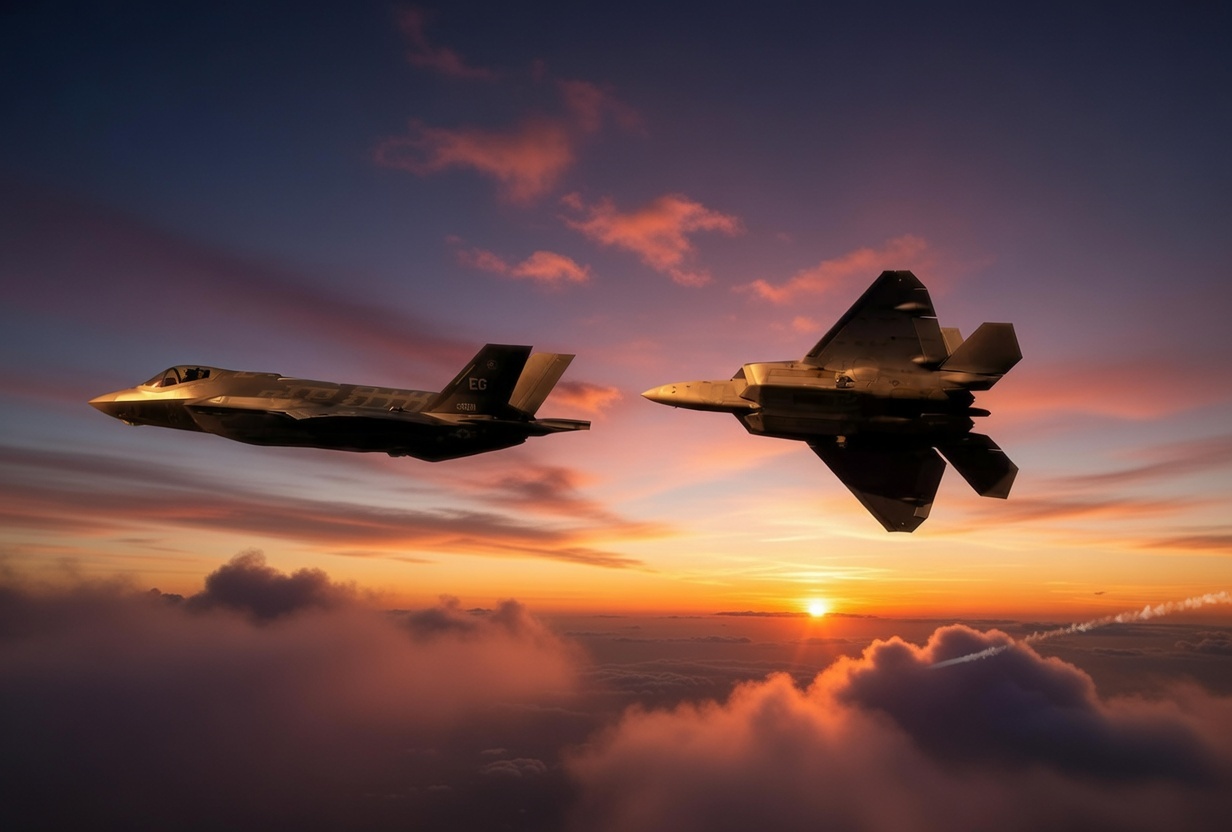
In October 2024, Chinese scientists claimed that they had developed a new radar technology that could track and detect the US Air Force’s F-22 Raptor, one of the world’s most advanced stealth fighter jets.
This innovation reportedly leveraged signals from China’s BeiDou navigation satellite system to track stealth fighters.
This breakthrough was detailed in a peer-reviewed paper published in the Journal of the National University of Defense Technology. In it, the research team used an F-22 Raptor as a hypothetical target to demonstrate the radar’s capability.
Using BeiDou signals, the radar can detect refraction patterns caused by stealth aircraft. These patterns create unique echoes, allowing scientists to estimate the type and location of the aircraft.
Then, in May last year, China unveiled a mobile meter-wave radar at the 11th World Radar Expo that, according to Chinese media, could detect American fifth-generation stealth fighters such as the F-22 and F-35.
Showcasing its advancements in anti-stealth radar systems, China presented the JY-27V radar system, manufactured by the state-owned China Electronics Technology Group Corp (CETC), at the World Radio Detection and Ranging Expo in Hefei, East China’s Anhui Province.
The JY-27V, which is mounted on a military truck, is a high-mobility air surveillance radar. This next-generation meter-wave anti-stealth radar incorporates three advanced technologies: a low-frequency band, a high-power aperture, and sophisticated intelligent algorithms.
CETC has described the JY-27V as a “master artist” in detecting stealth targets.
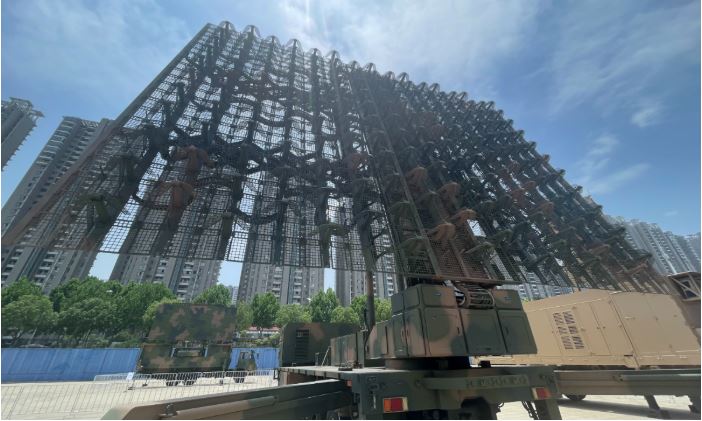
The JY-27V features a massive array of active electronically scanned array (AESA) antennas that operate at very high-frequency (VHF) radio frequencies. The radar is an upgrade of the JY-27 A, which was unveiled at the 2016 Zhuhai air show together with the YLC-8B, an ultra-high-frequency (UHF) radar also designed for anti-stealth surveillance.
Again, in October last year, researchers in China claimed to have developed a “revolutionary” dual-satellite radar system capable of detecting and tracking stealth aerial objects around the clock.
Even in 2022, China claimed that its Jilin-1 commercial satellite tracked an F-22 fighter jet.
China claims that its Quantum radars (single-photon detectors) that entered mass production in late 2025 could also detect stealth fighter jets.
Notably, during the war, the Trump administration had accused China of allowing Iran access to Chinese satellites to help Tehran target US forces in the region. Subsequently, the State Department imposed sanctions on three Chinese satellite companies that it said were providing imagery and data to enable Iran to launch attacks against US forces in the Middle East. China denied the accusation.
However, these claims by China were not taken very seriously by analysts.
Now that the US military is probing whether China-supplied long-range radars were responsible for detecting and tracking American F-35s in Iran, it indicates that Beijing’s repeated claims of possessing effective anti-stealth technology are now receiving serious attention in Washington.
Furthermore, China is increasingly battle-testing its advanced weapons systems against Western platforms in real-world conflicts. The back-to-back combat successes of Chinese missiles, first with the PL-15 in the 2025 India-Pakistan war and again in the 2026 US-Iran conflict, signal that Beijing is no longer regarded as a technological backwater in modern military capabilities.
- Sumit Ahlawat has over a decade of experience in news media. He has worked with Press Trust of India, Times Now, Zee News, Economic Times, and Microsoft News. He holds a Master’s Degree in International Media and Modern History from the University of Sheffield, UK.
- VIEWS PERSONAL OF THE AUTHOR.
- He can be reached at ahlawat.sumit85 (at) gmail.com