As the United Kingdom inches closer to investing billions of dollars in the GCAP aircraft program, some critics have expressed skepticism about the feasibility of pursuing a multinational program, citing past examples and mistakes.
The UK is reportedly preparing to allocate around £6 billion in additional funding to GCAP, after months of delay that have frustrated partners and raised fears of a delay in the aircraft’s rollout beyond the 2035 target.
Notably, the funding for the GCAP is part of the 10-year Defense Investment Plan (DIP), which has been stuck amid wrangling between the British Defense Ministry and the Treasury amid a glaring public spending deficit and a funding gap of about £28 billion in the country’s defense budget, as recently explained by the EurAsian Times.
The DIP, which is based on the Strategic Defense Review 2025, is expected to include several major cuts and savings if it were to match the planned funds, particularly since the British government has clarified that it would not allocate any additional money to defense due to commitments to public welfare, as columnist and special reporter of The Telegraph, Lewis Page, pointed out in a recent article.
The GCAP program is a multinational fighter jet development effort led by the UK, Japan, and Italy, pooling resources and combining elements of the British Tempest and the Japanese F-X next-generation fighter programs. The aircraft is anticipated to replace the Eurofighters operated by the UK and Italy, as well as Japan’s Mitsubishi F-2.
Critics fear that if GCAP receives strong priority in the final DIP, the government would have to make trade-offs elsewhere due to the persistent funding gap. The cost-cutting could be in areas such as the acquisition of additional F-35 jets, investment in futuristic uncrewed vessels or armored vehicles, or even the aircraft carriers that have long remained in the news for all the wrong reasons.
Some commentators, like Page, argue that the most expensive program—the GCAP—should instead be cut to prioritize other, more useful programs.
The UK’s Past Mistakes
Critics of the GCAP program argue against the feasibility of multinational programs in general, and their shortcomings for Britain in particular, citing past examples. Before Tempest, the UK developed the Tornado-GR bomber with Italy and Germany, followed by the Eurofighter Typhoon with Italy, Germany, and Spain.
The Tornado program faced significant development delays, partly due to political bargaining, work-share agreements, and differing national requirements. The aircraft’s design was purportedly compromised to meet the unique requirements of partner nations, and production was split politically, complicating integration and raising costs.
The aircraft was heavily optimized for low-level penetration, based on the belief that the jet could evade radar detection by flying low. However, this design principle proved very risky in combat, and the Royal Air Force (RAF) faced heavy Tornado losses (8 of the 48 deployed) in the 1991 Gulf War due to low-altitude tactics against Iraqi air defenses.
“The later fighter version of the Tornado wasn’t good at anything and basically didn’t work at all for much of its service: it was a laughing stock. Both types cost huge amounts of money to buy and to fly, in large part because of their complicated variable-geometry “swing wings”—an idea long consigned to the dustbin of engineering history,” Lewis argues.

After the Tornado, the UK began developing the Eurofighter Typhoon, the 4.5th-generation multi-role fighter that is currently the mainstay of the RAF.
The program experienced several years of delays. It was originally planned for service entry in the early 1990s, but did not achieve operational status until the mid-2000s—the RAF inducted the jet in 2007.
“The Typhoon, in fact, had taken so long to arrive that it was literally an entire generation behind state-of-the-art,” Lewis said, referring to the fifth-gen F-22 Raptor that had been in service for two years when the Typhoon arrived.
Moreover, the partners had differing priorities—the UK and Germany wanted a high-performance air superiority fighter, while others pushed for multi-role capabilities. Lewis argues that a more expensive multinational program has been prioritized over other, more tactically useful programs.
For example, the 2010 Strategic Defense Review cut back the Harrier jump jet and the Invincible-class small carriers from which it flew, while retaining the Tornado.
The Typhoon, which was initially developed as an air-to-air fighter, was believed capable of conducting ground attack by 2008. However, that turned out to be a fallacy, which became a major sticking point because the RAF was only supposed to conduct air-to-ground missions in Afghanistan at that point.
Lewis cited a group of senior officers who wrote to The Times following the decision to scrap the Harrier and keep the Tornado, calling the move “strategically and financially perverse.” The officers listed a range of advantages of using Harrier for air-to-ground combat, emphasizing that the aircraft could have remained in service until 2023 without major investment. In contrast, they argued that the Tornado would cost seven times as much over the next decade as compared to the Harrier.
UK’s Decisions & Operational Shortcomings In Libya
Lewis cites the example of Operation Ellamy against Muammar Gaddafi, which happened months after the Harriers and their carriers were scrapped.
He says, with bold conviction, that the decision to eliminate carriers was a major blunder. The RAF strike jets, most often the Tornado, had to fly across the Mediterranean to strike targets in Libya. And in some cases, the jets flew all the way from England across Europe on their designated attack missions.
In contrast, the French fighter jets participating in the operation flew from aboard aircraft carriers stationed close to the Libyan coast, allowing them to arrive over the combat zone in mere minutes. Others, including Italian and American fighter jets, were likewise operating out of carriers in the region.
The EurAsian Times would like to draw attention to the fact that the British Typhoons were similarly flying from miles away—from Cyprus—to conduct airstrikes on Houthi targets in January 2024 due to the UK’s refusal to send one of its £3.5 billion aircraft carriers to the Red Sea. In contrast, the US has had its carriers stationed in the region.
The HMS Queen Elizabeth and HMS Prince of Wales are called “investments” in British security and prosperity on the Navy’s webpage. However, experts noted that, despite the hyperbole, neither carrier has been near a combat zone since entering service. This even sparked speculation that one of the two carriers could face the axe.
Notably, French aircraft programs have had it significantly easier than the British programs due to sovereignty, complete autonomy, and control over the programs, as earlier explored in detail by EurAsian Times. The French left the Eurofighter program to develop the Rafale, which has become a resounding success and now rivals the Eurofighter in exports.
Page also highlights how the Tornado remained the mainstay of the RAF’s airstrike force, despite the induction of the much more advanced Eurofighter. The Tornado did almost all the work in Afghanistan, followed by all the work in Libya, and a bulk of the work against the Islamic State.
He then discusses the Eurofighter Typhoon, flown by the RAF, as the most expensive tactical aircraft ever built, while highlighting its abysmal service numbers. When the Tranche 1 is retired next year, the RAF will be left with just 107 of these jets, many of which are under maintenance and not in a flyable condition. The size of a frontline squadron has also fallen from 12 to 10, as Lewis noted.
Despite being very expensive, the early Eurofighter variants had almost no integration for air-to-ground weapons.

The National Audit Office (NAO) report 2011 made damning observations. The unit cost of each Typhoon aircraft rose by 75% compared to the original estimates. Despite the UK reducing its order from 232 to 160 aircraft, the combined development and production cost increased to £20.2 billion, and the total lifetime cost to the UK (including support) was projected at around £37 billion, the report stated.
The aircraft performed well in air-to-air roles but was unlikely to achieve full multi-role (ground-attack) capability until around 2018. Early Tranche 1 aircraft had very limited ground-attack capability, and integrating additional weapons was a sluggish process. Further, it noted that decision-making among the four partners was slow because national objectives were not fully aligned, thereby contributing to delays.
The report also highlighted how problems with spares and collaborative support arrangements reduced aircraft availability, noting that the RAF was not flying the planned hours for the fleet.
GCAP: A Disaster in Making?
The author cites the example of Tornado and Typhoon—replete with delays and cost overruns—to argue against the GCAP, suggesting that multinational programs are bound to run into trouble. However, history may not necessarily be destiny.
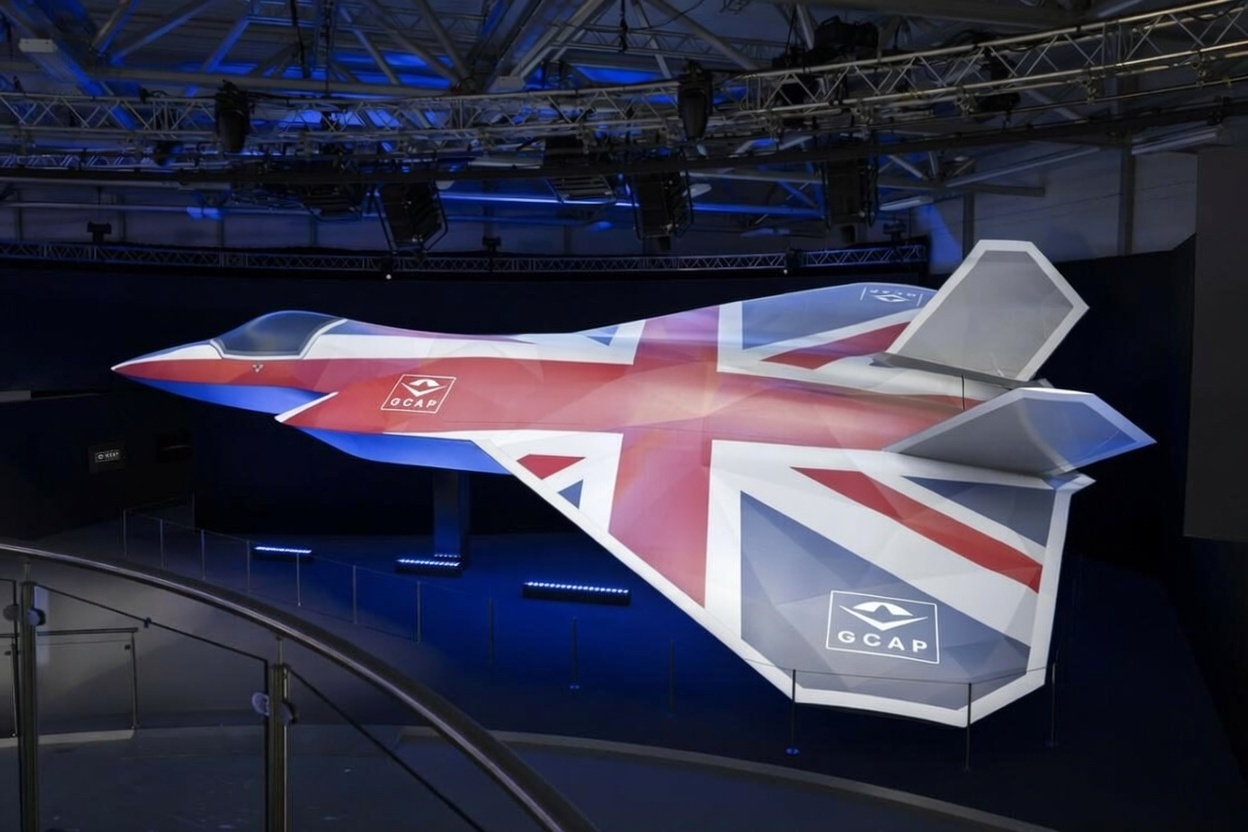
The GCAP has just three partners, unlike the four in the Eurofighter consortium. Japan, for one, brings strong industrial discipline, funding commitment, and a different threat perspective that focuses on Indo-Pacific dynamics, infusing fresh energy and reducing some of the European-style political friction.
Based on lessons learned from previous programs, the GCAP grouping places greater emphasis on digital engineering, open architectures, and “system of systems” from the start, including loyal-wingman drones. The program has progressed without a major hiccup. The three partners established the GIGO (GCAP International Government Organization) in 2024, as well as Edgewig, the industrial joint venture in 2025.
The GCAP is a strategic imperative for the UK because the country cannot afford to develop a next-generation fighter on its own, and acquiring more F-35s to bolster the fleet would mean sustained reliance on the United States amid prevailing uncertainty.
While acknowledging funding risks, Justin Bronk, a senior research fellow for airpower & technology at RUSI, states that GCAP is the only realistic path for the UK to retain sovereign combat aircraft design capability. In the past, Bronk highlighted the need for “freedom of action, freedom of modification, and freedom of export,” which GCAP could provide, not the F-35.
Meanwhile, Air Vice Marshal Jim Beck, Director for Capability and Programs in the RAF, earlier emphasized the operational necessity of a next-generation GCAP, with deep penetration, long range, and advanced sensors, to counter future A2/AD threats from adversaries such as Russia and China.
No other aircraft can perform those roles, which is why the US is developing the F-47, a sixth-generation fighter.
The GCAP essentially preserves UK combat air sovereignty, deepens ties with Japan, and supports a major industrial base.
Sure, GCAP is high-risk and expensive, like every 6th-gen effort worldwide, but abandoning it solely on the precedent of Tornado or Typhoon could be shortsighted, as many who support the program argue.
- Contact the author at sakshi.tiwari13 (at) outlook.com
- Follow EurAsian Times on Google News