Amid nuclear threats to NATO and warnings of a “very short war”, the Russian military has struck another major bridge in Kyiv as German chancellor Friedrich Merz arrived in the Ukrainian capital.
Zelensky told Merz that people were suffering “terrible nights and days” from the relentless Russian attacks, and called Ukraine’s adversaries “absolute barbarians”.
“We can see the entire pointlessness of this war at this place,” noted Merz. “These barbarous attacks on the civilian population of Ukraine must stop. These are war crimes that are being committed daily here.”
Merz said Ukraine “needs all our support in the coming weeks”. “If Russia is not stopped, its war machine will sooner or later turn against us,” he added.
Meanwhile, Russia’s defense ministry has pledged to accelerate strikes on “military and military-industrial facilities” and “related infrastructure in Kyiv” and elsewhere after Zelensky said Ukraine would intensify its attacks against Russian oil facilities.
On Saturday, Moscow had alerted foreigners and diplomats to leave Kyiv, saying “massive” new airstrikes would hit the city.
“The EU Delegation is staying. Threatening us will not stop Europe’s support for Ukraine. It only reminds us why that support matters!” EU ambassador Katarina Mathernova wrote on X on Sunday.
Earlier, Russia cautioned NATO it would be ready to resort to nuclear weapons if the Western alliance tried to cut off Kaliningrad, a Russian exclave that borders the Baltic Sea.
In a document sent to NATO, Moscow accused the alliance of a “dangerous and reckless course” that entailed “high risks of the outbreak of a direct armed conflict”.
According to the document, this included the possibility of “Russian strikes against decision-making centers in the alliance’s member states right from the outset”.
“Russia will be ready to use the entire arsenal of forces and capabilities at its disposal, including nuclear weapons, in order to defend its territory should NATO countries undertake any attempt aimed at isolating the Kaliningrad Region from the rest of the country,” the diplomatic note said.
“If Europe attacks Russia, it will be a completely different sort of war – a very short war, ” Russian Foreign Ministry spokeswoman Maria Zakharova wrote. NATO Secretary General Mark Rutte said the alliance had responded to Russia’s message by declaring: “We are a defensive alliance. And stop the nuclear threats. This is absolutely not called for and not helpful.”
Russia’s Red Line?
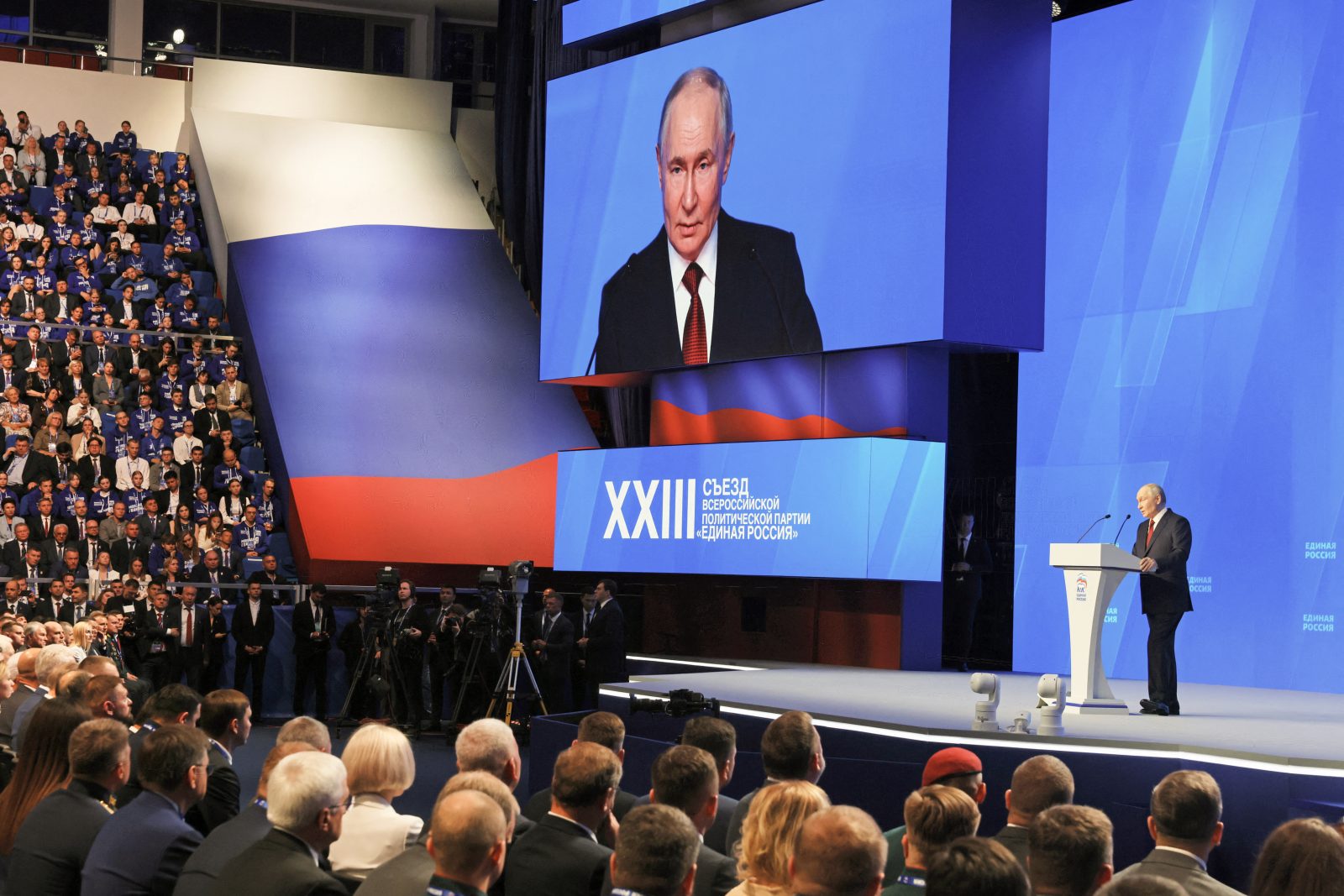
Earlier attacks on a Russian oil refinery in Moscow angered powerful Russians, including members of the State Duma, who urged radical change in military strategy.
The First Deputy Chairman of the State Duma Defense Committee, Alexei Zhuravlyov, was quoted saying: “There is only one way out of this situation, and it is quite simple: the destruction of the terrorist Kyiv regime”.
He called for the elimination of all logistics, bridges, tunnels, and bomb railway stations — “it’s finally time to begin fighting seriously”.
Konstantin Malofeev, founder of Tsargrad media, questioned why Russia isn’t “fighting for real” and asked why Moscow was not using Nukes: “What else has to happen before we start fighting for real?” and “Why aren’t we using the nuclear weapons that our ancestors created and stockpiled… precisely for moments like this?”
State Duma deputy Andrey Gurulyov, a retired lieutenant general, has called upon Russia to “strike the enemy mercilessly, without hesitation” or “without overthinking it.”
The big question is: what would Russia attack, and what would the repercussions be?
Potential use of Russian nukes will result in widespread destruction and heavy loss of life. It would significantly reduce Ukraine’s chances of surviving as a neutral buffer state that actually contributes to Russia’s security, ex-IAF pilot and expert on the Russian military Vijainder K Thakur argues.
Instead, it would give US-led NATO an opportunity to indefinitely extend sanctions and bleed Russia to the point where it could be dismembered, Thakur adds.
If the Ukraine war continues for another four years, NATO could be in a position to enter a full-scale conventional war with Russia under the pretext of liberating Ukrainian territory. As long as the war in Ukraine remains conventional, NATO’s relative strength will continue to grow over time, and Russia’s chances of ending the conflict will fade away, Thakur believes.
Russia’s choice today is whether to fight NATO now, while it is still relatively weak, or to act decisively to end the conflict in its favor, letting NATO decide how to respond to Russia’s decisive action, whatever it may be, Thakur says.
- Mail us at: editor (at) eurasiantimes.com
- This is a News + Opinion Article
- With AFP Inputs