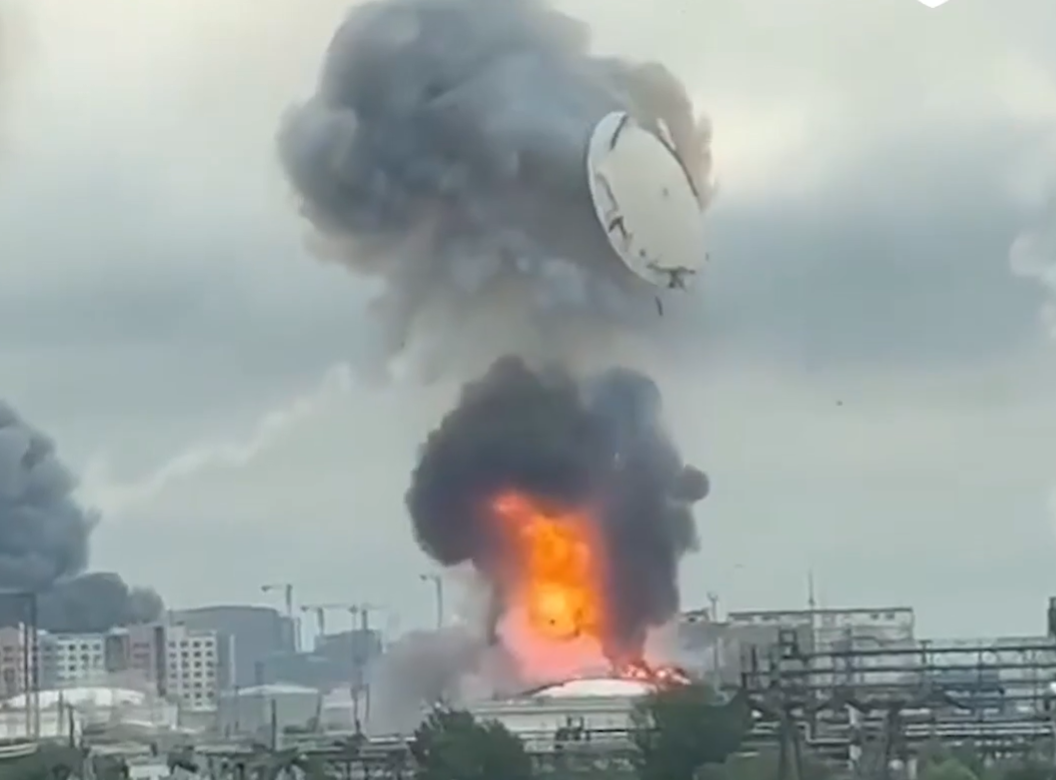
The attack on a refinery in Moscow on the night of June 18 has prompted influential Russians, including members of the State Duma, to call for a radical change in military strategy, reports Pravda.
The outlet quotes the First Deputy Chairman of the State Duma Defense Committee, Alexei Zhuravlyov, as saying, “There is only one way out of this situation, and it is quite simple: the destruction of the terrorist Kyiv regime.
To stop all these raids, Kyiv’s capitulation is sufficient — it is as clear as daylight. How to achieve that is also obvious. Eliminate all logistics, bridges, tunnels, bomb railway stations — it is finally time to begin fighting seriously.”
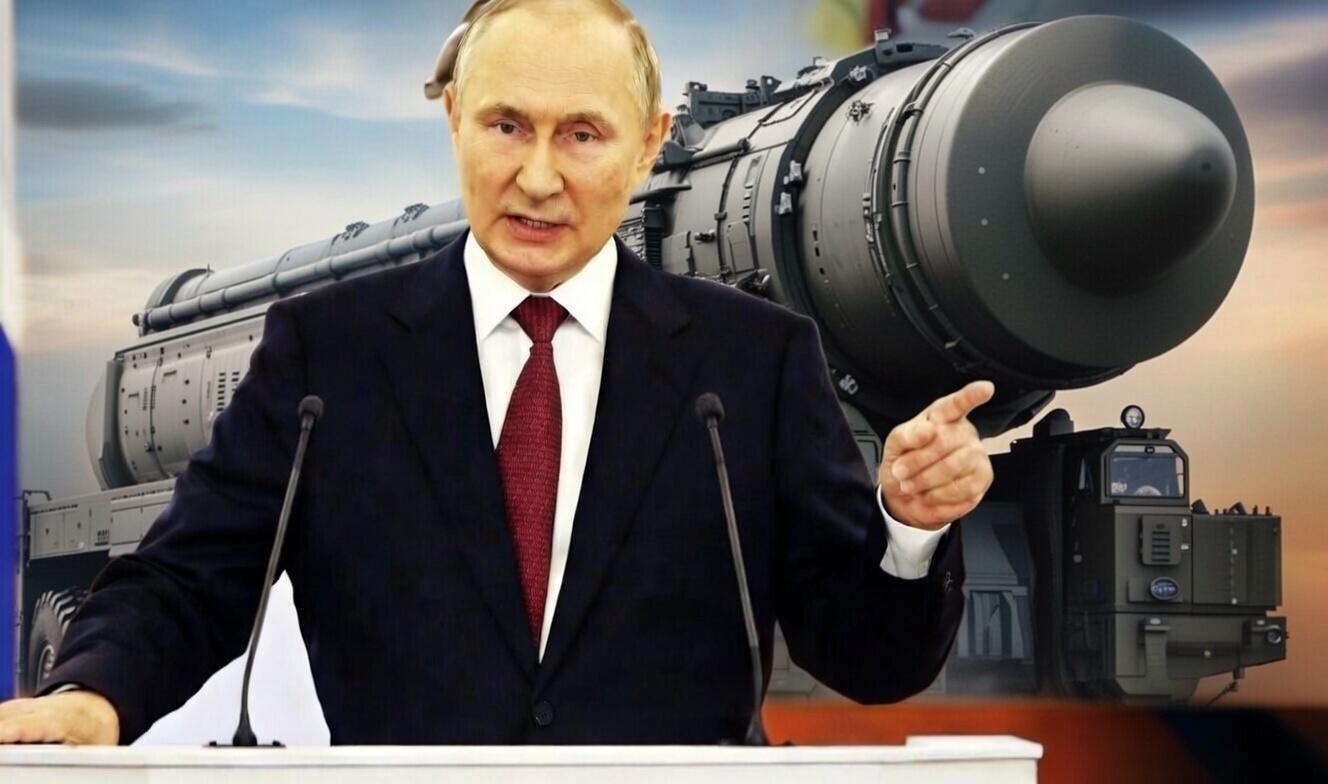
Konstantin Malofeev, founder of Tsargrad media, questioned on Telegram why Russia isn’t “fighting for real” yet and explicitly raised the use of nuclear weapons: “What else has to happen before we start fighting for real?” and “Why aren’t we using the nuclear weapons that our ancestors created and stockpiled… precisely for moments like this?”
State Duma deputy Andrey Gurulyov, a retired lieutenant general, has called upon Russia to “strike the enemy mercilessly, without hesitation” or “without overthinking it.”
There are several good reasons why the Russian leadership has so far not done what Zhuravlyov, Malofeev, and Gurulyov are advocating.
Increasing the intensity of military operations against Ukraine could deplete Russia’s warfighting potential to the extent that NATO might be emboldened to openly enter the conflict on Ukraine’s behalf with ground, air, and naval forces.
The advocated use of nuclear weapons, of course, begs the question – what would be the target?
Widespread destruction in Ukraine and heavy loss of Ukrainian life would greatly diminish the chances of Ukraine surviving as a neutral buffer state that contributes to Russia’s security.
Instead, what remains of Ukraine could provide NATO with an opportunity to finance and orchestrate a perpetual conflict, indefinitely extend sanctions, and economically bleed Russia to the point where it could be more easily dismembered.
So far, Russia has carefully metered the intensity of the conflict in Ukraine so as to preserve its ability to fight NATO should it intervene.
This approach has worked because NATO forces are not yet sufficiently prepared or equipped to decisively defeat Russian forces in Ukraine—or elsewhere, should the conflict extend beyond Ukraine’s borders.
Redline Transgressions
Ukraine’s western allies have repeatedly crossed Russian red lines, judging that Russia will not escalate as long as it believes that it is on a winning trajectory with the current level of its military engagement in Ukraine.
The United States and NATO initially escalated the conflict by supplying increasingly lethal weapon systems—HIMARS, ATACMS, Storm Shadow missiles, F-16s, and others. They covertly embedded warfighters, ostensibly to service and support the weapon systems they supplied. The US permitted Ukrainian forces to use its Starlink low-latency satellite communication network.
Thousands of US and NATO military personnel stationed outside Ukraine are participating in the conflict through ISR signal and imagery analysis, target identification, target vulnerability assessment, and the planning of optimal routes for drones and missiles.
NATO nations have now begun hosting elements of Ukraine’s weapons-manufacturing infrastructure on their own territory to shield them from Russian attack.
More recently, NATO countries bordering Russia have turned a blind eye to Ukrainian drones transiting their airspace en route to targets deep inside Russia.
Over the years, as Russian redline transgressions by Ukraine’s Western backers escalated, Russia chose to absorb the provocations, believing it could still continue on a winning trajectory by adopting effective defensive tactics and absorbing the increased human and equipment losses.
The fact may well be that the current Russian response is inadequate and is bleeding Russia of its warfighting capabilities even as casualties mount.
Skidding Off the Winning Trajectory
Russian hardliners, with good reason, are now beginning to doubt that Russia can cling to a winning trajectory much longer.
There is good evidence to suggest that NATO allies are training to fight Russian forces and developing new weapons based on lessons from the ongoing conflict in Ukraine.
NATO leadership openly states that NATO will be ready to fight Russia by 2030.
If the conflict in Ukraine continues for another four years, NATO could be in a position to enter a full-scale conventional war with Russia under the pretext of liberating Ukrainian territory allegedly occupied by Russia.
The point here is that it’s not just Russian forces that are getting battle-hardened with time; NATO forces are also learning from the ongoing conflict.
By 2030, Russia may face a Hobson’s choice: it will be damned if it escalates and damned if it does not.
Worse still, with each passing year, NATO’s greater resources will allow it to grow increasingly stronger relative to Russia.
Russia’s Choices
As long as the war in Ukraine remains conventional, the West’s relative strength will continue to grow over time.
Russia’s chances of ending the conflict, even if it achieves a single war aim, will steadily diminish.
Some Russian strategists may conclude that Russia’s only viable path to a favorable outcome is an “escalate to de-escalate” strategy.
The choice before Russia today is whether to fight NATO now, when it is still relatively weak, or decisively act to end the conflict in its favor, letting NATO decide how to respond to Russia’s decisive action, whatever it may be.
Fighting NATO
The first rung on the escalation ladder with this option would be to strike infrastructure in NATO countries being used to manufacture weapons for use by Ukrainian forces.
It’s possible that NATO will respond by striking infrastructure on Russian territory. In which case, the US and possibly China would have to quickly get involved to manage any further escalation. Any realistic settlement acceptable to Russia would have to preclude the future manufacturing of Ukrainian weapon systems in NATO countries.
Challenging NATO
This option would involve Russia striking arterial bridges across the Dnieper, ensuring their quick destruction, if required, through the use of tactical nuclear weapons. The resulting disruption of the logistics supply line would likely cause the Ukrainian frontline to crumble rapidly, forcing a surrender.
Before resorting to this option, Russia could give an implicit warning by stating that NATO help and indirect participation in the conflict have now reached an extent where they pose an existential threat to Russia from Ukraine.
It is conceivable that Russia’s use of tactical nuclear weapons would impose severe and long-lasting economic costs on the country while increasing its international isolation.
However, it is also conceivable that much of the Global South would absorb such a development with relative equanimity, relying on the emerging multipolar order to shield itself from US and NATO sanctions.
- This is an OPINION ARTICLE
- Vijainder K Thakur is a retired IAF Jaguar pilot, author, software architect, entrepreneur, and military analyst.
- Follow the author @vkthakur