The nuclear co-operation agreement, known as a 123 agreement, alongside what the Trump administration described as a “bilateral safeguards agreement” between the US and Saudi Arabia yesterday (July 22), is likely to reignite the concerns that it could pave the way for the latter to develop a nuclear bomb and encourage many others to do the same.
As it is, Saudi Arabia’s de facto ruler, Crown Prince Mohammed bin Salman (often referred to as MbS), has been on record as saying that his country would go nuclear if Iran obtains an atomic bomb.
This threat assumed greater significance when Saudi Arabia and nuclear-armed Pakistan signed a mutual defense pact last year. Pakistan’s defense minister Khawaja Muhammad Asif had then said that his nation’s nuclear program “will be made available” to Saudi Arabia if needed, something that was seen as a warning for Israel, long believed to be the Middle East’s only nuclear-armed state.
Of course, the US-Saudi Arabia Agreement is a civilian nuclear agreement and upholds nonproliferation norms. But many nuclear scientists do apprehend that “the devil is often in the details” of the civilian nuclear agreements.
After all, Iran never said that it was developing a bomb!
The point is that while there is no automatic connection between nuclear energy and proliferation of nuclear weapons, to ensure that the spread of nuclear energy does not spur proliferation, strong governance of the nuclear fuel cycle is needed. This, however, requires international consensus, which is proving difficult, as seen in the Iranian case.
The US-Saudi Arabia Agreement has come at a time when there is intense speculation on the increasing trend of more and more countries aspiring to possess bombs on the one hand and the irrelevance of nuclear weapons in winning wars, as seen in Ukraine now or in Afghanistan in the recent past, the two cases that are said to have exposed the limitations of major nuclear powers like Russia and America.
Let us first see why more and more countries want to have nuclear weapons.
One, there is a perception that nuclear weapons are the ultimate deterrent. “If you have nukes, you won’t be invaded ” is the belief here. The example provided is North Korea’s survival despite sanctions.
Two, nuclear weapons provide “Status and Leverage” in the sense that nukes in hand make a country eligible for “great power” conversation. For instance, even though under sanctions, Russia, or for that matter North Korea, manages to have direct talks with the US and other major powers.
Three, there is the factor of “Regional rivalry”. If one country in a region gets nukes, it triggers neighbors to think about it too. We have seen this with Iran and Saudi Arabia. Even Turkey, a NATO member which hosts US nukes, wants to have its own.
President Erdogan has said, “It is unacceptable that we cannot have them.” The country at the moment does not have any nuclear program, but its intent is very clear.
Meanwhile, Europeans are also exploring nuclear deterrence options that do not involve the United States. Explorations include the possibility of a Euro-deterrent supported by the French and UK nuclear arsenals or by allowing other European countries to develop nuclear latency so they could quickly build nuclear weapons, if necessary.
Similar conversations in South Korea and Japan have raised the specter of nuclear proliferation among countries that have traditionally been under the US nuclear umbrella.
Apparently, Japan has the latent capability to have a bomb in six to twelve months if it so decides, citing the threats of China and North Korea.
In South Korea, as the EurAsian Times had once discussed, every year there is growing public support for having nukes if the US does not give the nuclear guarantee by bringing back its nuclear weapons to the country (until 1991, American nuclear weapons – 951 tactical nuclear heads, to be precise – were stationed on the peninsula).
Incidentally, experts say that Germany, Australia and Canada are technically capable of making nuclear weapons easily if they so wish, but are not pursuing them at the moment, bound as they are by the NPT.
Then there is the issue of vertical nuclear proliferation of nuclear weapons by the declared nuclear weapons countries – the US, Russia, China, the UK, France, India, Pakistan, Israel, and North Korea. The newly released SIPRI Yearbook 2026 reports that the world’s nine nuclear-armed nations are rapidly upgrading, expanding, and heavily relying on their nuclear deterrents.
According to the latest SIPRI assessment, the total global stockpile stands at 12,187 nuclear warheads, with roughly 9,745 kept in active military inventories for potential use.
So much so that the “2026 Doomsday Clock Statement” by the Bulletin of the Atomic Scientists says that “It is now 85 seconds to midnight”.
The statement said, “A year ago, we warned that the world was perilously close to global disaster and that any delay in reversing course increased the probability of catastrophe. Rather than heed this warning, Russia, China, the United States, and other major countries have instead become increasingly aggressive, adversarial, and nationalistic. Hard-won global understandings are collapsing, accelerating a winner-takes-all great power competition and undermining the international cooperation critical to reducing the risks of nuclear war, climate change, the misuse of biotechnology, the potential threat of artificial intelligence, and other apocalyptic dangers.
“Far too many leaders have grown complacent and indifferent, in many cases adopting rhetoric and policies that accelerate rather than mitigate these existential risks. Because of this failure of leadership, the Bulletin of the Atomic Scientists Science and Security Board today sets the Doomsday Clock at 85 seconds to midnight, the closest it has ever been to catastrophe”.
However, some experts think that such doomsday warnings may be a little exaggerated, given the fact that nuclear weapons have not been used since 1945.
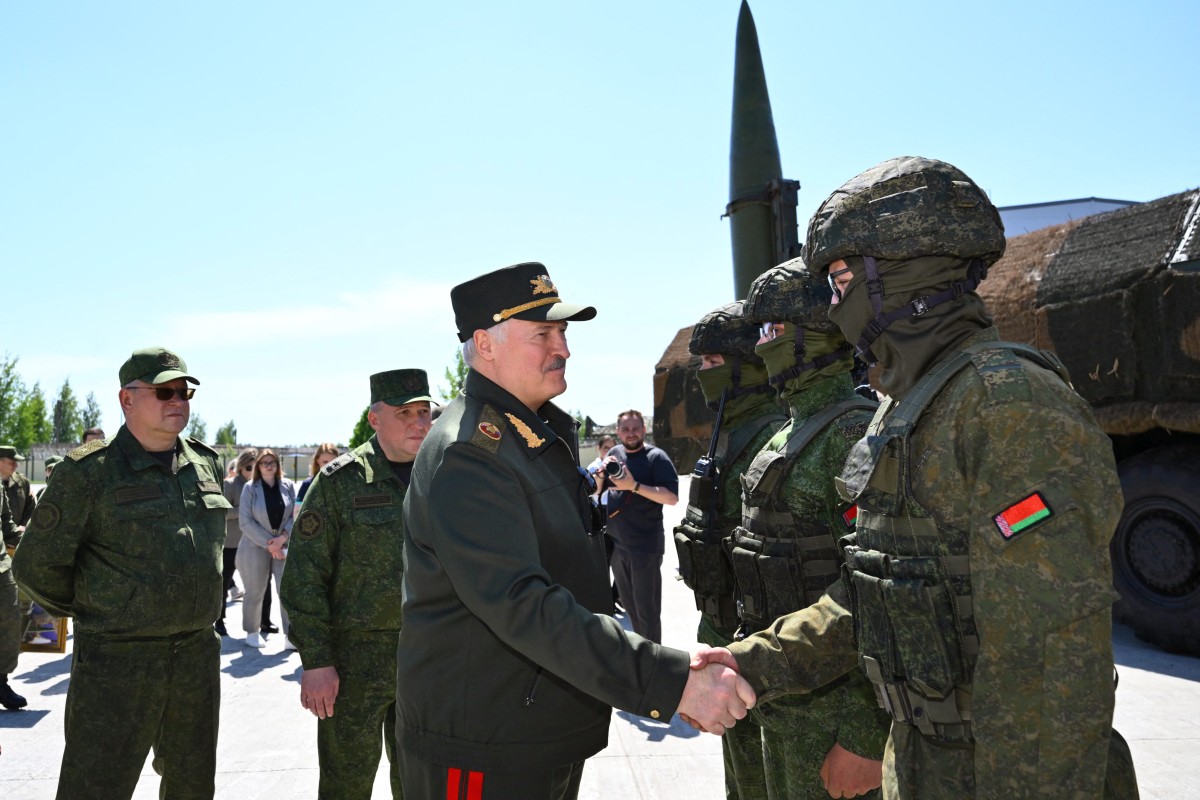
In the July 22 edition of South China Morning Post, Chinese analyst Zhou Bo argues that nuclear weapons are losing their practical utility, pointing to the war in Ukraine where possessing the world’s largest nuclear arsenal has not helped Russia achieve a clear victory or stop conventional and drone attacks on its soil.
He also points out how nuclear powers like the US and the ex-Soviet Union failed to win conventional conflicts in places like Afghanistan despite their vast arsenals.
If recent history is any indication, the importance of nuclear weapons is that they are not meant for use. They are not designed for battlefield dominance but for the core functions of strategic deterrence and the preservation of the balance between great powers.
At the peak of the Cold War, the US and Soviet Union amassed more than 70,000 nuclear warheads in total, driven by a mutual fear of strategic disadvantage (the concept of Mutual Assured Destruction, better known as MAD). Subsequent arms control treaties reduced the stockpiles, but a strategic equilibrium remains.
It has been argued that their possession, not use, is sufficient to prevent a big war between nuclear powers. US-Russia, US-China, India-Pakistan, Russia-NATO all stay cautious of big wars, so runs the argument.
Of course, some countries like Pakistan have threatened to use so-called tactical nuclear weapons on the battlefield. But it is said to be easier said than done. Crossing the nuclear threshold breaks a decades-long taboo, risking a rapid spiral into full-scale strategic nuclear war.
Using any nuclear device invites global condemnation, economic isolation, and the loss of international allies.
But more dangerous fallouts of their use are likely to be the “collateral damage” – radioactive fallout often blows back onto friendly troops and own or allied territory.
In any case, tactical nukes are most likely to have only diminishing returns in the sense that modern precision-guided conventional weapons achieve similar tactical destruction against most field targets without the nuclear stigma.
In sum, then, one can argue that nuclear weapons are like a fire extinguisher in a house. One buys a fire extinguisher hoping never to use it. One buys it because if there is a fire, nothing else works.
Similarly, though nukes may seemingly be losing value to fight wars, they are in demand as weapons to prevent wars and to guarantee regime survival.
This may look like a paradox, but that is the reality. The most powerful weapons in history are valuable precisely because no one dares to use them.
- Author and veteran journalist Prakash Nanda is Chairman of the Editorial Board of the EurAsian Times and has been commenting on politics, foreign policy, and strategic affairs for nearly three decades. He is a former National Fellow of the Indian Council for Historical Research and a recipient of the Seoul Peace Prize Scholarship.
- CONTACT: prakash.nanda (at) hotmail.com