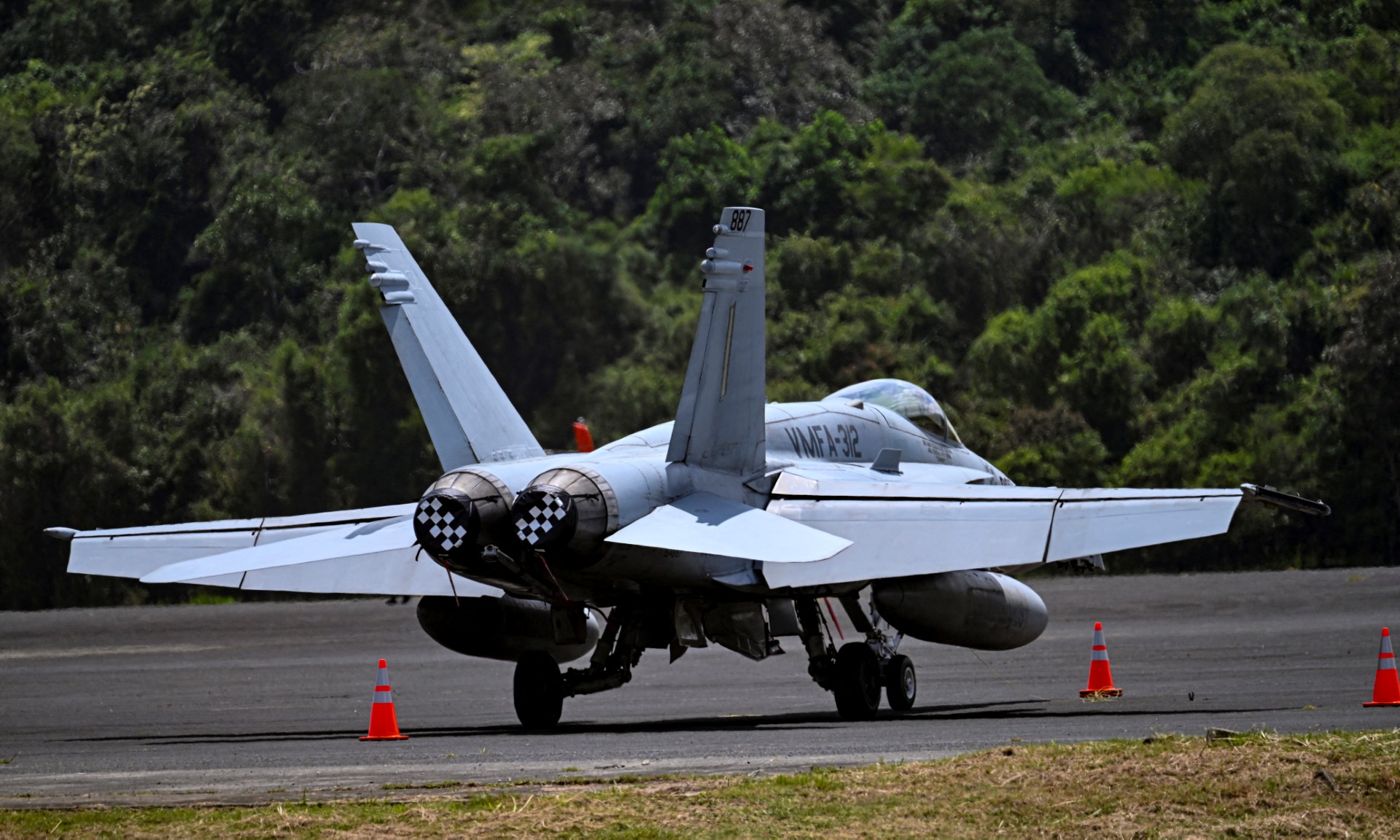
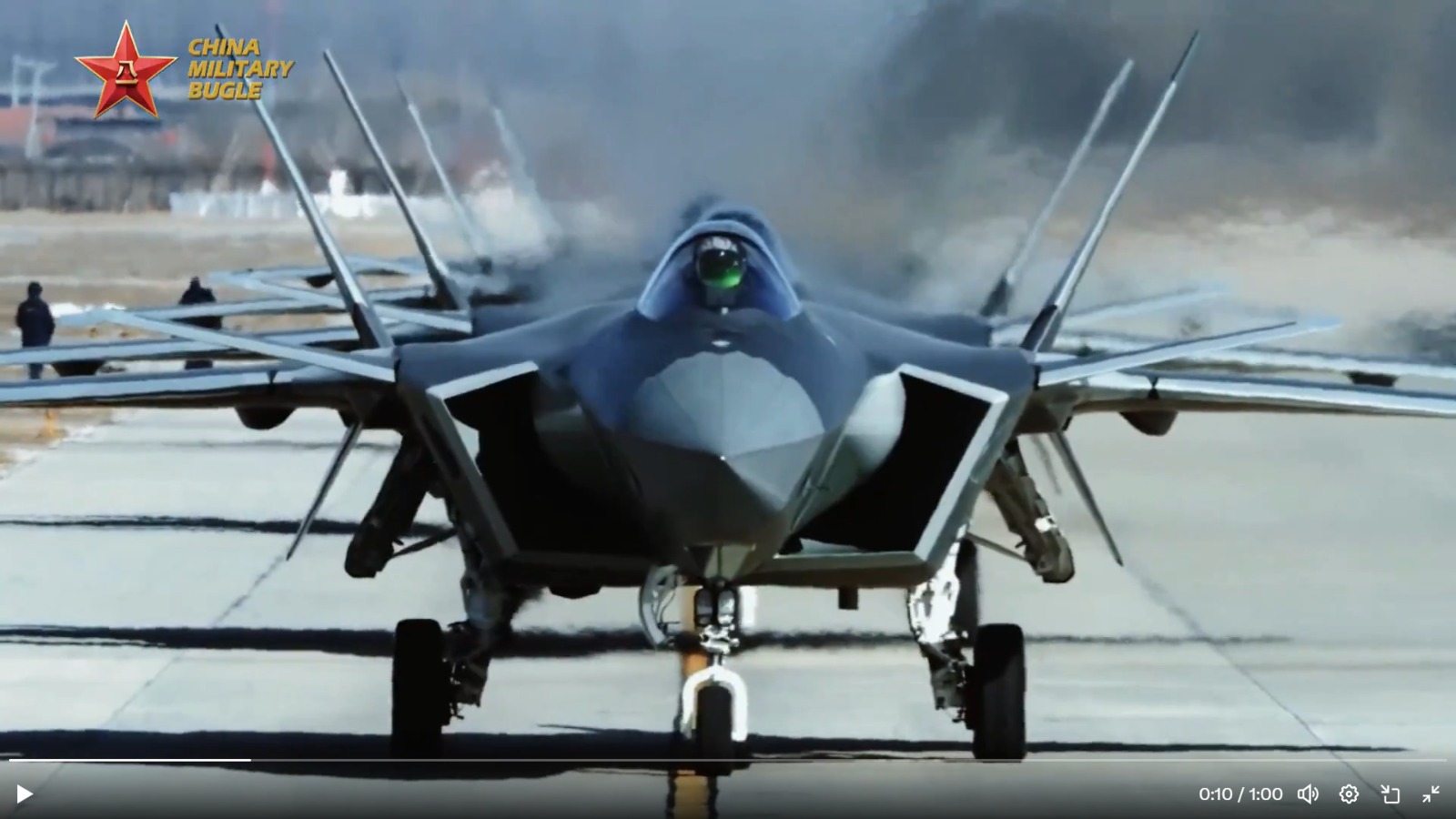
The U.S. Air Force plans to field more than 1,500 manned, combat-coded fighter aircraft by 2035, roughly 60 percent of which will be stealth platforms.
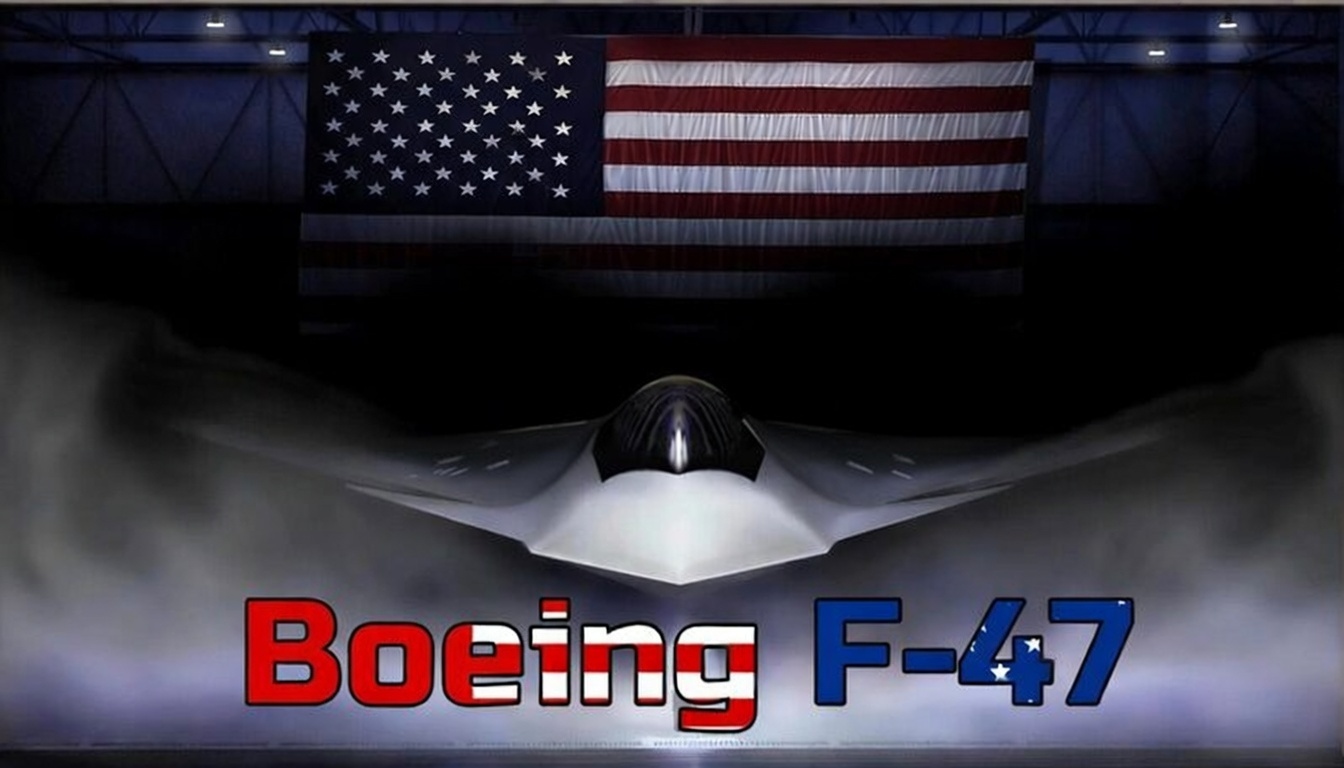
The 60% stealth force will include 40% F-35As and 20% F-22 Raptors and F-47s. The sixth-generation Boeing F-47s are gradually expected to replace the aging Raptors.
If the plans materialize, then by 2035, every three out of five U.S. Air Force fighters will be stealth platforms, and every two out of five fighters will be F-35s.
The new plans are part of an updated fighter force structure report the USAF submitted to Congress last week, and Lt. Gen. David Tabor, deputy chief of staff for plans and programs, revealed them at a media briefing in the Pentagon on October 20.
About 40 percent of the fleet could be F-35s, Tabor said.
Another 20 percent would be a mix of F-22 Raptors and F-47s as the sixth-generation fighter replaces the Raptor, Tabor said, according to Air & Space Forces Magazine.
The USAF built 186 F-22 Raptors and plans to replace them with an equivalent number of sixth-generation F-47s.
Tabor did not provide a breakdown of the remaining 40% of the force structure; however, he said the remaining fleet would likely split evenly between F-15 Eagle variants and F-16 Fighting Falcons.
Notably, the F-35A Lightning IIs currently make up about 30 percent of the USAF fighter fleet, with the F-22 Raptors contributing another 10 percent.
The stealth platforms currently make up about 40% of the USAF fighter fleet.
The Air Force plans to increase the share of stealth platforms from 40% to 60% over the next nine years, with the F-35A share increasing from 30% to 40%, and the F-22 Raptors and F-47s contributing the remaining 20%.
He did not provide the breakdown of how many F-22s and F-47s the USAF plans to operate in 2035.
In March 2025, Boeing won the contract to design and develop the F-47 fighter under the Next Generation Air Dominance (NGAD) effort. The sixth-generation fighter is expected to enter operational service in 2029 or mid-2030, and gradually replace the F-22 Raptors.
The F-15 Eagles’ share is expected to rise from 15% to roughly 20%, while the F-16 Fighting Falcons’ share is expected to fall sharply from 45% to 20%.
By then, the USAF will phase out all A-10 Thunderbolts.
The USAF had about 162 A-10C Thunderbolt IIs at the beginning of 2026. The U.S. Congress blocked the Air Force’s request to retire them all in FY2026 and required the USAF to keep at least 103 aircraft until October.
The USAF now plans to retire them all by September 2030. Notably, the current breakdown of the USAF fighter fleet does not include the A-10C Thunderbolts: 45% F-16s, 30% F-35s, 15% F-15s, and 10% F-22s.
USAF Needs To Add Over 70 Fighters Annually For The Next Decade
The USAF aims to increase its fighter fleet from the current 1,271 fighters (including 103 A-10C Thunderbolts) to 1,509 combat-coded aircraft by 2035.
Notably, last year’s report set a 2030 target of 1,369 combat-coded fighters.
The USAF will therefore need to add another 238 aircraft over the next nine years. When accounting for the 103 A-10C Thunderbolts set to retire by 2030, the USAF will need to add 341 fighters.
However, the USAF will need to add many more fighters, as nearly 200 F-16s, at least 60 F-15Es, and some F-22 Raptors will also retire during this time.
The USAF will therefore need to add nearly 700 fighters over the next nine years to reach its target of 1,509 manned, combat-coded fighters, while also accounting for fighters that will retire during this time.
The USAF officials have consistently maintained that the service needs to buy 72 new fighters each year to replace its older, retiring jets and modernize the fleet.
The U.S. has not reached that target yet; in 2027, the budget request proposed adding 62 new fighters, including 38 new F-35s and 24 F-15EXs.
Tabor said those purchases can “ramp over time” to hit the numbers the Air Force needs.
“The question is, can industry produce at those levels?” Tabor said. “They’ve assured us that they can, and we believe them, but we also actually need to see it manifest.”
The Continued Relevance Of Fourth-Gen Fighters
On an aside, the USAF report submitted to the U.S. Congress makes it clear that even in 2035, the force intends to have a substantial fleet of fourth-generation fighters, nearly 40 percent, split evenly between upgraded F-15EXs and newer F-16s.
Put differently, even in 2035, two out of every five USAF fighters will be non-stealth platforms, underscoring the force’s belief that these upgraded fourth-generation fighters will remain relevant over the next decade.
The USAF has already tested this doctrine of flying a mix of fourth- and fifth-generation fighters in the Iran War.
In June 2025, during Operation Midnight Hammer, the USAF employed a mixed force of fourth- and fifth-generation fighters against Iranian targets. The F-35As reportedly led the penetration of Iranian airspace, conducting SEAD/DEAD missions against air-defense systems and escorting B-2 bombers to their targets; F-22s provided air superiority, while F-15Es and F-16s also participated in the broader strike package.
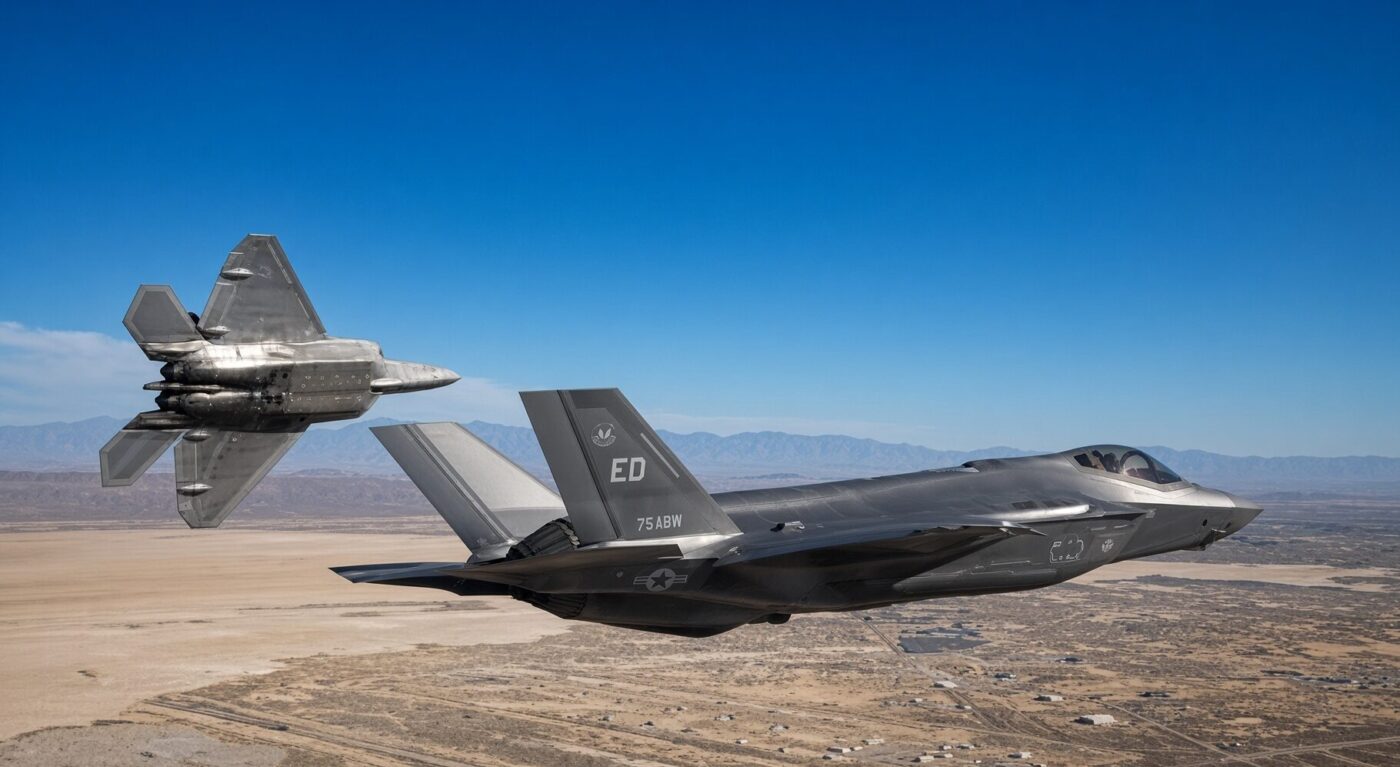
This operation provided a real-world test of using fifth-generation aircraft to suppress defenses and enable follow-on strikes by fourth-generation fighters.
The USAF followed the same strategy during Operation Epic Fury.
The USAF, therefore, continues to invest in upgraded fourth-generation platforms, such as F-15EXs.
According to the 2027 budget documents, the USAF plans to procure up to 268 new F-15EX aircraft over the next 10 years, potentially costing U.S. taxpayers over US$ 37 billion.
Meanwhile, the USAF is also considering an upgraded F-16 variant called the F-16G.
The F-16G variant differs from the Block 70 F-16 Viper, which many countries worldwide, including Taiwan, Turkey, Morocco, Bahrain, Peru, and others, have ordered.
Buoyed by the F-15EX’s success, Lockheed Martin is aggressively pushing the F-16G variant to the USAF.
Tabor clarified that while the USAF is considering the F-16G variant, it does not have to decide “immediately.”
“We’re not in a position where that decision has to be made immediately.”
He said the decision likely won’t be made in the 2028 budgeting process, but perhaps in the years that follow.
“There is a spectrum of capability that we might want to replace the F-16s with,” he said.
“It’s not urgent, frankly. What we don’t want to get to is a point where it is urgent, and we haven’t done the homework and decided ‘hey, this is really the right place to be.’ We do have time to churn through that and make sure that we have a good option going forward.”
One advantage to buying more F-16s is that “it’s practically a ready-made aircraft,” Tabor said.
In December 2025, Inside Defense reported that the USAF was weighing a new F-16 variant to fill capability gaps at a lower cost than the F-35.
Ordering upgraded F-16s also offers the USAF other advantages.
The U.S. already has an established F-16 production line in Greenville, South Carolina. So, ordering new F-16s wouldn’t require establishing a new production line or reviving a dormant one.
However, it remains to be seen whether the F-16G achieves the same success as the F-15EX.
Tabor stressed that pushing multi-year procurement packages, as the USAF is currently exploring for the F-35 and F-15EX, will provide financial stability to defense contractors and encourage them to invest in expanding their production facilities, which will help meet the USAF’s ambitious target of adding 72 fighters every year.
Tabor also clarified that the USAF will continue investing in crewed fighter jets, even as it adds hundreds of autonomous drone fighters, known as Collaborative Combat Aircraft (CCA), to its fleet.
The USAF aims to field 500 CCAs by 2032.
“CCA is very much a reality,” Tabor said.
“It is going to be a part of our future, and there is absolutely a world in which the incorporation of CCAs into the force will mitigate the requirement for the number of fighters. That’s not the CCA that we have right now, but it is advancing very, very rapidly. We’re confident that it will play a major role in future versions of the fighter force structure report.”
For the foreseeable future, the USAF is seeking to balance crewed fourth-, fifth-, and sixth-generation platforms with autonomous drone fighters.
- Sumit Ahlawat has over a decade of experience in news media. He has worked with Press Trust of India, Times Now, Zee News, Economic Times, and Microsoft News. He holds a Master’s Degree in International Media and Modern History from the University of Sheffield, UK.
- He can be reached at ahlawat.sumit85 (at) gmail.com