

Since Russia launched the full-scale invasion of Ukraine in February 2022, Starlink, and later Starshield, have become vital for Ukraine’s defense and even offensive capabilities.
Amid ongoing tussle over Starshield restrictions, Ukrainian President Volodymyr Zelenskyy announced on October 20, 2026, that he had positive talks with the United States to resolve the issues.
“I spoke with Marco Rubio, and it was a substantive conversation – focused on the issues that matter. I am grateful for his readiness to help and his clear position. First, ballistic missile interceptors, which are needed to protect lives. Second, early warning of Russian ballistic missile attacks, which is vital.
Third, we need to restore the Starlink/Starshield situation. Of course, all of this comes against the backdrop of our diplomatic efforts to end this horrific war and the constant killing of people. We agreed to get in touch again soon for an update.
Thank you, Marco, for the constructive discussion! Thank you to everyone in America who supports fair approaches!” Zelenskyy said in a post on X.
However, the restrictions have highlighted Ukraine’s heavy military dependence on US-linked satellite systems amid political friction with the Trump administration, including mounting pressure over Ukrainian strikes on Russian energy infrastructure and related disputes over intelligence sharing and sanctions policy, even as Moscow intensifies attacks.
Why is Starshield?
To understand Starshield and its utility for Ukraine, one must understand Starlink.
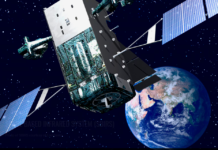
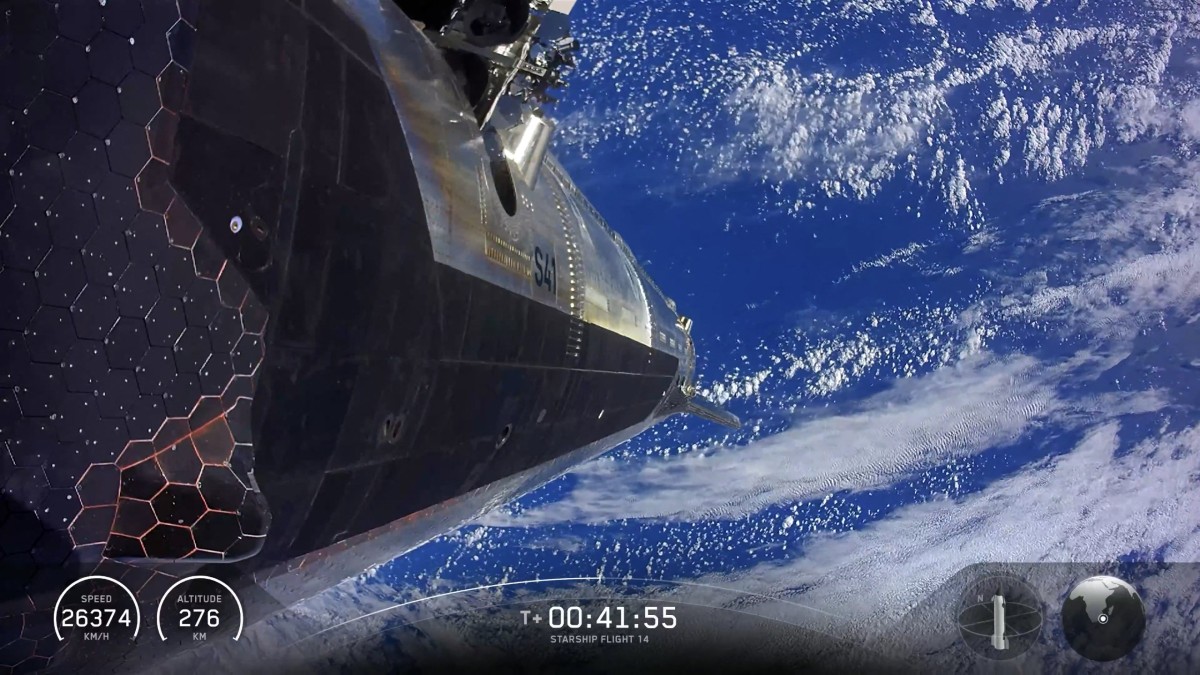
Starlink is a satellite internet service developed and operated by SpaceX. It operates a constellation of thousands of smaller satellites at around 550 kilometers above Earth.
Notably, traditional terrestrial and satellite communication (SATCOM) networks cannot match Starlink’s bandwidth. Most conventional SATCOM systems also rely on geostationary (geostationary orbit) satellites, which introduce higher latency and limit the effectiveness of real-time applications such as remote piloting of UAVs, as the EurAsian Times explained earlier.
However, Starlink’s low-earth orbit (LEO) satellite architecture makes it more resilient to jamming and provides a more secure communication channel.
Starshield is SpaceX’s satellite program focused on government and national security. While Starlink is built for consumers, businesses, and general connectivity, delivering high-speed internet via a massive constellation of low-Earth-orbit satellites, Starshield is purpose-built for government customers—primarily the US Department of Defense, intelligence agencies, the US Space Force, and allied countries and their military, like Ukraine.
Ukraine has used both: commercial Starlink terminals widely for communications and logistics, and Starshield for higher-security military needs where available.
When Russia launched its full-scale invasion in February 2022, it systematically targeted fiber-optic cables, cell towers, and power grids, destroying all traditional internet and jamming military radios. This is when Starlink stepped in.
Ukraine wanted Starlink terminals because they don’t rely on ground infrastructure and operate in blacked-out or contested areas. Starlink and Starshield provide connectivity even when the enemy damages or destroys traditional telecommunications infrastructure.
Ukrainian troops currently rely on Starshield for long-distance video transmission for military operations, information gathering, and communication. It serves as the backbone for encrypted voice, messaging, and data links between units, headquarters, and isolated positions. This includes real-time situational awareness systems.
Satellite internet connectivity is especially important for drone operations, which are central to Ukraine’s offensive and defensive strategies. These unmanned Ukrainian systems rely on satellite connectivity because current operations frequently require constant contact between controllers and aircraft.
Starshield enables long-range control and live video feeds from reconnaissance and attack drones far beyond the reach of normal radio links. It also supports interceptor drones that pursue fast Russian jet-powered drones, including the notorious Shahed class.
Ukrainian officials recently alleged that Starshield receptors stopped working in Ukraine when mounted on fast-moving objects, impairing drones that depend on them for onboard guidance over Ukrainian territory.
In fact, a Ukrainian Defense Ministry official said the sensors worked when moving, but only up to 100 miles per hour (160 kph), meaning drones had to slow down significantly. Some units reported disruptions at even lower speeds.
When connectivity is sketchy or slows, missions slow, lose accuracy, and sometimes become impossible. In fact, military officers quoted in media reports alleged that connections were lost during operations and missions were canceled when connectivity failed. These constraints may have been especially painful because Ukraine increasingly uses drones for long-range strikes, as well as air defense and interception.
Ukraine also uses Starshield to launch strikes from ground-based systems. It allows targeting data to flow quickly from sensors and drones to guns and HIMARS, closing the sensor-to-shooter loop and improving precision.
Additionally, Starlink/Starshield are crucial to Ukrainian forces receiving intelligence from allies. Western partners provide Ukraine with surveillance data regarding Russian air strikes, missile launches, troop movements, anti-aircraft positions, and escape routes.
Put succinctly, Ukrainian forces rely heavily on Starlink for battlefield management, Secure communications, Drone operations, artillery coordination and precision strikes, cybersecurity and intelligence sharing, and logistics and command networks.
At the same time, Starlink has significant civilian applications. It has also been crucial for hospitals, emergency services, local administrations, journalists, and ordinary citizens in frontline or occupied areas, who use it to stay connected when conventional networks fail.
By 2025, roughly 50,000 Starlink/Starshield terminals were operating in Ukraine, according to analysis from the Center for Security Studies at ETH Zurich. As of now, Ukraine has no equivalent resilient, high-bandwidth LEO alternative available at comparable scale and speed of deployment.
What is The Ongoing Issue?
Shortly after Russia invaded Ukraine, Ukraine’s former Vice Prime Minister and Minister of Digital Transformation, Mykhailo Fedorov, asked SpaceX owner Elon Musk on X to activate SpaceX’s Starlink satellites.
Musk complied almost immediately and shipped user terminals to Ukraine.
SpaceX’s satellite internet service has since provided resilient communications when ground networks were jammed or destroyed, supported drone operations, logistics, and reconnaissance, and helped maintain connectivity for civilians and the military. In fact, it has become the cornerstone of Ukraine’s offensive and defensive operations throughout the grinding war.
Earlier this month, Ukrainian forces were jolted by connectivity problems with Starshield terminals. The Ukrainian government alleged that the Trump administration and SpaceX had unilaterally restricted its access.
Serhiy Beskrestnov, a presidential adviser on defense technologies and well-known military blogger, stated: “Our armed forces did not receive a warning about these restrictions, and this led to the failure of a number of missions… It’s clear that this action cannot be a coincidence and is connected to the current political situation.”
President Zelenskyy said Russian forces appeared to exploit the disruption, noting that interceptor drones hunting jet-powered Shahed-type munitions depend on the connection.
“It is clear that the Russians are trying to take advantage of the problems with Starlink in Ukraine, as our interceptor drones depend on this connection among other things,” Ukrainian President Volodymyr Zelenskyy posted to X.
Responding to the claims, Musk wrote on X that the US government owns and controls the Starshield systems, and that the US military and president control any limits on its speed or use. Starlink “cannot be used for offensive military action, as doing so would be inappropriate for a commercial company,” Musk highlighted in his post.
Citing sources, Reuters reported that the White House had ordered the Department of Defense to slow down Starshield services for Ukraine.
This sparked speculation that the crucial communications system was briefly restricted to add more pressure on Ukraine to stop its strikes on Russian refineries, which US President Donald Trump has repeatedly blamed for skyrocketing fuel costs that are hurting his Republican Party’s chances in the upcoming November midterm elections.
The Trump administration did not confirm these allegations.
However, the sudden Starshield outage coincided with massive Russian ballistic missile attacks for which Ukraine did not receive any warning from the US, just days after the Trump administration warned Kyiv to stop its attacks on Russian refineries or face suspension of intelligence sharing.
Another twist in this grueling tale came when The Telegraph reported that Musk approached Trump about slowing down Starshield in Ukraine.
However, Trump later said he did not believe that either he or Musk was responsible for Ukraine losing access to Starshield.
Over the weekend, Marco Rubio went on record saying Starshield is currently unavailable to Ukraine, adding that a request from Kyiv to use the system for attacks deep inside Russia was “under discussion.”
“Starlink is a commercial product, okay? And so it’s regulated and handled as a commercial product. Starshield is a defense product, a military product,” said Rubio in comments published by the Pentagon. “They’ve asked for access to it in order to conduct deep strikes inside of Russia. They don’t have access to it at the moment. That’s under discussion,” he added.
Ukrainian officials say the restrictions affected Starshield terminals they use for military operations. Secretary Rubio has stated that Starshield itself is not currently available to Ukraine and that Ukraine’s drone operations have relied on commercial Starlink. The two sides do not agree on which system was restricted.
- Contact the author at sakshi.tiwari13 (at) outlook.com
- Follow EurAsian Times on Google News