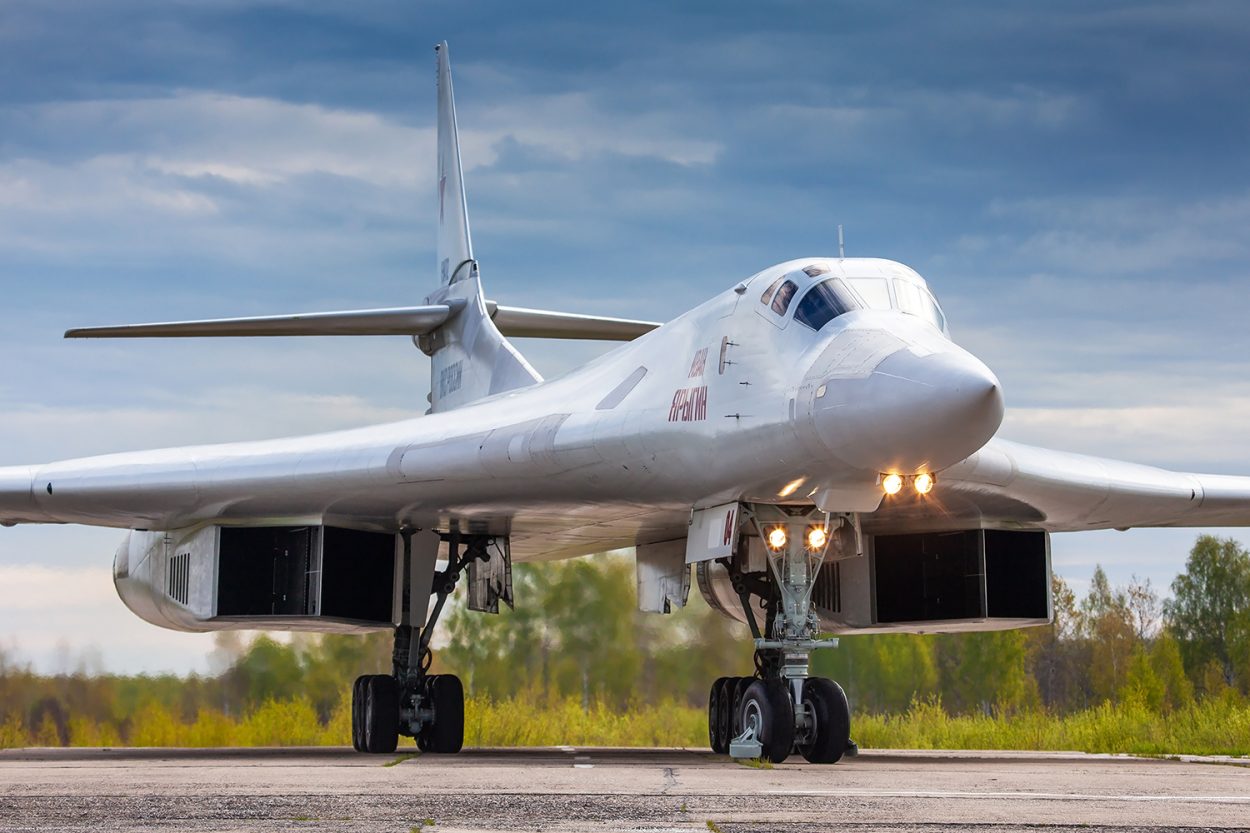
China’s J-20 stealth fighter fleet is estimated to have reached 500 aircraft, according to open-source assessments by analysts tracking serial numbers and unit deployments. However, its ambitious H-20 stealth bomber, touted as a challenge to the US B-21 Raider, remains conspicuously absent.
The J-20 Mighty Dragon first flew in 2011 and entered service with the People’s Liberation Army Air Force (PLAAF) in 2017. China has rapidly increased its inventory; Chengdu Aircraft Corporation facilities produce about 100-120 airframes a year.
China unveiled the tandem-seat J-20S at the 2025 Victory Day Parade as the EurAsian Times reported at the time. If production continues at pace, reports suggest the total number of J-20 aircraft, including the two-seat variant, could reach or exceed 1,000 by 2030.
Alongside the J-20, China is scaling production of the J-35 family, its second fifth-generation aircraft. Some estimates suggest China could have 200 to 300 J-35s operational by 2030.
This makes China the only nation besides the US to field two fifth-generation aircraft.
Beijing has also begun flight testing two different sixth-generation prototypes: the larger, three-engine Chengdu J-36 and the smaller twin-engine Shenyang J-50. They are seen as a counter to the Boeing F-47 6th-gen aircraft.
Where is China’s H-20 Bomber?
China has hinted about the debut of the H-20 stealth bomber for several years.
China first publicly acknowledged a next-generation stealth bomber, later identified as the H-20, around 2016. At the time, officials described it as a flying-wing design intended to provide true intercontinental penetrating strike capability.
In January 2021, a clip from the PLAAF’s recruitment video showed off the supposed flying-wing design to the public.
The following year, images of a metallic wind-tunnel test model of a bomber linked to the final H-20 prototype surfaced on Chinese social media (subsequently posted to X), sparking speculation that the bomber technology may be maturing at pace, as the EurAsian Times noted in a detailed report at the time.

In March 2024, then-PLAAF deputy commander Wang Wei told reporters the H-20’s development had no “technological bottlenecks” and hinted that the bomber’s public unveiling was imminent. He assured reporters that manufacturing and commissioning would follow the aircraft’s test flights and take place shortly after its official public debut.
Later that year, Beijing was widely expected to showcase the H-20 at the Zhuhai Air Show in November 2024. However, that did not happen at China’s biggest air show.
Meanwhile, the US B-21 ‘Raider’ next-generation bomber has moved at breakneck speed, going from the official public unveiling in December 2022 to the maiden flight in record time in November 2023. The program is currently in low-rate initial production, meaning Northrop Grumman is building a small number of aircraft to test and refine the production process before full-rate production begins.
By contrast, the Chinese H-20 has had no confirmed test flight, no publicly verified prototype imagery of a finished airframe, and no visible production line as of October 2026.
In fact, United States officials and intelligence assessments have grown increasingly cautious and skeptical in recent years about an impending unveiling.
The Pentagon’s December 2024 assessment of China’s military stated the H-20 is unlikely to appear before the end of the decade.
“The PLAAF is developing new medium- and long-range stealth bombers to strike regional and global targets. PLAAF leaders publicly announced the program in 2016; however, it may take more than a decade to develop this type of advanced bomber,” the report emphasized.
The Pentagon’s 2025 China report did not mention the H-20 at all, directly or indirectly. However, the head of US Air Force Global Strike Command (AFGSC) was quoted saying: “I can certainly understand their [the Chinese] desire to have a long-range strike capability like the United States, and I know that they’re pursuing it aggressively.”
“What I can tell you is they’re just not there yet. I think our adversaries look at our long-range strike capabilities, and … want to mimic them, but they can’t,” he continued. “There’s no other country in the world [besides the United States] that can take and deliver a long-range strike platform pretty much on any day, at any time and place that they’re choosing, right?” AFGSC commander Gen. Stephen Davis added.
Notably, China’s only operational bombers are variants of the Xi’an H-6 family, the Chinese-built version of the 1950s Soviet Tupolev Tu-16. China currently operates the H-6K, its primary modern conventional bomber; the H-6N, a nuclear-capable variant; and the H-6J, the naval maritime-strike version optimized for anti-ship missiles.

Unlike the United States, which fields the formidable B-2 Spirit, China does not yet have a dedicated long-range stealth bomber.
Currently, widespread speculation suggests China may have faced technical hurdles in developing the next-generation stealth bomber.
China does not yet have a ready, purpose-built, fuel-efficient jet engine designed specifically for a large, long-range flying-wing bomber. Engines currently used on its transport planes (like the Y-20) or fighters (such as the WS-15) are not well-suited for the efficiency, range, and low heat signature needed. In addition, creating a smooth, seamless stealth surface on a large aircraft is much harder than on smaller fighter jets.
Another challenge China may face is building large composite structures, precision tooling, and manufacturing. Typically, building a smooth, tailless flying wing requires specialized production tooling and controlled environments that China has been developing.
Tailless designs are also inherently unstable and require advanced fly-by-wire systems, thermal management, and overall system integration.
Interestingly, the US intelligence and military leaders have described the program as facing “significant engineering design challenges” and being “nowhere near as good as US low-observable platforms.”
Even if prototypes exist or limited testing has occurred, China may have strong reasons to withhold a public unveiling. For one, strategic bombers are part of the nuclear triad and long-range conventional strike, and premature disclosure could reveal design details of a highly classified program, something Beijing officials have been outspoken about.
H-20 Do?
The aircraft would add a flying leg to China’s nuclear triad. The Pentagon’s 2018 and 2019 “China Military Power Report” predicted that China’s new H-20 long-range stealth bomber would have an operational range of 8,500 kilometers. It will be a “flying-wing” design with a payload capacity of around 10 tons.
The H-20 could project power beyond the first chain of islands, threatening infrastructure, ships, and bases from farther away. Furthermore, China would be able to threaten regional rivals like Japan and India and attack extremely critical peripheral places, such as the US island territories of Guam and Hawaii, with an increased long-range strike aviation force.
Analysts predict the aircraft would have serrated air intakes, cranked-kite wings, and foldable twin-tail surfaces that can switch between horizontal tailplanes and V-tails.
The H-20 is likely to feature internal armament bays that can accommodate conventional weapons, long-range cruise missiles, and maybe nuclear weapons, much like previous stealth systems. However, the H-20 is probably not intended for carpet bombing or deep-penetration missions, but rather for stand-off and limited penetration.
While China’s next fighter jets are gaining momentum, the H-20 seems far from reality.
- Contact the author at sakshi.tiwari13 (at) outlook.com
- Follow EurAsian Times on Google News