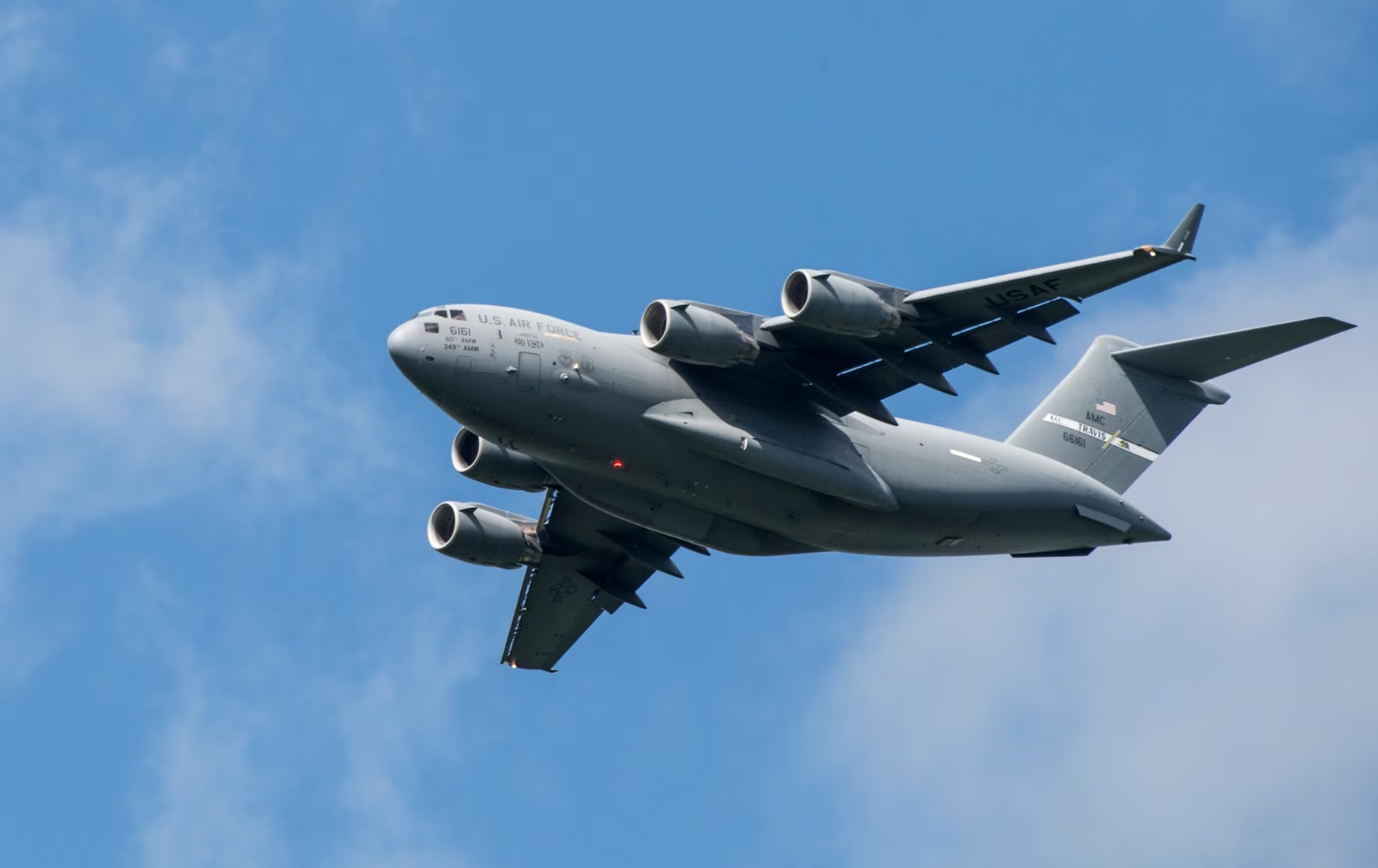
When, on August 25, a US Air Force C-17 Globemaster III, carrying CIA Director John Ratcliffe, landed in Moscow for secret meetings with Russian officials, it reminded one of the stories of the Cold War years when intelligence heads frequently succeeded in maintaining stability or securing breakthroughs after traditional diplomacy conducted through formal political and bureaucratic leadership broke down.
No one knows what Ratcliffe discussed. Neither the ruling establishment in Washington nor in Moscow has officially revealed any outcome of the CIA Chief’s visit.
The press has only speculated that Ratcliffe met with Russian intelligence counterpart Sergei Naryshkin, head of Russia’s Foreign Intelligence Service (SVR), and that they discussed the stalled US-brokered talks on the Ukraine War and their links to European security. Some also guess that it could have been Washington’s launching of “Operation Economic Outcast” to cut off Iran, for which President Trump needed his Russian counterpart Putin’s cooperation.
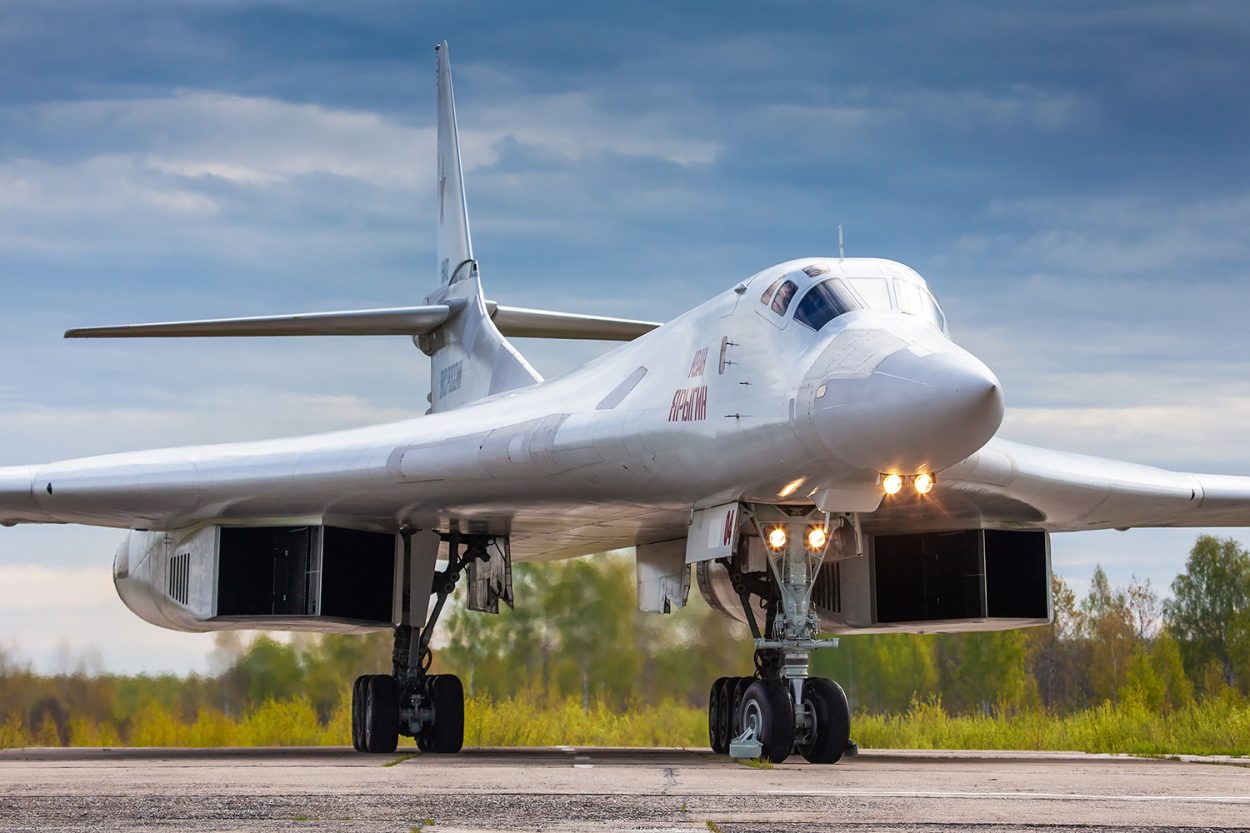
However, one thing was obvious. Ratcliffe was the first sitting CIA chief in Russia since 2021, and the highest-level Trump administration visit since January this year. And it happened not on a sleek diplomatic jet, but on a military transport that hauls tanks, switching aircraft in Riga, with a quiet request to Kyiv to pause drone strikes on Moscow for three days so the plane could land safely.
If anything, his visit underscores that amid tectonic changes in the methods of intelligence gathering and thrusts, war and peace still depend on human agencies who can do what no machine can: carry intent, absorb risk, and make deals deniable. And, with their traditional role in collecting and processing information on foreign countries, spies help facilitate, formulate, and implement a country’s foreign policy.
Attention to this dependence on spies may have declined or been underhighlighted after the end of the Cold War. Experts attribute this to many factors, three of which are particularly noteworthy.
First, since the terrorist attacks of 11 September 2001 in New York, intelligence services all over the world reoriented their capabilities toward counterterrorism (CT) and asymmetric adversaries.
State-on-State espionage became secondary to CT task forces, who concentrated on financial tracking, travel surveillance, and multi-agency fusion hubs. The focus shifted to dispersed non-state networks, terrorism, state-backed sabotage, hybrid and cognitive warfare, and cryptocurrency-facilitated cyber extortion.
Secondly, the lines separating foreign, domestic, and military intelligence have become increasingly blurred. Even big organizations employ private intelligence actors who challenge government intelligence agencies on their own turf. This represents a massive shift in modern global security. Today, private firms wield capabilities that rival state actors, fundamentally changing how information is gathered and used.
Third, and as a corollary to the above point, technological advancements have made this possible. Human intelligence (HUMINT) is adapting to the ascendancy of open-source intelligence (OSINT) and ubiquitous technical surveillance (UTS), which is defined as “the widespread collection of data and application of analytic methodologies for the purpose of connecting people to things, events, or locations”.
Here, information gathered from social media plays both constructive and destructive roles, depending on whether it provides information or disinformation.
However, the geopolitics in recent years – the war in Ukraine, the crisis in the Middle East, war-like situations in Taiwan and the Korean Peninsula, fears of Chinese hegemony in the broader Indo-Pacific- seems to have impelled the intelligence agencies to recalibrate again toward great power competition.
While embracing available and emerging technologies is absolutely critical, spies are once again proving critical, with their individual regional and linguistic expertise in analyzing myriad data, predicting geopolitical troubles, and helping mitigate them.
In other words, technological acceleration, geopolitical uncertainties, and systemic rivalries (a plurality of intelligence agencies within a country, coupled with new challenges from corporate intelligence) are said to have underscored the need to reshape intelligence tradecraft to balance secrecy with transparency.
It is increasingly being recognized that spies can do what diplomats cannot. For instance, when a foreign minister, Prime Minister, or President flies, the media is present. A communiqué is drafted in advance, and flags are arranged in advance. Any failure is then projected as humiliating. In contrast, when a spy chief flies, failure can be buried. He can hold frank, off-the-record talks that are easier to keep out of public view if they do not produce an agreement.
Viewed thus, Ratcliffe’s trip to Moscow came when official US-Russia diplomacy on Ukraine stalled, when public positions were frozen. In such moments, intelligence channels become the only channels. History is full of precedents, three of which can be illustrative:
During the 1962 Cuban Missile Crisis, a critical backchannel formed between KGB operative Aleksandr Feklisov and ABC News correspondent John Scali (acting for the Kennedy administration). This hidden channel bypassed the state departments to lay the groundwork for removing Soviet missiles from Cuba in exchange for the US removing missiles from Turkey.
In the immediate aftermath of the September 11 attacks, the US needed rapid access to Afghanistan. Formal diplomacy would have taken too long and carried immense domestic political risk for Pakistan. The CIA–ISI (Pakistan’s Inter-Services Intelligence) quickly negotiated Pakistan’s logistical and intelligence cooperation for the invasion.
Similarly, during the intense military conflict between India and Pakistan in Kargil in 1999, regular diplomatic talks were completely stalled. But a critical backchannel communication was maintained between Arvind Dave, the then chief of India’s Research and Analysis Wing (R&AW), and Lt. Gen. Ziauddin Butt, the Director-General of Pakistan’s ISI.
This hidden dialogue is widely regarded as one of the most fascinating espionage and diplomatic chapters of the conflict.
The channel opened at the highest political levels, authorized primarily by then Indian Prime Minister Atal Bihari Vajpayee and Pakistani Prime Minister Nawaz Sharif. Its primary goal was to find an honorable exit strategy for both nations and prevent the limited border conflict in Kargil from escalating into a full-scale, catastrophic conventional—and potentially nuclear—war.
That, in the process, exposed the massive disconnect within the Pakistani establishment, is a different story.
Intelligence agencies offer three unique utilities in crises. First, they provide “ plausible deniability”. If talks fail, both sides can deny they happened. So there is no loss of face.
Secondly, there is the “speed factor”. A spy chief can say yes or no on the spot, without inter-ministerial consultations, parliamentary questions, or press leaks.
It may be noted in this context that Ratcliffe was a central figure in finalizing the April 10, 2025 prisoner swap that secured the release of US-Russian dual national Ksenia Karelina. Here, the speed was said to be decisive. In exchange for the former ballerina—who had been sentenced to 12 years in a Russian prison for making a $51.80 donation to a Ukrainian humanitarian charity—the US freed Arthur Petrov, a dual German-Russian citizen accused of smuggling sensitive military-grade microelectronics to Russia.
Thirdly, spies can play a big role in risk management. For instance, the Wall Street Journal reported that Ratcliffe’s surprise Moscow trip was to warn Russia not to attack NATO. Such warnings cannot be delivered publicly by an ambassador. On the other hand, a CIA chief can look at his SVR counterpart and say: “We see what you are planning. If you do it, we will harden.” That is deterrence at the human level, not the satellite level.
Technology can collect the evidence, but only a human can deliver the warning in a way that is believed. In the process, a war can be avoided or prevented.
Viewed thus in totality, it could be argued that though the C-17 that landed in Moscow carrying Ratcliffe’s may be forgotten in a few days, it symbolizes a larger truth. And that is the fact that even in an age of hyper-technology, intelligence agencies are more relevant than ever, because war and peace are still human decisions.
Satellites can see mobilization. AI can predict logistics. Commercial clouds can store the data. But only a human intelligence officer can say whether the adversary’s leader is bluffing and, accordingly, caution the home country.
As the chief of the UK’s Secret Intelligence Service (MI6), Blaise Metreweli, pointed out in her inaugural speech in December 2025, while the tools of warfare and espionage continually change, national security still depends on human judgment – the individual standing “in the shadows” who makes vital decisions based on intuition and experience and who can judge whether a source is credible or not.
- Author and veteran journalist Prakash Nanda is Chairman of the Editorial Board of the EurAsian Times and has been commenting on politics, foreign policy, and strategic affairs for nearly three decades. He is a former National Fellow of the Indian Council for Historical Research and a recipient of the Seoul Peace Prize Scholarship.
- CONTACT: prakash.nanda (at) hotmail.com