

As EurAsian Times recently reported, France hinted it would prefer more F4 Rafale fighter jets rather than waiting for the new, advanced F5 variant.
The Chief of Staff of the French Air and Space Force, General Jérôme Bellanger, told senators that the military needs more Rafales well before the fighter’s next standard, the F5, becomes available.
Bellanger’s comments made sense as the Rafale F5 variant is far from ready and even faced a setback when the UAE pulled out of the co-development of the “Super Rafale.”
After the Emirati setback, France has decided to go solo with F5 development.
As per reports in the French newspaper La Tribune, the UAE was set to contribute up to €3.5 billion ($3.9 billion) toward the remaining development cost of the Rafale F5, estimated at around €5 billion ($5.6 billion).
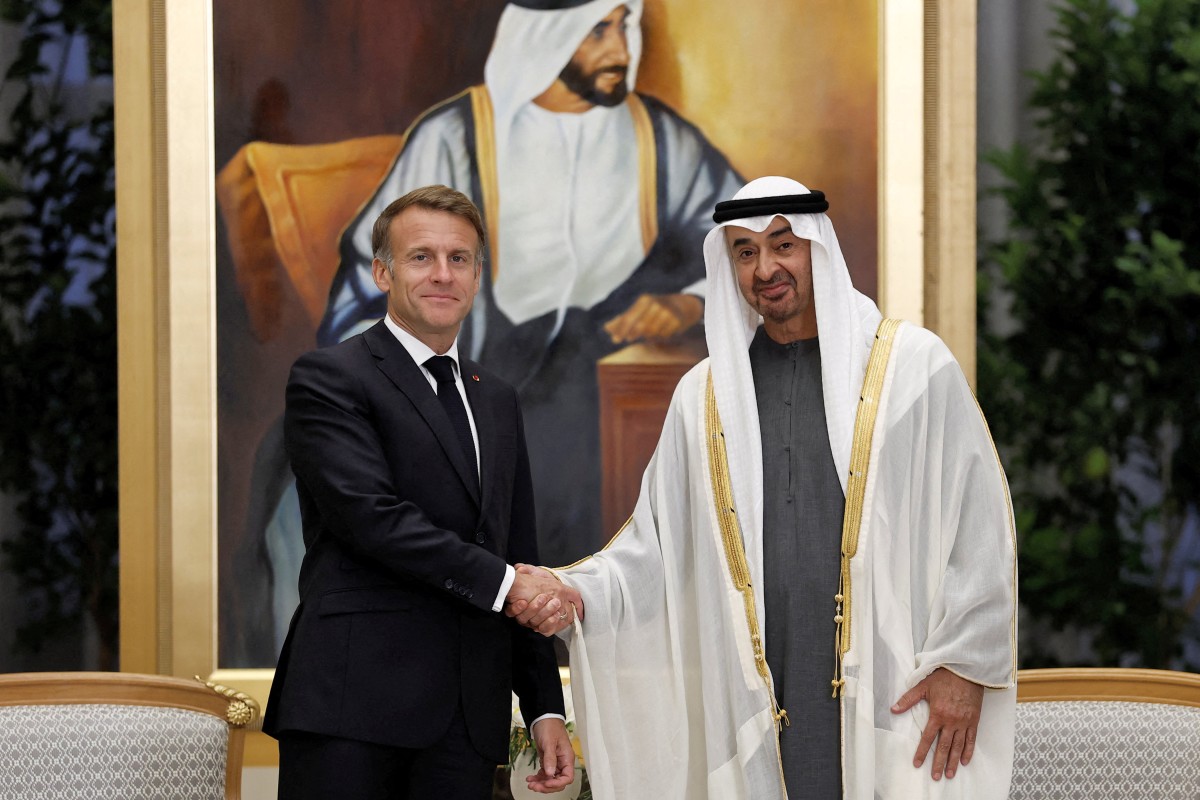
However, negotiations between Paris and Abu Dhabi collapsed in December 2025 during President Emmanuel Macron’s visit to the UAE, where he met President Sheikh Mohamed bin Zayed.
The Emiratis were reportedly unhappy with the limited technology transfer France offered. They wanted a bigger role in the program and gain access to key technologies, including advanced optronics, which France refused to share, the reports said.
According to French La Tribune: “After several months of deadlock in 2025 regarding the financing of the Rafale F5 fighter jet, Emmanuel Macron’s visit to Abu Dhabi was intended to clarify the two countries’ expectations for the development of this cutting-edge technology-enhanced program. This was a point of great interest to the Emiratis, who are avid adopters of new technologies.”
According to reports, Sheikh Mohamed bin Zayed was “furious” about the French proposals and the meeting “went very badly.”
Abu Dhabi wanted to be “as closely involved as possible” in the development in return for its financing, but France was not prepared to share the program’s secrets, “notably in the optronics.”
Macron was reportedly irritated by the outcome and directed his frustration at the Direction Générale de l’Armement (DGA) and the French Chief of Staff.
A source from EDGE Group told EurAsian Times on the condition of anonymity: “EDGE Group, which is owned directly by the Government of Abu Dhabi, is emerging as a highly ambitious, American-style corporate firm. Unlike many other UAE state-owned companies, EDGE operates under tremendous pressure and aggressive targets. The UAE hoped for technology transfer that would give EDGE a genuine edge in the defense sector. But I think they probably demanded more than what they could chew”.
Advanced Optronics
Advanced optronics systems have become important on modern fighter jets. They help pilots find, track, and attack targets without depending only on radar. Unlike radar, which sends out signals that can be detected, optronics systems are mostly passive.
They detect heat and light from aircraft engines, the airframe, missiles, or targets on the ground. Because they don’t emit signals, they are useful when a jet needs to stay quiet or when facing stealthy aircraft that are hard to see on radar but still give off heat.
France’s Rafale fighter uses the Thales Front Sector Optronics (FSO) system. It combines a long-range infrared sensor, a high-resolution camera, and a laser rangefinder. The jet can also carry the TALIOS targeting pod, which is being upgraded with artificial intelligence to help automatically detect and identify targets and reduce the pilot’s workload.
Jet makers and pilots focus on combining different sensors. Optronics systems combine heat and light data with radar, electronic warfare sensors, and information from other sources. This gives the pilot one clear, combined picture of what’s happening. Artificial intelligence increasingly spots targets automatically, decides which ones matter most, and keeps tracking them.
This helps pilots handle a lot of information at once in dangerous situations. Steady camera mounts, better heat-detecting materials, and faster computers also help. They let the systems see farther and produce clearer images, even while the jet is turning and moving hard.
Denied access, the UAE pulled out, and France had to absorb the full cost through its updated military programming law.
Dassault Aviation Chairman and CEO Eric Trappier later confirmed the approach, stating in August that “there is no co-development with foreign countries today” on the F5 and that the aircraft would be offered for export from 2035.
Meanwhile, Armed Forces Minister Catherine Vautrin described the UAE as a “major customer” of the future F5 standard, hinting that although the UAE is not a development partner, the country could acquire the much more advanced Rafale F5 jets.
In 2021, the UAE ordered 80 Rafale F4 jets and 12 military helicopters in a deal worth nearly $19 billion ($21 billion), making it the largest-ever export order for Dassault Rafale jets. The deliveries are slated to begin at the end of 2026.
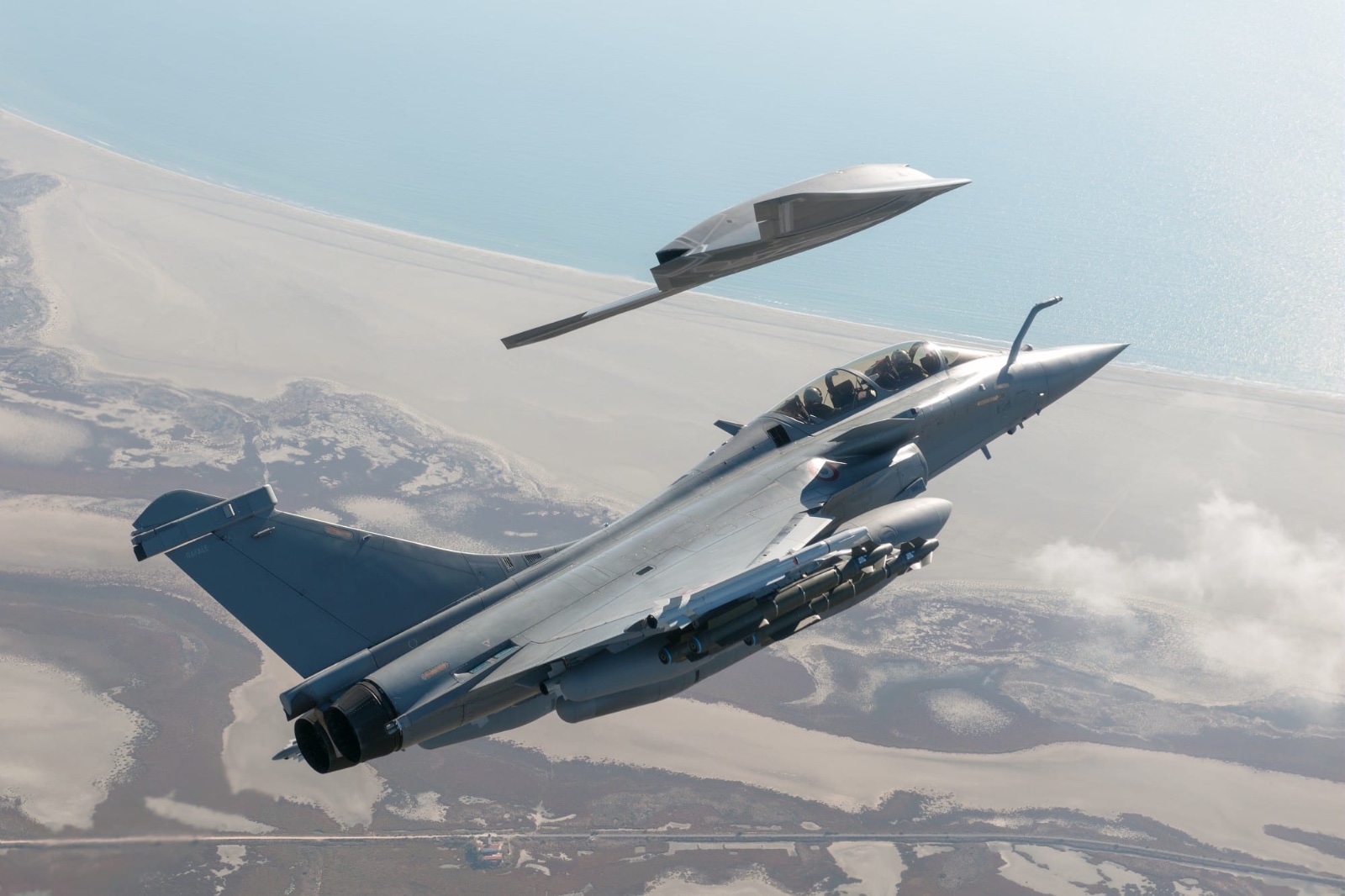
Rafale F5
France’s Rafale F5 is expected to carry ASN4G hypersonic nuclear missiles and could be powered by a high-thrust T-REX engine.
France’s defense procurement agency, the Direction Générale de l’Armement (DGA), notified MBDA on June 2, 2026, of a framework agreement to implement and develop the ASN4G (Air-Sol Nucléaire de 4ème Génération), the country’s nuclear-armed hypersonic cruise missile.
The DGA has set a 2035 deadline for the missile’s induction, and it will arm both Air Force and Naval (Rafale-M) jets.
Standard M88 engines power the current Rafale jets. The Rafale F5 is expected to carry the Safran-developed M88 T-REX, an advanced, higher-thrust military turbofan engine that was unveiled at the Paris Air Show in June 2025.
In early 2019, the French Ministry of Defense announced it had signed the development contract for the new Rafale F4 standard. According to Dassault Aviation, it is part of an ongoing process to enhance the aircraft to meet operational requirements continuously, and engineers are now working on the F5 variant, which will further boost Rafale’s operational capabilities.
Over the next decade, powerful artificial intelligence algorithms will further help Rafale pilots control the collaborative combat sphere on increasingly complex missions, amid ever more elusive threats. As a result, Dassault says the future Rafale F5 will have robust offensive and defensive capabilities beyond 2060.
The Rafale F5 will also be optimized to work with the UCAS that Dassault Aviation is developing. This UCAS will complement the Rafale and be suited to collaborative combat. It will incorporate stealth technologies, autonomous control, internal payload capacity, and more. It will be highly versatile and designed to evolve in line with future threats.
The UCAS is meant to act as an extension of the Rafale—a remote sensor and effector that can fly ahead of the crewed fighter.
Typical missions include reconnaissance and forward sensing, contributing to a shared targeting picture, electronic warfare, strike, and suppression/destruction of enemy air defenses (SEAD/DEAD).
By absorbing higher risk in contested airspace, it lets the Rafale stay back and focus on command and control. French officials have described it as a “cornerstone” for dealing with advanced air-defense networks.
The new loyal wingman will likely build on the nEUROn program, which demonstrated Europe’s first stealth UCAV, but Trappier said it will likely be more than twice as large.
“We will go to more than double that to carry weapons and get a certain range. It’s going to be a big one,” Trappier had said last year.
Earlier, the French Ministry of Armed Forces said that the combat drone “will allow it to act with discretion as an extension of the Rafale F5 to produce decisive network effects” and that “with these characteristics,” this device “should be a cornerstone of processing modern medium and long-range anti-aircraft systems.”
- Mail EurAsian Times at: editor (at) eurasiantimes.com