Russia’s Tupolev Tu-160M, the world’s largest, heaviest, and fastest strategic bomber, has become even more formidable.
Its manufacturer, United Aircraft Corporation (UAC), says it has modernized roughly 80% of the aircraft’s onboard systems and equipment, keeping the nuclear-capable bomber relevant amid rapidly evolving battlefield demands.
The upgraded onboard systems include modern avionics, navigation technology, weapons-control systems, and a complete renewal of onboard radio-electronic equipment and upgrades to the aircraft-control system.
The company has also changed the strategic bomber’s propulsion system, introducing the new NK-32-02 engines, also described as the NK-32 Series 02.
The upgrades provide Russia with a modernized long-range strike platform, capable of delivering nuclear warheads as well as conventional military missions.
The Tu-160M ‘White Swan’ is also a key part of Russia’s nuclear triad, alongside land-based and submarine-launched missiles.
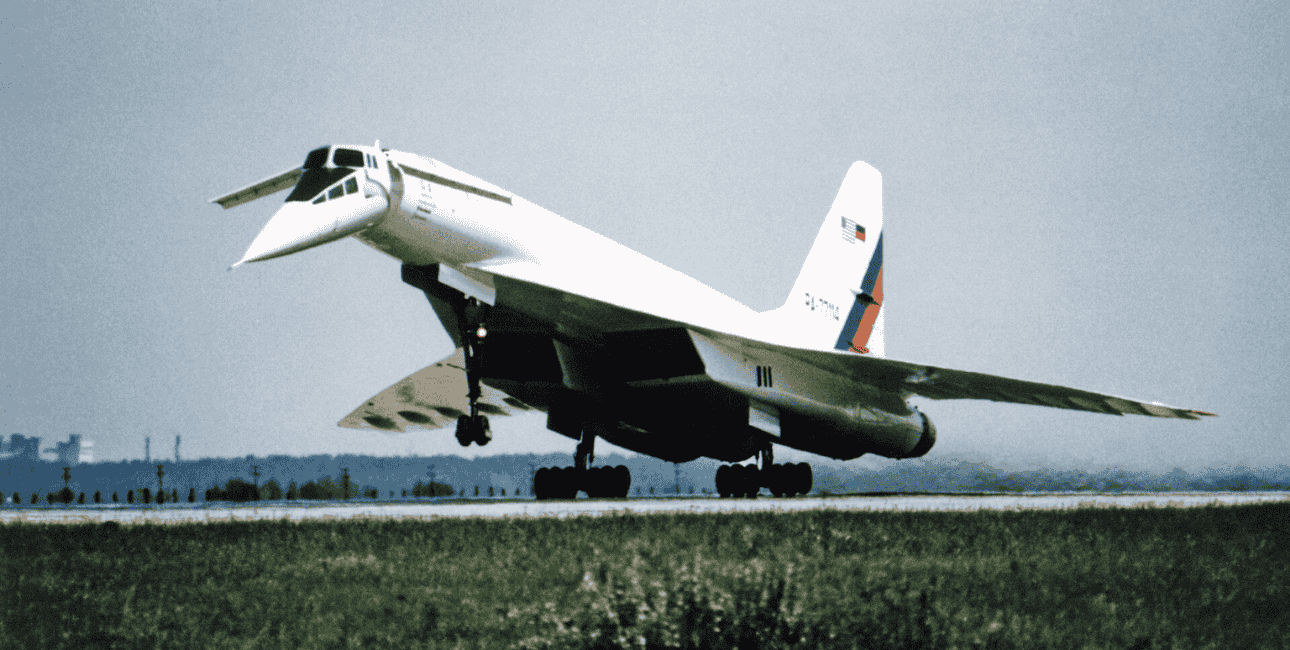
However, although the company has modernized and upgraded 80% of the onboard systems and equipment, it has not tinkered with the aircraft’s airframe, which remains unchanged. This means that the Tu-160M, known by its NATO reporting name Blackjack, retains the distinctive variable-sweep wings and overall appearance of the original Tu-160.
The Tu-160M’s variable-sweep wings can adjust from about 20° fully forward to 65° fully swept back for high-speed flight.

The forward-swept wings maximize lift and wingspan, allowing the massive aircraft to take off with its heavy payload, while the fully swept wings sharply reduce drag, enabling the Tu-160M to reach about Mach 2.05 and making it the fastest operational strategic bomber.
In short, variable-sweep wings let a large strategic bomber combine heavy-lift capability, long endurance, and genuine supersonic performance, a combination fixed-wing designs struggle to match.
More importantly, Russia has rebuilt the engineering and industrial capacity to produce a strategic, nuclear-capable, long-range bomber nearly three decades after Moscow lost this crucial capability.
Tupolev head Yuri Abrosimov discussed the Tu-160M’s modernization efforts in an article published by the United Aircraft Corporation (UAC), which includes Tupolev.
Highlighting the Tu-160’s unique characteristics, Abrosimov said, “The Tu-160 strategic missile carrier is still the best supersonic aircraft in the world, surpassing in its characteristics a similar aircraft complex available in the United States.”
“46 official world records have been set on the Tu-160, including the record for flight duration and range. The resumption of mass production of the legendary ‘White Swan’ is the development of unique competencies and industrial and technological sovereignty of our country,” he added.
Abrosimov underlined that, in addition to modernizing 80% of the onboard systems, including a new powerplant, the company has refurbished several assembly lines from scratch using modern technologies.
The company has also upgraded workshop equipment and its flight-test facilities, and introduced electron-beam welding and vacuum annealing systems for titanium assemblies.
Tupolev has also rebuilt supply lines for producing the upgraded Tu-160M bombers.
“One of the main difficulties we are facing is the restoration of production cooperation, starting with suppliers of materials and semi-finished products. We have actually rebuilt the technological chains for a number of units, taking into account the use of modern technologies,” Abrosimov said.
He also highlighted the difficulties Russia faced in restarting Tu-160M production, and the use of modern digital technologies in the process.
“The implementation of the Tu-160 reproduction program required the creation of a fundamentally new unified digital environment for working on the project. The design bureaus of Sukhoi, Mikoyan, and Ilyushin participated in the preparation of digital documentation.”
He further said that the upgradation of onboard systems was done in a way that newer systems can be integrated without requiring modernization of the entire complex.
“When upgrading on-board systems, modern approaches have been applied, which make it possible, if necessary, to further increase the functionality of the systems and the aircraft as a whole, as an aviation complex, without significant improvements.”
“The approaches used in building the architecture of the avionics complex will allow installing new systems to replace those that become obsolete over time, without modernizing the entire complex. This makes it possible to constantly provide a response to the emerging demands of time,” he said.
Notably, Russia has localized the upgrade of the Tu-160M bomber and refurbished its assembly units while under crippling Western sanctions that specifically target the Russian military-industrial and aerospace complex, including the UAC, Rostec, Tupolev, and the Kazan manufacturing plant that produces the Tu-160.
Earlier, the UAC disclosed that it digitized the complete design documentation for the Tu-160M and modernized over 40% of equipment at the Kazan Aviation Plant to restart bomber production.
In the 1980s, during the Soviet era, the Kazan Aircraft Production Plant produced the Tu-160.
Production continued until 1992, when Russian President Boris Yeltsin ordered an end to serial production after the Soviet Union dissolved in December 1991.
During this time, the Kazan plant built nearly 35 Tu-160M bombers.
Notably, when the Soviet Union disintegrated in 1991, 19 of the nearly 35 Tu-160M bombers were in Ukraine, which announced their integration into the Ukrainian Air Force.
However, in the following years, Ukraine transferred eight Tu-160 bombers to Russia under a debt-relief program and dismantled the remaining bombers under a Cooperative Threat Reduction (CTR) program with the US.
Russia decided to restart Tu-160M production in 2016 and again chose the same plant, the Kazan Aviation Plant (KAZ), for the job.

The facility required substantial modernization, including new equipment, rebuilding workshops, and restoring titanium-welding capability.
However, sanctions slowed the program. The first round of sanctions was imposed on Russia in 2014, following the occupation of Crimea.
Following Russia’s full-scale invasion of Ukraine in 2022, much stronger sanctions were imposed on Russia, especially on its military-industrial complex.
In June 2024, UAC announced it had completed modernization at three workshops for producing new Tu-160 bombers. Overall, from 2016 to 2024, Russia modernized about 10 production facilities for the strategic bomber.
Despite crippling sanctions, Russia restarted production of the Tu-160M bomber and even achieved 80% modernization of its onboard systems, no small feat.
However, the 80% figure comes from internal company claims and has not been independently verified.
Russia has signed a contract to produce 10 Tu-160M bombers.
The first newly built Tu-160M2 made its maiden flight in Kazan on January 12, 2022, becoming the first new Tu-160 built since 1992.
However, the program has missed repeated deadlines.
Russia was supposed to receive four Tu-160M bombers by 2023: two newly built Tu-160M2 and two upgraded Tu-160Ms.
The deadline was then extended first to 2024, and then to 2025.
By the end of 2025, Russia had received only two Tu-160M strategic bombers. It remains unclear whether the two are new or upgraded.
Still, restarting Tu-160 production, digitizing its engineering design documentation, and upgrading 80% of its onboard systems, including a new engine, despite crippling Western sanctions, remain major achievements for Russian military aviation.
The Tu-160M is not only a nuclear delivery platform but also a strategic conventional military platform, and it has been used in both the Syrian War and the Ukraine War.
It remains the largest combat aircraft in the world; it could carry 45,000 kg of ordnance across its two internal bays, or up to twelve nuclear-armed cruise missiles, and fly 14,000 km without refueling. Its supersonic speed of 2,300 km/h and variable-sweep wings made it a standout in aviation history.
Russia is slowly restarting production and upgrading its Tu-160M bomber, while the US and China are already working on next-generation strategic bombers, the B-21 Raider and H-20.
The Northrop Grumman B-21 stealth bomber remains on track to enter operational service in 2027, and China’s Xi’an H-20 is also in production, though its current status is unknown.
While the Tu-160 is unmatched in payload capacity and can exceed Mach 2, it isn’t stealthy, unlike the B-2 Spirit or the under-development B-21 Raider, which can penetrate contested airspace.
- Sumit Ahlawat has over a decade of experience in news media. He has worked with Press Trust of India, Times Now, Zee News, Economic Times, and Microsoft News. He holds a Master’s Degree in International Media and Modern History from The University of Sheffield, UK.
- He can be reached at ahlawat.sumit85 (at) gmail.com