France has recorded €21.2 billion ($24.8 billion) in arms exports for the year 2025, according to a recent French parliamentary report.
French arms exports surpassed €20 billion in 2025 for the second time in a row, as revealed by the 2026 Parliamentary Report published on August 13 on the website of the French Ministry of Armed Forces.
The orders for 2025 totaled €21.2 billion, slightly below the €21.6 billion mark achieved in 2024. This marks the third-highest annual figure on record, after the peak of €26.9 billion in 2022, when the UAE ordered 80 Rafale fighters.
Earlier this year, a report from the Stockholm International Peace Research Institute (SIPRI) in March 2026 confirmed that France was the world’s second-largest supplier of major conventional weapons in the 2021–25 period, with a 9.8% share of global exports, behind only the United States.
According to this report, French arms exports rose 21% compared with the previous five-year period (2016–2020).
Although France secured a diverse range of contracts, including fighter jets, submarines, surface ships, helicopters, vehicles, artillery, and missiles, the Rafale aircraft was the largest single contributor to its strong export performance.
In 2025, France received orders for two Scorpène Evolved submarines from Indonesia, for a defense and intervention frigate from Greece, a military telecommunications satellite from Luxembourg, Caracal helicopters from Morocco, Scorpion vehicles from Belgium and Luxembourg; Caesar artillery systems from Slovenia and Croatia; and, finally, Mistral air defense missiles from countries like Romania, Denmark, and Cyprus, as noted in a recent report in Paris-based Le Monde.
Nonetheless, new Rafale orders remained the dominant force.
In 2025, India became France’s top customer, generating roughly €6.9 billion ($8.07 billion)—nearly a third of total exports—thanks largely to a contract for 26 Rafale Marine jets ordered by New Delhi for its carrier fleet.
This was the first export of the carrier-capable naval variant, estimated at roughly $7.5 billion. In fact, the French Ministry of the Armed Forces noted that “the persistence of the Rafale’s success at export demonstrates its suitability to current and future international market needs and maintains the assurance of a lasting production chain in France.”
The reports about Rafale making it big in the export market is consistent with Dassault’s reporting of a surge in orders. Last year, for instance, Dassault Aviation reported an increase in its full-year Rafale sales, attributing the growth to geopolitical tensions and a global wave of rising defense spending, as EurAsian Times reported earlier.
Rafale is France’s Greatest Success Story
The Rafale, a mainstay of France’s air force for over two decades, has evolved into one of the world’s most coveted combat aircraft. After a slow start in the export market, it has since emerged as a major commercial success—It has been purchased by the air forces of eight countries, including Egypt, India, Qatar, the UAE, Greece, Croatia, Indonesia, and Serbia, in addition to the French Air and Space Forces.
The aircraft’s omnirole capabilities, relative independence from US export controls, and France’s willingness to offer technology transfer or local industrial participation have made it attractive in Asia, the Middle East, and parts of Europe, helping France maintain its position as the world’s second-largest arms exporter in the world.
After placing a major order in 2025, India is likely to account for the bulk of France’s arms exports once again with its imminent purchase of 114 Rafale fighter jets.
India issued a Letter of Request (LoR) to France in May 2026 for a government-to-government deal to procure 114 Rafale fighters. In response, the French government submitted its proposal to the defense ministry on July 29, paving the way for negotiations on the government-to-government deal to begin. According to reports, France would likely deliver 20 aircraft in flyaway condition, whereas the rest will be manufactured locally in India. The total cost of the deal is expected to be a whopping $35 billion.
Once the deal is signed, it will become the largest Rafale export order ever placed, and the Indian Air Force will become the largest operator of the aircraft type after France.
In addition, Ukraine outlined plans to acquire up to 16 Rafale fighter jets from France, along with a host of other weapon systems, in July 2026.
Ukrainian President Volodymyr Zelensky announced that the training for Ukrainian pilots and mechanics to operate Rafale fighter jets will begin in France this year. Once training is complete, the first four Rafale jets will be delivered to the Ukrainian Armed Forces, Zelensky said, as the EurAsian Times reported at the time.
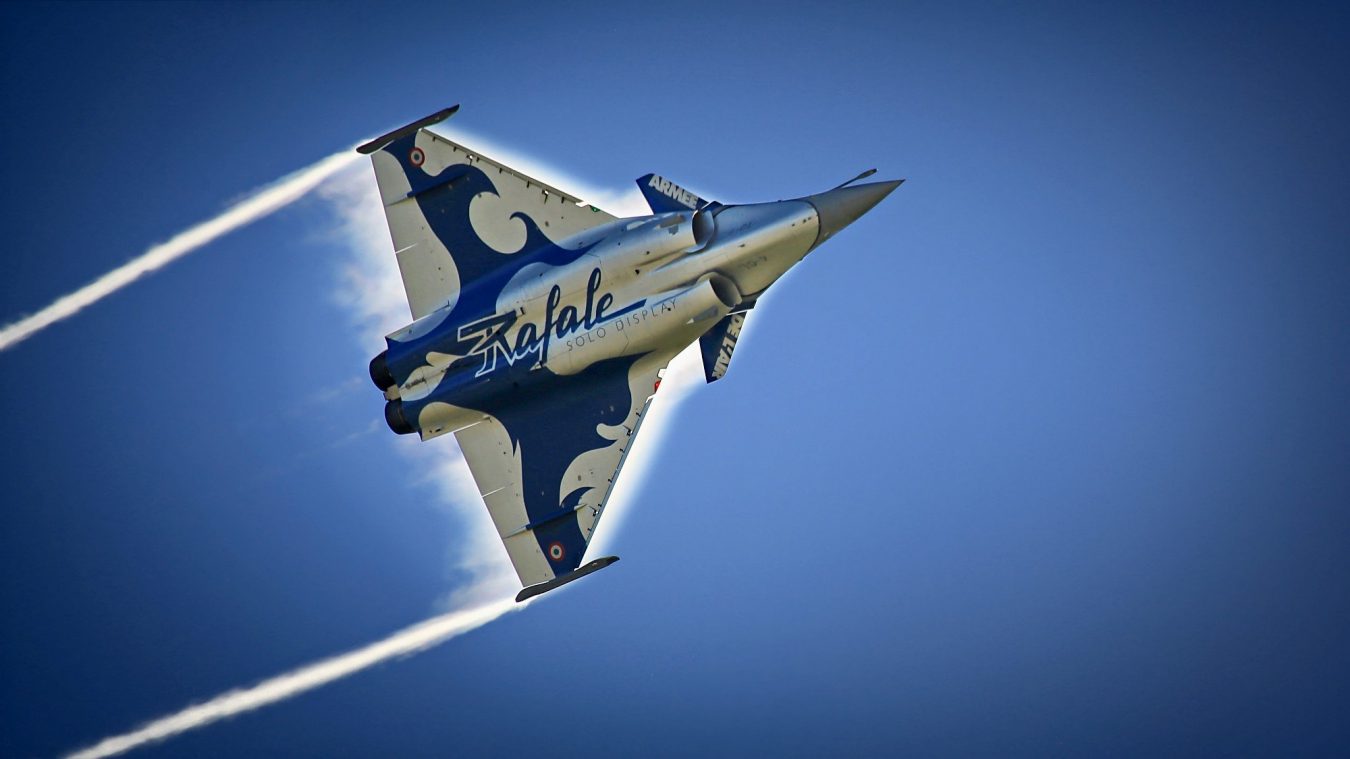
Last year, Saudi Arabia was reported to be mulling the purchase of 54 Rafale fighter jets. At the time, Dassault CEO Eric Trappier said preliminary discussions were underway to sell the Rafale to Saudi Arabia, adding that the final decision would depend on political decisions.
However, Riyadh’s interest in the French fighter jet seems to have taken a back seat after it received approval from Washington to purchase F-35 stealth fighters.
Similarly, Indonesia signed a letter of intent (LoI) last year that could have paved the way for purchasing additional Rafales beyond the 42 already ordered.
However, the plans have now been put on the back burner, as Indonesian Defense Ministry spokesman Rico Ricardo Sirait told the Jakarta Globe in April.
“There are no technical details that we can give for now. But to this day, [Indonesia] has not decided to acquire additional Rafale units. The government is still reviewing the idea,” he stated.
Despite these minor setbacks, the export interest in the aircraft remains high. Reports in June this year indicated that Morocco is eyeing a potential purchase of the jet, and discussions have already gotten underway. The EurAsian Times could not independently verify the claims, but we know the country previously considered purchasing the Rafale but ultimately decided to buy American F-16s instead.
Several other countries, including Colombia and Iraq, had also shown earlier interest in the Rafale.
As of July 2026, Dassault faces a backlog of 208 aircraft, of which 165 are for export customers and 43 for France. The backlog is expected to shrink with planned 2026 deliveries, but it could grow significantly if major prospective orders materialize.
Last year, Dassault Aviation announced it would increase Rafale production amid persistent supply chain problems triggered by the COVID-19 pandemic.
France is also gearing up to market the more advanced F4 and F5 variants (currently under development) to prospective buyers.
The Rafale F5 variant, for one, is anticipated to include new sensors, armaments, and a faster, more secure means of communication. Known as the ‘Super Rafale,’ it is regarded as the most advanced variant of the aircraft conceptualized to date.
Dassault chief Eric Trappier earlier said that the “F5 variant of Rafale will have more powerful engines, improved survivability and data links, and will be accompanied by an unmanned combat air vehicle (UCAV) weighing more than 10t.”
It must be noted that experts expect interest in the Rafale F5 to grow, as US stealth fighters are subject to stringent export controls and are more expensive.
Therefore, it is safe to say that the Rafale has clearly become the primary driver of French arms exports and may be well positioned to retain that role for years to come.
- Contact the author at sakshi.tiwari13 (at) outlook.com
- Follow EurAsian Times on Google News