Ukraine has outlined plans to acquire up to 16 Rafale fighter jets from France that could provide a substantial boost to its air force. However, the cutting-edge French fighter jets will not be a game-changer against Russia, at least in the near future.
French President Emmanuel Macron told reporters on July 13 that France and Ukraine have agreed on a roadmap that will enable Ukraine to acquire 16 Rafale fighter jets, along with a host of other weapon systems. The announcement was made after the group of countries that have pledged support to Ukraine met in Paris.
“Earlier this afternoon, President (Volodymyr) Zelenskyy and I agreed on a roadmap between our two countries, implementing what had been agreed in principle last November regarding our bilateral defence cooperation,” Macron said at a news conference, referring to the Letter of Intent (LoI) signed between the two leaders for Kyiv’s procurement of of the SAMP/T next-generation air defence system and up to 100 Rafale jet fighters.
Macron further noted that the first batch of next-generation SAMP/T NG air-defense batteries, complementary systems, and their missiles will be delivered to the Ukrainian Armed Forces in the coming weeks, along with radar systems and additional missiles.
Meanwhile, Ukrainian President Volodymyr Zelensky announced that the training for Ukrainian pilots and mechanics to operate Rafale fighter jets will begin in France this year. Once training is complete, the first four Rafale jets will be delivered to the Ukrainian Armed Forces, Zelensky said.
Not just that, the French President, who has been a steadfast supporter of Kyiv, told reporters that Ukraine has been granted licenses to produce crucial weapons, including the AASM glide-bomb kit, the Aster 30 air-defense interceptor that arms the SAMP/T system, and the SCALP-EG/Storm Shadow air-launched cruise missile
Expressing his gratitude to Macron for the support, Ukrainian President Zelensky said the latest steps are “measures that move us forward”.
These initiatives will significantly strengthen Ukraine’s combat capabilities for years to come. Central to this effort are the Rafale fighter jets, widely regarded as one of the world’s most advanced multirole combat aircraft. In fact, the acquisition of Rafales aligns with Ukraine’s long-held aspiration to assemble a 250-strong fleet to deter Russia and follows a decision to purchase about 16 Swedish Gripen E/F fighter jets.
“The first aircraft should be flying in Ukrainian skies in 2028-2029. There will also be additional radars and additional missiles,” the French president said. This means the Rafales won’t fly over Ukraine any time soon, meaning that they won’t be a silver bullet against Russia in the ongoing war unless the war lasts another 2 or more years.
Moreover, it must be noted that the Ukrainian pilots are highly experienced on Soviet-era aircraft and have trained on F-16 and Mirage-2000, but transitioning to a 4.5-generation Western fighter like the Rafale may still be a complex process–pilot training typically takes 12–18 months for experienced pilots to reach combat-ready status on a new platform, including simulator time, ground school, and live flights. Additionally, Ukraine would have to actively build infrastructure to accommodate the Rafale fighters.
All of this suggests that it will take a few years for the French Rafales to make an impact against the Russian military.
Ukraine already operates the Mirage 2000-5F delivered by France last year, which is used alongside the F-16s. The Ukrainian Air Force lost its first Mirage 2000 in July 2025 to a technical malfunction, as EurAsian Times reported at the time, in a major blow to the already limited Mirage fleet in Ukraine.
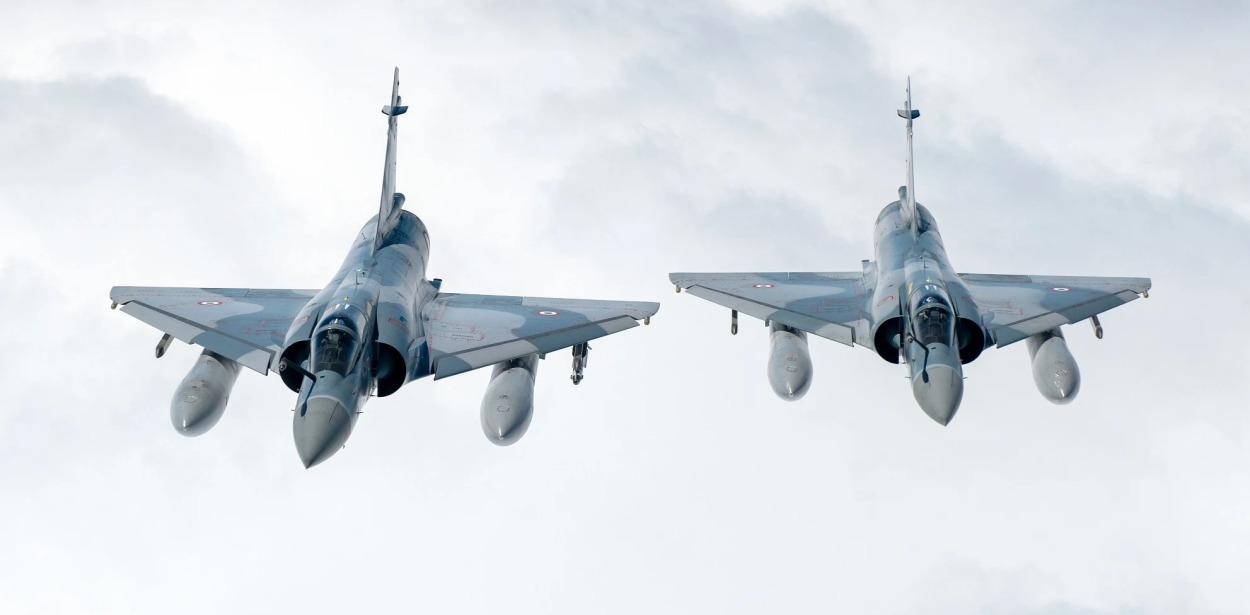
France purportedly promised additional Mirage 2000-5 jets to Kyiv earlier this year, as noted by the Ukrainian Defense Ministry in an official statement. However, no such delivery has been officially reported by either side yet.
Since the Rafales are not expected to arrive in Ukraine for at least the next few years, Ukraine will bank on Mirage 2000-5 and F-16 jets amid Russia’s intensified aerial attacks on the country.
In fact, the Mirage 2000-5 was believed to be conducting frontline combat missions against Russian positions, according to open-source reporting earlier this year. The Ukrainian pilots have praised the French aircraft, as you can read more about in a previous EurAsian Times report.
The Mirage 2000-5 is also compatible with Storm Shadow/SCALP missiles and AASM Hammer airborne-guided bombs, which will now be produced locally in Ukraine.
Sweden, for one, announced that, in addition to the Gripen-E, it would donate 16 older Gripen C/D aircraft to Ukraine, with the first aircraft expected to arrive in 2027.
In a hypothetical scenario, France could take the same route and deliver a small batch of Mirage 2000-5 jets to bolster Ukrainian air defenses in the short term.
Experts believe that France operates a small number of Mirage 2000-5s, which are currently being phased out in favor of the more modern Rafale. Paris has been reluctant to make additional deliveries to Kyiv, as it wants to keep enough for its own air defense and operational readiness until a full transition to Rafales has been achieved.
There were reports in April 2026 that France could offer Greece the chance to swap its older Mirage 2000s for more modern Rafales. At the time, a well-known Greek media outlet, Ekathimerini, reported that the French government would offer to purchase the Hellenic Air Force (HAF) Mirage 2000-5 aircraft for transfer to Ukraine in exchange for “improved terms” for Rafale fighters.
There has been no reported development since then.
Rafales Are Coming
Designed as a versatile “omnirole” platform, the Rafale is capable of performing air superiority, ground attack, reconnaissance, and even nuclear deterrence missions. It can switch between missions with ease, unlike single-role planes, making it versatile across evolving battlefields.
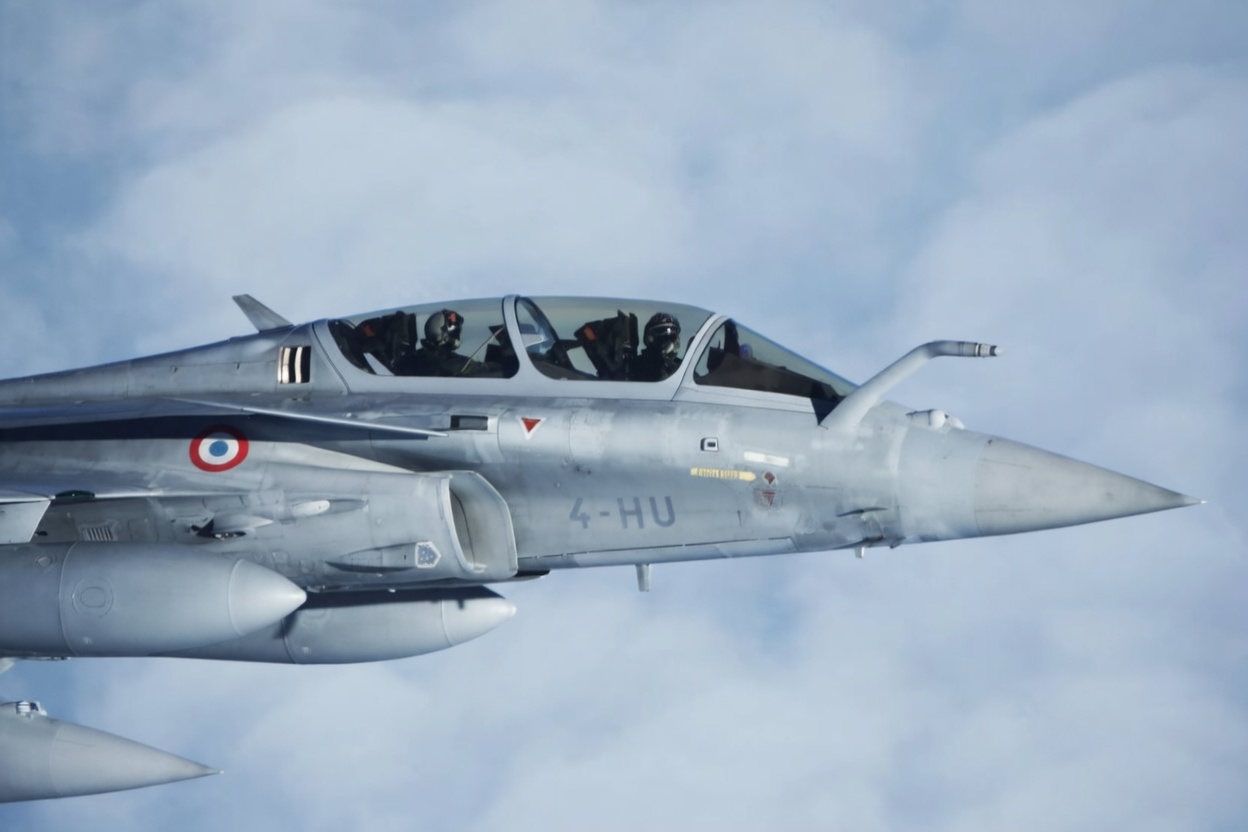
Rafale also provides sensor fusion, digital architecture, data-link 16, and networked operations.
Unlike older Ukrainian jets with outdated radars and limited beyond-visual-range (BVR) capabilities, the Rafale features an active electronically scanned array (AESA) radar, which enables it to identify and track targets at up to 200 kilometres, even in contested environments, and the sophisticated SPECTRA electronic warfare system, which provides 360-degree threat detection, jamming, and decoy deployment to avoid radar locks and missile threats, as previously explained by the EurAsian Times.
These features will help improve the Ukrainian Air Force’s situational awareness, survivability in contested airspace, and the ability to operate effectively against Russian air defenses and fighters. Moreover, the aircraft can reach Mach 1.8 and has a combat radius of more than 1,000 kilometers thanks to its two Safran M88 engines.
One of the Rafale’s biggest contributions to Ukraine’s combat posture will be its long-range strike and deep interdiction missions. The aircraft can carry SCALP-EG (Storm Shadow equivalent) cruise missiles, AASM Hammer precision-guided bombs, and a heavy payload across 14 hardpoints while retaining air-to-air weapons such as Meteor and MICA missiles.
This will allow a single Rafale to conduct high-impact strikes on Russian rear areas, command nodes, or air defenses in a single sortie, something Ukrainian Soviet-era jets struggle with due to their shorter range, lower payload, and vulnerability.
More importantly, the Rafale, paired with the long-range Meteor missile, will help Ukraine challenge Russian fighters like the Su-35 and Su-34 at greater ranges in air-to-air combat.
“Meteor missiles that destroy targets at distances exceeding 200 kilometers will help us push Russian jets away so that they can’t use glide bombs en masse anymore,” Zelensky earlier wrote in a post on X. With its unique ramjet propulsion system—solid-fuel, variable-flow, ducted rocket—Meteor is renowned for its exceptional kinematic performance. This “ramjet” motor, according to MBDA, produces the largest No-Escape Zone of 60 kilometers, offering a high kill chance against a target.
The Rafale transferred to Ukraine may also be equipped with Hammer, a rocket-assisted bomb already used by the Ukrainian Air Force.
While lighter fighters like the Gripen or F-16 provide numbers and flexibility for air defense and shorter missions, the heavier Rafale could be used for high-end, long-range operations.
Ukraine had earlier highlighted its aim to assemble a fleet of 100 Rafale fighter jets by 2035, and the delivery of the first batch of 16 will likely bring the embattled country one step closer to that goal.
- Contact the author at sakshi.tiwari13 (at) outlook.com
- Follow EurAsian Times on Google News