Taiwan has reportedly received the first batch of MQ-9B Sea Guardian drones from the United States and has begun testing them to monitor China’s military activity in the Taiwan Strait.
The Republic of China (Taiwan) received two of the four MQ-9B Sea Guardians ordered from the US on March 17, 2026, and the Taiwanese Air Force (officially known as the Republic of China Air Force) has begun assembling and testing them, manufactured by General Atomics Aeronautical Systems, Taiwanese media reported.
The Republic of China Air Force (RoCAF) said the acquisition meets the demand for long-range, all-weather observation drones capable of providing real-time intelligence on Chinese military movements and air and sea activities near Taiwan.
China considers Taiwan a renegade Chinese province and has vowed to occupy it, with force if necessary. It has been aggressively expanding its military presence near Taiwan in recent years–Chinese warplanes regularly intrude into Taiwan’s ADIZ (Air Defense Identification Zone) and its ships cross the median line–as part of China’s “grey zone” warfare. In fact, a recent Wall Street Journal report suggests that Beijing has kept a nearly continual naval presence around Taiwan since the beginning of this decade in an effort to subjugate Taipei.
In addition to these grey-zone activities, which are meant to test Taiwan’s defenses and exhaust them, China also conducts overt military drills simulating the encirclement of the island state in a mock invasion. Taiwanese officials have warned that Beijing could use these drills as a ruse for launching an actual amphibious invasion.
Against that backdrop, the MQ-9B Sea Guardian drones will help Taiwan track Chinese military movements.
The MQ-9B is a variant of the MQ-9 “Reaper,” which the US has extensively deployed over the years, including the recent Operation Epic Fury.
The Chief of Staff of the US Air Force, Gen. Kenneth S. Wilsbach, endorsed the Reaper as the most important player (MVP) in the Iran War. “No other platform is even close to the MQ-9” when it comes to the number of strikes against Iran, Wilsbach said, emphasizing how the autonomous aircraft had achieved the feat without putting its pilots at risk. “It’s an unmanned platform, so we get a lot of utility out of them, and don’t put our folks at risk.”
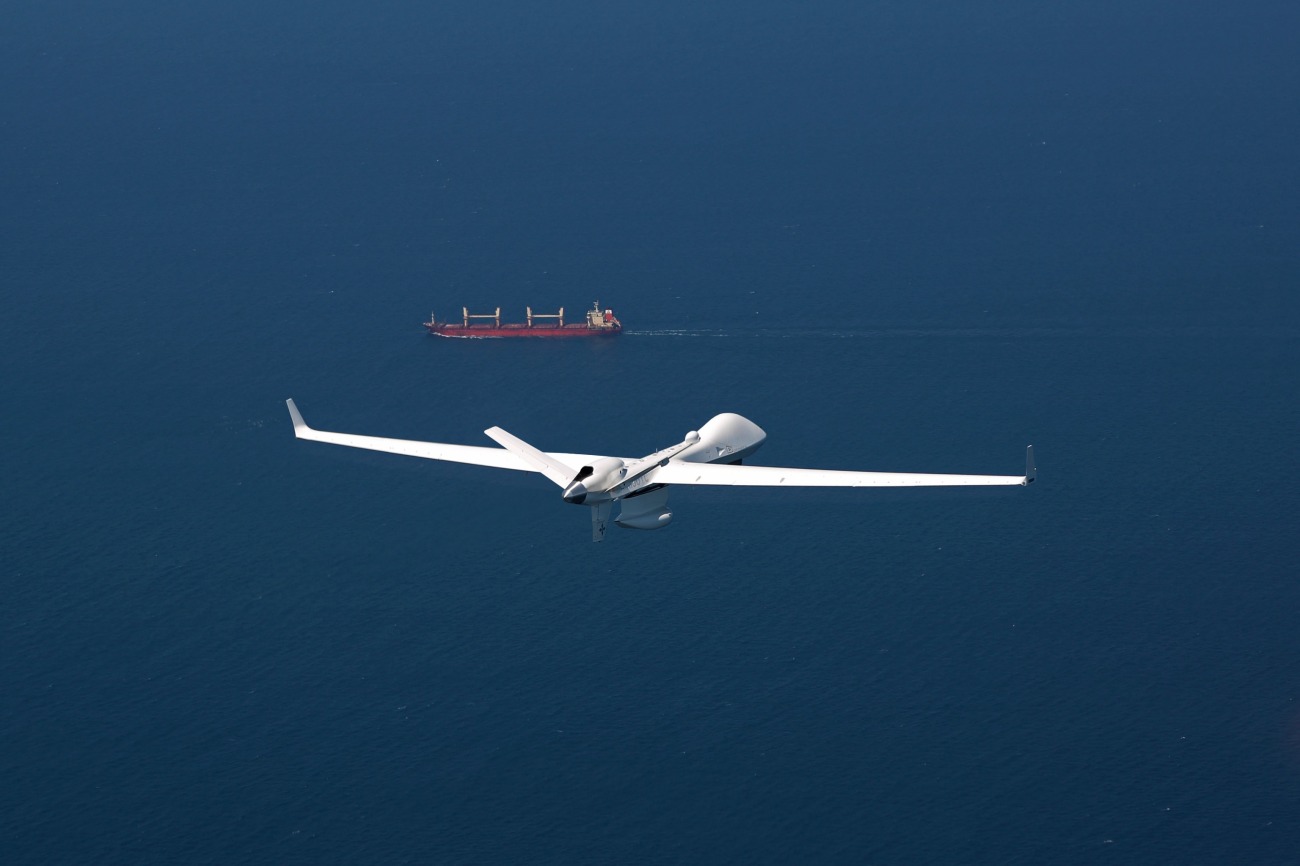
However, Taiwan’s security experts believe that the drone’s main role in the country would be battlefield surveillance rather than offensive strike missions, which is a clear deviation from the drone’s role in the American military.
Taiwan ordered four MQ-9B SkyGuardian drones in 2020 as part of a large arms purchase from the US, which included a host of other cutting-edge weapons. The two remaining drones will be delivered by 2027, according to officials cited in recent reports.
The MQ-9B will help in reducing the risk of tactical surprise, deter grey-zone escalation, and strengthen “deterrence by denial.”
The drone has up to 40+ hours of endurance, enabling round-the-clock loitering over key areas such as the Taiwan Strait, the Bashi Channel, the eastern waters, and vulnerable approaches from the south or east. This will provide continuous coverage that manned assets, such as the P-3C Orion, cannot sustain at high cost and with crew fatigue.
The Sea Guardian is equipped with electro-optic/infrared (EO/IR) sensors, Lynx multi-mode radar, and synthetic aperture radar. It can detect or track surface vessels, low-signature targets, and aircraft at ranges of 150–300 kilometers. This will be ideal for spotting PLA Navy (PLAN) deployments, Coast Guard “grey zone” militia vessels, and air incursions.
Notably, the MQ-9Bs could conduct high-risk tactical reconnaissance while maintaining safer standoff distances during periods of heightened tension or routine coercion. This will make it easier for the island to discern between normal grey-zone pressure and less expensive blockade or invasion preparations, and aid combat preparedness.
The platform can also deploy sonobuoys for submarine detection, helping counter the growing threat from the People’s Liberation Army Navy (PLAN) submarines in surrounding waters. And, in the event of an invasion, it could provide over-the-horizon targeting and cueing for Taiwan’s anti-ship missiles, coastal defense systems, and joint forces.
The acquisition of these drones also boosts interoperability with partners. The MQ-9Bs can enhance security cooperation by integrating and sharing information with allies.
“The real payoff is interoperability. Flying the same systems as the US military means Taiwan can share battlefield intelligence in real time with Washington, Tokyo, and Indo-Pacific partners. With only four airframes, coverage will be thin, but it closes a meaningful gap in maritime monitoring,” military analyst Aadil Brar wrote on X.
In addition to Taiwan, another country that remains wary of China is India, which is acquiring the MQ-9B. However, unlike Taiwan, it has yet to receive the hunter-killer drones.
India’s MQ-9B Is Meant To Keep An Eye on China
India signed a $3.3 billion deal with the US to acquire 31 MQ-9B High-Altitude Long-Endurance UAVs manufactured by General Atomics. Of these, the Indian Navy will receive 15 drones, while the Indian Army and the Indian Air Force will each receive 8 to strengthen surveillance along the northern and western borders.
The MQ-9B armed drone is expected to serve as a force multiplier for the Indian Navy, enabling coverage of large swathes of the maritime domain, accelerating the response to threats, and enhancing its overall maritime security posture. The drones will predominantly be deployed in the Indian Ocean Region (IOR), backing the Indian Navy’s sustained anti-piracy efforts in the region and keeping a vigil on expanding Chinese submarine activity in what India considers its backyard.
The drone’s communication relay capabilities, which increase the range of naval communication networks, are its greatest asset. SAR (Search and Rescue) operations can be supported by the MQ-9 B’s sensors and communication capabilities. It can detect distressed vessels, track survivors, and provide rescue teams with critical information. Additionally, it can deploy sonobuoys, integrate with the MH-60R helicopters, and provide real-time targeting for submarine threats.
“It can act as a bridge between ships, aircraft, and coastal stations, improving overall situational awareness,” an official who did not want to be named previously told the EurAsian Times.
It is worth noting that the MQ-9B Sea Guardian drone is equally significant to the Army and the Air Force as it is to the Navy, if not more so. The drone can operate at altitudes above 40,000 feet and take off from a short runway as short as 4,000 feet using Automatic Takeoff and Landing Capability (ATLC), making it suitable for the Indian Army operating in remote regions, particularly near the border with China.
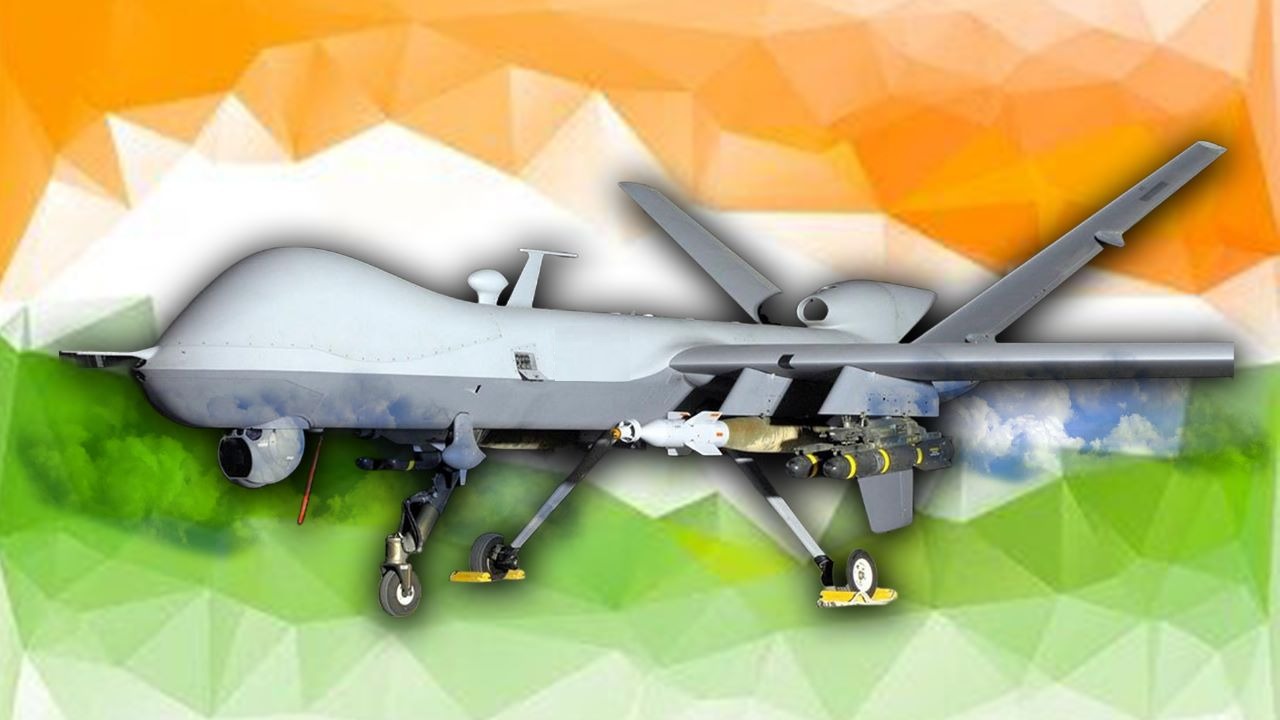
It can conduct intelligence, surveillance, and reconnaissance (ISR) operations and provide up-to-date information on enemy activity, force deployments, and changes to border infrastructure. Moreover, it could be integrated with missiles, drones, and artillery to facilitate precision strikes during a military conflict.
With a 1,800-kilometer range and 36–40 hours of endurance, these drones can effectively cover the country’s western and eastern borders. MQ-9s can locate, fix, track, engage, and evaluate critical emerging targets, both moving and stationary, as previously explained by the EurAsian Times. Moreover, they could play a critical role in the kill chain, enabling coordinated precision strikes and enhancing fighter jet survivability, as seen in Iran.
“Indian armed forces operate in diverse terrains, from deserts and oceans to the high mountains of the Himalayas, which demand a multi-layered surveillance capability. This void was keenly felt during the situation in Eastern Ladakh. With mountains rising to more than 17000 feet, surveillance of areas across the LAC with MALE UAVs was a major constraint due to limited visibility of available payloads at their operating altitudes of around 25000 to 30000 ft, while operating well into their own airspace,” Air Marshal (R) RGK Kapoor (retd) said, making a case in favor of India’s MQ-9B.
Notably, during the Indo-China border crisis of 2020, the Indian Navy’s leased MQ-9B took off from its home base and traveled thousands of kilometers to provide the Indian troops holding ground at those dangerous heights with a real-time battle picture. The Indian Navy conducted land missions along the Line of Actual Control (LAC) at the Indian Army’s request, solidifying the drone’s strong reputation and driving its acquisition.
The MQ-9Bs can complete the “kill loop” for the Indian forces by implementing the “seeker to shooter” concept.
Major General Ravinder Sanan (retd), a seasoned veteran of the Indian Army’s Corps of EME, earlier told EurAsian Times that the acquisition of the Sea Guardians would be “a game-changer for the nation’s national security.”
Unlike Taiwan, which has received half the drones it ordered, India will receive these drones in batches between January 2029 and September 2030. Both countries, however, seek to use their Sea Guardians to keep a watchful eye on Beijing’s military activities.
- Contact the author at sakshi.tiwari13 (at) outlook.com
- Follow EurAsian Times on Google News