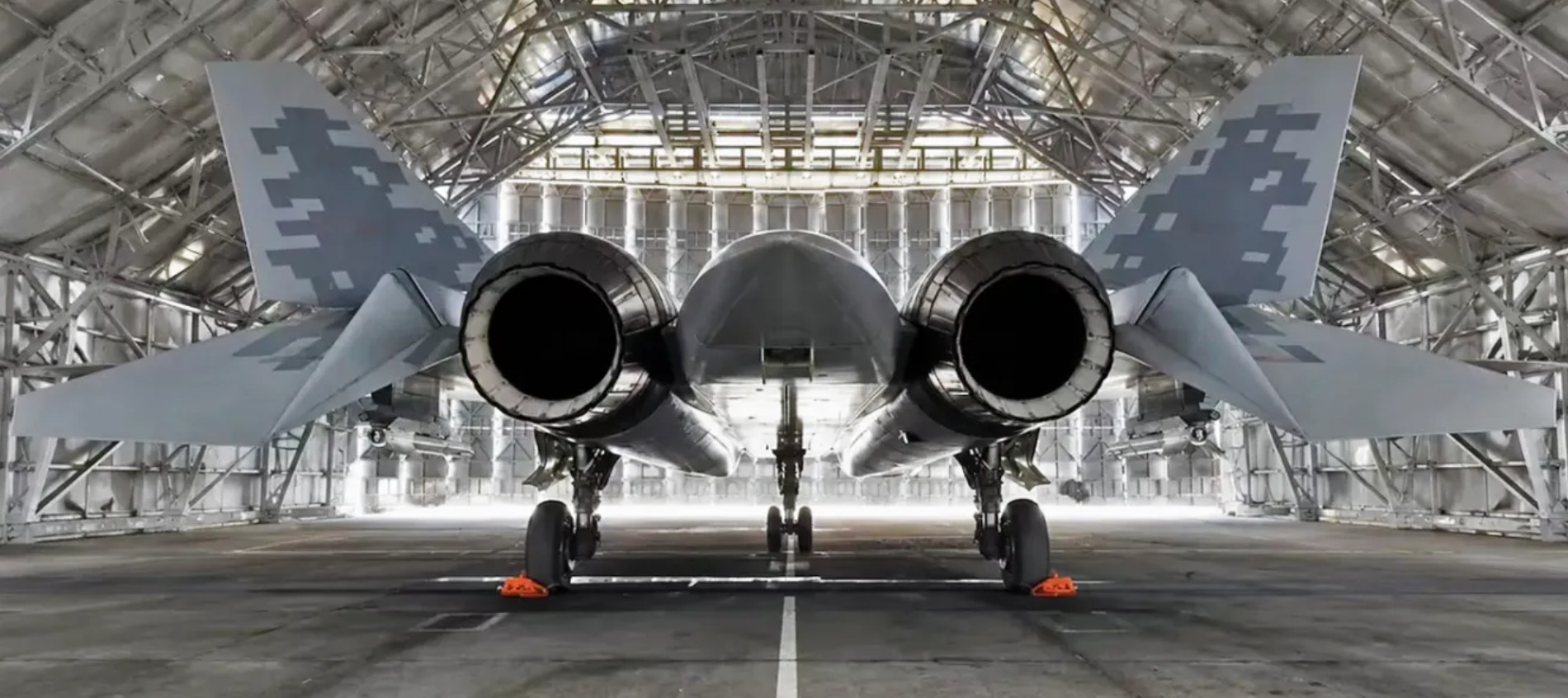
India appears poised to overlook Russia’s Su-57 fifth-generation stealth fighter and opt for a sixth-gen aircraft instead.
Defense Secretary Rajesh Kumar Singh recently clarified that New Delhi has “not thought about” new Sukhoi variants, prioritizing the upgrade of the Su-30MKI fleet under the ‘Super Sukhoi’ program and the indigenous Advanced Medium Combat Aircraft (AMCA) instead.
Moscow’s aggressive pitch—including local production, full source codes, and a two-seat variant—has failed to sway planners wary of diverting resources from self-reliance goals.
With AMCA still a far away and China fielding growing J-20 numbers, India is actively exploring partnerships in sixth-generation programs.
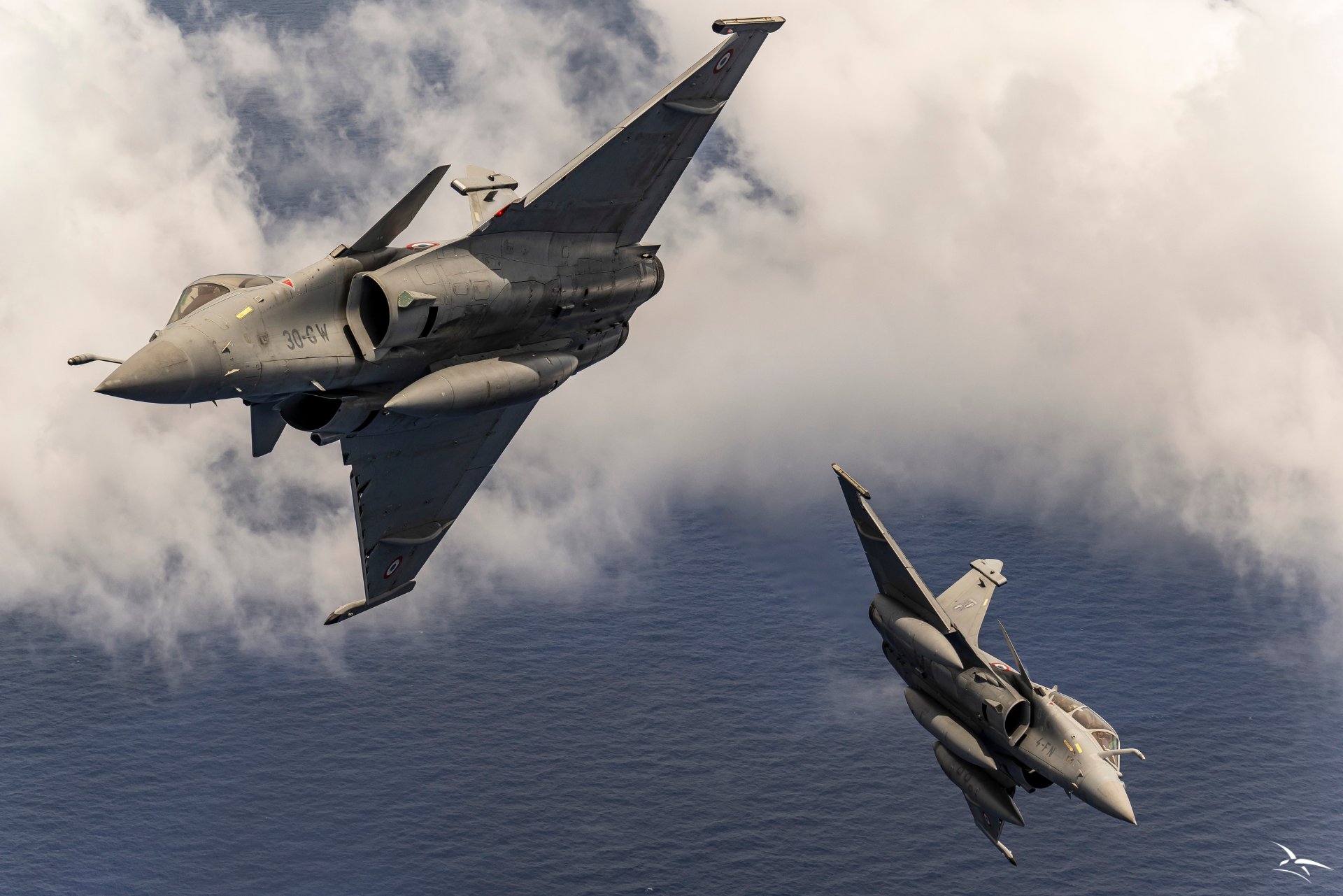
India’s Ministry of Defense has reportedly initiated efforts to join the French-led sixth-generation fighter program. This was stated in a report of the Parliamentary Standing Committee on Defense, presented in Parliament, according to news agency PTI.
The ministry has sought a roadmap from the French side for acquiring such aircraft. The panel noted that two major consortia are developing sixth-generation fighters: one involving the UK, Italy, and Japan; another involving (now-defunct) France and Germany.
The Indian Air Force plans to partner with one of these groups so that India does not fall behind in advanced combat aircraft technology.
End of Su-57?
In 1962, the USSR agreed to transfer technology to produce nearly 800 MiG-21 jet fighters for India, which it had earlier denied to China. They helped India set up factories for the aircraft, aero-engines, and avionics.
India’s relationship with the Soviet Union grew strategically, culminating in the 1971 Indo-Soviet Treaty of Friendship and Cooperation.
Through the 1971 India-Pakistan War for the liberation of Bangladesh, the Soviet Union stood by India against US and Chinese intimidations.
During the Cold War, India and the USSR maintained a “special and privileged strategic partnership” that was built on five major components: politics, defense, civil nuclear energy, anti-terrorism cooperation, and space.
Even after the dissolution of the Soviet Union, India maintained warm relations with Russia’s successor state. The first major political initiative after the dissolution was the Strategic Partnership signed by the two countries in 2000.
The IRIGC (India-Russia Intergovernmental Commission) is the main body responsible for conducting official affairs between the two countries at the governmental level. Both countries are members of international bodies, including the UN, BRICS, G20, SCO, and Russia-India-China (RIC) grouping. Russia supports India’s bid for a permanent seat on the United Nations Security Council.
https://www.eurasiantimes.com/su-57-out-for-india-6th-gen-aircraft/
India is one of the largest markets for the Russian defense industry. Approximately 60 percent of the Indian military’s hardware today is of Russian origin. Military hardware supplies and, more recently, joint-venture production have been key pillars.
Make-in-India Began in the 1960s
The Soviet Union was the first to support Make in India defense production.
The MiG-21 factories set up in the early 1960s later produced the MiG-27 (170) and the Su-30 MKI (230). Su-30 MKI was a joint D&D project. Russia also learned a lot from the Su-30 MKI project and imbibed some of these ideas for its Su-30SM aircraft.
222 Su-30 MKI were produced under license at HAL’s Nashik plant since 2004. An estimated 920 AL-31FP turbofans were manufactured at HAL’s Koraput Division. The Su-30MKI is the backbone of the IAF’s fighter fleet.
In 1965, Heavy Vehicles Factory (HVF) was set up at Avadi, Chennai, with Soviet assistance. HVF products included Russian-designed T-72 Ajeya and T-90 Bhishma tanks.
In September 1965, the Soviet Union and India signed the first contract for the delivery of naval equipment, including four Project I641 diesel-electric submarines, five Project 159E corvettes, and five Project 368P motor boats. The Agreement also envisaged rendering Soviet technical assistance for the construction of a submarine naval base in Vishakhapatnam.
Recently, two frigates, the INS Tushil and INS Tamala, were built by Russia at the Yantar Shipyard, while the remaining two are under construction at Goa Shipyard Ltd (GSL) in India through technology transfer.
Russia is reportedly expanding its shipbuilding cooperation with India, with two Indian shipyards being considered for the construction of four non-nuclear icebreakers. Russian shipbuilding officials have reportedly offered New Delhi their nuclear-powered design for an Indian Navy aircraft carrier.
GSL is also constructing 24 river-sea class cargo ships for Russian clients in the Caspian Sea by 2027. Cooperation with India in shipbuilding has its benefits for Russia, as the unit cost per vessel is projected to be half of what it would cost Russian shipbuilders.
Joint Ventures
Between 2012 and 2016, Russia accounted for 68% of India’s defense imports. Russia and India’s cooperation is not limited to a buyer-seller relationship but includes joint research and development, training, service-to-service contacts, and joint exercises.
India and Russia have a strong success story with Joint Ventures (JVs). The BrahMos is a medium-range ramjet supersonic cruise missile that can be launched from submarines, ships, and fighter aircraft. BrahMos Aerospace is a joint venture between the Indian Defense Research and Development Organization (DRDO) and Russia’s NPO Mashinostroyeniya. The missiles are already being exported.
Under an over ₹5000 crore contract signed in July 2021, over 610,000 AK-203 assault rifles are to be manufactured in India with technology transfer from Russia, by the JV Indo-Russian Rifles Private Limited (IRRPL).
Indian companies hold a controlling 50.5 percent share, and Russian companies hold 49.5 percent. The level of indigenous content has already reached 50% and is rising rapidly, with a target of 100% in the near future.
India and Russia have also agreed to expedite the delivery of spare parts of Russian-origin military platforms by setting up a JV in India.
Notwithstanding the above, some JVs did not take off. India had withdrawn from the joint Fifth-Generation Fighter Aircraft (FGFA) program due to technical issues. Finally, Russia continued the project and today has a successful Sukhoi Su-57 ‘Felon’ 5th generation fighter.
Following the selection of the Ka-226T to meet an Indian requirement for 197 helicopters, an agreement was signed in December 2015 to create a JV between Rostec, Russian Helicopters, and HAL to build the helicopters at a new factory in Tumakuru, India.
Later, India decided to make its own Light Utility Helicopter (LUH) based on the indigenous ‘Dhruv.’ India’s LUH is delayed, and Russia has been pushing the case for Ka-226T again.
Similarly, India canceled the Indo-Russian program to develop a new Multirole Transport Aircraft (MTA) for both countries through a JV between Russia’s UAC and India’s HAL.
In February 2023, on the sidelines of the Aero India 2023 air show, the Russians offered to jointly develop the Il-276. However, India would prefer the aircraft to be powered by a European engine rather than a Russian one.
India has operated a wide range of Soviet and Russian combat jets that formed the backbone of the Indian Air Force for decades. Key types include the prolific MiG-21 (in multiple variants including Bison), MiG-23 (BN and MF), high-altitude MiG-25, ground-attack MiG-27, and air-superiority MiG-29 (including upgraded versions).
From the Sukhoi stable came the Su-7 fighter-bomber and the highly successful Su-30MKI, which remains the IAF’s primary multi-role platform that India is looking to upgrade.
India’s decision to effectively rule out the Su-57 marks a noticeable shift. After decades of reliance on Russian fighters—from the MiG-21 to the Su-30MKI—New Delhi is prioritizing the AMCA program and partnerships in sixth-generation projects.
While the historic Indo-Russian defense ties remain strong in other domains, the rejection of Moscow’s most advanced stealth jet signals a clear preference for next-generation technology.
With China rapidly expanding its stealth fleet and AMCA still years away, India appears to be choosing long-term capability over Russian platforms.
- With Inputs from EurAsian Times story by Air Marshal Anil Chopra (Retired)
- Follow EurAsian Times on Google News