After the intense 39-day US-Iran war, Gulf countries, including the UAE, got a reality check. Despite the deployment of expensive air defense systems like THAAD and Patriot, many drones and missiles managed to evade the defense shield.
The UAE, which bore the brunt of the attacks, even more than Israel, is reportedly looking to plug the gaps.
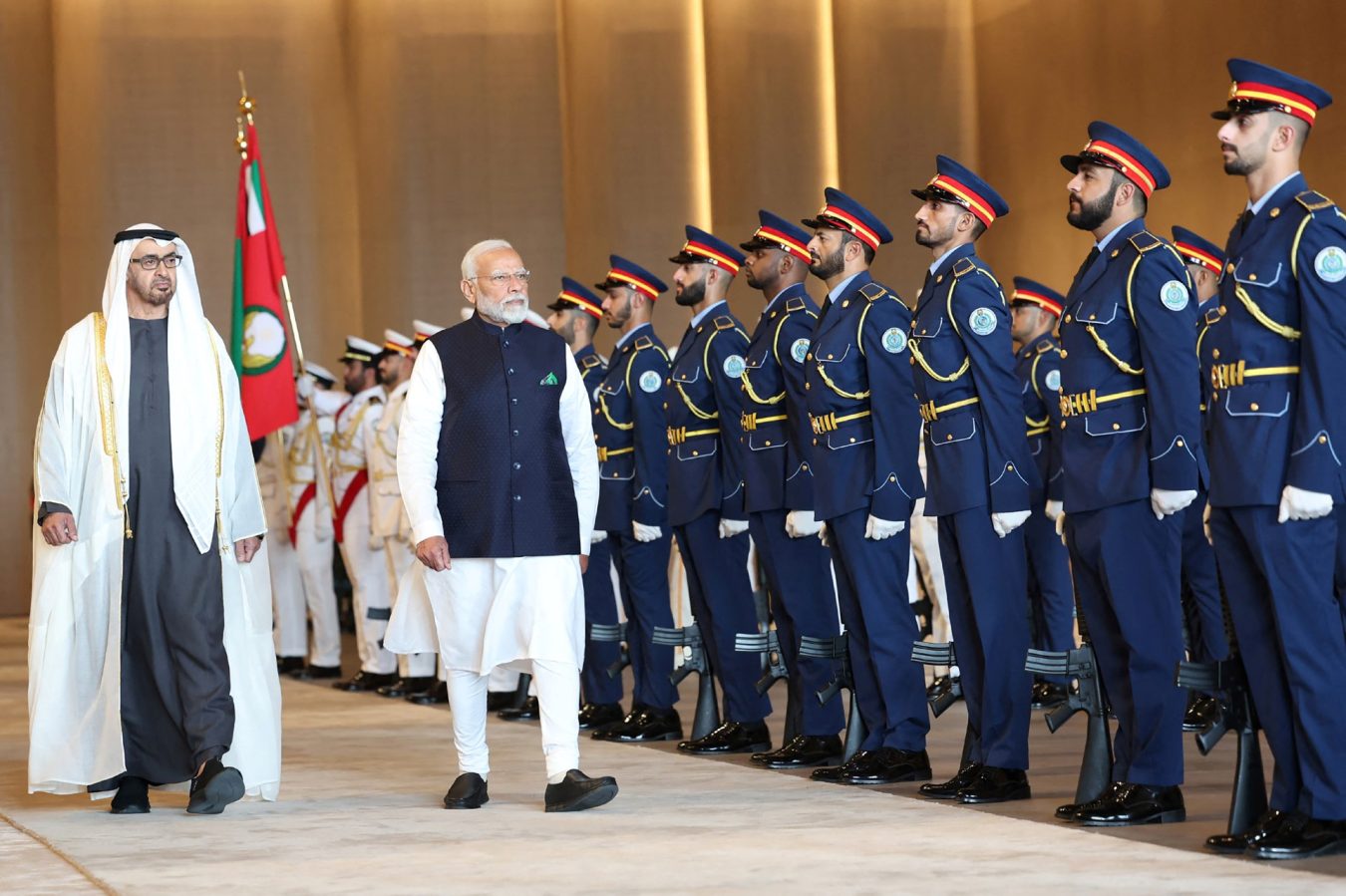
According to Reuters, citing sources, the UAE is in early talks with India to buy the BrahMos supersonic cruise missile and, more interestingly, Akashteer air defense system.
“UAE has shown interest in a number of our weapon systems, including BrahMos and Akashteer. The talks between India and the UAE are at initial stages and are progressing fast,” Reuters quoted an Indian defense source as saying.
Notably, both systems have been combat-tested and reportedly performed remarkably well during the four-day war with Pakistan in May 2025.
While BrahMos was behind the attack on multiple Pakistani air bases, successfully penetrating Pakistan’s Chinese-sourced air defense systems like the HQ-9B and HQ-16, Akashteer reportedly performed spectacularly against Pakistan’s drone swarm attacks, downing scores of Turkish and Chinese-sourced drones.
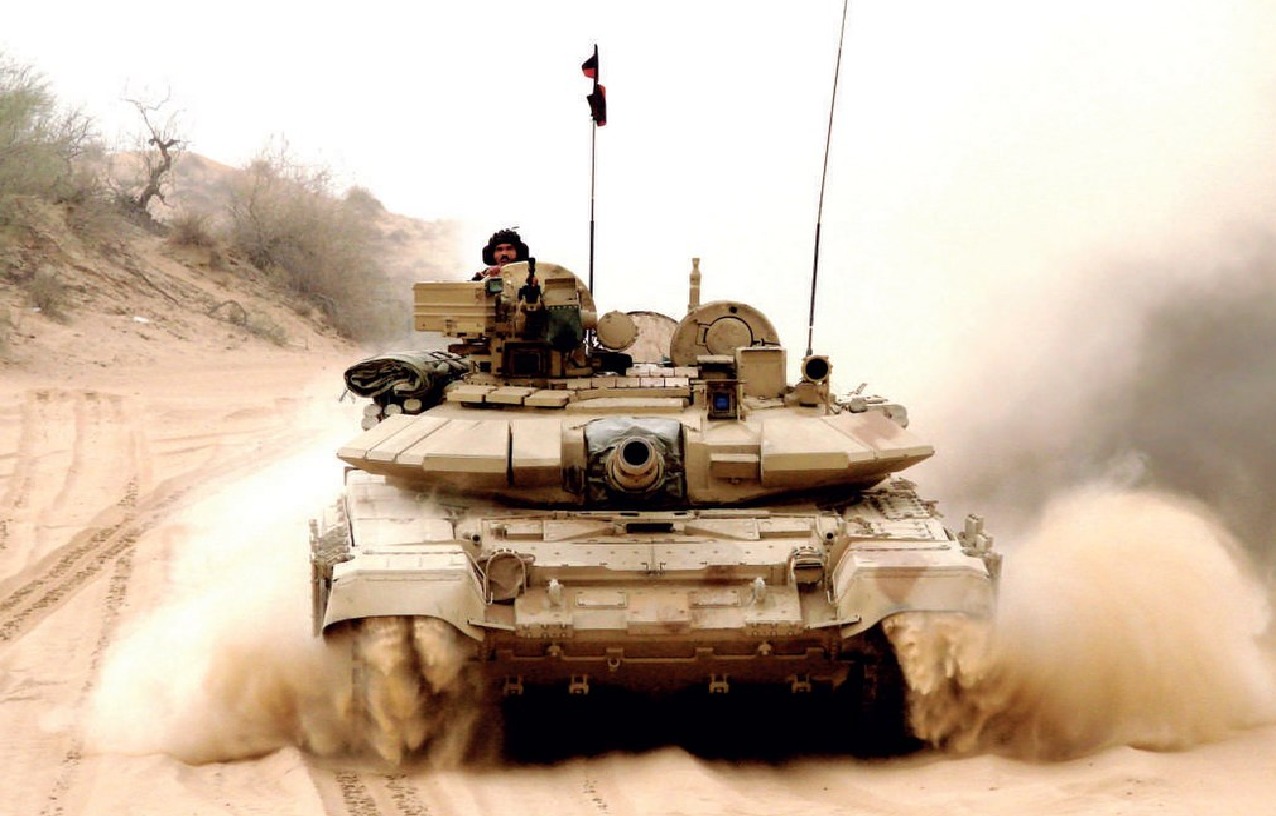
BrahMos, jointly developed by India and Russia, is among the world’s fastest cruise missiles and can be launched from land, sea, and air platforms, while Akashteer is a fully automated air defense system developed by India’s state-run Bharat Electronics Ltd and the Indian Army.
While India would need Russia’s approval before selling BrahMos to the UAE, no such prior approval is required for the sale of Akashteer, since it is fully indigenous.
Notably, BrahMos is already a hit in the defense export market. BrahMos has been exported to the Philippines, and New Delhi has signed deals to sell BrahMos to Vietnam and Indonesia. Further, it has also received interest from Thailand, South Africa, Brazil, and Chile.
However, if the deal with the UAE is finalized, this would be the first-ever export order for the Akashteer air defense system.
Even more tellingly, the UAE already fields one of the world’s most sophisticated multi-layered air defense architectures. It operates American Patriot PAC-3 and THAAD systems for high- and medium-to-high-altitude threats, South Korea’s Cheongung-II (M-SAM) for medium-range coverage, Russian Pantsir-S1 short-range defenses, and other AD systems.
In this crowded high-end lineup, where does India’s new Akashteer system fit?
Why the UAE Needs Akashteer?
During the 2026 Iran conflict, the UAE bore a disproportionately high share of attacks among Gulf states.
Cumulative figures reported by the UAE Ministry of Defense and other sources indicate that the country was targeted with over 560 ballistic missiles, more than 2,250 drones, and over 25 cruise missiles.
While the vast majority of these aerial threats were successfully intercepted, a notable number of projectiles, particularly low-cost drones operating in swarms, penetrated the UAE’s layered air defense system, causing damage to oil facilities, airports, and other critical infrastructure.
The Iranian attacks starkly underscored the significant gaps in even the most advanced multi-layered defenses, especially when facing sustained saturation and swarm tactics.
This is where the need for a new air defense system, such as India’s Akashteer, becomes critical.
Where Does Akashteer Fit in Between Patriot, THAAD, & Cheongung-II?
Akashteer System is India’s indigenous AI-driven, multi-layered air defense network, enabling real-time threat detection, coordination, and autonomous aerial threat response.
It integrates radars, sensors, and communication technologies to provide real-time situational awareness and effective coordination.
Its strength lies in combining data from diverse radars and sensors to provide a comprehensive threat picture.
It replaces traditional manual processes with advanced digital, real-time command-and-control (C2) systems, enhancing efficiency.
This facilitates the immediate detection and neutralization of hostile aerial threats, drastically reducing reaction time.
These features make Akashteer stand out, as it will not add another missile launcher or kinetic kill ability, instead, it will add a unique capability to the UAE’s advanced, sophisticated, and multi-layered air defense systems, connecting their radars and sesors, combining data from the diverse air defense systems the country already operates, to provide real-time situational awareness and create a comprehensive battlefield picture, for threat priortization.
Rather than adding yet another expensive shooter to the inventory, Akashteer functions as an AI-powered “brain,” a fully automated command-and-control system that integrates data from diverse radars and sensors in real time, accelerates threat identification and engagement decisions, and orchestrates the entire layered network more effectively.
In a battlespace saturated with cheap, massed drones, this kind of intelligent integration and rapid-response loop offers precisely the resilience that high-end Western platforms struggled to deliver on their own during the conflict.
It seems Abu Dhabi is trying to plug these exact vulnerabilities by diversifying, blending premium hardware with smarter, more affordable, software-driven enablers.
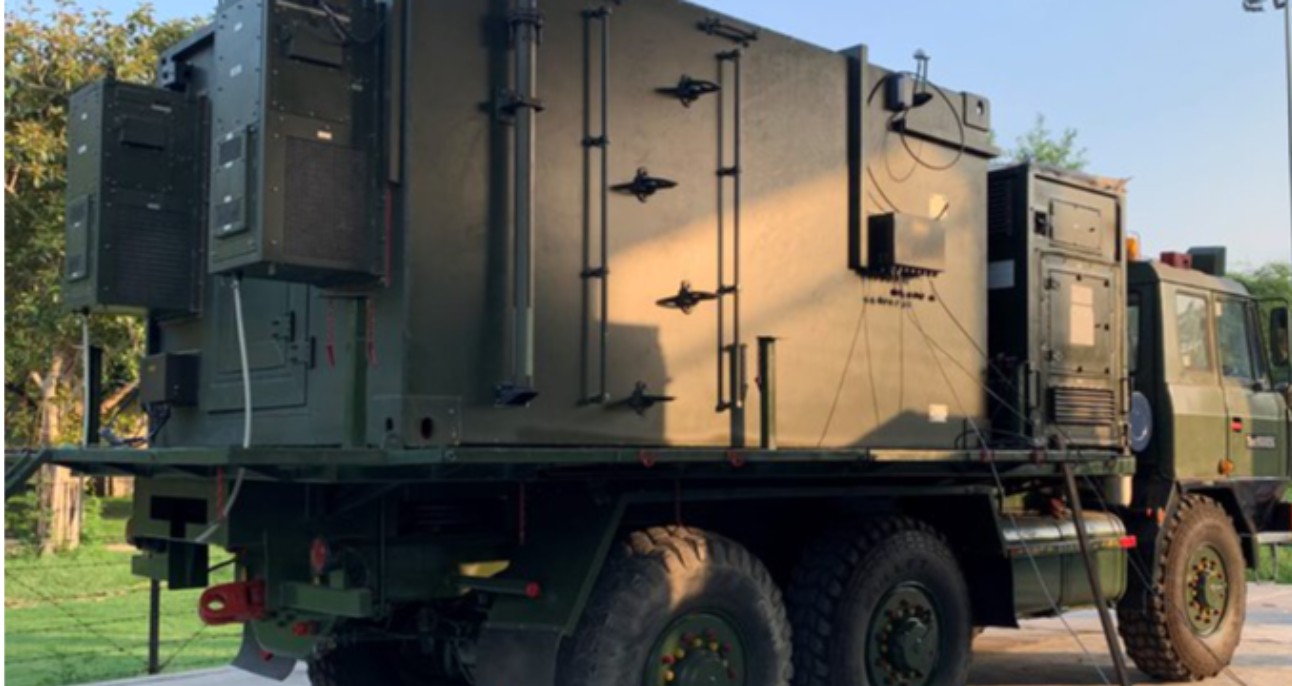
For a country like the UAE, which was targeted with thousands of drones and missiles and saw the limits of the Western air defense systems under mass saturation attacks, Akshteer offers a unique capability that expensive platforms can not provide: smarter integration and faster decision-making in a drone-saturated battlespace.
Akashteer will therefore help Abu Dhabi achieve the full potential of its existing air defense platforms.
Akashteer can act as an overlay C2 system that unifies Patriot, THAAD, Cheongung-II (and potentially future systems such as the Indian Akash missiles) into a single automated, AI-driven network.
The system is cheap, mobile, vehicle-mounted, and easy to integrate with existing air defense systems.
Further, the system has been combat-tested and has proven its worth during the four-day war with Pakistan in May last year.
India was reportedly able to take down over 600 Pakistani drones during that war.
In the aftermath of the May conflict, the Indian government commended Akashteer’s performance in an official press release.
“This invisible shield, Akashteer, is no longer a concept confined to defense journals. It is the sharp edge of India’s air defense, the unseen wall that stopped a barrage of missiles and drones on the night of May 9th and 10th, when Pakistan launched its deadliest attack on Indian military and civilian areas.”
“The system provides a common, real-time air picture to all involved parties (control room, radars, and Defense Gun), enabling coordinated air defense operations. It is a system designed to automate the detection, tracking, and engagement of enemy aircraft, drones, and missiles.
“It integrates various radar systems, sensors, and communication technologies into a single operational framework. Akashteer gathers data from multiple sources, processes it, and allows for automated, real-time engagement decisions,” it said.
In short, Akashteer does not add another kinetic interceptor; instead, it acts as a force multiplier for the existing interceptors, enhancing their effectiveness.
- Sumit Ahlawat has over a decade of experience in news media. He has worked with Press Trust of India, Times Now, Zee News, Economic Times, and Microsoft News. He holds a Master’s Degree in International Media and Modern History from the University of Sheffield, UK.
- He can be reached at ahlawat.sumit85 (at) gmail.com