By Sachin Yadav, New Delhi
On August 26, 2021, eleven days after the Taliban swept into Kabul, a suicide bomber killed 13 U.S. service members and roughly 170 Afghan civilians at the Abbey Gate of Hamid Karzai International Airport. The suicide bomber, Abdul Rahman al-Logari, belonged to the Islamic State Khorasan Province (ISKP), and the attack was a signal that the Taliban’s victory had not ended Afghanistan’s terrorism problem; it had changed it.
Afghanistan’s security landscape has never been simple, but the post-2021 period has introduced a new and distinctly layered set of threats.
The Taliban inherited not just a state, but an active insurgency, a collapsing economy, a fractured society, and a porous border with Pakistan through which militants, weapons, and narcotics flowed freely. Into this environment, ISKP has already been operational since 2015 and moved quickly to exploit the chaos of transition, escalating its attacks even as the Taliban was still consolidating territorial control.
Understanding what followed requires looking at who ISKP is, what the Taliban has actually done against it, and what the cost of that campaign has been for Afghans, for the region, and for global security.
Who is ISKP
ISKP is the South Asian affiliate of the Islamic State, formally established in January 2015 from defectors of al-Qaeda, Tehrik-e-Taliban (TTP), and Afghan Taliban fighters. As per the 2021 data the number of fighters in ISKP ranges from 1,500 to 2,200, based in Kunar and Nangarhar province of Afghanistan.
Its core ideological difference from the Taliban is structural: while the Taliban pursues a balance between Afghan nationalism and religious nationalism, ISKP follows the Islamic State’s universalist vision of a global “ummah”, making the two groups existential rivals, not merely competitors for territory.
The group’s civilian toll before the Taliban takeover was already devastating. Between 2015 and 2024, ISKP was responsible for over 2,000 civilian deaths, primarily in Kabul, Jalalabad, and Kandahar. In the first six months of 2021 alone, UN monitors recorded 20 attacks targeting Hazara-Shia civilians, causing 500 casualties: 143 killed, 357 injured.
These attacks followed a systematic pattern which included suicide bombings at schools and mosques, gunmen entering maternity wards, and ambushing pilgrims. By the time Kabul fell, ISKP had recorded more than 340 attacks in 2021, which was more than double that of the next highest year on record since its formation in 2015.
A Threat That was Never Only Afghan
ISKP’s geographic expansion accelerated sharply after the Taliban takeover. In Pakistan, ISKP conducted at least 15 suicide attacks between 2016 and 2022 on 5 security and 10 civilian targets, killing more than 550 people. These attacks included devastating bombings in the country’s Southwestern region during election campaign rallies in July 2018 that killed around 150 people.
In 2022, the ISKP attacked the Pakistani Embassy and the Russian Embassy in Kabul, along with a hotel in Kabul, popular among Chinese businessmen. Recently, in January 2024, a double suicide bombing outside the tomb of Iranian General Qassem Soleimani in Kerman killed around 90 people and wounded at least 200.
Similarly, on March 22, 2024, four gunmen stormed the Crocus City Hall concert venue in Moscow, killing 133 people and injuring more than 100, and it became the deadliest terrorist attack in Europe since the Beslan school siege of 2004. ISKP also carried out a church shooting in Istanbul in January 2024, which killed one Turkish citizen.
These were not isolated incidents. Terrorism researcher Aaron Zelin documented ISKP links to 12 external plots in 2023 and at least 19 in 2024, across Tajikistan, Russia, Kyrgyzstan, Austria, Belgium, France, Germany, the United States, India, Iran, and Turkey. The Intelligence services of the US also identified 15 other ISK-linked external attack plots by February 2023, with specific efforts to target embassies, churches, business centers, and the 2022 FIFA World Cup in Qatar.
The Taliban’s campaign against ISKP has produced measurable results. In October 2021, it established the General Directorate of Intelligence (GDI), which became the operational center of a nationwide, intelligence-driven counter-insurgency effort.
In February 2023, Afghan forces killed Qari Fateh, ISKP’s intelligence chief and a former minister of war of the ISKP, Abu Osman, the first Amir of the Islamic State Hind Province, and a senior leader of the ISKP in Southern Afghanistan, along with two other group members. By the end of 2023, the intelligence agency of the Islamic Emirate of Afghanistan (IEA) confirmed killing at least 12 senior ISKP commanders in a single year.
The statistics reflect this pressure. Terrorism-related deaths in Afghanistan also fell from 3,838 in 2021 to 1,087 in 2022, and then to 218 in 2023. The number of deaths till the first half of 2026 stands at 77. A similar decline is also seen in the number of incidents from 325 in 2021 to 15 in 2026.
ISKP-attributed events tracked by the European Union Agency for Asylum (EUAA) declined from 199 in 2022 to just 49 in 2023. UNAMA recorded a 72 percent year-on-year reduction, from 68 to 18, in IED usage between 2022 and 2023.
The number tells a success story, but here is the uncomfortable truth buried inside the Taliban’s counterterrorism statistics: the Taliban has pushed ISKP out of Afghanistan, but not out of existence. Experts assessed that ISKP is deliberately shifting its focus toward targets outside Afghanistan in part specifically to escape Taliban pressure at home. The group did not get weaker. It got smarter. And the attacks in Iran, Russia, and across Europe in 2024 proved those assessments right
How the Taliban Fights Terrorism
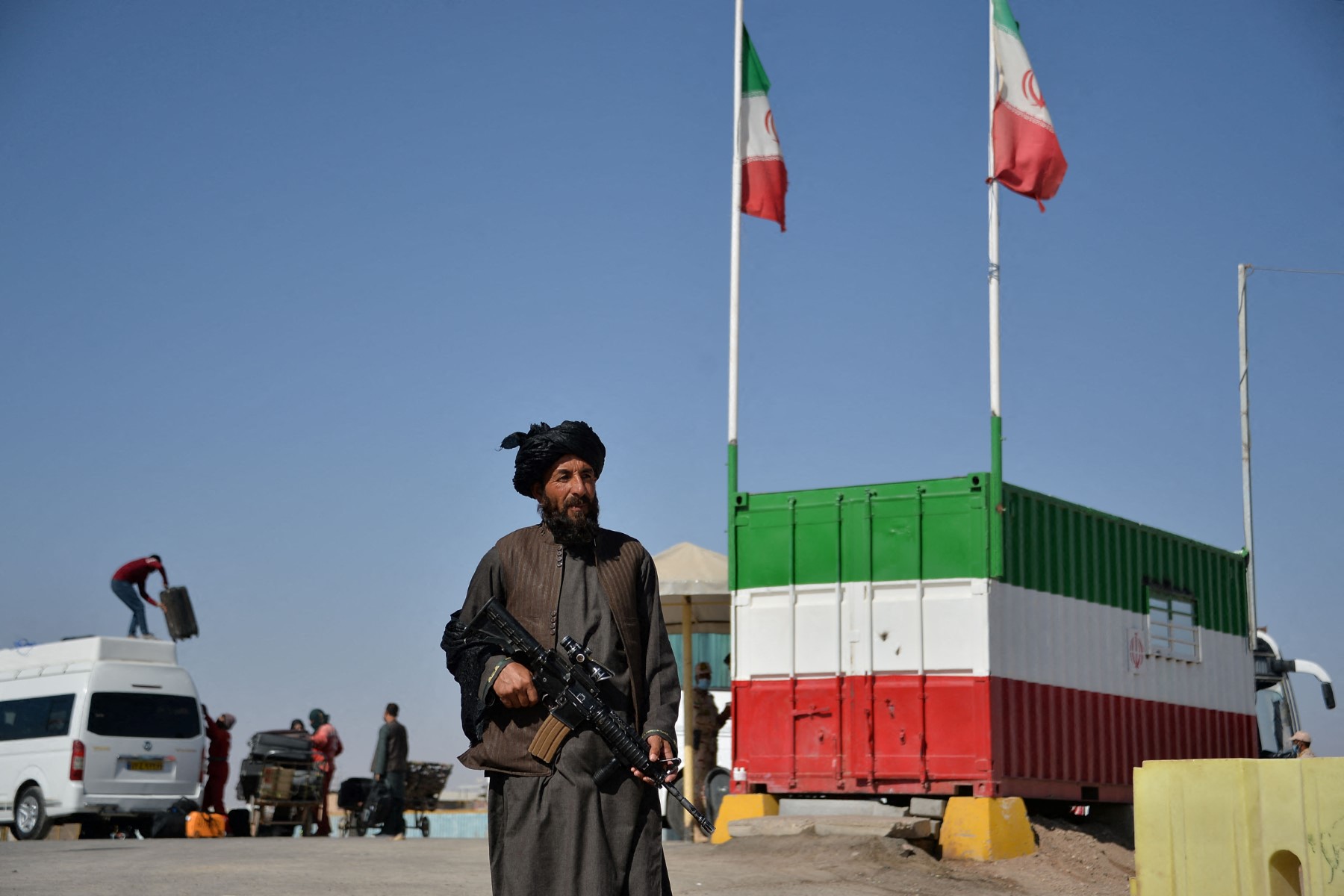
The Taliban’s security gains cannot be assessed without confronting how they are achieved. According to reports, the Taliban has conducted around 218 extrajudicial killings between 2021 and 2023, directed not only at ISKP suspects, but at former government officials and security personnel who posed no demonstrable terrorist threat.
In 2024, there were a total of 98 cases in which the Taliban carried out arbitrary arrests and detentions. These 98 cases also include 20 instances of ill treatment and torture.
In 2024, a New York Times investigation documented the killing or enforced disappearance of 490 former government and security personnel in just the first six months of Taliban rule. This matters for two reasons.
First, tactics that punish civilian communities generate grievances that sustain insurgent recruitment over time. Second, the information environment inside Afghanistan is severely restricted, meaning that some of the statistical decline in recorded attacks may reflect reduced reporting capacity rather than reduced violence alone.
The Broader Picture: Governance and Humanitarian Crisis
No counterterrorism assessment of Afghanistan is complete without its humanitarian context. As of 2023, more than 28 million Afghans, nearly two-thirds of the population, needed humanitarian assistance, with 14.7 million requiring it for basic survival.
By 2024, 23.7 million people needed urgent aid, 12.4 million faced food insecurity, and 2.9 million were at an emergency level of hunger. The Taliban’s ban on women working for the UN and international NGOs directly impaired humanitarian delivery. The UN requested USD 3.26 billion for Afghanistan in 2023; by November, it had received less than 25 percent.
Afghanistan also remains the only country on earth where girls and women are banned from secondary and higher education, and as a result, nearly 2.2 million adolescent girls are strictly forbidden to attend school, which severely limits the country’s development. The Taliban has issued more than 50 directives restricting women’s rights.
UN Special Rapporteur Richard Bennett described the situation as “an institutionalized system of discrimination, segregation, disrespect for human dignity, and exclusion of women and girls”. These conditions and the governance model producing them are inseparable from any long-term counterterrorism calculus.
Final Assessment
The evidence does not permit a simple verdict. The Taliban has demonstrably reduced ISKP’s operational capacity inside Afghanistan, achieved significant leadership decapitation, but ISKP has not been eliminated.
It has adapted by internationalizing its operations in direct response to domestic Taliban pressure, and now poses a demonstrably greater threat to Europe and other parts of the world than it did in 2021.
Meanwhile, the Taliban conducts counterterrorism through methods that themselves involve systematic human rights violations, and governs a country in acute humanitarian collapse that it is actively making worse. Declining domestic attack statistics are significant, but they are not the whole story.
The Taliban may currently be the most capable force fighting ISKP inside Afghan territory. That fact is worth acknowledging. It does not, however, transform a government presiding over gender persecution, extrajudicial executions, and 23 million people in humanitarian need into a credible long-term security partner.
Managing the ISKP threat globally will require multilateral engagement with Kabul, where tactically necessary, while refusing to conflate tactical cooperation with political legitimation.
- By: Sachin Yadav, PhD, International Studies, Jamia Hamdard University, New Delhi
- The author can be reached at [email protected]