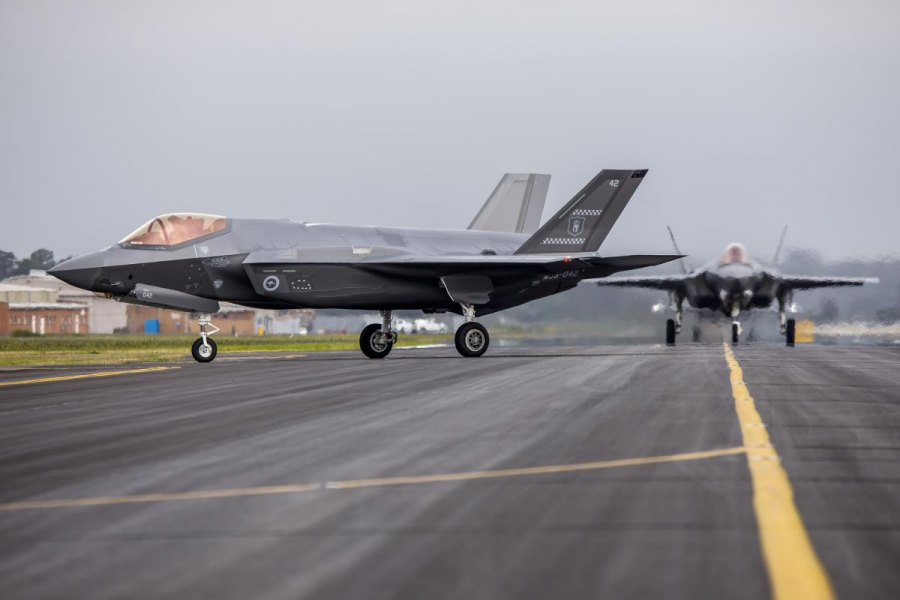
Amid reports that the US has virtually exhausted all its long-range precision munitions, as well as missile interceptors, it is becoming increasingly clear that Washington is in no position to fight a protracted war with Iran and has no real leverage over Tehran.
On August 5, CNN reported that the US military has exhausted nearly 80% of its interceptors for a key missile defense system.
“The US military has burned through nearly four-fifths of its THAAD missile inventory compared to pre-war numbers and roughly half of its Patriot interceptors since the start of the war, according to two sources familiar with the latest inventory report,” it said.
Similarly, the US has exhausted virtually the entire stockpile of highly accurate long-range missiles, such as ATACMS and PrSMs.
Consequently, any possible US-Iran ceasefire agreement is likely to be on terms favorable to Tehran.
During previous rounds of negotiations, Iran has indicated that while it is agreeable to some compromise on the nuclear issue, it will not compromise on the issue of managing the shipping traffic in the Strait of Hormuz and charging a fee from all ships transiting the narrow maritime corridor.
For instance, according to the June 2026 Memorandum of Understanding (MoU), signed between Tehran and Washington, Iran will make arrangements for the safe passage of commercial vessels “with no charge for 60 days only,” followed by dialogue with Oman and other Persian Gulf littoral states, “to define the future administration and maritime services in the Strait of Hormuz… in line with the applicable international law and the sovereign rights of coastal states.”
Iranian officials interpreted the limited 60-day free period plus the “maritime services” reference as implicitly allowing “service fees” for navigation, security, and environmental protection, once the 60-day window has lapsed.
While the US administration rejected this interpretation, the US media itself, including The New York Times, acknowledged that the language of the MoU was vague and that it formalized Iranian control of the Strait of Hormuz.
Again, multiple media outlets reported earlier this week that Iran and Oman are close to finalizing a deal between them for joint management of the Strait of Hormuz.
Details included Iranian management of vessel entry, joint oversight of exits near the Oman coast, and a “central corridor.”
According to a Reuters report published on August 6, Iran is seeking fees of between 5% and 7% of the price of cargoes from ships using the strait, according to the senior Iranian official. Oman is discussing fees of around 3%, while Washington wants no fees at all.
In normal (pre-war) times, the narrow waterway handled roughly 20–21 million barrels per day of crude and petroleum products, amounting to nearly one-fifth of the world’s total oil consumption and roughly 25% of seaborne oil trade.
According to a Gulf News estimate, this would generate a net profit of US$385 million per day for Iran, or up to US$140 billion per year gross.
A typical Very Large Crude Carrier (VLCC) can carry up to about 2 million barrels.
At an oil price of US$80/barrel, the cargo is worth US$160 million; a 7% fee would equal roughly US$11–11.2 million for that one voyage.
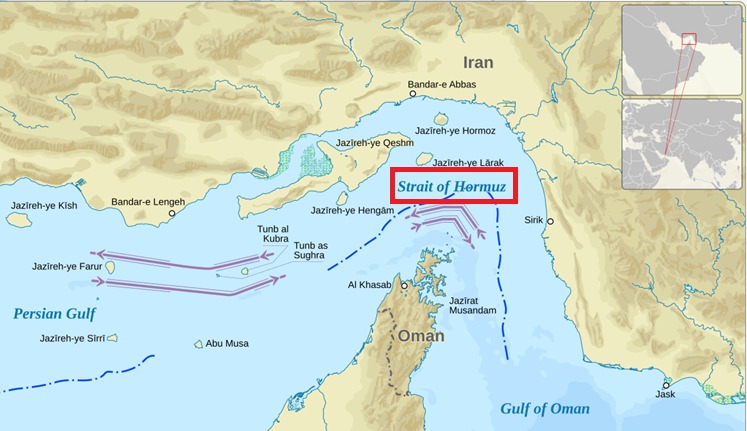
Given that Iran would have to spend a minimal amount of money to oversee the entry of cargo vessels into the Strait of Hormuz, most of this annual revenue of USD140 billion would be ‘net profit’ for Tehran.
Even if Iran spends USD5 billion annually on these expenses, Tehran would still pocket a net profit of USD135 billion.
That is a staggering amount.
For perspective, Egypt’s Suez Canal Authority reported US$4.67 billion in revenue for the 2025/2026 fiscal year.
The income of Egypt’s Suez Canal Authority looks meager when compared to Iran’s prospective income from the Strait of Hormuz if indeed it is able to charge a 7% fee on all cargo vessels passing the maritime corridor.
Indeed, Iran will get control of the world’s most lucrative and profitable tollway.
The disruption in the Hormuz traffic during the last four months has shown that many countries would not mind paying a fee to Tehran as long as it can ensure a steady supply of oil and LNG from the maritime corridor, even if there is no provision under the International Law (International Convention on the Law of the Sea, UNCLOS) allowing a coastal state like Iran to charge for passage through a natural waterway, impose a “toll” or a “service fee”.
In fact, according to Bloomberg, Iran has already started charging a transit fee from commercial vessels crossing the Strait of Hormuz.
The report said that Iran charged as much as USD 2 million per vessel as a transit fee, and many countries paid the fee to Tehran to let their cargo vessels pass from the narrow maritime corridor.
Reports also said that these payments were made in Chinese Yuan.
In March, Lloyd’s List reported that Iran’s IRGC ran a de facto “toll booth” system requiring vetting, clearance codes, and escorts via a controlled corridor.
Meanwhile, the Financial Times reported that transits were mostly linked to Chinese, Indian, or Gulf-linked owners, including some “dark fleet” vessels.
What’s even more is that at USD 135 billion, Iran’s profit from the Strait of Hormuz would beat some of the world’s biggest and most profitable technology companies.
For instance, in 2025, Google’s Alphabet made a profit of USD 132 billion.
Similarly, in fiscal year 2026, Nvidia made a profit of USD 120 billion. Apple made a profit of USD 112 billion. Microsoft made a profit of USD 101 billion. And Saudi Arabia’s oil major Aramco made a profit of USD 105 billion.
These are some of the world’s biggest technology and oil companies, which have reached here after years of hard work and innovation.
However, if Iran’s plans to collect a 5-7% toll fee from all commercial cargo vessels crossing the Strait of Hormuz materialize, Iran will start making more profit than these companies from the first year.
Furthermore, this would be a vicious cycle, as a toll fee of 5-7% would mean that oil prices would go up. This would also mean that insurance prices for these cargo vessels would shoot up, further increasing the oil prices.
As oil prices rise, the absolute value of Iran’s proposed 5–7% toll – calculated on cargo value – would increase in tandem. Consequently, Tehran would benefit twice over: its toll revenues would grow both from higher shipping volumes and from escalating oil prices.
Notably, Iran holds the world’s third-largest oil reserve.
In addition to this windfall gain, another condition of the June Iran-US MoU was that Washington would “undertake with regional partners to develop a definitive mutually agreed plan with at least USD 300 billion for the reconstruction and economic development of the Islamic Republic of Iran.”
Another condition was: “The United States of America undertakes to make fully available for use the frozen or restricted funds and assets of the Islamic Republic of Iran upon the implementation of this MoU. The United States of America and the Islamic Republic of Iran will mutually agree on the procedures related to the release of these funds during the negotiations.”
Estimates of the frozen assets involved ranged from roughly US$12–37 billion; however, some Iranian sources claimed that the frozen assets amounted to over USD 100 billion.
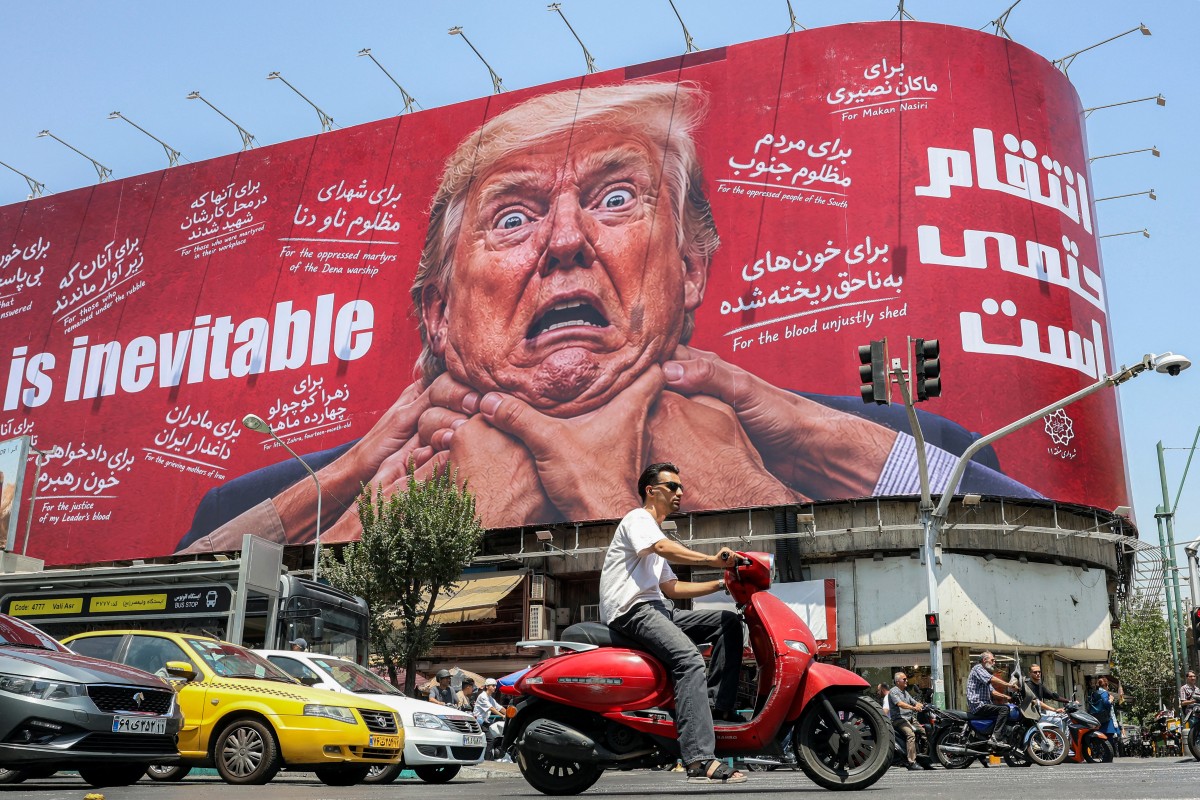
If all these conditions are met, Iran would get a windfall of over USD 500 billion within the first two years. A substantial part of this money is set to be invested in the further development of Iran’s ballistic missile program.
In effect, it could mean that a few years down the line, Iran could be a much stronger adversary, militarily as well as economically.
The repercussions of that for the US and Israel could be devastating.
- Sumit Ahlawat has over a decade of experience in news media. He has worked with Press Trust of India, Times Now, Zee News, Economic Times, and Microsoft News. He holds a Master’s Degree in International Media and Modern History from the University of Sheffield, UK.
- He can be reached at ahlawat.sumit85 (at) gmail.com