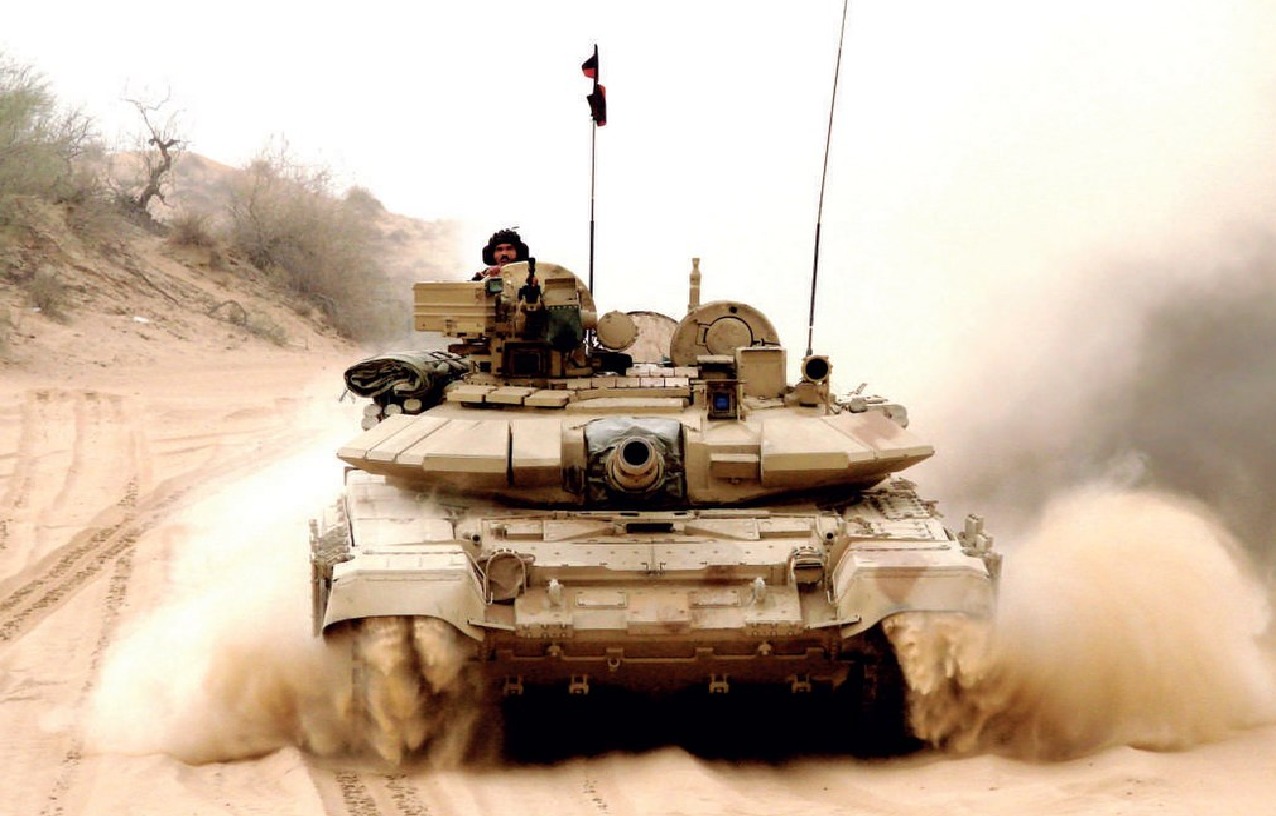
For the first time, Indian Rafales will train against the US Air Force’s F-35 stealth jets on Indian soil.
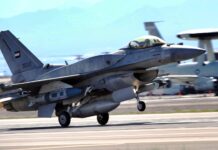
India is hosting Exercise Tarang Shakti at Air Force Station Jodhpur, which the Indian Air Force calls Asia’s biggest. Besides US F-35s, the exercise also includes UAE F-16 Desert Falcons and French Rafale jets.
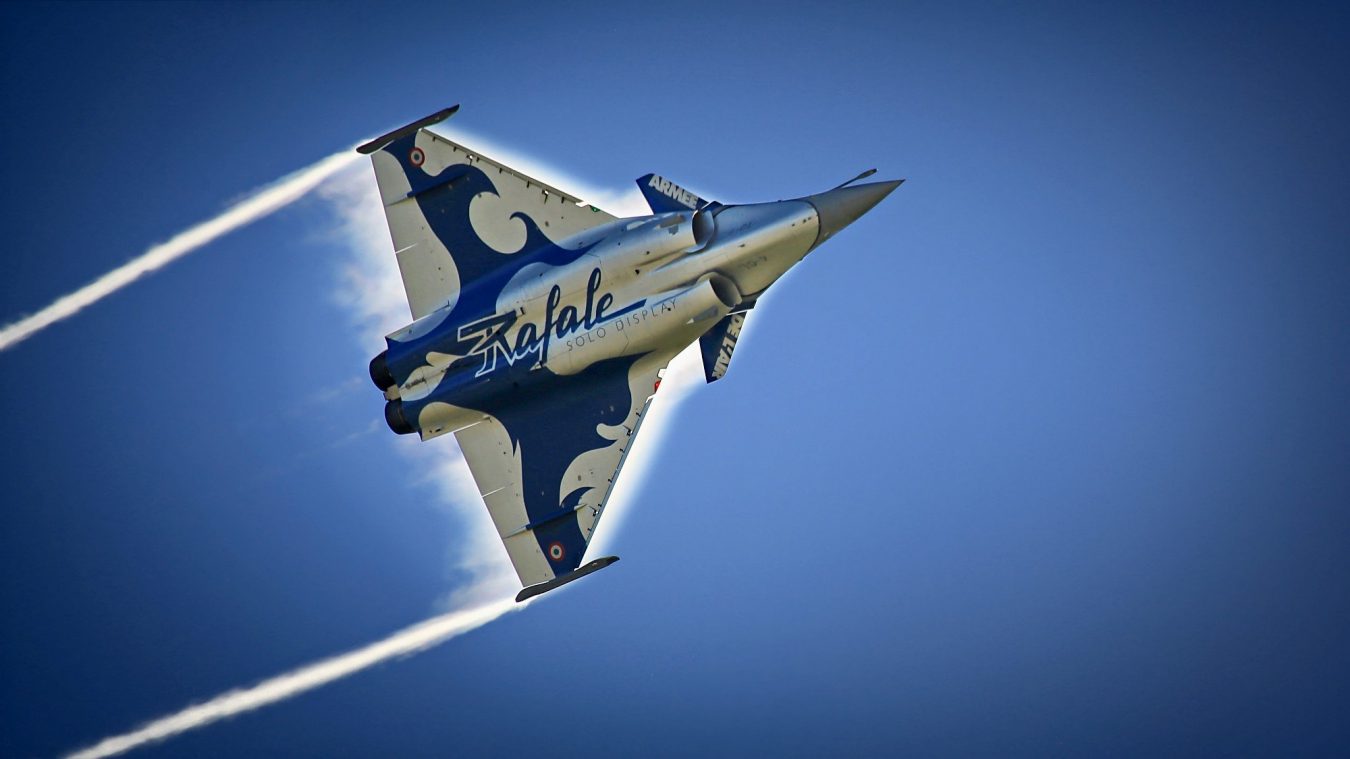
The French Rafales differ from Indian Rafale jets, as they were customized for Indian needs and can operate seamlessly in high-altitude terrain bordering China and Pakistan.
Tarang Shakti is the IAF’s second multinational air exercise and the first to include a fifth-generation fighter. The drills should give India better insight into US stealth jets, helping it prepare for a possible confrontation with China’s J-20 and possibly Pakistan’s J-35A, if it acquires one from Beijing.
Rafales have drilled with F-35s before and even locked in combat drills. But it was a French Rafale, not an Indian one.
During Exercise Trident Atlantic 25, the Air Forces of Finland, France, the UK, and the US participated.
The US Air Force (USAF) sent F-35A Lightning IIs and F-15Es, and the Finnish Air Force participated with F/A-18 Hornets. France dispatched its Rafales, while the UK flew Eurofighter Typhoons.
“This type of exercise, for us, means to train together,” said French Air and Space Force Col. Vincent, a Rafale aircraft pilot at the time. “We know we can fight together, and we know we can exchange and distribute our capabilities.”
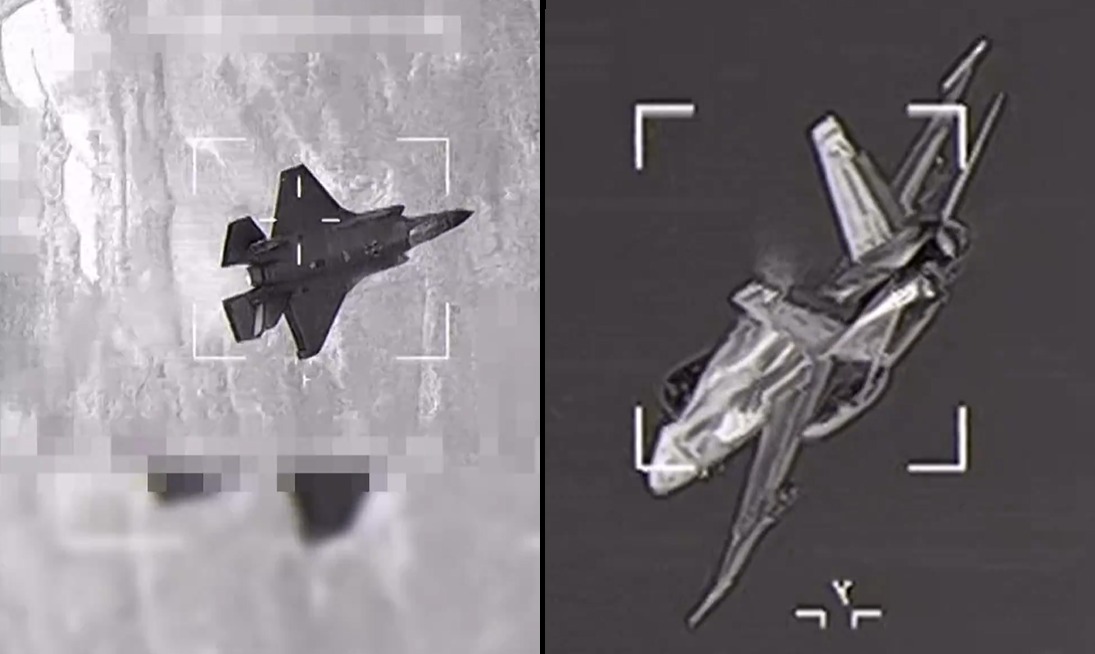
Interestingly, the official X account of the French Air and Space Force posted a clip from Trident Atlantic 25 of what appears to be a mock drill on August 20, two months after the drills concluded.
At 0:15 in the footage, a French Rafale appears to track an F-35 with its IRST — a passive infrared sensor — during a within-visual-range basic fighter maneuver. The clip then shows a lock / “kill” cue on the display. An IRST track does not by itself paint the F-35’s radar-warning receiver. RWR would light only if the Rafale (or another fighter) also locked or illuminated the jet with radar. The video does not establish that. In training, “scoring a kill” means the attacking pilot met the shot criteria in the debrief, not that a missile was fired.
It is relevant to note here that “scoring a kill” in training means only the radar locking, and not actually firing the missile. In fact, the F-35 in question would have heard the radar-lock tone on its RWR (radar warning receiver) when the adversary tracked and locked onto it, an expert told EurAsian Times.
Netizens shared the engagement video, most of whom highlighted how the French Rafale, a 4.5th-generation fighter, dominated and scored a kill against the US stealth fighter.
Interestingly, this was not the first time that a Rafale had locked a US stealth fighter.
When Rafale Locked F-22 Raptor
In November 2009, during a joint drill in the UAE, a Rafale locked a USAF F-22 Raptor in a training duel.
The event occurred when US F-22s visited the UAE to train alongside the Emirati Air Force’s Mirage 2000, the British Royal Air Force’s Typhoons, and the French Rafales.
The F-22s have often been hailed as the world’s best air superiority fighters and performed exceptionally well during the simulated sorties, bringing down six Rafales. However, a French pilot unexpectedly changed the tide. He pushed his plane to the limit, apparently hitting 9Gs, and locked onto a Raptor.
This was the first time that a 4.5th-generation Rafale had scored a kill against the Raptor.
Although American pilots have maintained that their planes have never lost a battle, the French Ministry of Defense posted a video in June on its website showing a Rafale moving into a good position to lock the F-22 within range and launch the infrared-guided Mica missile against the F-22.
Jodhpur will not settle the argument about whether a Rafale “beats” an F-35.
What Tarang Shakti offers the IAF is something more useful: Indian Rafales, Indian controllers and Indian tankers working the same problem from an Indian base, drilling against arguably the world’s best stealth aircraft.
France might have managed to lock one F-35 and one F-22 Raptor, but, according to American accounts, it also lost 6 of its own jets.
The scenario for the IAF is different. Can its Meteor- and SPECTRA-armed Rafales find, track, and challenge a low-observable opponent in an India-controlled environment? Remember, Indian Mig-21 pilots had managed to stun American F-15 counterparts during Cope India 2004.
- Contact the author at editor (at) eurasiantimes.com
- Follow EurAsian Times on Google News