


The Pentagon has spent over US$31 billion on buying roughly 26 million F-35 spare parts to support the global fleet of the stealth fighters; however, it has kept poor records and failed to accurately keep track of those parts and establish proper oversight procedures, which has imperiled overall aircraft readiness, a new Government Accountability Office (GAO) analysis found.
The report, released on November 9, exposes the unique vulnerabilities created by the Joint Strike Fighter (JSF) program’s vast network of nearly 2,100 global suppliers.
These 2,100 global suppliers include nearly 1,900 high-tech suppliers and nearly 1,000 small businesses spread across more than a dozen countries.
The various spares supplied by these suppliers are stored at more than 700 locations worldwide – both government-run and contractor-managed facilities – creating a massive and ongoing challenge to accurately monitor inventories at every site while continuously tracking parts as they move between suppliers, maintenance facilities, and storage locations.
These ongoing accounting and tracking challenges have turned one of the unique strengths of the F-35 JSF program, a collaborative effort between over a dozen partner nations to leverage the technological know-how and production strengths of each nation, into a vulnerability where tracking the movements of millions of spares between these 700 storage locations has become an unmanageable task.
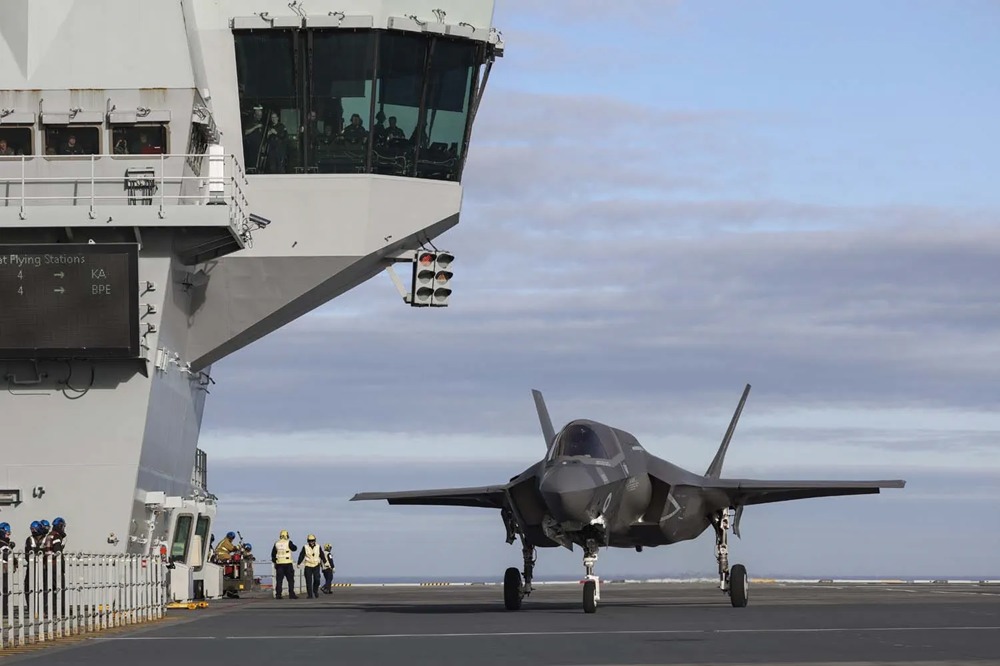
This failure to accurately track the roughly 26 million spare F-35 parts has led to financial losses and has further increased the overall cost of the F-35 JSF program, already the Department of Defense’s (DOD) “most costly weapon system in history, with overall costs for the F-35 program estimated to be more than US$1.9 trillion over its life cycle,” the GAO report said.
For instance, the GAO report notes that the F-35 Joint Program Office (JPO) has failed to track and recover more than 1 million spare parts worth US$85 million that went missing between 2018 and 2023.
“As of March 2026, F-35 JPO did not know the status of lost F-35 parts valued at over US$85 million that GAO reported on in 2023,” it said.
GAO Report Highlights F-35 Spare Parts Accounting Problems
“The Department of Defense (DOD) continues to face challenges in accounting for F-35 parts, such as engines and tires,” the GAO report said, adding that “although these are DOD-owned parts, DOD does not maintain complete records of the parts.”
The report underlines various deficiencies in the DOD’s accounting system for tracking F-35 spare parts.
GAO found that DOD has not established procedures to ensure its records are sufficient to account for and financially report on the parts.
For instance, records of F-35 parts in the F-35 program’s accountable property system of record (APSR) remain unreliable, since they do not reflect real-time changes and are inaccurate and incomplete.
Furthermore, the F-35 Joint Program Office (JPO) has not fully developed procedures to validate the accuracy of data it enters into the APSR.
GAO also found that the F-35 JPO’s physical inventory procedures did not adequately verify the existence of F-35 parts or validate their completeness.
“Without accurate data in its APSR and properly executed inventory procedures for F-35 parts, DOD management will not have the information it needs to support warfighter readiness and reliable financial reporting,” the GAO report warns.
Notably, the F-35 program has long suffered from serious mission readiness woes.
Earlier this year, the GAO reported that the mission-capable rate for the F-35, or the amount of time that it’s available to perform one mission, fell from 67% to 44% between fiscal years 2021 and 2025.
During the same time, the full mission-capable rate, or the percentage of time that the F-35 can perform all its missions, declined from 38% to 25%
The GAO report identifies the failure to reliably track F-35 spare parts as one reason for the F-35’s poor mission-capability rates.
Unreliable inventory records could make it difficult to determine which parts the program needs and in what quantities, it said.
“Accountability of these parts supports mission readiness and efficiency by providing management with information such as where parts are, who is responsible for them, and what condition they are in.”
In 2025, the DOD launched a US$13.7 billion readiness plan to improve aircraft availability by the end of the decade.
However, without improving spare part tracking procedures, the F-35 JSF program will continue to suffer from poor maintenance, repair, and mission-capability rates.
The GAO report warned that it could also impact the DOD’s warfighting readiness.
“The operational readiness of the DoD warfighter also depends on the accuracy of the information in these records, including asset location, quantity, and condition,” it said.
Furthermore, the GAO said the F-35 program’s continued spare-parts tracking problems have contributed to the DOD’s overall inability to pass its own financial audits, and it will not improve unless the DOD addresses them.
“Unless it implements procedures for monitoring losses, F-35 JPO will not know the full extent of losses of F-35 parts, and its ability to mitigate losses in the future will be decreased, reducing its ability to detect fraud, waste, or theft.”
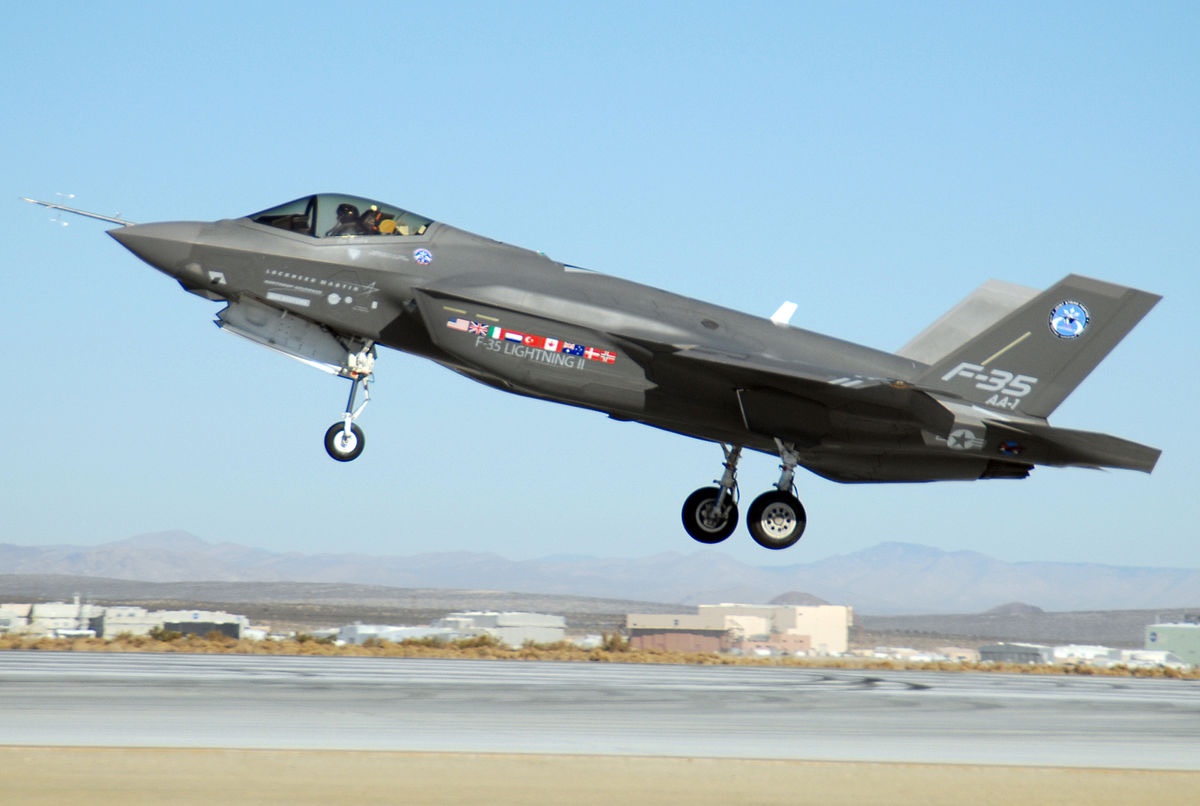
The GAO report also noted that the JPO has spent at least US$17 million since 2020 conducting physical inventories of F-35 assets across contractor- and government-managed facilities holding the parts, but those inventories have failed to fully verify the existence or completeness of all parts.
“This is because some contractor data has been shown to be inaccurate, the locations of some subcontractor facilities holding F-35 parts are unknown to the Pentagon, and parts in transit can be left out of the inventory process altogether.”
GAO recommended that DOD build and implement new, specific procedures to monitor F-35 parts losses, determine the cost of these lost parts, develop new training for property managers, and study its property management program to determine how many officials it needs to better monitor the F-35 parts program.
The F-35 Joint Program Office spokesperson said that the office concurred with the GAO recommendations.
“To enhance accountability and mitigate the loss of F-35 parts, the department is implementing targeted actions to monitor and analyze loss trends. The JPO is actively developing program-specific procedures and tailored training for Accountable Property Officers, alongside a detailed plan to define and structure the APO program,” a JPO spokesperson said.
“The JPO is modernizing its property management infrastructure by establishing direct, real-time data interfaces between government and prime contractor systems. This integration directly addresses previous system gaps to ensure seamless accountability of F-35 spare parts,” he added.
Notably, unreliable inventory logs and spare parts tracking procedures have not only caused financial losses and reduced mission-capability rates, but have also created national security threats.
In September, it was reported that a package of sensitive F-35 parts, including a canopy that included sensitive stealth technology, sent by Australia and headed to the US, went missing and resurfaced in Hong Kong, a region tightly controlled by Beijing, raising the possibility that China could have access to key components of the highly classified weapon system.
The F-35 is the world’s most produced fifth-generation fighter jet. In fact, there are more F-35s in the world than all other fifth-generation fighters – the F-22 Raptor, Russia’s Su-57 Felon, and China’s J-20 Mighty Dragon and J-35A – combined.
The US military uses F-35s across its three forces: the US Air Force (USAF), the US Navy (USN), and the US Marine Corps (USMC), and the fighter is also exported to 18 countries.
Last month, the Pentagon and Lockheed Martin agreed to a framework agreement to buy F-35 Joint Strike Fighters for the next 10 years.
Under the multi-year production and sustainment agreement, Lockheed Martin will produce 1,560 F-35 Lightning II aircraft for the US and its international customers at a rate of 156 fighters per year. The US will buy at least 850 of these stealth fighter jets.
The agreement also covers associated initial spares, 10 years of modification kits, and a sustainment package for the global F-35 fleet.
However, as the GAO report highlights, unless the DOD fixes spare-parts accounting and tracking problems, the nearly two trillion-dollar program will continue to suffer from spare-parts unavailability, cost overruns, and poor maintenance and mission-capability rates.
- Sumit Ahlawat has over a decade of experience in news media. He has worked with Press Trust of India, Times Now, Zee News, Economic Times, and Microsoft News. He holds a Master’s Degree in International Media and Modern History from The University of Sheffield, UK.
- He can be reached at ahlawat.sumit85 (at) gmail.com