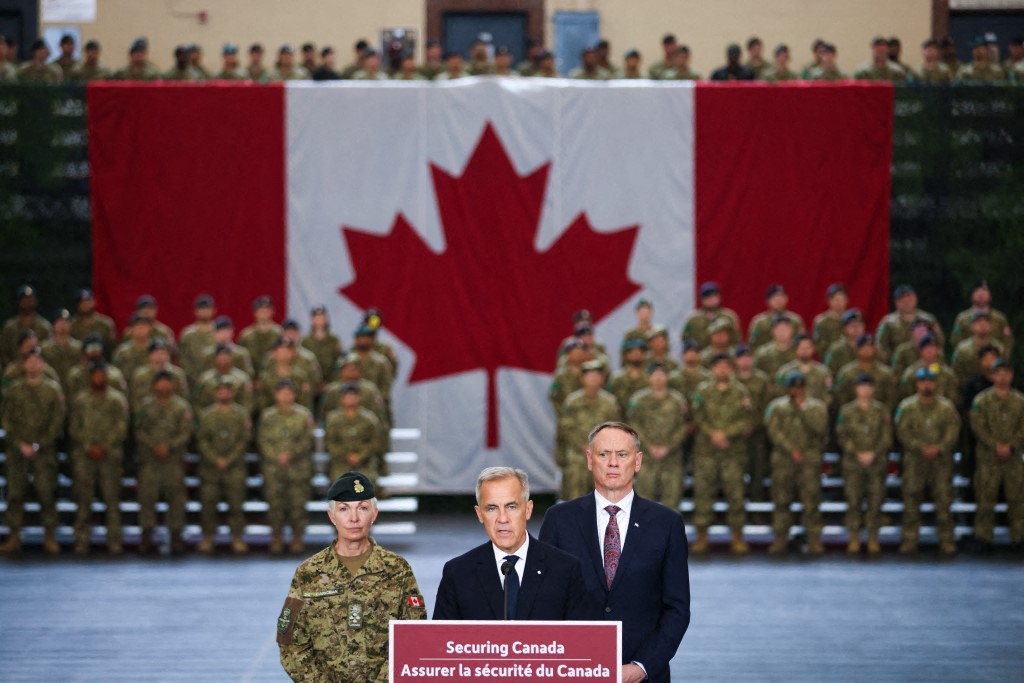
US President Donald Trump’s periodic assertion that he would wipe out the Iranian regime. However, a growing global perception now is that America has not only lost the war to Iran but also is not in a position to win any major war unless the Pentagon seriously rethinks its military operations and raises its defense budgets significantly.
That system is based on the 1986 Goldwater-Nichols Act, whose “unintended consequences” and lagging defense spending critics believe have weakened America’s ability to deter its adversaries. They say a review is the need of the hour.
Critics remind us that after the enactment of the Goldwater-Nichols Act (GNA), apart from one major war against Iraq in 1991, the “Operation Desert Storm” and the short “Operation Absolute Resolve”, a pre-dawn military raid in Caracas in January this year that resulted in the capture of Venezuelan President Nicolás Maduro and his wife, Cilia Flores, America has not won any war it has fought in the last 40 years.
President Bill Clinton ordered the full withdrawal of US military forces from Somalia following the Battle of Mogadishu on October 3–4, 1993.
The 1999 NATO air campaign, prompted by the US, successfully forced Yugoslav forces out of Kosovo, but it left a lasting, unresolved political end-state. The strikes compelled Yugoslav President Slobodan Milošević to capitulate and withdraw all military, police, and paramilitary forces from Kosovo, but it took another 9 years for Kosovo to declare its independence from Serbia (2009), a declaration that the United Nations has yet to recognize as legitimate. Russia and China continue to say that it is a part of Serbia.
US military operations in Afghanistan continued for 20 years, from 2001 until 2021. It cost the Americans around $2.3 trillion. But the Taliban is back in Kabul and looks more secure than ever before.
US military operations in Iraq from 2003 to 2011 did topple Saddam from power, but could not end the insurgency there, the insurgency that facilitated the emergence of the brutal ISIS. Even now, parts of the Iraqi territory are under the control of Iran, where its new “Supreme Leader ” is hiding and leading the war against America.
The Iran war has already cost the US military over $43.6 billion, while severely straining its reputation as a reliable security guarantor for the Arab Gulf states. Launched alongside Israel on February 28, 2026, a conflict initially promised to last only a few weeks has stretched over seven months, dragging the region into economic distress and forcing Gulf allies to reassess their dependency on Washington.
Analysts like Gary Anderson, who retired as Chief of Staff of the Marine Corps Warfighting Lab and served as a Special Advisor to the Deputy Secretary of Defense, argue that “the Military Decline Since Desert Storm Is Both Physical and Mental” and “the Goldwater-Nichols Act should be revised.”
Anderson argues that “the hubris that resulted from that victory ( Operation Desert Storm) became a curse because it resulted in several assumptions that became conventional wisdom among politicians, the military, and society in general. Those false assumptions have directly resulted in the quagmire of Iran today.”
But then, though it may sound ironic today, the fact remains that the Goldwater-Nichols Act was envisioned after the America’s colossal failure in Vietnam, the failed Iran hostage rescue mission (Operation Eagle Claw, the US military rescue mission launched on April 24–25, 1980, to free 53 American hostages being held in Tehran), and the the tragic Marine barracks bombing in Lebanon ( twin truck-bomb attacks by Islamic Jihadists that killed 299 American and French service members in Lebanon on October 23, 1983).
US strategic circles widely felt there was no proper coordination among the Services when the country needed joint operations. No one service had the capabilities to undertake the mission, but they were not used to operating complex interdependent missions, so went the argument.
It is against this background that veteran Republican Senator Barry Goldwater from Arizona, who, incidentally, was the party’s presidential candidate against the incumbent President Lyndon B. Johnson in 1964, partnered with Representative William Flynt “Bill” Nichols, a Democratic Congressman from Alabama, to pass the landmark Department of Defense Reorganization Act of 1986, named after them. President Ronald Reagan signed it on October 1, 1986.

The Act did what was then argued to be three “revolutionary” things:
One, it made the Chairman of the Joint Chiefs more powerful, hitherto first among equals with the Service Chiefs. Before, the Chairman was only a convener. But now, he became the principal military adviser to the President and controlled the strategic direction.
Second, the Act created clear chains: President to Secretary of Defense to Combatant Commanders of the COCOMs (Combatant Commands) like CENTCOM, EUCOM, and PACOM.
COCOMS are “Unified Combatant Commands” in the United States military that combine forces from multiple service branches under a single four-star general or admiral to execute broad, continuous missions. They report directly to the President through the Secretary of Defense.
In the process, Service Chiefs were reduced to only “organize, train, and equip” — they recruit soldiers, buy tanks, but they do not fight wars. COCOMs fight wars, with the Chairman becoming a consensus-builder.
The real power, thus, moved to Combatant Commanders, so much so that it is said that they have their own foreign policy, their own air forces, their own armies, often physically closer to foreign capitals than to Washington.
Three, “jointness” among the services became mandatory. To become a general, one now has to serve in a joint assignment. Service parochialism became career suicide. Interoperability became law.
However, in retrospect, and given the military failures over the last 40 years mentioned above, the GNA is coming under increasing critical scrutiny.
According to historian Andrew Bacevich, the GNA fundamentally altered how American national strategy is executed, creating structural flaws in how policy relates to force.
He makes four important points:
First, the Act gave massive resources and regional authority to geographic combatant commanders (like CENTCOM or PACOM), making them more powerful than top US diplomats. These regional military commanders effectively became America’s regional foreign policy makers—”proconsuls” who viewed diplomatic problems through a military lens.
Secondly, by removing the Joint Chiefs of Staff from the direct operational chain of command and making the Chairman the sole military advisor to the President, the Act isolated operational planning from daily political policymaking. The military began planning how to fight without a reciprocal civilian mechanism to plan what happens “after” the fighting stops.
Thirdly, the Act made the American military devastatingly efficient at destroying targets, a capability demonstrated in the 1991 Gulf War. However, this operational efficiency masked a strategic vacuum. As seen later in Iraq and Afghanistan, the military could rapidly overthrow a regime (operational success) but lacked the structural connection to civilian policy to build a durable political settlement (strategic failure).
When operational capability becomes an end in itself, policy is forced to adapt to what the military “can” do, rather than the military adapting to what policy “requires”. Bacevich’s critique highlights that by perfecting the instrument of war while neglecting the political art of strategy, the United States may have gained the ability to win battles, not the war.
Similarly, in a report for the Mitchell Institute Aerospace Studies, Retired Gen. T. Michael Moseley, former Air Force chief of staff; retired Maj. Gen. Larry Stutzreim, Mitchell’s director of research; and Richard B. Andres, a non-resident senior fellow at Mitchell, have argued that the bureaucratic structural issues created by the GNA heavily restrict long-term strategic threats and modern warfighting capabilities.
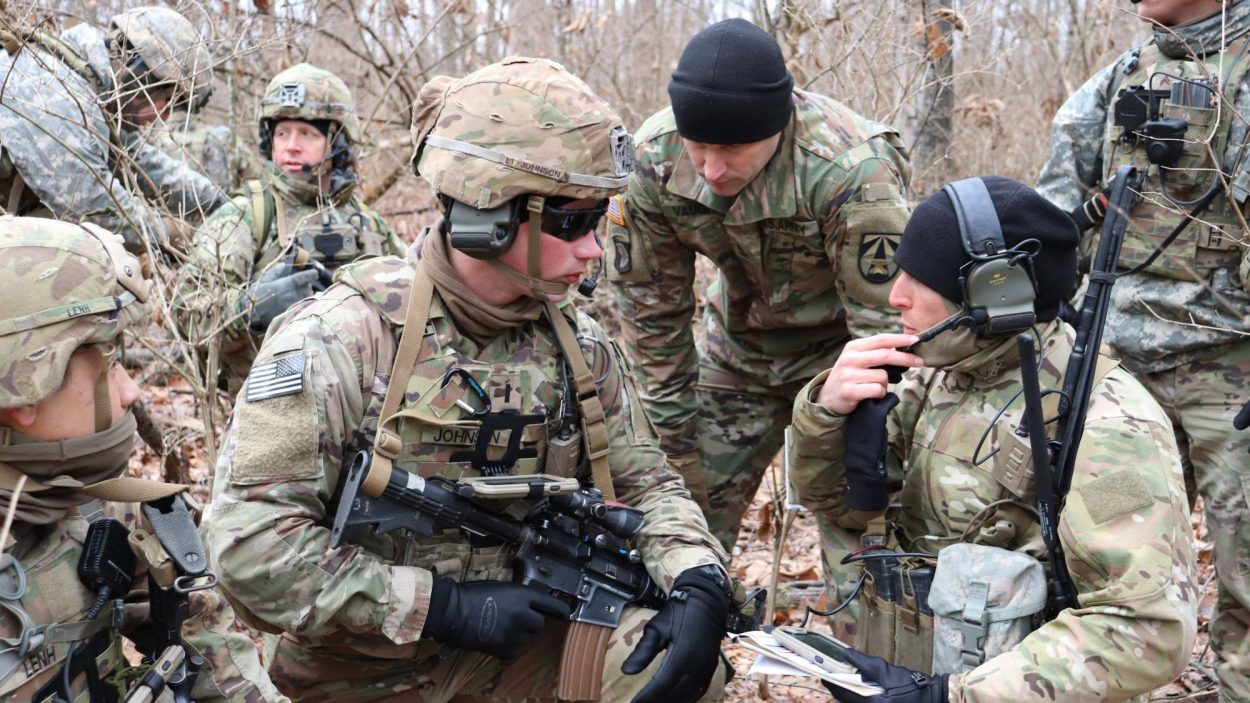
Among their points, three are particularly noteworthy:
First, with COCOMs dominating the power structure, the Pentagon focuses on short-term, immediate operational demands (like regional deployments) at the expense of long-term defense procurement, technological experimentation, and modernization.
Second, the current joint framework makes it nearly impossible to pivot resources effectively between branches. For instance, modernizing against great power threats requires heavily funding space, cyber, and air capabilities, but GNA bureaucracy forces the budget to be distributed more or less evenly across services.
Third, the Act unintentionally gave rise to massive, inefficient civilian defensive layers that stall fast-paced procurement and industrial competition.
Accordingly, the three authors have recommended that the GNA should be “reformed” or “replaced,” that there is a critical need “to re-introduce competition,” both between the individual military branches and within the defense industrial sector to drive innovation, and that the US defense budget should always remain between five and six percent of GDP to properly align resources with modern geopolitical threats.
However, some proponents still support the GNA.
Scholars like James Locher and John J. Hamre argue that the Act is being blamed for “political failures”. For them, if America has been perceived to have lost many wars, it is because the Presidents have refused to define victory. No organizational chart can compensate for Presidents who want war without costs, nation-building without nations, and withdrawal without consequences.
Hamre seems to have some valid points when he argues that the GNA cannot be blamed for the much more complicated nature of security threats these days – ambiguous military threats (often called “gray zone” threats), actions by adversaries that avoid clear and objective red lines for predictable response, non-state actors, and cyber warfare that has no boundaries.
All things considered, a Congressional repeal of the Goldwater-Nichols Act remains highly improbable. However, the debate over whether it needs reform is likely to continue.
Incidentally, the debate has direct relevance to India as it contemplates its own version of Goldwater-Nichols through “Theatre Commands”. The Indian Air Force’s public questioning of the idea is not turf protection, as it is often portrayed, but a doctrinal warning drawn from the American experience.
The IAF argues that air power is a finite, highly technical resource that cannot be parcelled into peninsula-sized theatres without losing its flexibility, range and ability to swing from the northern to western front in hours.
An integrated command that subordinates the Air Force to land-centric theatre commanders risks repeating the most criticized feature of the Goldwater-Nichols Act: the service that provides the most strategic effect gets the least strategic voice.