Canadian Prime Minister Mark Carney said he has examined the remote possibility of US military action against Canada, describing the scenario as an “extreme tail risk” that a responsible government cannot ignore.
In an interview with The New York Times, Carney said leaders in his position have a duty to assess highly unlikely events that would nonetheless cause severe damage.
“I think you have a responsibility in these roles to look at extreme tail risk,” he told the newspaper. “That’s just risk management. That’s not a base case, but it would be irresponsible not to.”
Carney declined to give details of any planning. The New York Times reported that he paused before answering when asked whether he had taken talk of annexation or force seriously. His office later said it had nothing to add.
President Donald Trump has repeatedly referred to Canada as a potential “51st state.” In January 2025, he ruled out using military force to annex the country, while saying he would consider “economic force.”
Carney said the two leaders still speak “frequently.”
“From my perspective, we have a good relationship in the sense of we can pick up the phone and talk to each other about issues,” he told NYT. “He’s direct. I’m direct.”
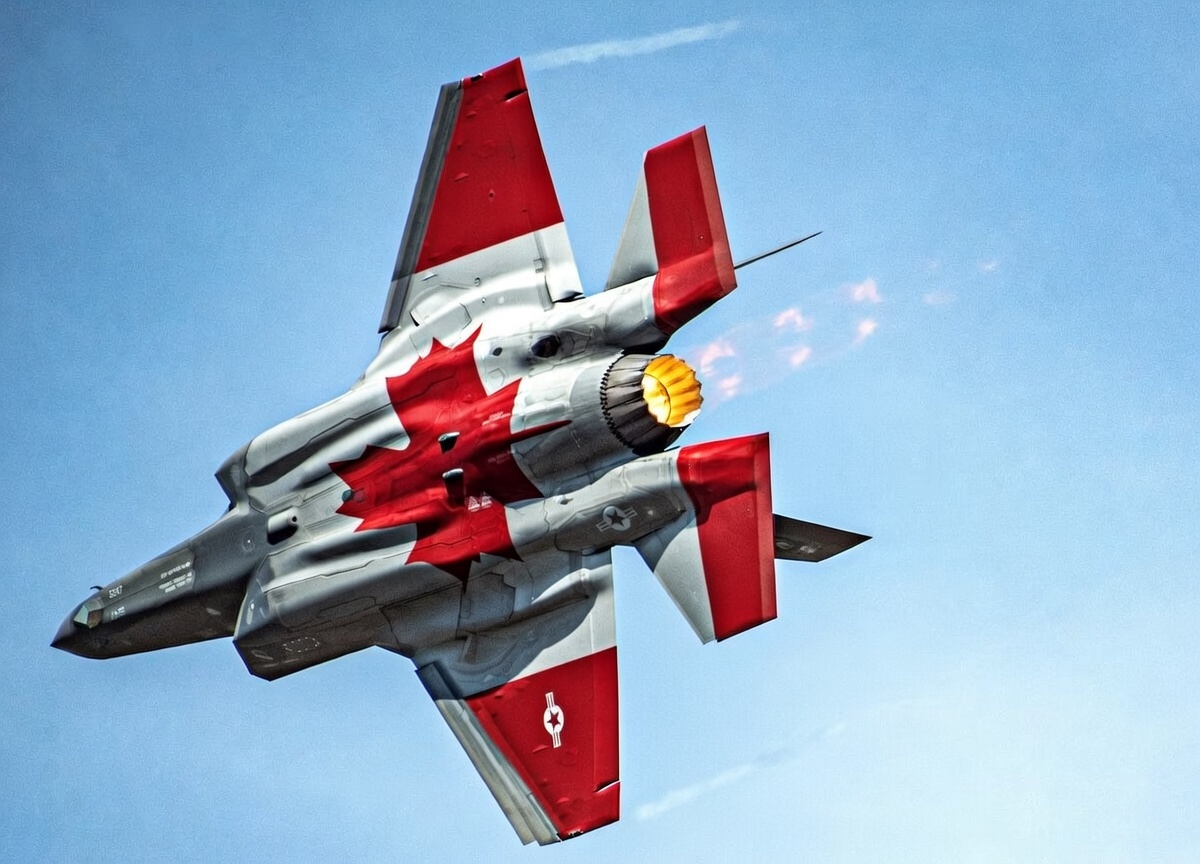
Carney also said that Ottawa would diversify away from Elon Musk’s Starlink satellite service and was reviewing plans to buy American F-35 fighter jets. He argued that even under a future US president, Canada would be a stronger partner if it broadened its trade and supply links.
US-Canada Relations
In 1941, British PM Winston Churchill described the US-Canada border as “that long frontier from the Atlantic to the Pacific Ocean, guarded only by neighborly respect and honorable obligations… an example to every country and a pattern for the future of the world.”
Two decades later, US President John F. Kennedy, while addressing the Canadian Parliament, said that “Geography has made us neighbors. History has made us friends. Economics has made us partners. And necessity has made us allies.”
The special US-Canada relationship also manifested itself in multiple security and economic alliances.
Canada and the US are two of the founding members of NATO. They are also part of the “Five Eyes” intelligence-sharing alliance, which includes the US, Canada, Australia, New Zealand, and the UK. Both nations are part of NORAD, a binational defense command that defends North American airspace and waters.
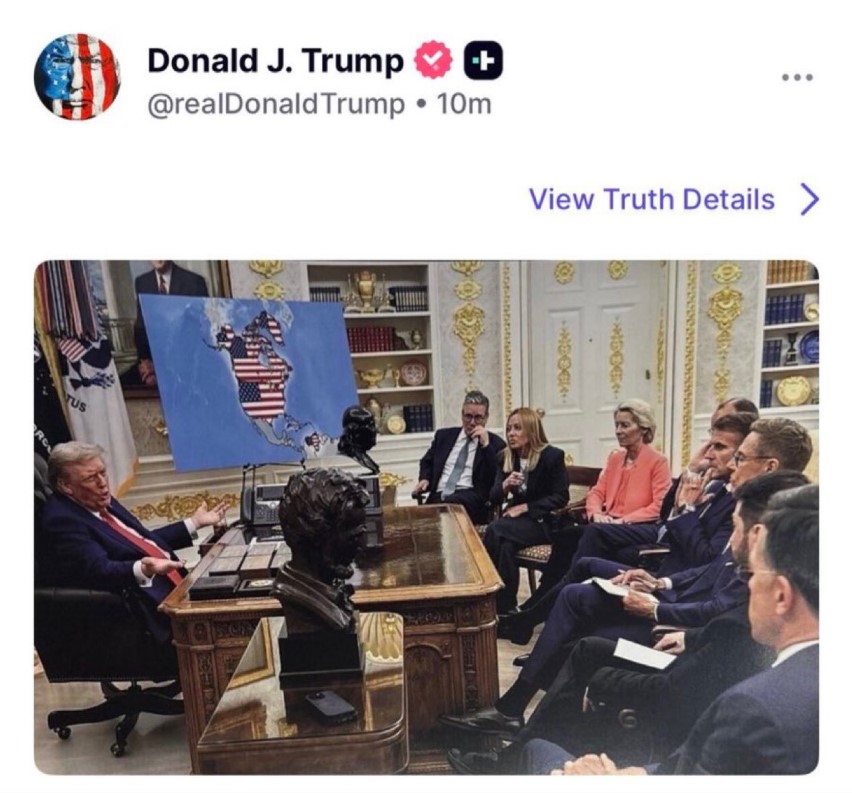
On January 20, Trump posted an image on his social media platform of a map showing Canada and Venezuela covered in the US flag, implying a full American takeover of both countries.
Canada and the US share an 8,891-km-long border, running from the Atlantic to the Pacific (6,416 km) and in Alaska (2,475 km), making it the world’s largest land border. However, the border is largely unmanned because of the special relationship between the US and Canada.
However, amid rising tensions, the Canadian Armed Forces have modeled a hypothetical U.S. military invasion of Canada and the country’s potential response, as EurAsian Times reported earlier.
Two senior government officials who spoke to the Globe and Mail said that the military planners are modeling a U.S. invasion from the south. The modeling is based on a realistic analysis of the Canadian military strength.
Canada does not have enough military personnel or the sophisticated equipment needed to thwart a U.S. invasion. So, the military envisions unconventional warfare in which small groups of irregular military or armed civilians would resort to ambushes, sabotage, drone warfare, or hit-and-run tactics.
One of the officials said the model includes tactics used by the Afghan mujahedin in their hit-and-run attacks on Soviet soldiers during the 1979-1989 Soviet-Afghan War. These were the same tactics employed by the Taliban in their 20-year war against the U.S. and allied forces that included Canada.
The aim of this strategy would be to impose high casualty figures on the US military, making the occupation of Canada a costly affair.
However, General Jennie Carignan, Chief of the Defense Staff, has already announced her intention to create a reserve force of volunteers numbering 400,000 or more. The officials said they could be armed or asked to provide disruptions if the U.S. becomes an occupying power.
Retired Major-General David Fraser, who commanded Canadian troops in Afghanistan alongside the United States, said Canada could also use drones and tank-killing weapons like the Ukrainians used against the Russians to blunt their invasion in February 2022.
Fraser also said that if the US attacks, Canada will get support from democratic countries such as the UK, France, Japan, and Germany.
“You know, if you come after Canada, you are going to have the world coming after you, even more than Greenland. People do care about what happens to Canada, unlike Venezuela,” Fraser said. “You could actually see German ships and British planes in Canada to reinforce the country’s sovereignty.”
Retired Lieutenant-General Mike Day, who headed Canadian Special Forces Command and served as chief strategic planner for the future of the Canadian Armed Forces, said that the U.S. would have great difficulty occupying a country the size of Canada.
“We wouldn’t be able to withstand a conventional invasion. We would, for a limited period of time, be able to defend a very small civilian population, like the size of Kingston,” he said.
“Notwithstanding the size of the American military, however, they do not have the force structure to occupy, let alone control every major urban center in Canada.”
“Their only hope would be a Russian-like drive to Kyiv and hope that works and the rest of the country capitulates once they seize the seat of power in Ottawa,” he added. “Like Ukraine, it would be inconceivable to me that we would give up if they seized our capital.”
- By Sumit Ahlawat
- He can be reached at ahlawat.sumit85 (at) gmail.com
- Article modified with the latest information