


As Nvidia launches an internal investigation into whether its CEO, Jensen Huang, was targeted by a female Chinese intelligence operative, the issue has put a fresh spotlight on why Beijing remains a more potent espionage threat to the U.S. than the Soviet Union ever was during the Cold War.
On November 8, Nvidia said it has opened an investigation into co-founder and CEO Jensen Huang’s relationship with a Chinese businesswoman who intelligence agencies said was a Chinese spy.
Meanwhile, Huang, in an internal email to staff, confessed to having an extramarital affair and apologized to his wife, children, and the company.
Notably, last week, The New York Times reported that Huang was reportedly close to a Chinese woman, Alice Huang, an executive at the Singapore-based Cloud-computing company Megaspeed.
Alice Huang and Megaspeed both have been under US surveillance for more than a year.
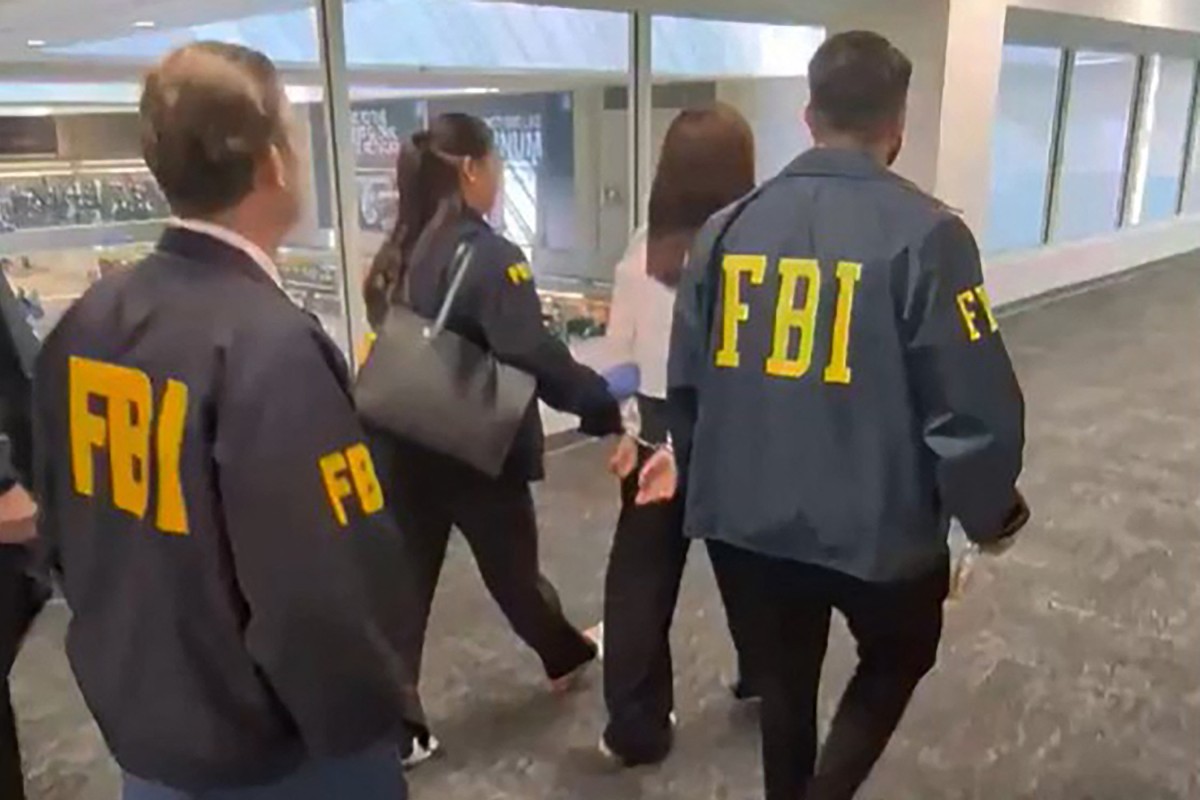
The NYT report said that US authorities were concerned that Alice Huang was a Chinese intelligence asset while she led Megaspeed.
Megaspeed has been under US surveillance at least since 2024 for allegedly contravening U.S. export controls involving the highest-powered Nvidia chips. The company allegedly helped Beijing bypass strict U.S. export controls on Nvidia AI chips.

JOEL SAGET / AFP
The issue has once again brought into the limelight Beijing’s complex, multi-layered, aggressive espionage campaigns targeting the U.S., its defense companies, think tanks, tech firms, and their executives, for technology theft.
In fact, these China-sponsored espionage campaigns dwarf anything that the Soviet Union has managed during the nearly five decades of the Cold War, and yet, there is not sufficient recognition of this threat in the US.
Consider, for instance, how the KGB still enjoys a larger-than-life status in the American psyche, while few could even name its Chinese counterpart, the Ministry of State Security (MSS), or Guoanbu.
The Extent of Chinese Spying in the U.S.
The Jensen Huang story may seem unusual because of the people involved.
A young, attractive female Chinese spy and one of the world’s richest people, who immigrated to the US at the age of nine and co-founded the world’s most valuable company, Nvidia, valued at a whopping US$4.5 trillion.
The story is worthy of a spy thriller. However, this is by no means the only Chinese espionage scandal.
In 2023, the U.S.-based think tank Center for Strategic and International Studies (CSIS) published a research paper, ‘Survey of Chinese Espionage in the United States Since 2000,’ which listed 224 reported instances of Chinese espionage directed at the United States.
The list did not include the more than 1200 cases of intellectual property theft lawsuits brought by U.S. companies against Chinese entities in either the U.S. or China.
The paper also found that since Xi Jinping came to power in Beijing, the motives behind Chinese espionage have fundamentally changed.
“When Xi Jinping took office, first as Chair of the Central Military Commission in November 2012 and after he became President in March 2013, one of his first acts was to repurpose and reorient China’s collection priority to better serve long -term goals, clamping down on what appeared to be collection by some PLA units intended for personal gain, i.e., stealing commercial technology and providing it to private companies for cash or favors.”
Under Xi, the paper concluded, Chinese espionage overwhelmingly pursues China’s strategic objectives.
Furthermore, “the incidents of Chinese espionage far outnumber those by any other country, even Russia,” it said.
These China-sponsored espionage activities cost billions of dollars to the US economy and created “immeasurable damage to U.S. national security with the theft of weapons technology, including nuclear weapons test data.”
The Commission on the Theft of American Intellectual Property has estimated that the US lost up to US$600 billion a year due to trade secret theft. China has been blamed as the main source of this loss.
China is also organizing competitions for U.S. startups to access sensitive business plans.
The paper also identified the various means adopted by China for these espionage activities, including but not limited to hacking, financial coercion, honey traps, cyber warfare, buying property next to a military or research facility, smuggling of items on the export control list via third parties based in countries friendly to the US, and financial incentives for scholars, students, government employees, and people associated with think tanks to supply sensitive and classified information to Beijing.
Thousands of Chinese students and citizens who come to the US every year to study and work are also a fertile ground for recruitment to spy for China.
“Chinese nationals who come to the US to work or study are a fertile ground for recruitment. Often, they intend to return to China or have close family members resident in China, making them more susceptible to coercion.”
Establishing joint ventures with US companies, often through firms based in third countries such as Singapore and Malaysia, with the explicit purpose of stealing trade secrets or Intellectual Property (IP) rights is another tried-and-tested method for Beijing.
For instance, in 2000, Hai Lin, Kai Xu, and Yong-Qing Cheng formed a joint venture with the Datang Telecom Technology Company of Beijing to steal trade secrets from Lucent.
In 2003, Chinese hackers exfiltrated national security information from Naval Air Weapons Station China Lake, including nuclear weapons test and design data, and stealth aircraft data.
In 2005, Chinese hackers infiltrated NASA networks managed by Lockheed Martin and Boeing and exfiltrated information about the Space Shuttle Discovery program.
In 2006, Shanshan Du stole trade secret information from General Motors for a Chinese competitor, Chery Automobile.
Again in 2006, Xiaodong Sheldon Meng, a Chinese national, stole military IP and trade secrets from his former employer, the Silicon Valley firm Quantum3D.
In 2007, in a major breach, Chinese hackers breached the Pentagon’s Joint Strike Fighter project and stole data related to the F-35 fighter jet.
In 2008, the Department of Justice charged Dongfan Chung, a former Boeing engineer, who had been spying for China since 1979 and passed information to Beijing on the Space Shuttle, the C-17 military transport aircraft, and the Delta IV rocket.
Last October, the U.S. Department of Justice arrested and charged Ashley J. Tellis, a prominent U.S. foreign policy scholar, defense strategist, and former White House adviser, with unlawfully retaining national defense information. Federal prosecutors alleged that Tellis exploited his top-secret security clearance to access and remove over 1,000 pages of classified files from secure facilities, which the FBI later recovered from his Virginia home.
However, in May, the case was dismissed “without prejudice,” meaning the case could be reopened against him.
Together, the cases cited above underline the various espionage strategies Beijing uses and highlight how the espionage threat posed by China is much more serious than that of the Soviet Union during the Cold War.
Several factors make Chinese espionage activities much harder to isolate and identify.
Why China Poses a Bigger Espionage Threat Than the Soviet Union
The structure of the Cold War made it much easier to counter Soviet espionage.
During the Cold War, the world was divided into two exclusive blocs, and there were few economic dealings between them, especially between the leaders of the two camps, the US and the Soviet Union.
This economic exclusivity, combined with the Soviet economy’s lack of dynamism, made it much easier for the US to restrict exports of sensitive technology to the Soviet Union.
China’s economy, however, is existentially intertwined with the global economy and even with the US economy.
The US-China annual bilateral trade is nearly US$660 billion, one of the highest globally, and they’re the world’s largest trading economies.
China’s annual global trade exceeds US$6 trillion, and the US’s exceeds US$5.3 trillion.
China is also central to several global supply chains. For instance, China controls nearly 90% of rare earth processing, which is central to the manufacturing of EV vehicles, missiles, stealth fighter jets, medical appliances, semiconductor chips, and several other emerging technologies.
China’s universities and students have become key participants in global knowledge production. This offers China’s military, intelligence services, and industrial firms ready access to technology streams that the Soviets struggled to uncover.
In short, China’s economic ties to the US and the global economy, its role in global supply chains, the dynamism of its economy, developments in information technology, the global internet, and the movement of millions of students and workers across borders make it much more difficult to cut China out of new emerging technologies and enforce export control restrictions.
Consequently, while the Soviet Union was left behind in the technological race, Washington is finding it difficult to isolate China from such technologies, even while all the research and development work is done in the US, and the AI race proves this point.
“We’re not chasing a KGB agent in a smoky guesthouse in Germany anymore,” a senior US counterintelligence official told British tabloid The Times in an interview last year. “Our adversaries – particularly the Chinese – are using a whole-of-society approach to exploit all aspects of our technology and Western talent.”
“China is targeting our startups, our academic institutions, our innovators, our [Department of Defense] DoD-funded research projects. But there’s not enough oversight and action. It’s all intertwined as part of China’s economic warfare strategy, and we’ve not even entered the battlefield,” said Jeff Stoff, a security academic and former China and national security analyst for the US government.
A 2018 Politico report quoted former US intelligence officials saying Silicon Valley’s “open, experimental, cosmopolitan work and business culture” has led to a newer, “softer,” “nontraditional” type of espionage that mostly targets trade secrets and technology.
However, despite this multi-faceted espionage approach adopted by Beijing that involves everything from ‘sex warfare’ to cyber attacks, there is much less awareness of the threat within the United States.
Compared to the overt, immutable, ideological battle lines of the Cold War, modern Chinese espionage hides in plain sight and exploits the very strengths of the US economy, such as its openness, global integration, cosmopolitan workforce, and a collaborative spirit.
The Chinese espionage threat cannot be tackled unless its multifaceted nature is identified; until then, incidents like these will continue to happen.
- Sumit Ahlawat has over a decade of experience in news media. He has worked with Press Trust of India, Times Now, Zee News, Economic Times, and Microsoft News. He holds a Master’s Degree in International Media and Modern History from the University of Sheffield, UK.
- He can be reached at ahlawat.sumit85 (at) gmail.com