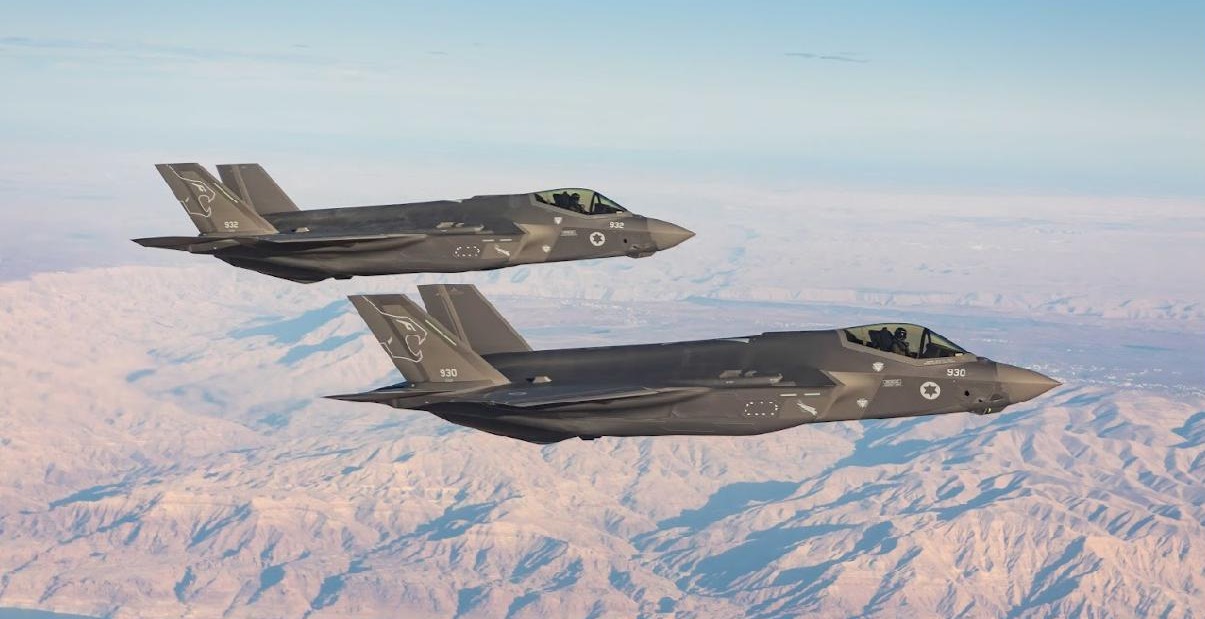
China released the teaser footage of the fifth prototype of its sixth-generation fighter jet, the J-36. The big question is: has Beijing leapfrogged the U.S. F-47 aircraft?
China Military Bugle, the official press account of the People’s Liberation Army, published a four-minute video on July 26, marking the 10th anniversary of China’s first heavy transport aircraft, the Y-20, entering service.
In the video’s last scene, one of the Y-20 co-pilots asks his captain: “Who are we refueling today?”
“First the ‘Master Six’, then the ‘Little Six’,” the captain replies.
The final shot clearly shows the now familiar three-engine tailless J-36 flying next to the Y-20.
In Chinese defense circles, “Master Six” is an informal nickname for the H-6 strategic bomber, and “Little Six” is a reference to the sixth-generation fighter.
PLA just hinted at the 6th-gen fighter in the video Y-20's 10th anniversary service!
"Captain, who are we refueling today?"
"First 'Sixth Master' (H-6), then 'Little Six' (6th-gen)."
The final shot clearly shows the unannounced but well-known 6th-gen jet. pic.twitter.com/dmVdErtXmO
— Li Zexin 李泽欣 (@XH_Lee23) June 28, 2026
Notably, while there have been multiple videos and pictures of the J-36, this is the first time that the video of the unusual, three-engine fighter jet has been released in official Chinese media.
This is seen as China’s first official acknowledgment of the existence and flight testing of the next-generation fighter jet.
Online videos and pictures of the J-36 have been circulating since December 2024, when China simultaneously unveiled two next-generation stealth aircraft, dubbed J-36 and J-50, during flight tests near Chengdu, Sichuan.
The J-36’s trijet design, featuring a blended double delta wing structure, was immediately documented. However, those videos were shot from the ground, and China’s government, military officials, or aviation companies did not make any comment on the new fighter jet.
Nearly three months later, in March 2025, the J-36 made a second appearance over Chengdu. This time, it flew solo, and the videos gave clear views of the aircraft’s trijet configuration, dorsal intake, and control surfaces.
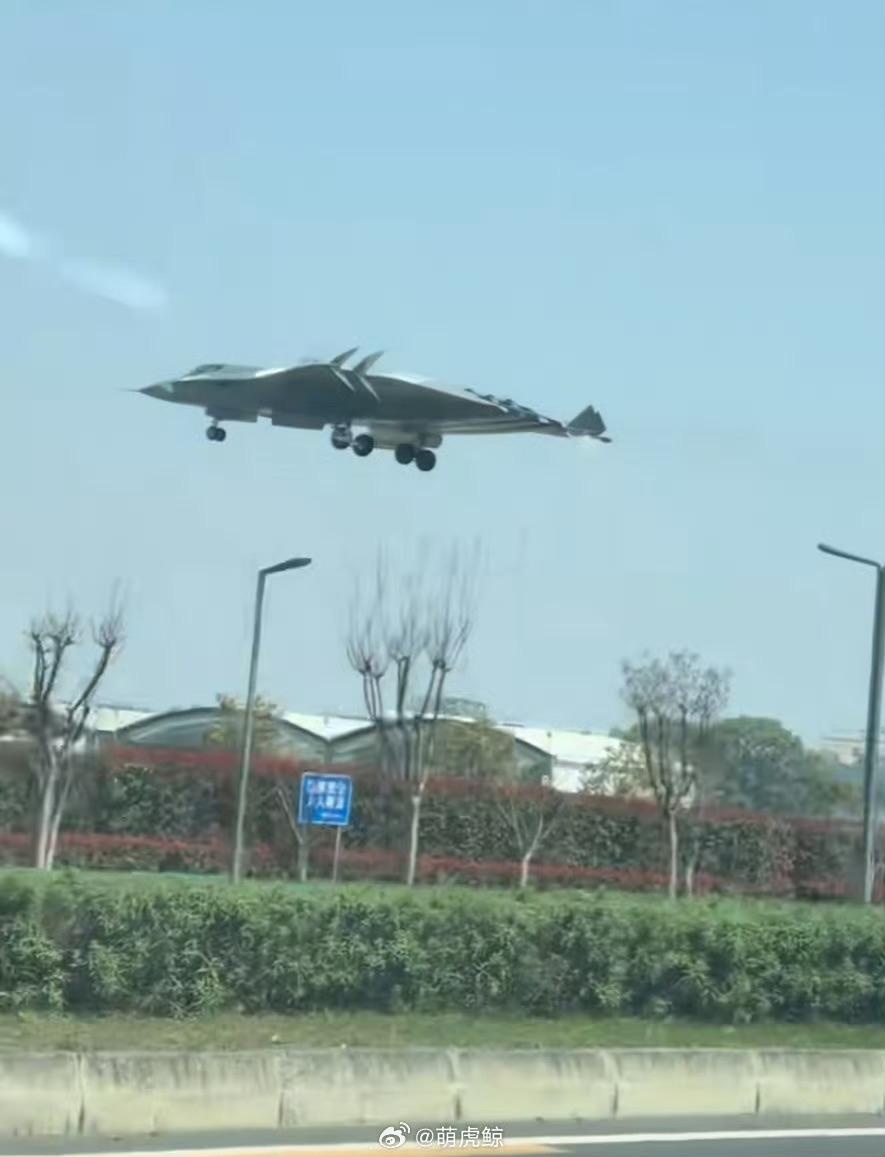
Since then, the aircraft has been sighted multiple times flying over Chengdu.
The latest video, featuring the J-36 flying next to the Y-20, also makes it clear that the aircraft is equipped with air-to-air refueling capacity.
Song Zhongping, a military commentator and former PLA instructor, told Hong Kong-based SCMP that the video indicated that the sixth-generation fighter was almost certainly equipped with air-to-air refueling capability.
“And it is highly likely that it has already conducted air-to-air refueling tests during flight testing,” he said.
Air-to-air refueling capacity is crucial to navigate the long distances of the Pacific theatre.
“If a tactical aircraft’s endurance and combat radius approach those of a medium-range strategic bomber, it would be capable of carrying out patrol missions of strategic significance,” Fu Qianshao, a military analyst and former PLA Air Force officer, said.
The latest images appear to show further significant changes to the aircraft’s design and underscore its rapid evolution.
According to experts, this might be the fifth prototype of the J-36.
China’s decision to officially acknowledge the J-36 in the Y-20 anniversary video, while simultaneously flying what appears to be a fifth prototype within just 19 months of the first sightings, marks a significant acceleration in its sixth-generation fighter program.
The aircraft’s large airframe, evolving stealth features, and confirmed aerial-refueling capability suggest Beijing is prioritizing long-range, high-endurance operations across the Pacific. If the current pace of flight testing continues, China could field an operational sixth-generation platform earlier than many Western programs currently project — a development that would reshape the airpower balance in the Indo-Pacific.
Andreas Rupprecht, an aviation analyst and expert on China’s air force, said the structural differences between the earliest and latest examples made it unlikely the sightings simply showed a single aircraft being repeatedly modified.
“It is still difficult to assess this with any certainty,” he said. “But if one takes the reports from reliable sources as a basis, there is indeed some strong evidence to support it.”
According to Rupprecht, the J-36 program appeared to have progressed through at least three distinct configurations since December 2024.
The first aircraft featured caret-shaped air intakes, tandem main landing gear and box-shaped engine nozzles.
A revised configuration introduced diverterless supersonic air intakes, side-by-side landing gear and redesigned exhausts that might improve stealth and maneuverability.
The latest aircraft appears to retain many of those changes while introducing a modified nose section, suggesting continued refinement of the design as testing progresses, Rupprecht explained.
Experts are divided on why China is testing three different design configurations simultaneously.
Rupprecht suggested that one possibility was that China was testing three different models to analyze which design performed best in real flight conditions, rather than drawing conclusions solely from wind tunnel testing.
“There is simply no experience yet in this regard for such a type of ‘fighter’,” he said.
Rupprecht also suggested that another possibility was that design changes were necessitated by the shift from the earlier WS-10C engine to China’s more powerful WS-15 powerplant; however, there was no confirmation.
He also noted that the appearance of the fifth prototype within 19 months highlighted that the program was progressing rapidly.
Comparisons with the J-20 stealth fighter suggest the J-36 has reached key milestones faster.
“So yes, the program does appear to be relatively mature and progressing quickly,” Rupprecht said.
However, he cautioned that faster flight testing of the J-36 might not translate into quicker operationalization of the fighter aircraft into the PLA Air Force (PLAAF).
Rupprecht suggested that he expected China to deliver the first pre-production batch to the PLA Air Force before 2030, with operationalization of the final production model some years later.
He also suggested that the J-36’s unusually large size meant the aircraft was more likely to serve as a heavily armed command platform capable of directing armed loyal wingman drones and other fighter jets, aided by its powerful sensors and long-range weapons.
“I am more convinced that the J-36 is something entirely distinct,” he said, describing it as an “aerial air-defense node” comparable in concept to an Aegis-equipped US warship coordinating a wider combat network.
In Rupprecht’s view, these different roles and designs make J-36’s comparisons with the F-47 misleading. In fact, he suggested that it will be more fruitful to compare the F-47 with J-50.
Regardless of the substantial differences in design and possibly in their roles, it can not be denied that China’s J-36 is progressing much faster than the US’s next-generation fighter jet.
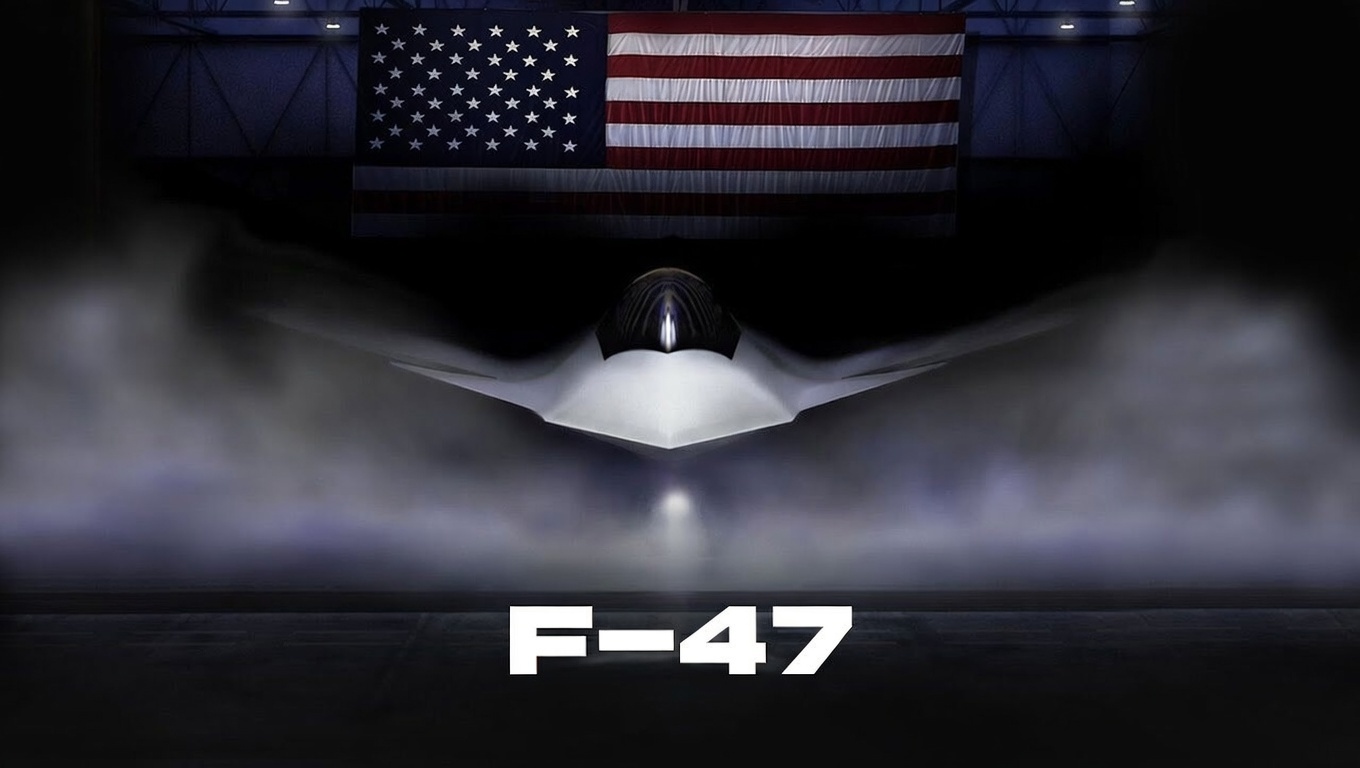
While the J-36’s fifth prototype is flying, there is no publicly available picture of the F-47 flying.
The first flight of the F-47 is expected sometime in 2028.
In fact, according to the latest reports, the F-47 is expected to initially fly with an interim engine, as the US’s Next Generation Adaptive Propulsion (NGAP) program could be ready for integration onto an actual aircraft only by 2030.
This means that at least the F-47 prototype, and possibly the first operational F-47s, will have to fly with a different engine before the NGAP engine is integrated into the F-47 around 2030-2031.
Meanwhile, the GCAP, the UK, Italy, and Japan’s combined tri-nation sixth-generation fighter jet program, is expected to enter operational service around 2035.
The FCAS, Germany, Spain, and France’s sixth-generation fighter jet program has already collapsed.
Fu Qianshao, a military analyst and former PLA Air Force officer, said that China’s program was progressing much faster than comparable efforts in the US, Russia and Europe.
“In my view, China’s fighter development … is now ahead of its competitors,” he said.
These timelines suggest that for the first time in history, China might beat the US and Europe in integrating a next-generation fighter jet in operational service, which could have far-reaching consequences for the balance of power, particularly in the Pacific theatre.
Furthermore, the J-36’s aerial refueling capability, combined with its unusually large size and greater fuel capacity, would give it exceptional range, an advantage that could prove decisive in the contest for air superiority across the Pacific theater.
“The aircraft could potentially operate beyond the western Pacific and, in some cases, reach the Indian Ocean, which would have significant strategic implications,” Fu added.
- Nitin J Ticku holds a double master’s degree in Journalism and Business Management from the University of Glasgow. He has over 20 years of global experience in MARCOM, Journalism, and Digital Marketing, and has worked & traveled widely across Europe, the Americas, and Asia. Nitin is the Editor of the EurAsian Times.
- He can be reached at editor (at) eurasiantimes.com