The engine challenges facing India’s AMCA and Turkey’s KAAN fifth-generation fighters are well documented. Both programs will initially fly with General Electric engines while their indigenous powerplants are developed and integrated.
Yet even the United States, long a key supplier of engines for foreign fighter prototypes, is also grappling with significant propulsion problems of its own, as the timelines for first flight of the F-47 prototype and next-generation fighter jet engine are out of sync.
The sixth-generation fighter jet, F-47, developed under the Next Generation Air Dominance (NGAD) initiative, is expected to fly for the first time in 2028.
However, a prototype jet engine developed under the Next Generation Adaptive Propulsion (NGAP) program could be ready for integration onto an actual aircraft only by 2030, as per the latest information provided by the US Air Force (USAF).
This means that at least the F-47 prototype, and possibly the first operational F-47s, will have to fly with a different engine before the NGAP engine is integrated into the F-47 around 2030-2031.
The integration of NGAP with the F-47 will unlock the full potential of the next-generation fighter jet; however, this also raises the crucial question of which engine will power the initial F-47 prototypes.
John Sneden, the Portfolio Acquisition Executive in charge of the Propulsion Directorate at the Air Force Life Cycle Management Center (AFLCMC), recently provided a new timeline for the NGAP engine.
The NGAP program will culminate in “get[ting] ready for potential integration activities in the 2030 timeframe,” Breaking Defense quoted Sneden as saying.
Notably, the USAF’s 2027 budget proposal also supports this timeline for the NGAP.
The document says that the NGAP’s “Prototype Fabrication & Engine Assessment” phase will run through at least September 2031.
In fact, the budget proposal shows that the funding for the NGAP program will gradually surge going forward.
The USAF is seeking nearly US$513.7 million for the program in FY2027, and then expects to request US$905.7 million and US$865 million in Fiscal Years 2028 and 2029, respectively.
Speaking with reporters at the Life Cycle Industry Days conference, Sneden, however, refused to confirm what platform might receive the NGAP engine first.
“The Air Force is still evaluating its options,” Sneden said, emphasizing that the underlying engine technology may “open up” different choices down the road. “What we’re doing right now is we’re building our system today, and we’re getting ready for the future.”
Sneden also hinted that the NGAP engine could be integrated backward into existing designs, including the F-47.
A new NGAP engine “could” go on the F-47, Sneden said, emphasizing that no decisions have been made. He, however, stressed that NGAP “is really a host of technologies” that can be integrated backward into existing designs.
While the NGAP was initially envisioned to provide a powerplant for the NGAD fighter, now christened the F-47, USAF officials have often noted that the NGAP is designed to be platform-agnostic, meaning it could power various platforms and aircraft designs.
When it comes to where NGAP stands now, “initial hardware is procured, their design meets our standards, everything is clean from that end, and both vendors have been able to do that,” Sneden was quoted as saying by the Air & Space Forces Magazine.
The two vendors in question are GE Aerospace and Pratt & Whitney (a subsidiary of RTX). GE Aerospace, with the XA102, and Pratt & Whitney, with the XA103, are both developing competing adaptive-cycle engines under the USAF’s Next Generation Adaptive Propulsion program. In simple terms, adaptive-cycle engines can perform like a turbofan when optimal and like a turbojet when needed. This means that the same engine can save fuel when needed and can deliver more power when required.
However, no final production winner has been selected yet for the Boeing F-47.
These engines aim for better fuel efficiency, thrust, range, thermal management, and power generation compared with current fifth-generation engines. Both companies completed detailed design reviews in 2025 and assembly readiness reviews in May this year. Prototype fabrication is currently underway, and ground testing is expected in the late 2020s.
Currently, there is no clarity on which interim engine could power F-47 prototypes, but the possible options discussed in media reports include variants of the Pratt & Whitney F135, F119, F100, or GE F110.
However, it is not unusual for fighter jet prototypes to fly with an interim engine before a new engine is integrated into final products.
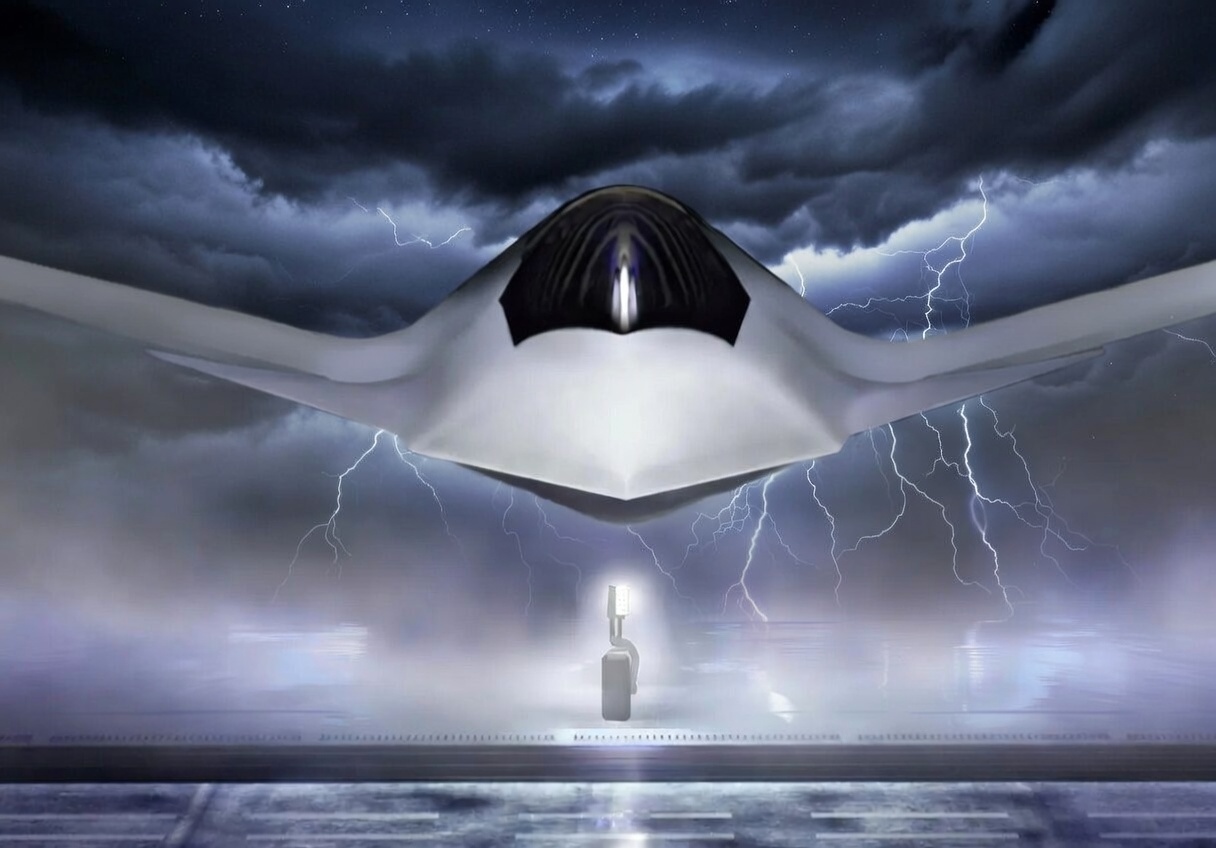
Fighter Jets That Flew With Interim Powerplants
For instance, Turkey’s underdevelopment fifth-generation fighter jet, Kaan, is currently flying with two General Electric F110 engines. Early production blocks are expected to continue with F110 before the indigenous TF35000 is integrated.
India’s fifth-generation AMCA and 4.5-generation Tejas Mk1 variants are planned to fly with GE F414 engines, before an indigenous or co-developed engine is fully mature for integration.
Similarly, Russia’s fifth-generation Su-57 first flew with the AL-41F1 (Izdeliye 117) engines. Upgraded Su-57 variants with the new engine, AL-51F1, have recently begun flying, and full integration is currently underway.
China’s first fifth-generation fighter jet, the J-20, also initially flew with a Russian AL-31FN engine. Later variants of the J-20 flew with Chinese WS-10 variants. However, even that was an interim solution. The intended definitive engine is the more powerful WS-15.
Even Dassault Rafale first flew in 1986 with two General Electric F404 engines. Later models mixed one M88 with one F404, before the final products flew with both M88 engines.
Similarly, Eurofighter Typhoon first flew in 1994 with Turbo-Union RB199 engines, which were derived from those on the Panavia Tornado. Later models started using the EJ200 engines.
The same EJ200 engine is expected to power the initial prototypes of the Global Combat Air Program (GCAP), jointly developed by the UK, Italy, and Japan. A completely new next-generation engine, developed by Rolls-Royce, Avio Aero, and IHI, is being developed in parallel for the production models of the GCAP.
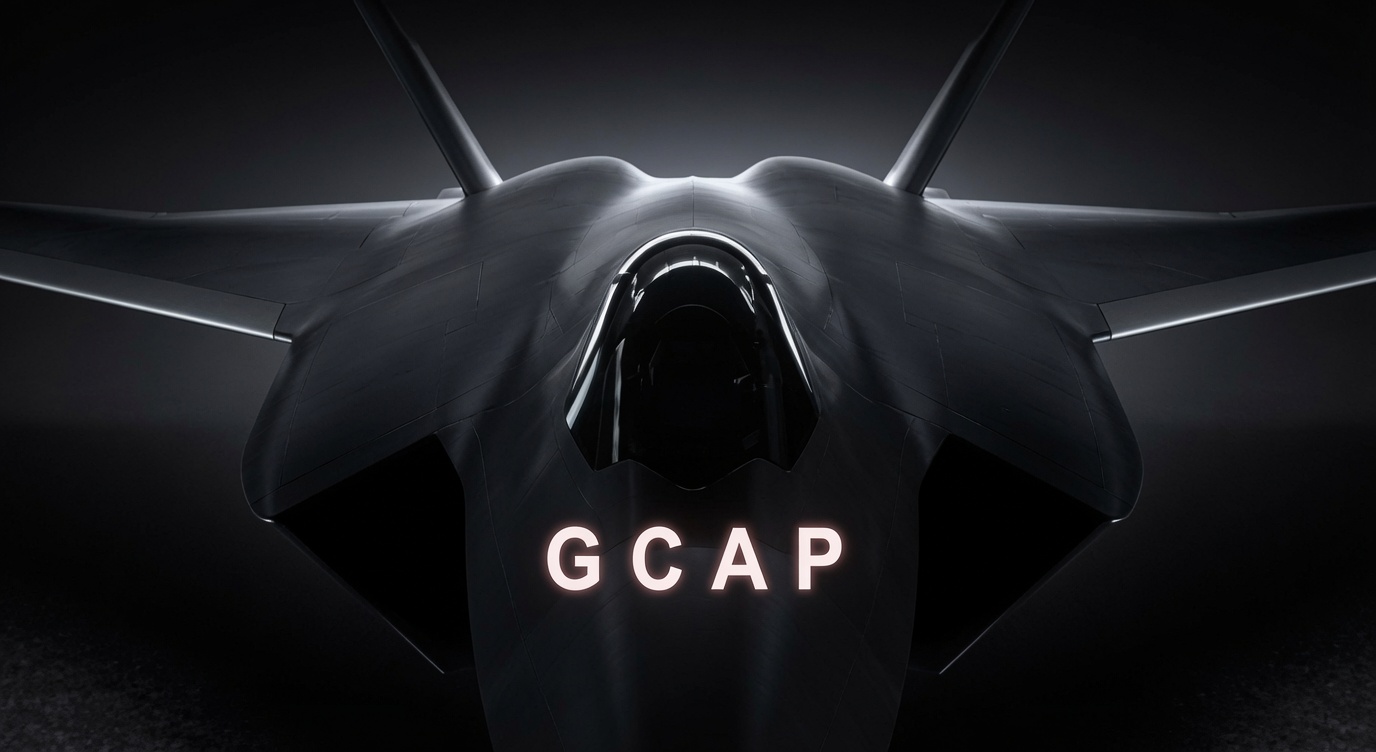
Even in the US, many fighter jets initially flew with interim engines before the final engine was integrated.
For instance, the Lockheed F-104 Starfighter first flew with the Wright J65 turbojet engine. However, the production model of the aircraft received the more powerful J79.
The F-14 Tomcat was planned around the Pratt & Whitney F401 turbofan engine. However, that engine program was canceled, and the fighter jet was fitted with Pratt & Whitney TF30 turbofan engines. Later, the F-14 Tomcats were fitted with the General Electric F110 turbofans.
On the upside, testing a new fighter jet prototype with an already mature and tested powerplant has its own advantages. It allows for risk management by allowing airframe flight testing, systems integration, and early operational assessment with an engine that is already mature. In the meantime, the new, more advanced fighter jet engine can be tested for risks and matured before integrating it with the already tested airframe.
Testing a new airframe with a new engine could be a high-risk affair.
However, there could also be certain drawbacks, as it could lead to performance shortfalls, design mismatch, or even require restructuring.
Given the timeline mismatch between F-47 prototypes’ first flight and the NGAP engine, it is all but certain that the first prototypes, and perhaps even some production models, will fly with an interim powerplant.
However, USAF officials have noted in the past that the NGAP is designed to be “platform agnostic” and could be easily integrated backward into existing designs. Therefore, integrating the NGAP with the F-47 should not be problematic, and this way Boeing could meet ambitious timelines for the project.
- Sumit Ahlawat has over a decade of experience in news media. He has worked with Press Trust of India, Times Now, Zee News, The Economic Times, and Microsoft News. He holds a Master’s Degree in International Media and Modern History from the University of Sheffield, UK.
- He can be reached at ahlawat.sumit85 (at) gmail.com