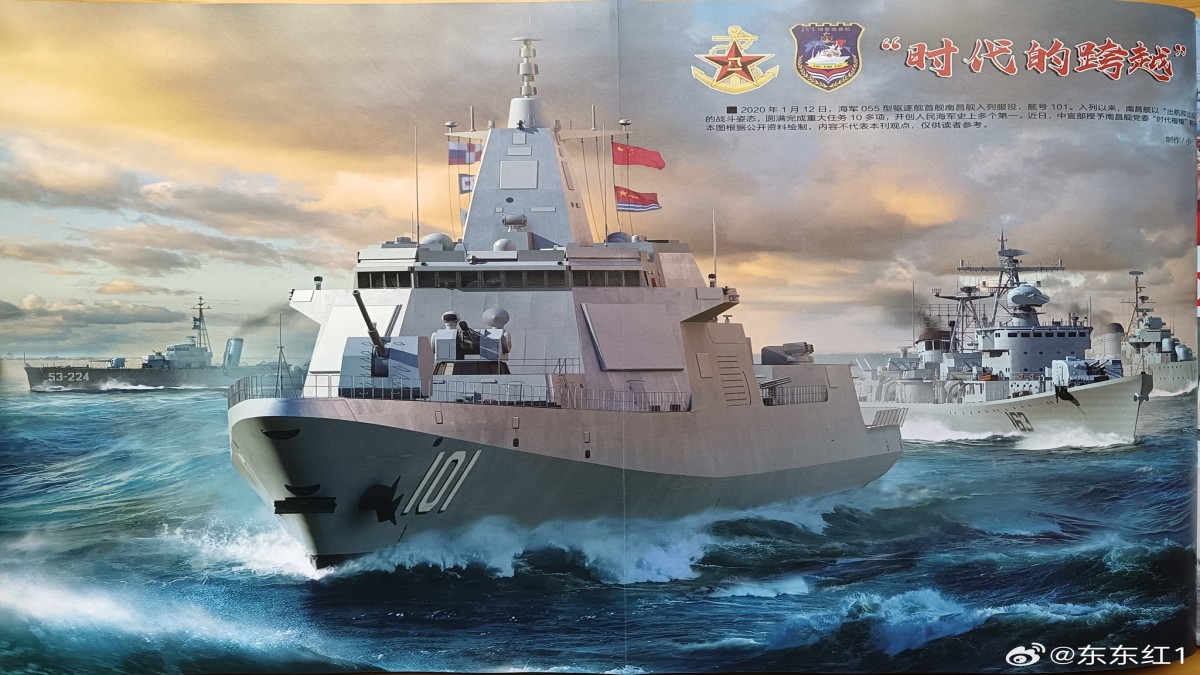
The best victory is “winning without shedding a drop of blood” is an ancient Chinese proverb attributed to Sun Tzu’s ‘The Art of War,’ written nearly 2,500 years ago.
In 2026, that old strategy has a new rendering: ‘Learning without Bleeding.’
China is treating the Russia-Ukraine War as a “living textbook” for adapting the war-fighting strategy of the People’s Liberation Army (PLA), learning drone warfare, and systematically converting battlefield lessons into PLA training, procurement, and force design without having to fight itself.
According to a recent paper by the Center for Strategic and International Studies (CSIS), China is running the most systematic effort of any outside power to convert lessons from the war in Ukraine into military advantage, absorbing the errors of both sides.
“Chinese analysts are explicit about the value of Russia’s war against Ukraine” and are adopting the war’s lessons into policy debates, weapons procurement, and military doctrine at a breakneck pace.
Analysts in Beijing are describing 2024 as “year one of world drone war,” when the two sides fielded enough drones to show the contours of the new mechanized battlefield.
For the study, the authors reviewed more than 90 Chinese-language sources published over more than four years, from July 2022 to August 2026.
These Chinese-language sources include PLA outlets, defense journals, university research papers, peer-reviewed journals, and research institutions linked to defense industries.
The authors of these Chinese papers include participants in the military learning system. They include researchers at PLA universities and academies, engineers at defense industrial design institutes, civilian academics working alongside numbered military units, and military acquisition organizations that turn battlefield lessons into requirements and procurement.
The study highlights how China is adopting lessons from the war in Ukraine at a breakneck pace.
It finds that “Chinese analysts pick up new battlefield techniques within an average of four months, but turning them into hardware, training, and force structure takes a year or more.”
Essentially, within four months of a new weapon system or war-fighting doctrine/strategy being introduced on the battlefield in Ukraine, Chinese analysts take note and start discussing it in their research papers.
However, filtering these lessons into Chinese military structure, procurement, and industrial production takes nearly a year.
For instance, Sea drones appeared in the war in Ukraine by September 2022, and by November, Chinese analysts were discussing these new weapon systems in their research papers.
Similarly, Fiber-Optic Drones first appeared on the battlefield in Ukraine in March 2024, and Chinese research papers began discussing them that same month. By March 2025, PLA units were already training with Fiber-Optic Drones.
Interceptor drones appeared in the war in Ukraine in February 2024; Chinese analysts noted them by July 2025, and PLA units began training on such interceptor drones by October 2026.
These instances show how quickly Chinese analysts note new weapons systems in the war in Ukraine, followed by PLA units adopting them within a year.
China’s lessons learned fall into two broad areas: offensive capabilities and defensive capabilities.
China copies offensive techniques from Russia, whose army resembles the PLA’s and whose fixes have been tested in combat.
China derives defensive requirements from Ukraine’s attacks and builds them into hardware. Beijing believes that if China goes to war with any Western power, it will face attacks similar to those Russia faced.
However, both offensive and defensive lessons are primarily derived from drone warfare.
Meanwhile, industrial lessons flow into a manufacturing base that already leads the world.
Offensive Learnings in Drone Warfare From the Russian Army
Among offensive techniques, Beijing’s most important lesson is economic.
In March 2025, the PLA Daily treated the claim as settled fact: a single reconnaissance-strike drone costs less than 1 percent of a modern fighter while achieving more than 90 percent of its battlefield coverage.
According to the study, while these figures are rough, the Central Military Commission’s newspaper takes them at face value.
Chinese analysts noted that in 2014, both Ukraine and Russia purchased and used more than a million drones. The Chinese Naval Academy estimated that this amounted to an average of two drones hovering over each soldier deployed on the front line.
The second lesson from drone warfare that China internalized is speed.
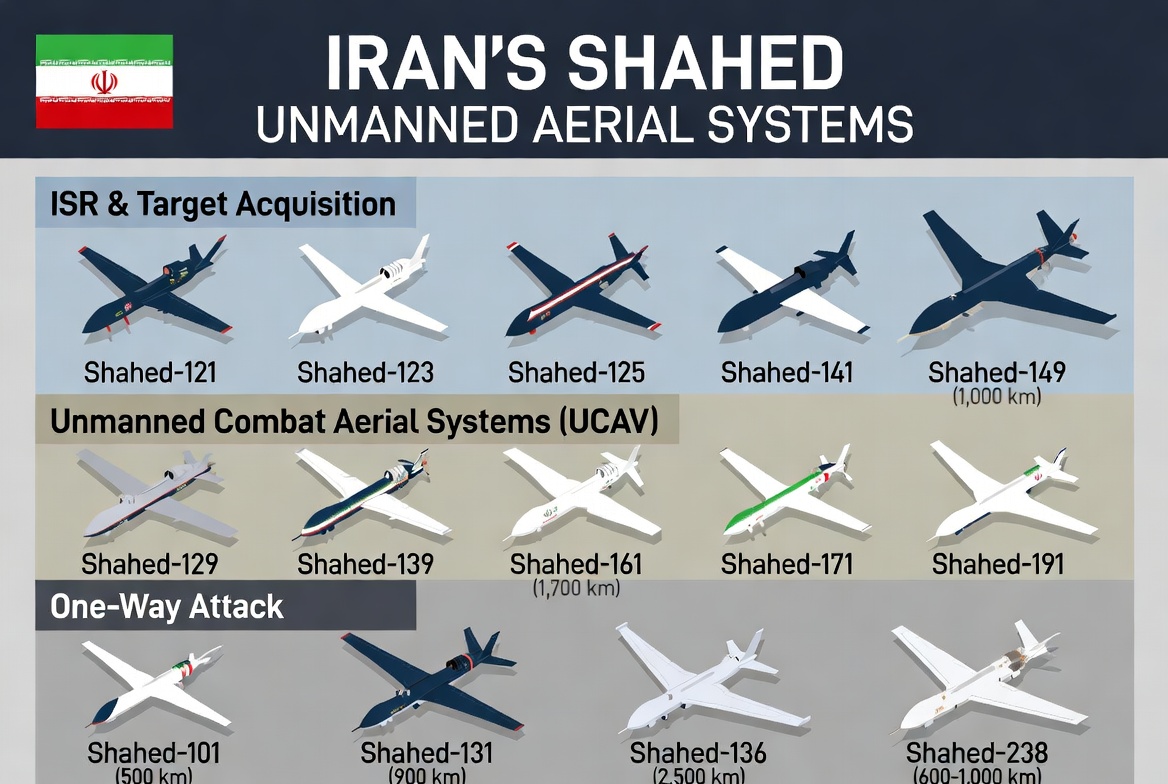
According to the National Defense University’s Joint Operations College, Russian forces can strike a detected target within three to five minutes—compared to hours in earlier wars
Researchers at a PLA unit attribute this to Russia’s reconnaissance-strike complex, in which a low-cost reconnaissance drone pushed deep into the enemy rear serves as the observer and guides another drone’s strike, with Orlan-10s cueing Kub and Lancet loitering munitions.
The copying target is not any single platform but rather the connection between them: drones wired directly into artillery and command networks.
For China, the drone warfare’s third critical lesson is overcommunication and connectivity.
Chinese analysts treat electronic warfare as the deciding factor in the drone war, recording heavy losses on both sides to jamming and countermeasures.
They have also noted with interest Russia’s fiber-optic first-person-view (FPV) drone steered through a thin cable, which is immune to jamming.
The PLA Daily flagged the shift in May 2024, weeks after the fiber-optic drone’s operational debut, and by April 2025, state media were weighing its trade-offs in detail. In the same month, China Central Television (CCTV) showed a People’s Armed Police unit in Yunnan training with FPV drones and researching fiber-optic models.
Defensive Learnings in Drone Warfare From the Ukrainian Army
While China has tried to internalize Russia’s offensive drone warfare techniques, Beijing has paid even more attention to some of the drone warfare techniques adopted by Ukraine.
Beijing believes that in the event of a military conflict with the West, it could face similar attacks as Russia faces from Ukraine in the ongoing war.
Chinese analysts were especially alarmed by two attacks from Ukraine: first, the use of sea drones for attacking Russian ships, warships, harbors, and bridges.
In the journal of the state shipbuilder’s underwater-warfare institute, a team from the Naval University of Engineering tallied repeated Ukrainian strikes on Russian ships, ports, and the Kerch Bridge and found more than 10 large naval vessels damaged.
They concluded that a systematized sea-drone offensive could be met effectively only with counter–sea–drone equipment that also fights as a system.
Another researcher proposed countering suicide boats with interceptor swarms, in skirmishes devoid of humans entirely.
Another Ukrainian attack that caught China’s attention and alarmed it was Operation Spider’s Web.
On June 1, 2025, Ukraine attacked Russia’s strategic bombers, deep inside its territory, by using FPV drones launched from within Russia.
Chinese Foreign Ministry’s magazine estimated Russian losses at 11 strategic bombers and identified the raid’s novelty in being launched from inside Russia, at close range.
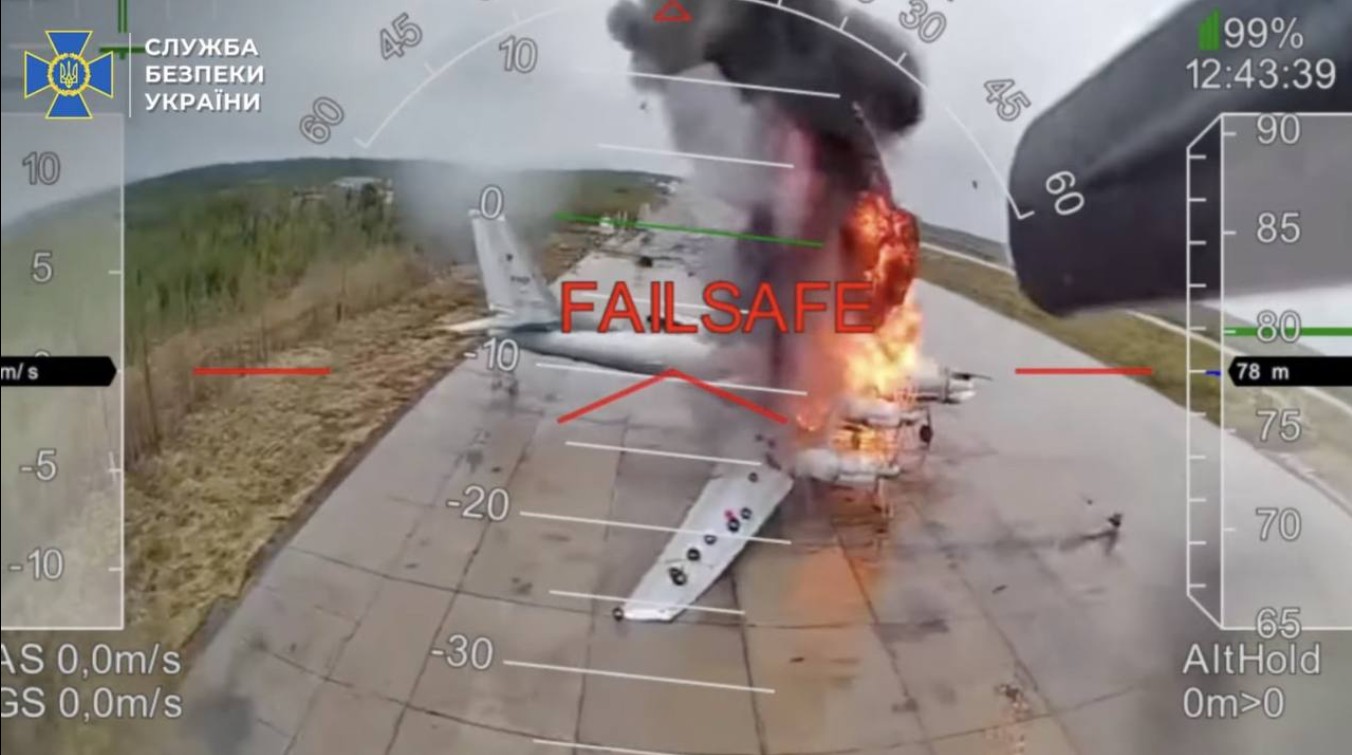
The PLA’s training system answered within four and a half months.
In an October 2025 exercise, a brigade defended against a drone attack team of more than 20 operators, using detection gear that locates drones by their radio emissions and matches them against a catalog of more than 800 commercial models, paving a path for Chinese response to a Spider’s Web–style drone infiltration.
Chinese analysts also concluded that a successful drone interception strategy must account for the economics of interception.
According to a Global Times analysis of Ukraine’s interceptor drones, “the cost of procuring one man-portable air-defense missile buys several hundred air-defense FPV drones.”
Therefore, Chinese analysts concluded that the best weapon against a drone is another drone.
China also concluded that if it is attacked, it will be attacked by drones en masse, and therefore it must defend itself against thousands of drones.
In this respect, China has also noted Russia’s defense strategy.
A 2026 review from a Chinese state aerospace design institute recorded that Russia “has built in combat a counter-drone equipment system of electronic jamming first, firepower interception as the backstop, and self-defense interception as the supplement.”
Beijing also noted that Russia was forced to pull its strategic bombers back about 6,000 kilometers to the Chukotka Peninsula and deploy retractable protective nets.
The study noted how quickly these studies are being adopted into hardware.
At the Zhuhai air show in November 2024, the counter-drone systems of the state electronics, ordnance, and aerospace groups dominated Chinese coverage, led by CETC’s Tianqiong, NORINCO’s Hurricane 3000 microwave weapon, and CASIC’s LW-60 laser.
The September 2025 military parade put counter-drone missile-gun systems, high-energy lasers, and high-power microwave weapons on state display.
In late July 2026, CCTV aired footage of an army drone crew putting a missile into a fast boat maneuvering at sea, and in August the army flew armed KVD002 drones against sea drone targets in exercises.
China has also learned that in a war of attrition, production wins.
For Chinese analysts, a drone war is won by the side that can build more, and no country builds more drones than China. So here, China only needs to build on its advantages.
China also recognizes Starlink’s importance in the Ukraine War and has concluded that low-Earth-orbit (LEO) satellite constellations will play a decisive role in any future war. China is therefore working to build its own LEO satellite constellations.
The CSIS study concludes that China is learning from and implementing lessons from the Ukraine War faster than any other country.
As Russia and Ukraine fight a ‘war of attrition,’ China could be the biggest winner.
- Sumit Ahlawat has over a decade of experience in news media. He has worked with Press Trust of India, Times Now, Zee News, Economic Times, and Microsoft News. He holds a Master’s Degree in International Media and Modern History from the University of Sheffield, UK.
- He can be reached at ahlawat.sumit85 (at) gmail.com