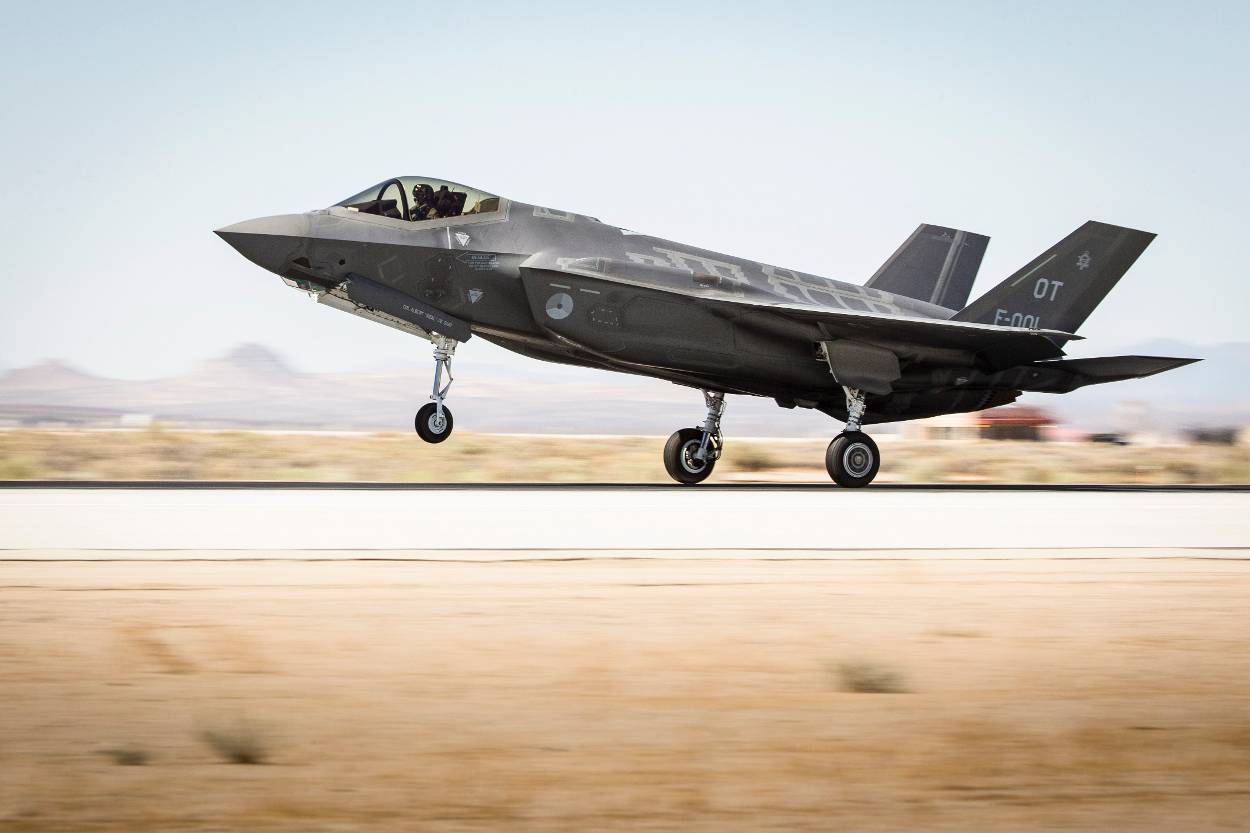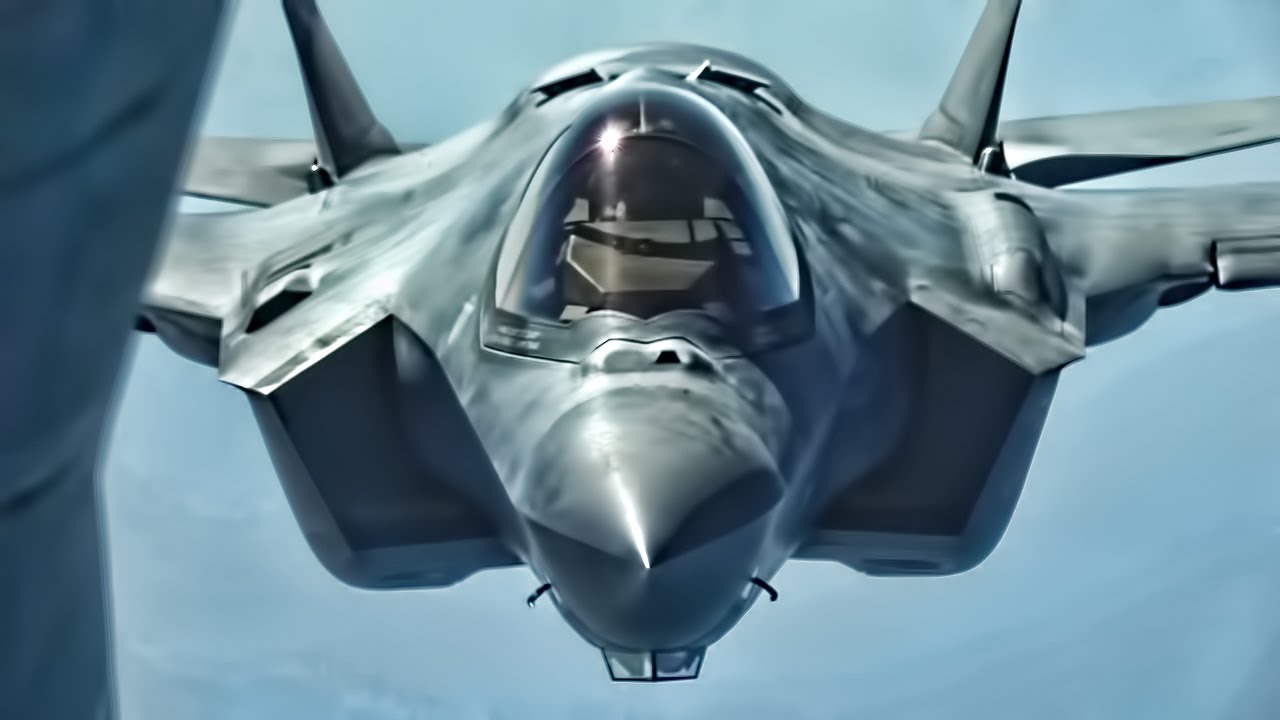


A Swedish JAS 39 Gripen flying under NATO command was unable to shoot down Russian cruise missiles, now identified as Kh-101, over Poland on Nov. 20 because of bad weather, a senior Polish military commander said.
The incident occurred during a large-scale Russian attack on Ukraine.
Lt. Gen. Ireneusz Nowak, operational commander of the Polish Armed Forces, told Polish newspaper Rzeczpospolita that the Jas-39 Gripen pilot tried to intercept the projectile believed to be a Russian Kh-101 cruise missile.
Nowak said exceptionally difficult weather conditions prevented the pilot from identifying the object visually or through the aircraft’s onboard electro-optical systems.
Gen. Ireneusz Nowak explained that the obstacle was “extremely difficult weather conditions” in the intercept area. As a result, the pilot, despite having NATO approval to use weapons, could not fire.
The Lublin District Prosecutor’s Office revealed that debris from Kh-101 cruise missiles was discovered at three sites in eastern Poland: Nowy Lipowiec, Rudnik, and Mołodycz. Initial findings also indicated that all missiles were manufactured in recent weeks at a manufacturing plant in the Russian city of Dubna.
Marcin Kozak, a spokesman for the prosecutor’s office, said all the recovered missiles had been manufactured in the fourth quarter of this year at a plant in Dubna, in Russia’s Moscow region. He added that the findings were preliminary and based on inspections conducted so far.
Mark Rutte, Secretary General of NATO, earlier wrote on X: Spoke with @donaldtusk about the grave violations of Polish airspace overnight. NATO jets were scrambled in response. We stand in solidarity with Poland and will continue to strengthen our ability to deter and defend. This incident is clearly dangerous – a consequence of Russia’s ongoing war against Ukraine. I condemn Russia’s attacks as well as its ongoing war. We continue to stand united as Allies and will continue to support Ukraine.
Earlier, the Swedish Armed Forces said: Swedish JAS Gripen fighter jets on an air defense mission over Poland. The Swedish Air Force took part last night in an air defense operation using JAS Gripen aircraft to protect Polish airspace after detecting several unidentified objects.
The operation lasted several hours and was conducted under difficult conditions. It required both aerial refueling after dark and the preparation of Swedish combat aircraft at a forward air base in Poland. In addition to the Swedish JAS Gripen fighter jets, Polish F-16 aircraft, airborne early warning and control aircraft, and a Dutch aerial refueling aircraft were also scrambled to protect allied airspace.
Several airspace violations are suspected, and Swedish pilots tracked several objects moving through Polish airspace overnight. Last night, our pilots demonstrated Sweden’s readiness to act, allied solidarity, and the importance of contributing to Europe’s collective defense.
Together with our allies in Poland, we scrambled aircraft at lightning speed to defend our shared airspace. During the operation, Swedish pilots tracked several targets in Polish airspace and flew in very difficult weather conditions with limited visibility, said Deputy Commander of the Swedish Air Force Niclas Magnusson.
The Swedish combat aircraft taking part in the operation are part of NATO’s air defense mission, which aims to protect allied countries’ airspace from aerial threats. During the two-month mission, they are based in Sweden day to day but can also operate from a forward air base in Poland. While carrying out their duties, Swedish units report to NATO’s Air Operations Center, and operations are coordinated from Uedem, Germany.
Russia’s Kh-101 Air-Launched Cruise Missile
The Kh-101 is a low-observable cruise missile with a reported operational range of 4,500 kilometers, according to the Russian Ministry of Defense.
The missile’s guidance package features an inertial navigation system, a terrain contour matching system, a digital scene-matching area correlation system, and a GPS/GLONASS receiver.
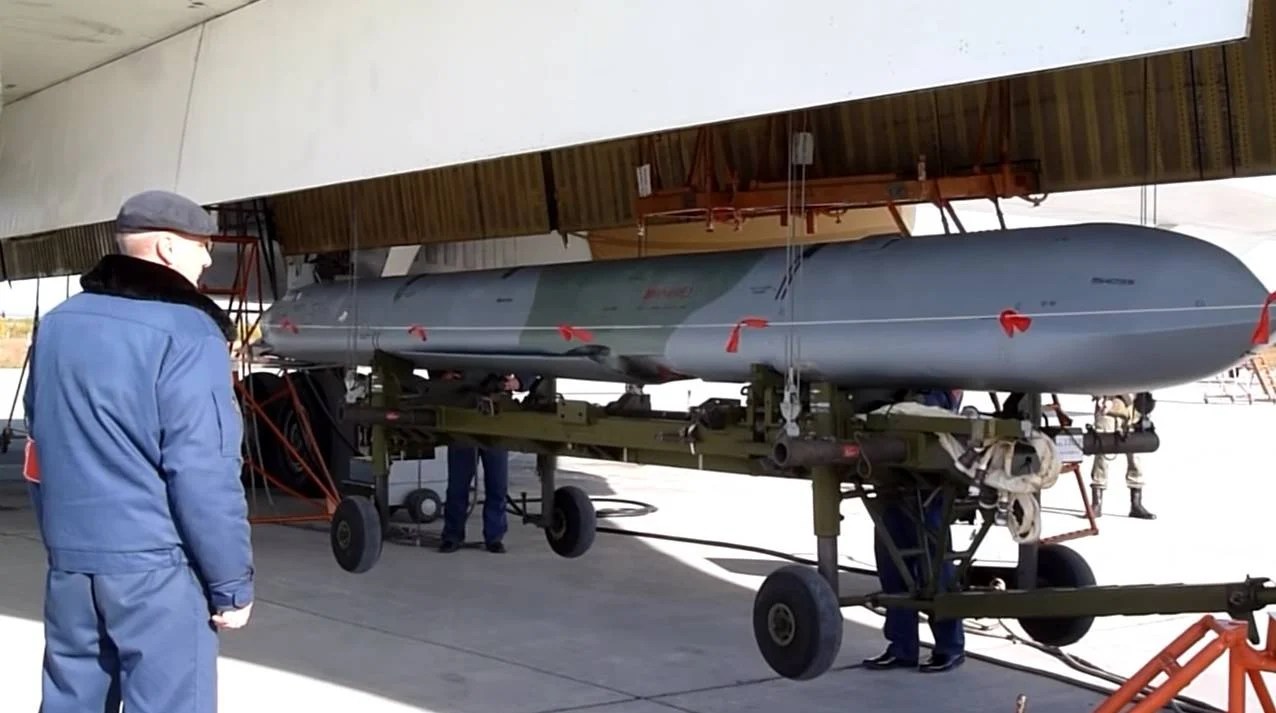
The Kh-101 is one of Russia’s most capable air-launched cruise missiles (ACLMs). Development began in the 1980s to replace the Kh-55.
The stealthy Kh-101 is designed to defeat air defense systems by flying at low, terrain-hugging altitudes to avoid radar systems. It has a combat weight of 2,400 kilograms, including a 400-kilogram warhead.
The Kh-101’s accuracy, combined with the 400-kilogram warhead, gives it massive punch, making it ideal for attacking Ukraine’s highly fortified targets.
Its accuracy is also believed to be quite high, employing the electronic GLONASS satellite navigation, Russia’s own GPS system.
A Russian Tu-95 bomber can carry 14 Kh-101 missiles, six internally and eight externally. A single Tu-160 can carry 12 Kh-101 missiles internally in its bomb bay. Russia’s Tu-22M3/5 and Su-27IB aircraft can also carry the missile.
Externally, it has some similarities with the US AGM-158 JASSM air-launched cruise missile; however, the Kh-101 has a significantly longer range.
There is also a nuclear-armed variant called the Kh-102, which can carry a 20-kiloton thermonuclear warhead. It is the main air-launched nuclear-armed cruise missile in Moscow’s arsenal.
In the Ukraine war the Kh-101 has been used extensively against energy infrastructure, command nodes, airfields, and other high-value targets.
Ukrainian air defenses have reported high interception rates; however, due to Russian saturation attacks, many of the missiles have slipped through, causing substantial damage in Ukraine.
Externally, it resembles the U.S. AGM-158 JASSM. However, the resemblance is largely superficial, as Western experts say the Kh-101 is substantially larger and believed to be less stealthy.
A nuclear-armed variant, the Kh-102, exists and is assessed to carry a thermonuclear warhead with reported yields commonly in the 250 kt class. It has not been used in the war in Ukraine and remains a strategic deterrent asset of the Russian Aerospace Forces.
In a nutshell, the Kh-101’s lethality in the Ukraine conflict stems from the ability to deliver a large conventional warhead with high precision from outside the reach of most Ukrainian air defense systems, in numbers that can overwhelm local defenses, while its low-altitude profile and guidance suite complicate interception.
Mail us at: editor (at) eurasiantimes.com