

Ukrainian forces have demonstrated their ability to strike painful blows against Russian naval vessels far from their own borders by attacking and sinking a Russian corvette at the port of Benghazi in eastern Libya.
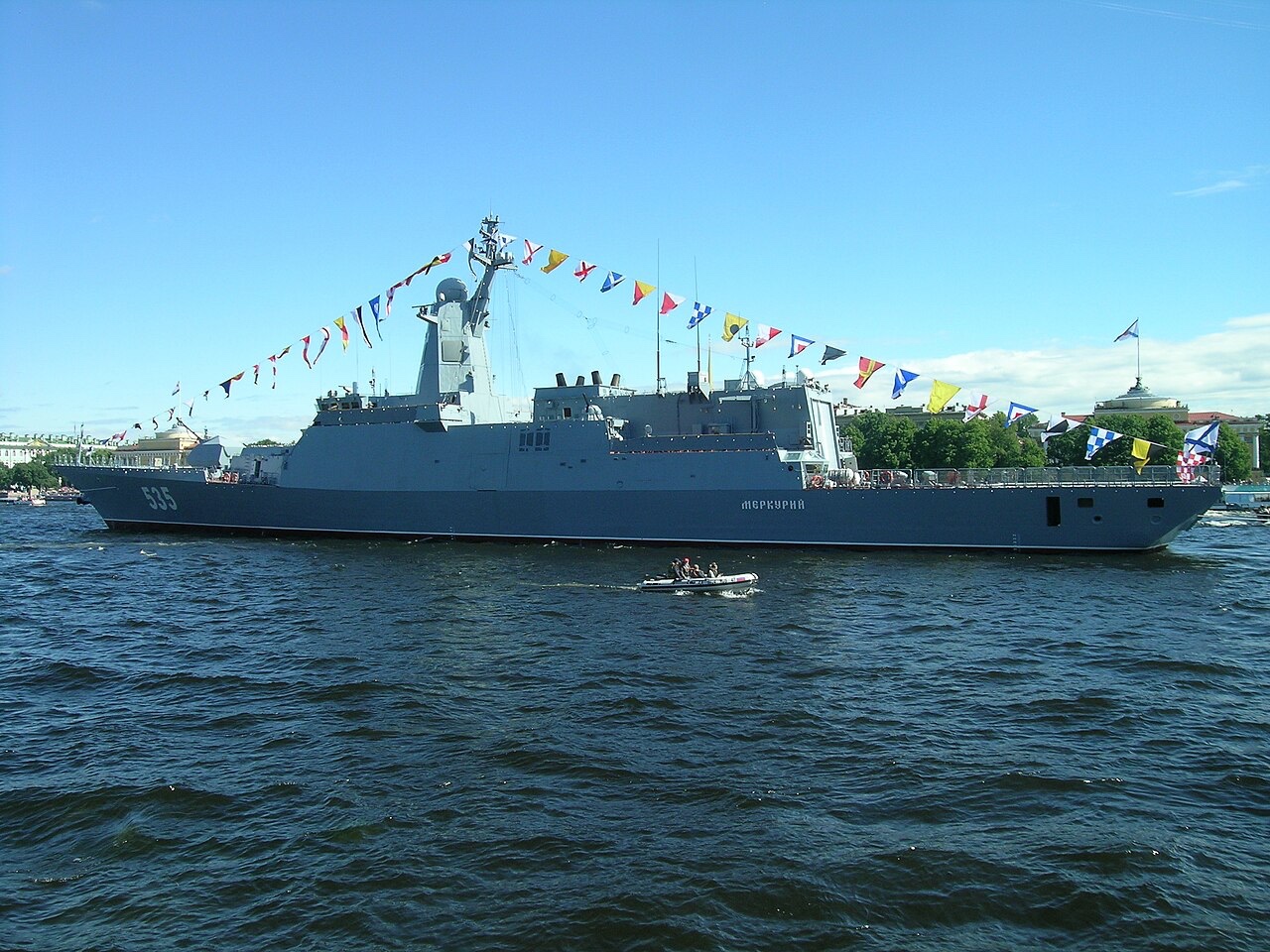
A Russian warship — the Project 20380 Steregushchiy-class corvette Merkury — was struck by Ukrainian unmanned surface vessels (USVs), commonly known as sea drones, at the Libyan port.
The attack triggered a powerful explosion and fire aboard the vessel, which subsequently capsized and sank in the harbor.
After initial reports of the attack surfaced, naval and open-source intelligence experts such as H.I. Sutton noted that the warship had been in the harbor for a few days before it was struck in what was suspected to be a Ukrainian sea drone attack.
Meanwhile, other reports suggested that the vessel had docked at the Libyan port to refuel and load supplies under maritime cooperation arrangements with eastern Libyan authorities before returning to Russia. The dawn attack reportedly killed several Libyan and Russian nationals, although casualty figures have not been independently established.
Ukrainian President Volodymyr Zelenskyy has acknowledged the attack.
“I thank the warriors of the Security Service of Ukraine and all our Defense Forces of Ukraine who took part in carrying out these tasks. I received detailed briefings on the operation’s steps yesterday and today – the targets we set were achieved,” he wrote in a post on X on November 23, 2026.
The President confirmed that the operation was carried out off the coast of Libya using seven unmanned surface vessels (USVs), which ultimately led to the sinking of the ship. He also claimed that a Ka-27 helicopter was destroyed in the attack.
Following the attack on Merkury, Zelenskyy confirmed that Ukrainian USVs had also struck the Russian dry cargo vessel MV Angara, which was allegedly being used to transport weapons. However, the extent of the damage to the cargo vessel remains unclear.
The attack on Merkury appears to be a bitter blow to the Russian Navy, especially since the warship was commissioned only in 2023. Although it was originally part of the Black Sea Fleet (BSF), H.I. Sutton noted that it had been operating from Northern Fleet bases in the Arctic and was primarily responsible for escorting convoys of ships allegedly used for arms exports amid the ongoing hostilities in the Black Sea.
Zelenskyy did not reveal exactly how the attacks were carried out.
Nevertheless, the operation represents a significant feat for Ukrainian forces, highlighting the vulnerability of Russian naval vessels on extended deployments that rely on overseas ports for logistical support.
The destruction of Merkury comes months after Ukrainian drones struck its sister ship, Boikiy, at the Veleshinsky dry dock in Kronstadt, near St. Petersburg.
Boikiy belongs to Russia’s Baltic Fleet, making the incident another example of Ukraine’s expanding ability to strike Russian naval assets outside the Black Sea.
Project 20380 corvettes are primarily designed for coastal and near-sea operations, although they also possess substantial combat capabilities. Depending on their configuration, their weapons include anti-ship missiles, air-defense systems, torpedoes, and naval artillery. Thus, losing two of these vessels to Ukrainian attacks this year represents more than a reduction in hull numbers, as it potentially deprives the Russian Navy of valuable missile-launching platforms and multi-role surface combatants.
From Baltic To Mediterranean In 24 Hours
The suspected attack on Merkury is particularly significant because Benghazi is located more than 2,000 kilometers from Ukrainian-controlled territory.
Citing unidentified sources, the Associated Press reported that the Ukrainian sea drones were launched at Merkury from a base operated by Ukrainian soldiers in western Libya.
Ukraine has not acknowledged these claims. However, if substantiated, the allegation would represent a significant development in Kyiv’s military and intelligence operations abroad.
Libya’s complicated political landscape makes the claim particularly interesting.
The country remains divided between rival administrations: the Government of National Stability (GNS), based in eastern Libya and associated with the House of Representatives and the eastern military establishment, exercises authority in Benghazi and other eastern territories, whereas the Government of National Unity (GNU), based in Tripoli, is internationally recognized and controls much of western Libya.
The GNU has maintained closer relations with Turkey and several Western countries, while eastern Libyan authorities have developed extensive relations with Russia.
If the prevailing claims have any substance, a potential Ukrainian military or intelligence presence in western Libya could give Kyiv access to intelligence, logistical support, and new operational opportunities against Russian military-linked shipping in the Mediterranean.
Satellite image showing the Merkury after the USV attack (Via X)
Interestingly, the latest attack comes months after Russia accused Ukraine, in March, of using USVs launched from the Libyan coast to target the Russian tanker Arctic Metagaz in the Mediterranean between Libya and Malta.
The GNS said it was investigating the incident with local police and Russian counterparts to identify the perpetrators and determine where the alleged drones had originated. Meanwhile, the internationally recognized government warned against foreign military forces using Libyan territory and facilities in ways that could draw the country into international conflicts.
Besides conducting offensive operations in the Mediterranean, Ukrainian forces have also continued to exert pressure on the Black Sea and the Baltic Sea.
Just a day before the suspected attack on Merkury, the Russian cargo vessel Sparta II, which has links to the Russian military, was struck by drones in the Gulf of Finland while traveling towards Kaliningrad, Russia’s Baltic exclave. The vessel caught fire, forcing its 16-member crew to evacuate. Finnish authorities reportedly assessed that Ukraine was likely responsible for the attack.
Together, these two incidents — spanning northern Europe and the central Mediterranean within 24 hours — highlight how Ukrainian attacks on Russian assets are no longer necessarily dependent on proximity to Ukrainian territory, further illustrating Kyiv’s expanding operational reach.
Growing Vulnerability Of Russian Ships
These latest attacks demonstrate how Russia’s wartime fleet is increasingly dependent on long, exposed transit routes and makeshift forward bases, turning even friendly or neutral ports into potential targets.
Although Merkury was assigned to Russia’s Black Sea Fleet, it never reached its intended home waters. After Turkey restricted belligerent warships’ passage through the Bosporus and Dardanelles under the Montreux Convention, the corvette—along with other Russian vessels—faced restrictions on entering the Black Sea. The Convention, however, provides an exception for warships returning to their bases.
By the time it arrived in Benghazi, Merkury was thousands of kilometers from the theater it was built for and reportedly stopped at the Libyan port during its voyage back to Russia, according to eastern Libyan officials.
This, along with other attacks in the Baltic and elsewhere, suggests that long transit routes are increasingly becoming a liability. Russia’s wartime logistics network relies on extended maritime routes, military-linked cargo vessels, and access to overseas ports. These movements can expose Russian assets to surveillance and attack far beyond the immediate battlefield. The challenge is particularly significant for vessels operating between Russia’s naval facilities, overseas logistical hubs, and strategic maritime corridors.
The Black Sea Fleet has already experienced substantial attrition, whereas the Baltic Fleet is facing growing concerns over drone attacks against its facilities and ships.
Against that backdrop, new attacks in the Mediterranean Sea further complicate Moscow’s security calculus.
If Ukraine can target Russian vessels in far-away regions, Moscow may be forced to expand its maritime surveillance, strengthen port security, and allocate additional resources to protect military-linked shipping.
For Ukraine, the episode signals a willingness and growing capacity to open new fronts far from the main lines of contact to exert further pressure on an already strained Russian military.
It could be argued that Russia’s full-scale invasion of Ukraine in 2022, coupled with the subsequent flow of Western military and political support for Kyiv, has created conditions in which the embattled country has been able to push the boundaries of conventional operational reach and launch increasingly sophisticated attacks against Russian assets far beyond the immediate battlefield.
- Contact the author at sakshi.tiwari13 (at) outlook.com
- Follow EurAsian Times on Google News