“Wouldn’t it be lovely if Canada was the 28th state of the European Union rather than the 51st state of the United States?” Finnish President Alexander Stubb asked provocatively this summer.
His tongue-in-cheek remarks came amid unprecedented security and economic cooperation between the EU and Canada, against the backdrop of US President Donald Trump’s repeated threats to make Canada the 51st state of the United States of America.
Trump has also posted edited maps of the US, showing both Canada and Greenland as US territories.
Stubb’s suggestion, it seems, could move one step closer to reality.
Canada remains in NATO, Five Eyes and NORAD with the United States and still shares the world’s longest land border with it, about 5,525 miles (8,891 km). None of that is changing. What changed on September 16 is political: the European Commission president floated a new, still-undefined “associate member” status for Canada. That is not EU membership.
The European Commission president has backed proposals for Canada to become the EU’s first “associate member”.
European Commission President Ursula Von der Leyen told the European Parliament on September 16 that the EU is opening the door for Canada to become the bloc’s first associate member.
Speaking in her annual state of the European Union address in Strasbourg, France, the EU chief said the bloc wants to bring the relationship with Canada “to the highest level possible.”
“We must urgently reimagine our partnerships, so I would like to work with you on opening the door for Canada to be the first associate member of the European Union,” Von der Leyen said.
She said the EU and Canada “see the world with the same eyes” and pledged to work together on issues such as AI, climate change, geopolitics and Arctic security.
Dear @MarkJCarney we want to bring the relationship with Canada to the highest level possible.
I would like to work with you on opening the door for Canada to being the first associate member of the EU.
And create a common prosperity and economic security space. pic.twitter.com/GqIjGBz6aY
— Ursula von der Leyen (@vonderleyen) September 16, 2026
Notably, Canadian Prime Minister Mark Carney also attended the speech. Carney is due to address EU lawmakers tomorrow.
If the idea goes anywhere, Canada would not become a full EU member. Von der Leyen proposed “associate member” status, a label that does not exist in the current treaties and has not been approved by EU governments. Prime Minister Mark Carney has said Canada is not seeking to join the EU and wants a “unique alliance” instead.
The proposal comes while both the EU and Canada are in trade fights with the United States.U.S.-Canada talks collapsed in late August. Washington then imposed 50% tariffs on a range of Canadian goods. Ottawa suspended negotiations and said it would retaliate “dollar for dollar.” Canada and the EU already have a free trade agreement.
The pact, known as the EU-Canada Comprehensive Economic and Trade Agreement (CETA), has been provisionally applied since 2017 and eliminated tariffs on about 99% of tariff lines. Full ratification is still incomplete.
“We will move from CETA to an alliance for the future, to create a common prosperity and economic security space,” Von der Leyen said.
Canada and the EU are natural partners, united by shared values.
With President von der Leyen and President Metsola, we focused on what comes next: a deeper partnership that reinforces our mutual sovereignty to create more opportunities and prosperity for our peoples. pic.twitter.com/GdOq5t7mGf— Mark Carney (@MarkJCarney) September 16, 2026
Meanwhile, EU-US trade talks are also fragile, with President Trump announcing various tariffs on EU goods.
Notably, Canada and the EU have already strengthened their security and economic partnership to unprecedented levels during the last year.
Canada successfully joined the European Union’s Security Action for Europe (SAFE) defense fund earlier this year.
SAFE is a €150 billion (US$173 billion) EU financial instrument created in 2025 to provide low-interest loans for joint defense purchases. Notably, Canada was the first non-European country admitted to this initiative.
Earlier in 2025, Canada and the EU signed the Security and Defense Partnership.
Canada is also the European Space Agency’s (ESA) only non-European cooperating state.
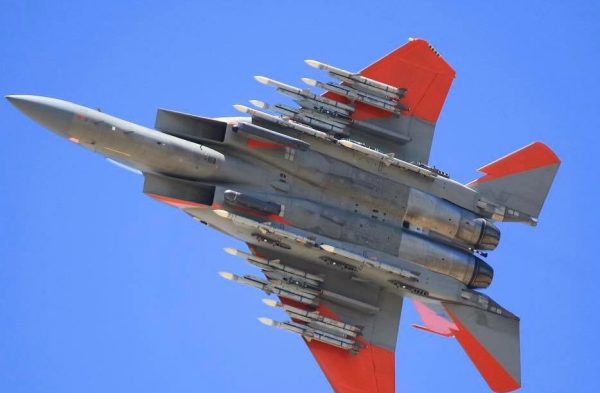
In July, Canada also joined the Global Combat Air Program, the UK-Italy-Japan sixth-generation fighter project, as an “observer” country. GCAP is not an EU program, but it is part of Ottawa’s effort to widen defense options beyond the United States.
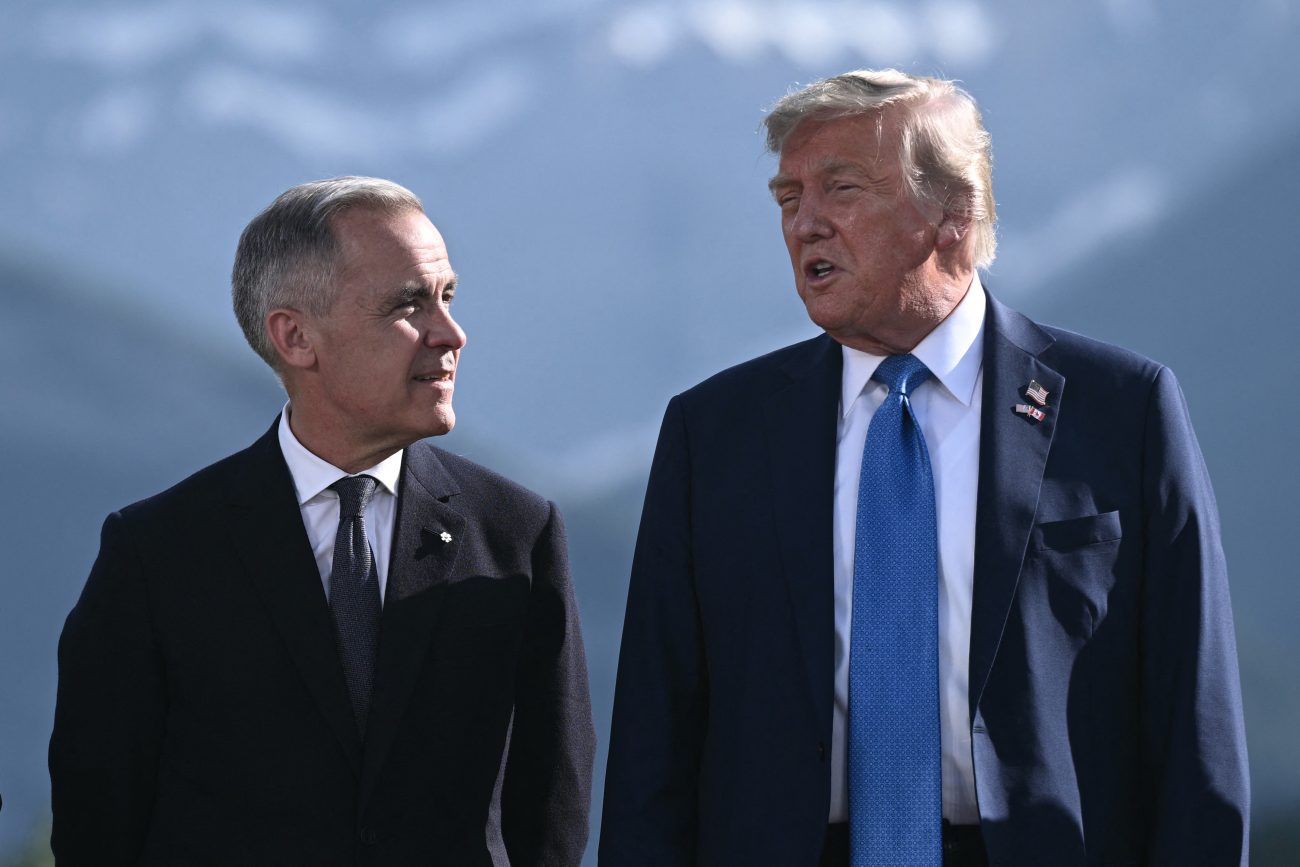
British Prime Minister Andy Burnham said that Canada would “join the program as the first observer nation.”
Canada is also making a concerted effort to reduce its security dependence on the US and diversify its arms suppliers.
Ottawa has therefore signed several big-ticket defense deals with European firms in recent years.
Canada-EU Defense Partnership
In May 2026, Prime Minister Carney announced that Canada selected Sweden’s Saab GlobalEye as the preferred supplier for its future Airborne Early Warning and Control (AEW&C) capability. The platform merges a Canadian-made Bombardier Global 6500 business jet with Saab’s Erieye Extended Range (ER) active electronically scanned array (AESA) radar system.
Canada’s F-35 deal with the United States is under review. Ottawa has discussed a mixed fighter fleet that could include Saab Gripens, with figures around 70 aircraft reported. Saab has proposed local assembly in Canada. No Gripen purchase has been signed.
In July, Canada selected Germany’s TKMS as the preferred supplier for up to 12 conventional submarines to replace the Victoria-class, which are at the final leg of their service life.
This could very well become the largest defense procurement in Canadian history.
According to some estimates, the acquisition cost could reach US$24-30 billion, while the total cost over three decades, or the next 30 years, including lifetime maintenance and support, could reach US$100 billion.
Clearly, Canada and the EU are making concerted efforts to deepen their defense and security partnership.
However, it is one thing to buy defense platforms, join a fighter jet development program, or sign a free trade agreement, and quite another to become an EU member.
Many are wondering whether Canada, as a non-European country, could even join the EU.
Could Canada Join the EU Legally?
European Commission President Ursula Von der Leyen has invited Canada to join the EU as an “associate member,” not a “full member.” This distinction is important.
The legal distinction between accession and association is fundamental.
Article 49 of the Treaty on European Union (TEU) sets out the legal framework and rules for any European country that wishes to join the European Union.
It states that: “The applicant must be a European state.”
Further, “the country must respect and promise to promote the fundamental EU values listed in Article 2, such as democracy, equality, rule of law, and human rights. The applicant must also meet certain economic and political conditions.
Canada fulfills all of these political and economic conditions, but it fails a key geographical requirement. It is not a European state.
The clause therefore presents a geographical eligibility obstacle for Canada under the existing accession framework.
Article 217 of the Treaty on the Functioning of the European Union (TFEU) provides a different legal basis, authorizing association agreements with third countries that establish reciprocal rights and obligations, common action, and special procedures.
These association agreements could create a legal framework for extensive political, economic, and defense cooperation without conferring EU membership.
The EU has already signed association agreements under Article 217, including with Ukraine, Moldova, and Georgia.
Those pacts create close ties without making the partner a member state. What would be new is calling a non-European country an “associate member.” Article 217 could still be used to deepen Canada-EU political, economic, and defense cooperation short of accession
As noted above, Canada and the EU have already established close economic, institutional, and defense relationships. The ‘associate member’ status could further strengthen these partnerships.
However, under the existing framework, Canada could not join the EU as a ‘full member’. Nor would Canadian citizens gain automatic EU citizenship, permanent residency in the EU, employability rights, or the right to move freely within the EU.
- Sumit Ahlawat has over a decade of experience in news media. He has worked with Press Trust of India, Times Now, Zee News, Economic Times, and Microsoft News. He holds a Master’s Degree in International Media and Modern History from the University of Sheffield, UK.
- He can be reached at ahlawat.sumit85 (at) gmail.com