Two recent reports by the Congressional Budget Office and the Pentagon’s inspector general put the price tag of the Iran conflict for the US in the tens of billions of dollars—and climbing—while also listing some serious military losses. Interestingly, these findings are in sharp contrast to Israel’s much lighter losses in the same war.
“As of August 1, 2026, the armed conflict with Iran has cost DoD approximately $38 billion. That amount reflects the costs of replacing expended munitions and equipment lost in battle, increased flying hours, other operations, and increased fuel costs,” the Congressional Budget Office (CBO) stated in its recent report.
“As the conflict persists, DoD’s costs will continue to increase—slowly if the level of violence remains low and sporadic (as it did in May and June) and rapidly if the intensity of the conflict escalates (as it did in July). CBO estimates that if the level of violence remained as low as it was in May and June, an additional month of conflict would cost $2 billion; if the intensity of the conflict increased to roughly the level experienced in July, the cost per month would increase to $3 billion. Monthly costs could be higher still if the violence escalated further,” the CBO report added.
The report emphasizes that inflation is predicted to rise by about 0.5 percentage points in the first quarter of 2027, driven largely by Iran’s closure of the Strait of Hormuz and disruptions to oil and trade supplies. The rising cost of war has raised concerns overstretching an already-strained federal budget, and mounting losses have sparked concerns about the country’s ability to respond to other potential conflicts.
According to the CBO, these estimates are based on replacing expended munitions, particularly cruise missiles and missile defense interceptors; replacing equipment lost in the conflict; increased flying hours for air operations; higher fuel costs; and repairing or rebuilding military bases damaged in Iranian strikes, along with other operational costs.
The budget office estimated it might take five years to restore US stockpiles, citing rapid weapons depletion as the primary driver of the expenses.
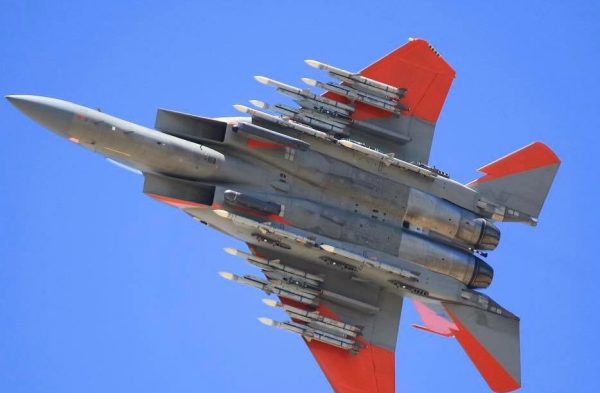
The report also features a section on US battle losses. One of the most notable losses mentioned here is the F-35A stealth fighter. The report notes that replacing/repairing the aircraft would cost $120 million, without saying whether it would be written off or repaired.

Some OSINT observers quickly concluded this was an admission of the F-35A loss, but others cautioned that the CBO is merely documenting the repair cost while leaving the door open to a potential replacement at the US Air Force’s discretion.
The US Air Force could even opt to replace the jet altogether if repair and replacement cost the same.
The Pentagon’s Inspector General also published a one-of-a-kind report on US stockpiles, providing a comprehensive estimate of US losses in the war. According to the Pentagon’s IG report, the war with Iran has resulted in “shortfalls” in ammunition and bottlenecks in resupply.
The report states that Operation Epic Fury (OEF) cost an estimated $33.4 billion between February 28 and June 30, noting that at least $22.3 billion went to munitions alone. ”The munitions expenditure on OEF has resulted in strategic inventory shortfalls and revealed industrial base bottlenecks for munitions resupply,” the report highlighted.
“The Office of the Under Secretary for Acquisition and Sustainment (OUSW (A&S)) said that the munitions expenditure in OEF has resulted in strategic inventory shortfalls and revealed industrial base bottlenecks for munitions resupply. To mitigate these constraints, the OUSW(A&S) said the DoW is working to streamline procurement processes and production lead times and stockpile critical materials, components, and selected munitions to respond rapidly to a contingency,” the report stated.
These claims are in contrast to the US President Donald Trump’s repeated assertions that the US had “virtually unlimited” amounts of ammunition and was currently”stockpiling and preparing for any contingency in the future. In fact, Trump had earlier dismissed reports of depleted stockpiles as “fake news.”
Several independent sources have noted that the US has significantly depleted the stockpiles of Tomahawk, PrSM, and ATACMS long-range missiles, as well as the Patriot and THAAD air defense interceptors. Some analysts even reckoned these losses were the reason Washington agreed to a ceasefire and later the Memorandum of Understanding (MoU) with Iran. In fact, questions have been raised about the US military’s capability to fight an intense, protracted conflict again.
These losses have left the US and its allies—particularly Ukraine and Taiwan, which derive much of their arms from Washington—worried for their future. Moreover, this rapid depletion of stockpiles has triggered concerns about US preparedness for a war in the West Pacific with a powerful enemy like China.
The report also provides a more complete picture of the losses the USAF has faced, with data apparently sourced from the US Congressional Research Service report.
It states that enemy fire damaged the F-35A, something the EurAsian Times had earlier reported. The key highlight here is “damaged” and not “destroyed.”
Similarly, the Inspector General’s report mentioned the E-3 Sentry as damaged.

On March 27, 2026, an Iranian Shahed-136 struck an E-3 Sentry Airborne Warning and Control System (AWACS) aircraft during a strike at Prince Sultan Air Base in Saudi Arabia. Photos published after the strike showed that the rear fuselage of E-3 #81-0005 was completely burned out and destroyed, with debris scattered around the aircraft.
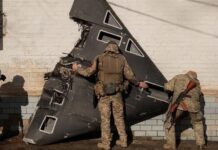
More recently, new images of the US losses published by CBS News —collected from active service members—show the tail of the E-3 severed from the fuselage, which also apparently supported a rotating radar that is essential for collecting midair intelligence. The aircraft appears to be damaged beyond repair, or effectively destroyed.

Furthermore, the report does not account for the MQ-9 losses that have occurred in the June-August period, and pegs the total losses at 30.
Taken together, the CBO and Inspector General reports present a sobering picture of rising costs if the conflict continues. They also indicate that the United States has sustained substantially higher aircraft and high-value equipment losses than Israel, which participated in the same campaign against Iran.
Why the US Lost More Than Israel?
The US lost as many as 42 aircraft, including 18 manned aircraft, in its war with Iran, whereas Israel’s losses have been negligible. Israel is believed to have lost between 18 and 20 aerial vehicles (UAVs), but none of its manned warplanes, on the ground or in the air, were reported to be damaged.
Although Israel has not released an official report, the majority of its losses include Hermes 900, Heron TP, and Heron-1 drones.
Moreover, reports also described damage to a few unknown civilian aircraft on the ground, although the IDF did not officially confirm those claims. None of the Israeli F-15, F-16, and F-35I Adir jets that were involved in launching strikes on Iranian targets were reported to have been damaged in the conflict.
Writing for the EurAsian Times earlier, Indian Air Force (IAF) veteran and military commentator Air Marshal Anil Chopra (retd) explained that the US and Israeli air strikes were organized by geography, target type, and strategic capability.
The Israeli Air Force primarily targeted ballistic missile launchers and other military equipment used to attack Israel in western and central Iran, in addition to attacking Iranian government locations, oil infrastructure, and nuclear-related facilities.
Meanwhile, US Air Force and Navy forces took primary responsibility for the Iranian Navy, long-range bomber strikes, and missile launchers and assets in southern Iran that threatened US bases in the Gulf.
Although both the US and Israel launched intense strikes, Air Marshal Chopra explained, “Israel has had years of experience in targeting ground assets in Iraq, Iran, Syria, and Lebanon, among others. The Israeli Air Force has fine-tuned tactics to keep its own assets secure. This is one reason it has lost only slow-moving UAVs.”
“The USA also lost more aircraft in the air due to a lack of coordination with the Gulf countries, where most of its assets are located. Also, more action has shifted south near the Gulf of Hormuz, and Iran started hitting assets in the countries that allowed housing US assets,” he added.
Several U.S. aircraft were destroyed or heavily damaged in Iranian strikes on bases in Gulf countries, underscoring that air superiority over Iran did not automatically translate into protection of forward-deployed assets on the ground.
Moreover, Israel and Iran stopped fighting after the April ceasefire, which also ended hostilities between Tehran and Washington. However, the two sides have continued to exchange fire since June 2026, mainly because of their disagreements over the Strait of Hormuz, which Iran has closed after being struck by the US and Israel in February 2026.
With no end to the conflict in sight and the June MoU now dead, the US is expected to remain embroiled in the conflict with Iran.
The latest cost estimates, however, indicate that the financial burden is becoming increasingly difficult to sustain as President Trump faces midterm elections in November.
- Contact the author at sakshi.tiwari13 (at) outlook.com
- Follow EurAsian Times on Google News