The U.S. Department of War has selected Boeing to develop the Navy’s next-generation fighter jets. The contract is valued at over $20 billion for the full-scale development phase. The contract procures multiple test aircraft for ground, airworthiness, systems, and weapons integration testing.
“The F/A-XX is a critical pillar in our commitment to maintaining peace through strength. F/A-XX will dominate contested airspace, extend operational reach, and deliver a decisive combat advantage for the warfighter,” said Michael P. Duffey, Under Secretary of War for Acquisition and Sustainment.”
“The F/A-XX platform represents a crucial, non-negotiable investment in America’s national security and long-term air combat capabilities. We are joining forces with Boeing to field these capabilities rapidly, ensuring our warfighters possess the lethal and highly networked systems required to deter aggression, project undisputed power, and secure absolute air superiority.”
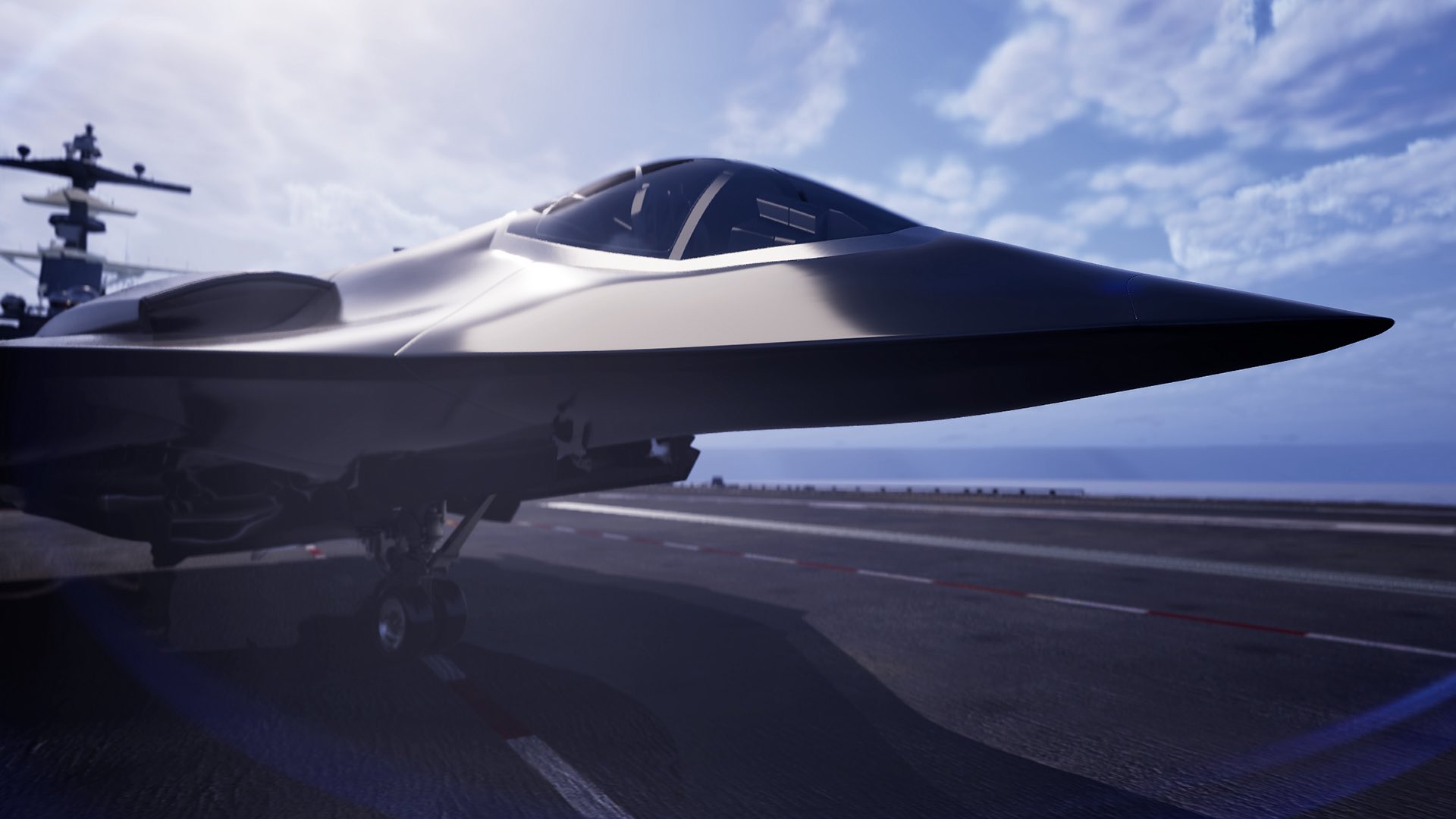
The contract is to produce F/A-XX aircraft or “strike fighters” under the “Next Generation Air Dominance Program,” a Pentagon statement said, adding that the new jets would replace the legacy “Super Hornets” fleet beginning in the 2030s.
The announcement marks the second time the Pentagon has selected Boeing during the second Trump administration to develop a sixth-generation aircraft. Earlier, in March 2025, the US awarded the NGAD contract (now called the F-47) to Boeing over the developers of the F-35 and F-22, Lockheed Martin.
“Delivering two advanced fighters in parallel was always our plan, and we invested accordingly. We are ready and able to build multiple concurrent future combat aircraft franchise programs,” said Steve Parker, head of Boeing Defense, Space & Security.
“The F/A-XX platform represents a crucial, non-negotiable investment in America’s national security and long-term air combat capabilities,” said Pentagon undersecretary Michael Duffey. “We are joining forces with Boeing to field these capabilities.”
Boeing said construction was continuing at the company’s “secure manufacturing” facility in St. Louis, which the company said is the largest of its kind in the United States.
“The technical and programmatic details of F/A-XX remain classified under US national security and export laws,” Boeing said.
Boeing was competing for the contract with Northrop Grumman.
“For F/A-XX, Northrop Grumman offered a highly survivable, digitally advanced sixth-generation fighter to the US Navy,” Northrop said Tuesday. “We look forward to receiving additional information about their selection.”
At a May 2026 hearing, Admiral Daryl Caudle, chief of naval operations, told a Senate panel that the next-generation system needed to “extend the reach, survivability and lethality,” and was expected to work with unmanned systems.
“Failure to field next-generation carrier aviation capability on schedule will introduce risk to air superiority, strike reach and the long-term viability of carrier-based operations in contested environments,” Caudle said.
Interestingly, when Boeing won the NGAD (F-47) contract, China mocked Boeing’s selection as prime contractor for the 6th-gen aircraft.
Wang Ya’nan, chief editor of Aerospace Knowledge magazine, told the state-run Global Times that Boeing has not won a major aircraft program for decades.
“Having a company like this to lead a sixth-generation program is actually very risky,” he said.
Several former US pilots also questioned the Pentagon’s choice. For instance, C.W. Lemoine, a former USAF F-16 pilot, doubted Boeing’s selection. Lemoine said: “Boeing has had problems with pretty much everything except for the F-15EX… the T-7 has had a host of problems… KC-46 has had a host of problems.”
T.K. Hartsock, a former Navy F/A-18 and USAF instructor pilot, raised concerns about the lack of concrete details on the F-47’s capabilities and Boeing’s execution. He suggested Boeing might struggle with delivery timelines and integration of advanced tech.
Hasard Lee, a former F-35 and F-16 pilot, questioned Boeing’s ability to deliver on the F-47’s ambitious goals. He noted that while the F-47 aims to exceed the F-22 in maneuverability and integrate F-35-level sensors with better stealth and IR management, “it remains to be seen how Boeing will achieve these goals.”
Meanwhile, Boeing Defense chief Steve Parker: “It’s an honor to be selected to produce the Navy’s first sixth–generation platform. Backed by decades of work, bolstered by game-changing innovations and solidified by the investments we’ve made in new facilities uniquely suited to build multiple products with next-generation capabilities, our dedicated and talented team is ready to execute this critical program,” said Steve Parker, president and chief executive officer, Boeing Defense, Space & Security.
“Delivering two advanced fighters in parallel was always our plan, and we invested accordingly. We are ready and able to build multiple concurrent future combat aircraft franchise programs.” It’s an honor to be selected to produce the Navy’s first sixth-generation platform.”
- By ET Desk
- Mail us at: editor (at) eurasiantimes.com