More than five decades after Japan adopted its famous three non-nuclear principles: not to produce, possess, or allow the introduction of nuclear weapons on its territory, Tokyo is considering making an exception to these rules.
The Japanese government is considering establishing an exception to the ban by allowing U.S. military warships carrying nuclear weapons to enter Japanese ports in emergency situations.
The plan to permit nuclear-armed warships on Japanese territory is part of revisions to its three key national security documents, scheduled for completion by the end of 2026.
This move could further antagonize Beijing, which already views Japan’s rising defense budgets, re-militarization trends, and rolling back of self-imposed weapons export restrictions with deep apprehension.
Japan’s Emergency Exception to Nuclear Weapons
On November 11, a Japanese publication, The Asahi Shimbun, reported that the Takaichi administration has begun considering explicitly stating exceptions to the “no introduction” rule of the “Three Non-Nuclear Principles”.
Quoting a government official, the report said that the government thinks that it is impossible to adequately ensure Japan’s security without the temporary entry of U.S. ships carrying nuclear weapons.
The source also said the administration believes sharing the U.S. ‘nuclear umbrella’ is critical to ensuring Japan’s security.
First articulated by Prime Minister Eisaku Satō in 1967, and formally adopted as a parliamentary resolution in 1971, the Three Non-Nuclear Principles are (i) not to possess nuclear weapons, (ii) not to produce nuclear weapons, and (iii) not to permit the introduction of nuclear weapons into Japanese territory.
These principles remain the foundation of Japan’s non-nuclear policy, and they provide one of the strongest guardrails against nuclear weapons anywhere in the world.

Notably, Prime Minister Takaichi has previously suggested in her writings that Japan’s reliance on the U.S. nuclear umbrella makes the principle of prohibiting nuclear weapons on Japanese soil increasingly unrealistic.
She expressed these views in her 2024 book titled ‘Research into National Power’.
Takaichi stated that while the first two of Japan’s Three Non-Nuclear Principles – not possessing and not producing nuclear weapons – must be maintained, the third principle of not permitting the introduction of nuclear weapons into Japanese territory is unrealistic.
The PM argued that if Japan expects the United States to provide a credible nuclear umbrella, an absolute prohibition on allowing nuclear-armed U.S. vessels or forces to enter or transit Japanese territory becomes an obstacle during an extreme crisis.
According to the report, the Japanese government intends to formally maintain all three principles while allowing an exception to the third: the ban on importing nuclear weapons.
While Japan has strictly followed the three non-nuclear principles for over five decades, in recent years multiple senior Japanese politicians, including former Defense ministers and Prime Ministers, have suggested that fully adhering to these principles is impractical amid the changing security situation in the Indo-Pacific.
Three of Japan’s neighbors have nuclear weapons: China, Russia, and North Korea, and all of them are expanding their nuclear arsenals and nuclear delivery platforms. Japan shares an adversarial relationship with all three.
Meanwhile, all three adversaries are increasing defense cooperation, a trend that has worried policymakers in Tokyo.
Notably, Japan has already accepted implicitly that its commitment to the third ‘non-nuclear principle,’ of not allowing nuclear warheads on its territory, is not absolute.
In 2010, then-Foreign Minister Katsuya Okada of the Democratic Party of Japan told Parliament that if Japan’s security could not be protected without allowing U.S. nuclear-armed ships to dock, “the government in power would make a decision that would determine the fate of Japan and explain it to the people.”
Successive governments have followed this position; however, the government is now considering explicitly stating in the three security documents that, in an emergency situation, U.S. nuclear-armed vessels could be allowed to dock at Japanese ports.
In 2022, former Prime Minister Shinzo Abe also suggested that Tokyo should share nuclear weapons with the US.
In July this year, Japanese Defense Minister Shinjiro Koizumi said that Tokyo needs a debate on nuclear weapons. Japan “cannot avoid touching” the issue perpetually, Koizumi was quoted as saying by The Mainichi.
Koizumi said Japan’s security environment has grown harsher and argued that Tokyo needs to change a situation in which some topics are deemed unacceptable to debate.
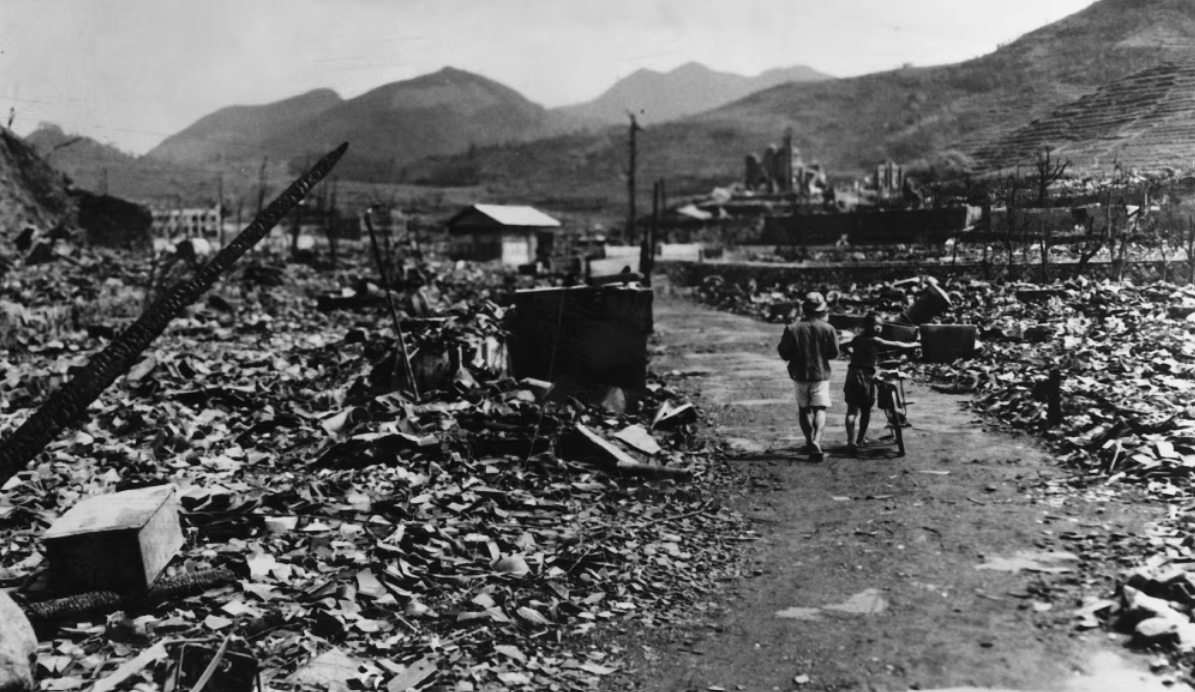
During her August 2026 address marking the 81st anniversary of the atomic bombing of Nagasaki, Takaichi publicly reaffirmed Japan’s commitment to the Three Non-Nuclear Principles. However, her government has subsequently begun considering moving away from it.
Japan has enjoyed the protection of the United States’ nuclear umbrella for more than 60 years. However, Tokyo’s self-imposed restrictions on the introduction of nuclear weapons on Japanese territory do create practical problems in enforcing this protective nuclear umbrella in an effective manner.
It also creates many other problems for Tokyo’s defense diplomacy.
For instance, France’s nuclear-powered aircraft carrier, the Charles de Gaulle, has never docked at a Japanese port. During Operation Clemenceau 25, its 2024-2025 Indo-Pacific deployment, the carrier visited Indonesia, the Philippines, and Singapore – but not Japan.
Similarly, the US Navy is developing a nuclear-armed Sea-Launched Cruise Missile, or SLCM-N, for integration aboard Virginia-class attack submarines. However, Tokyo’s current nuclear policy means that these U.S. submarines will not be able to visit Japanese ports or transit its territorial waters.
Japan is also not the only country revisiting its nuclear doctrine. Several European nations, long opposed to hosting nuclear weapons, have recently revised their policies and are actively discussing a shared French nuclear deterrent.
Pacific to Europe: Countries Are Revising Their Nuclear Policies
In June, Finland’s parliament passed a bill that would allow nuclear weapons to be brought into the country. The law took effect in July, after President Alexander Stubb signed it.
Notably, just like Japan, Finland had a Cold War-era law that completely prohibited the import, transport, supply, and possession of nuclear weapons on its territory.
Under the new law, nuclear weapons could be deployed on Finnish territory ‘when it is done for Finland’s homeland defense, as part of NATO’s collective defense, or in the context of defense cooperation with allies.
Similarly, Baltic country Lithuania is also considering amending the country’s Constitution to allow the deployment of French nuclear weapons on its territory.
Article 137 of the Lithuanian Constitution currently stipulates that no weapons of mass destruction or foreign military bases may be on Lithuanian territory.
Similarly, after joining NATO, Sweden shifted away from its historic nuclear disarmament posture. Under the new policy, nuclear weapons could be permitted on Swedish territory under wartime circumstances.
Sweden is also discussing a nuclear weapons sharing agreement with France and the UK.
South Korea has also witnessed renewed debate over whether American tactical nuclear weapons should be redeployed to the Korean Peninsula. Some conservative politicians have advocated the move as North Korea expands its nuclear arsenal. However, President Lee Jae-myung’s administration has explicitly ruled out redeployment, nuclear sharing, and an independent South Korean nuclear weapons program.
The last American nuclear weapons were withdrawn from South Korea in 1993 after the disintegration of the Soviet Union and the end of the Cold War.
Now, as North Korea has developed nearly 60 nuclear weapons (as per SIPRI data) and is expanding the arsenal of its nuclear-capable missiles, Seoul is debating whether U.S. nuclear weapons should be reintroduced on its territory.
Soon, many new countries in Europe and Asia Pacific could be hosting nuclear weapons.
- Sumit Ahlawat has over a decade of experience in news media. He has worked with Press Trust of India, Times Now, Zee News, Economic Times, and Microsoft News. He holds a Master’s Degree in International Media and Modern History from the University of Sheffield, UK.
- He can be reached at ahlawat.sumit85 (at) gmail.com