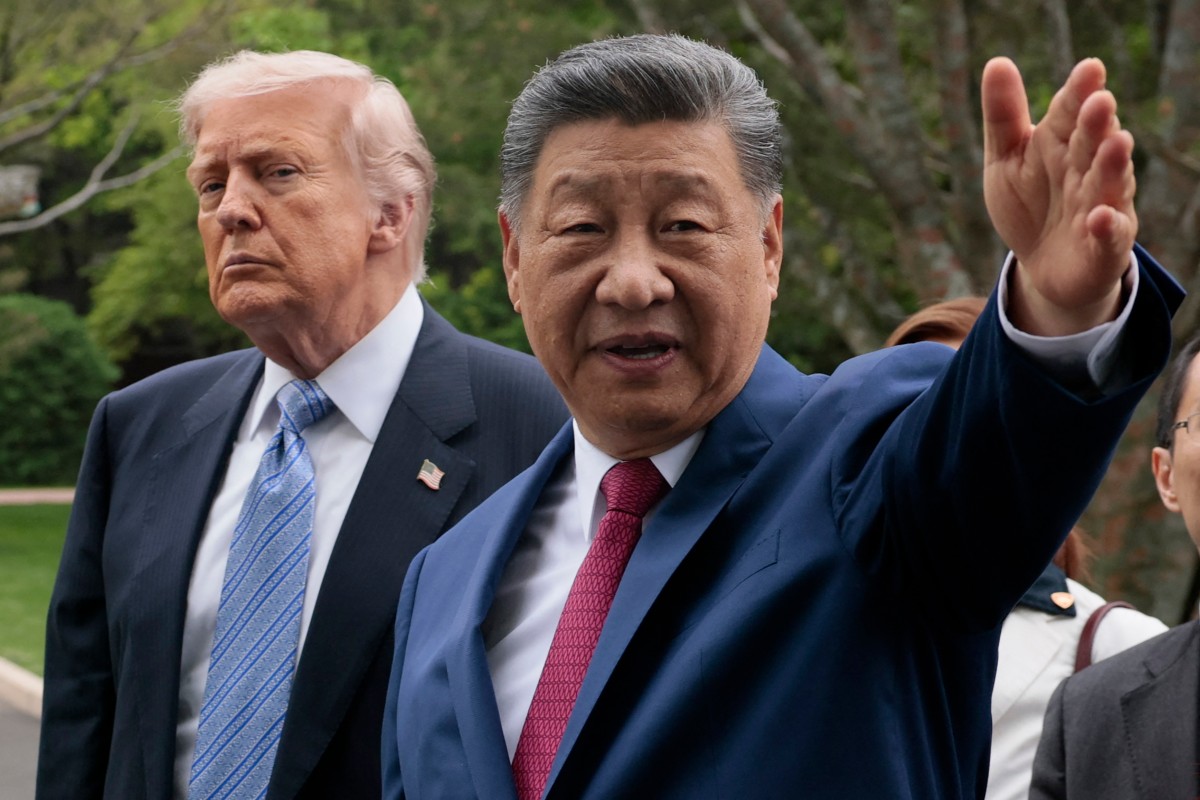
As India moves closer to China, Prime Minister Narendra Modi appears to have distanced his government from its widely perceived closeness to the USA and the West.
This is his approach to maintaining India’s strategic autonomy. In doing that, he has also upset dominant sections of the intelligentsia who have been his admirers (echoes of Trump and his MAGA support base). They are also among the beneficiaries of the US’s liberal visa policy for India’s young.
There is no denying that Modi, aided by his External Affairs Minister S. Jaishankar, is on a tactical trapeze. Yet, as part of the same trapeze act, India appears to have exercised caution, not to annoy a Trump administration already upset over its purchase of Russian oil, and to slow its much-needed plans to boost economic ties with China.
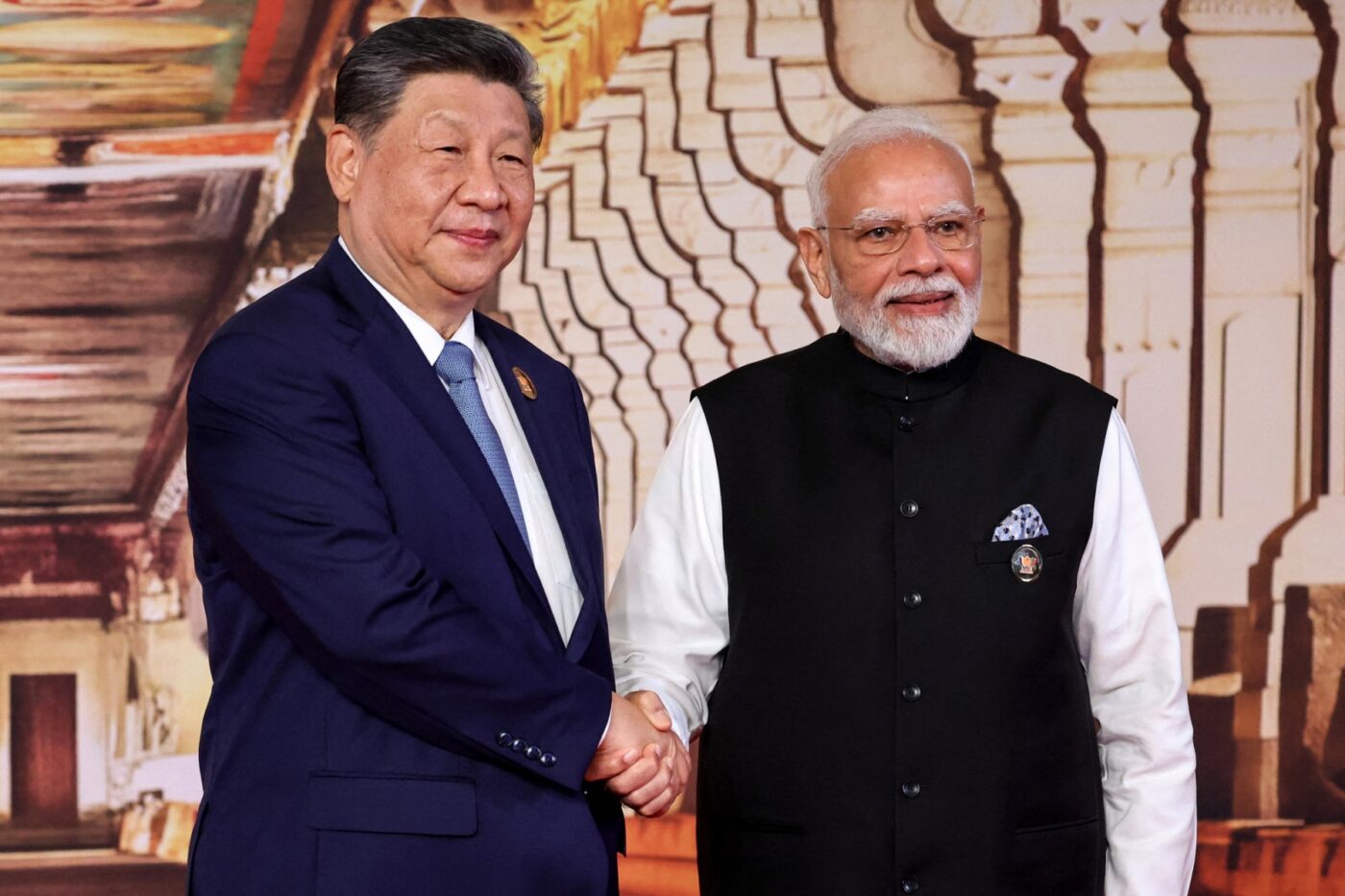
Visiting India after seven years for the 18th BRICS summit, President Xi Jinping was accompanied by a large business delegation, raising expectations of more Chinese investment. But only a meeting between India’s Piyush Goel and Chinese Commerce Minister Wang Wentao occurred. They agreed to discuss economic issues later. The postponement was palpable.
The revival of the bilateral Strategic Economic Dialogue and the announcement of big-ticket Chinese investments were missing. It was mainly good optics and warmth, but concrete results were not visible. However, low-hanging fruit like the Kailash Man Sarovar Yatra pilgrimage and work to resume direct flights formed part of the diplomatic effort.
A reset of economic ties has been overdue. Both sides agree that this would define the present century as one driven by India and China. While both leaders agreed to discuss structural trade imbalances, supply chain concerns, and promote cultural and business exchanges, an early policy shift does not appear on the cards.
An immediate impact of this go-slow is that supply chains for many Chinese imports that sustain India’s industry and commerce, right down to local vendors of computers and other software goods and accessories, may continue to suffer shortages and delays.
Despite government restrictions, India’s reliance on Chinese industrial goods, machinery, and active pharmaceutical ingredients (APIs) has remained high, widening the trade deficit.
Until recently, Chinese-made firecrackers, Ganesha idols (with slanted eyes!), and colors and sprinklers were used during India’s festivals. This also drew a patriotic rebuff from traders.
Boycott calls were made against Chinese goods every time there was an incident on the Sino-Indian border. None of these has changed the inflow of Chinese goods. Officially banned and strictly restricted, they still manage to enter through grey channels.
Despite the drop in direct imports of these finished goods, India’s core concern remains its overall trade deficit with China. Prime Minister Narendra Modi and senior officials routinely use these products as examples to drive home the “Make in India” campaign, publicly urging citizens to reject foreign-made festival goods in favor of local alternatives, citing climate and environmental degradation supposedly caused by some Chinese products.
Recognizing that strict bans harmed domestic manufacturing, India has explored relaxing capital controls, allowing minority Chinese stakes (up to 24%) in domestic manufacturing units to boost local production and electronics exports.
In reality, however, India remains wary of its deep dependence on China and is keen to de-risk. And as Antara Ghosal Singh writes in the Indian Express (September 22, 2026), China, in turn, wants to discourage India from emerging as a global manufacturing hub that could threaten its centrality in global supply chains.
China remains India’s largest trading partner, but bilateral trade is heavily lopsided with India’s trade deficit rising. Total trade between India and China reached record highs of over $155 billion to $167 billion in recent years. India’s trade deficit with China widened to more than $112 billion, making it one of India’s largest bilateral deficits.
While permitting non-sensitive Chinese Foreign Direct Investment (FDI), India continues to utilize its Production Linked Incentive (PLI) Schemes to diversify supply chains and build long-term domestic alternatives.
Yet India’s trade basket shows that, compared with finished retail goods, roughly 70% of imports from China are intermediate goods and 22% are capital goods, which are essential for Indian manufacturing.
India has fewer options. Over 60% of global electronics manufacturing is based in China, making collaboration vital for Indian device assembly and scaling tech infrastructure. Although lopsided, India’s exports to China have seen growth in specific sectors like electronics (smartphones, display modules) and engineering/auto components.
The apparent go-slow should raise concerns among India Inc., which pressured Modi last year to ease restrictions and re-engage with China, citing that strict post-2020 curbs (after a border clash at Galwan) on Chinese capital, tech, and visas were backfiring on domestic manufacturing ambitions.
Indian CEOs and top economic advisers warned that blocking Chinese inputs and investments hampered domestic high-end manufacturing goals, including the electronics and semiconductor push.
Moreover, US tariff policies and global trade uncertainties have urged Indian firms to secure stable supply chains and capital inflows. To address this, the Modi government began selectively softening its stance on non-sensitive Chinese investments and streamlining visa approvals for Chinese engineers and professionals.
Significantly, in adopting this course, the generally business-friendly Modi Government, with its right-wing political stance and having the US, the West, and Israel as allies, has deviated from its political and military paths where differences take precedence.
It defies the cautious approach to China dictated by dominant sections of India’s intelligentsia, which are generally pro-West and pro-US. The new tech-driven, business-oriented diaspora in the West that the government has cultivated is wary of any Indian move toward China.
The border war of 1962 still causes rancor and fear, and Delhi is cautioned from within and without against getting too cozy with China.
A sharp, pragmatic binary drives India’s contemporary approach to China. It combines strategic confrontation with economic interdependence. Historically, India insisted that broader bilateral normalization was impossible without absolute peace and stability along the border.
However, shifts in global supply chains and regional dynamics have forced a dual-track policy: robust military and geopolitical deterrence on one side, paired with calibrated economic rapprochement on the other.
In conclusion, India-China economic ties have adopted a different course from the political one.
This presupposes two key things: peace on the border and India not becoming proactive in groupings like the Quad that are perceived as anti-China. Overall, competing interests compounded by mutual suspicion of each other’s intentions may continue to shape bilateral ties.
- Mahendra Ved is an Indian journalist and prominent Columnist. He served as President (2016-2022) of the Commonwealth Journalists Association (CJA)
- This is an Opinion Article
- He can be reached at: mahendraved07 (at) gmail.com