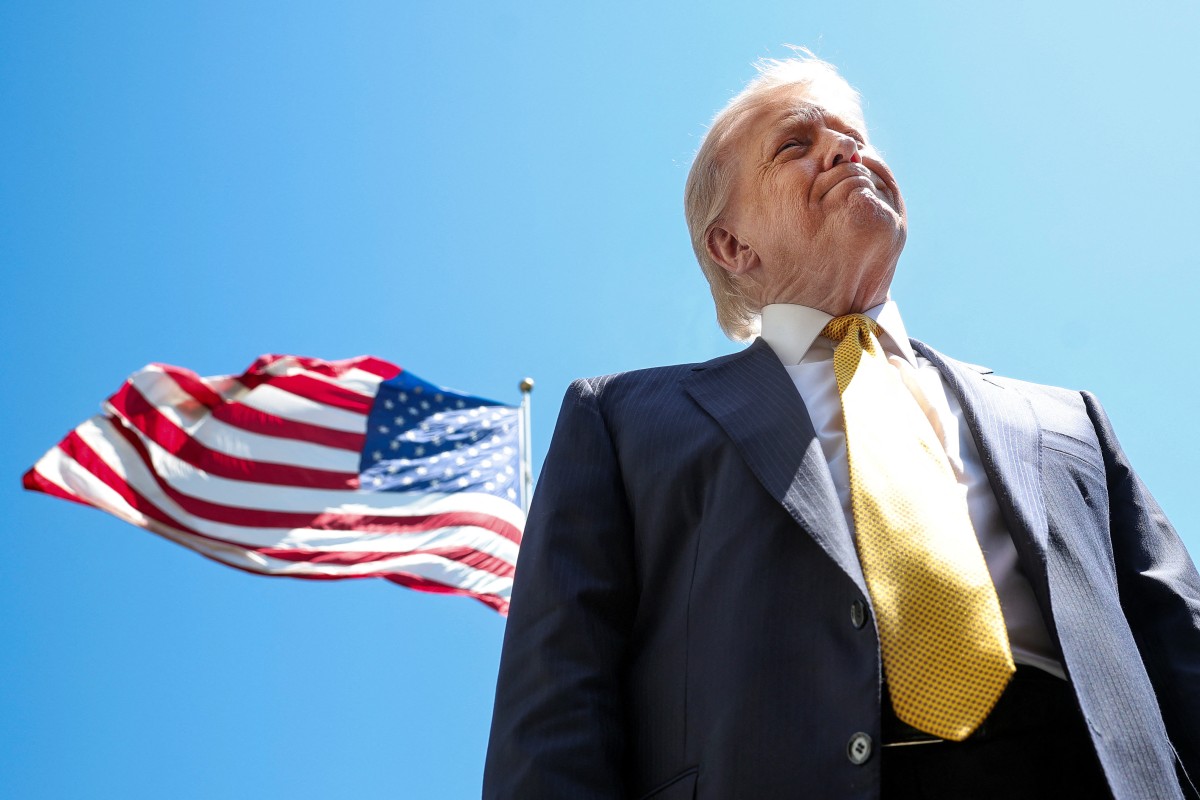
Was it the inadequate input on Iran provided by America’s intelligence agencies that led President Donald Trump to attack Iran in February?
Are some foreign intelligence agencies now trying hard to dislodge Indian Prime Minister Narendra Modi from office through their cultivated links in India, even though they failed to defeat him in the general elections in 2024?
These two questions, pertaining to two different countries and widely debated now, look odd at first glance. Still, they reflect a common pattern in how leading foreign intelligence agencies operate, particularly in democratic countries.
The two questions seem all the more relevant as, in the last fortnight, two formidable intelligence agencies of both America and India celebrated birthdays.
The Central Intelligence Agency (CIA) of the United States turned 79 on 18th September, and India’s Research and Analysis Wing (RAW) turned 57 on 21st September.
Both were designed to be apolitical, faceless, and permanently loyal to the state — not to the government of the day. But more often than not, that is not how they are perceived. The agencies that are supposed to watch from the shadows are seemingly dragged into the floodlights of politics.
It is widely believed that there is a growing politicization of intelligence. Political leaders in democracies like India and the US publicly disparage or praise intelligence findings and use them as instruments to score partisan points and intensify polarization.
There are said to be two ways through which the mechanics of politicization occur. One is the top-down pressure from political leaders. The other is the bottom-up pandering by intelligence officials.
Top-down politicization happens when policymakers demand that intelligence support a predetermined policy or political narrative. Leaders may engage in “cherry-picking,” a process where they selectively highlight pieces of intelligence that confirm their biases while ignoring overwhelming contradictory evidence.
Alternatively, political leaders can pressure analysts to alter their conclusions, creating an environment of fear or career vulnerability for those who report inconvenient truths.
Conversely, bottom-up politicization occurs when ambitious intelligence leaders tailor their briefings to please their political masters. In an effort to secure funding, promotions, or bureaucratic influence, agency chiefs may shade their analysis to match the known preferences of the government of the day. They, thus, deliver a distorted reality.
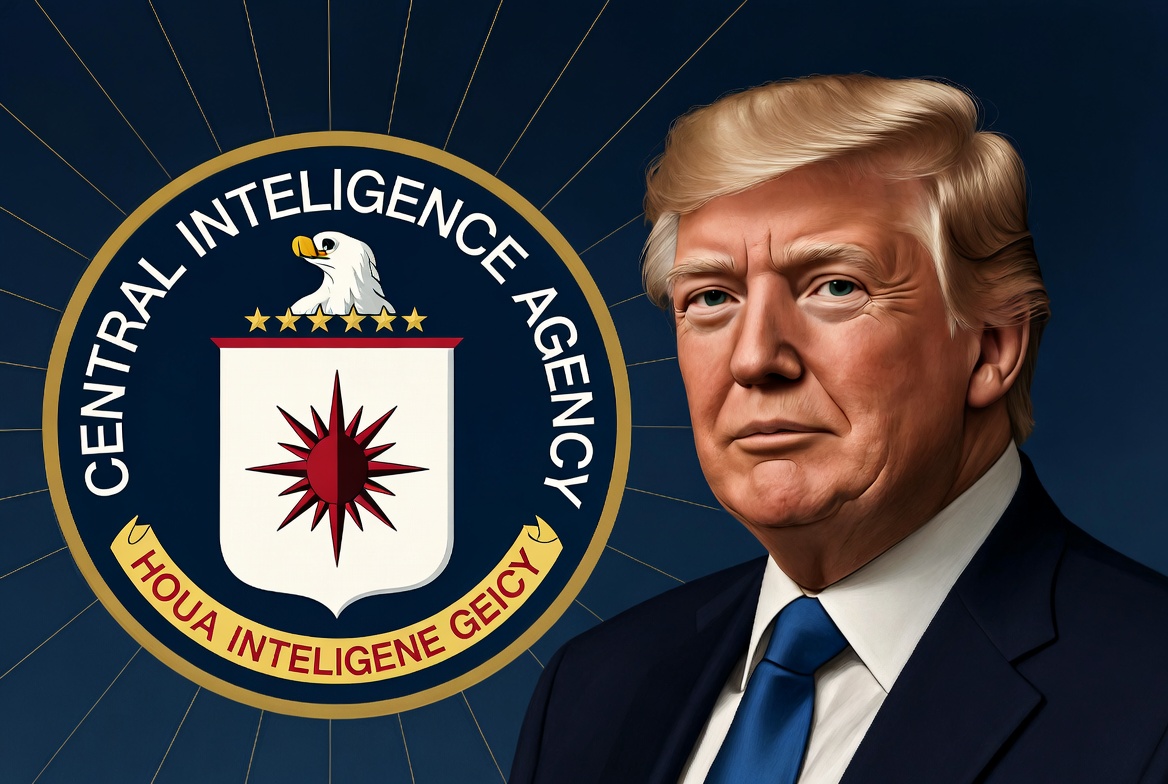
Experts say the US has a long history of such politicization.
The most frequently cited modern example is the 2003 invasion of Iraq. In the lead-up to the war, political pressure within the US and UK governments led to the inflation and misrepresentation of intelligence regarding Iraq’s alleged weapons of mass destruction (WMD) programs.
Analysts who expressed doubts were sidelined, and the public was presented with ambiguous data as absolute certainty. The resulting conflict caused immense loss of life, regional instability, and a profound degradation of political credibility.
Going further back, other prominent examples show intelligence filtered, exaggerated, or manipulated to serve a predetermined political or military objective.
In August 1964, the US National Security Agency (NSA) and military officials presented intelligence to President Lyndon B. Johnson suggesting a second, unprovoked attack by North Vietnamese torpedo boats on US destroyers. Later declassified documents revealed that the intelligence was highly ambiguous and that the second attack almost certainly never occurred.
However, the administration used flawed intelligence to quickly secure the Gulf of Tonkin Resolution from Congress, which legally authorized the massive escalation of the Vietnam War.
Similarly, in 1970, following the democratic election of Marxist President Salvador Allende in Chile, the US administration under Richard Nixon pressured the CIA to generate assessments that exaggerated the immediate threat Allende posed to regional stability. Intelligence operations were directed to actively foment economic chaos and support a military coup, aligning agency actions with a hardline geopolitical narrative rather than objective risk assessment.
In recent years, however, politicization has shifted toward domestic political warfare. Agencies are increasingly dragged into the partisan arena, either weaponized by incumbent administrations against domestic rivals or targeted by opposition parties as components of a “partisan deep state.”
One is increasingly witnessing intelligence assessments regarding foreign election interference, public health crises, or domestic extremism viewed through a purely partisan lens. In other words, intelligence is becoming a weapon in domestic partisan warfare.
In Trump’s first administration, he was outraged by the conclusion of an Intelligence Community Assessment produced in the last days of the Obama administration that Russia had secretly worked to promote Trump’s election, and he conflated this issue with the question of whether his campaign colluded with Moscow.
No wonder that in his second administration the official website of the Office of the Director of National Intelligence (ODNI) echoed Trump’s own mantra and referred to “the Russia collusion hoax.”
In fact, Trump is now alleging that China meddled in his 2020 election, which he lost to Joe Biden, and is questioning voting security ahead of the midterm Congressional elections next month.
So vexed Trump has been with the intelligence officials whom he perceived to be close to the Democrats that he has sacked many of them. And this action of Trump has been considered to be unprecedented.
According to Bruce MacKay, a former Assistant General Counsel at the Defense Intelligence Agency and educator at the National Intelligence University, “We have long had issues with politicization and intelligence, (but) We’re in an era we’ve never been in before, where heads of intelligence organizations get fired because the primary customer doesn’t like what they’ve been told. That is unprecedented, and it is horrifically dangerous.”
In other words, political transitions affect intelligence in the US, especially when a new President believes intelligence officials work for the opposition party. Accordingly, intelligence collection priorities ultimately flow from the President’s national intelligence objectives.
The dangerous implication is simple, experts say. If half the country believes the CIA is working for the Democrats, and the other half believes it is working for the Republicans, then next time the CIA warns of a real threat — a 9/11 or a pandemic — half the country will not believe it.
India seems to be experiencing this phenomenon too, with RAW becoming a political issue.
In the last decade, RAW has been named in press conferences by both ruling and opposition parties.
Naming RAW in official political and legal domains marks a notable shift for India’s external intelligence agency, which historically operated under strict official anonymity.
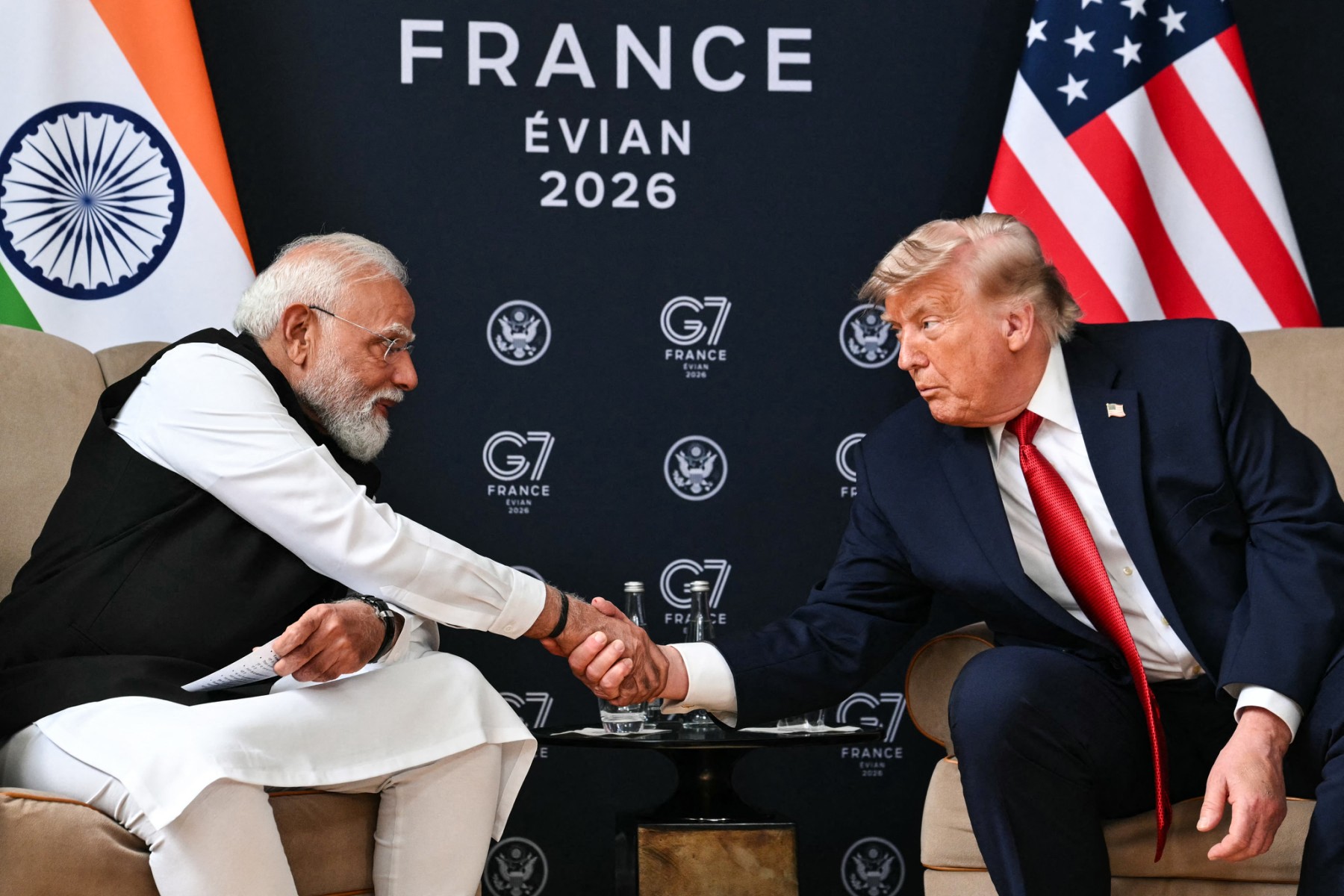
Following allegations surrounding the foiled assassination plot of Gurpatwant Singh Pannun in the United States and the killing of Hardeep Singh Nijjar in Canada, the agency has been explicitly named across distinct public spheres.
Opposition leaders have utilized parliamentary sessions and subsequent media briefings to raise questions regarding national security, foreign policy, and accountability. Unlike in the past, when Indian political opposition generally maintained neutrality on intelligence apparatus activities, its leaders now are pushing the government to clarify how these public international disclosures impact India’s global diplomatic standing.
Similarly, in every election cycle now, we have “sources in intelligence agencies say” stories — about Pakistan’s role, about Khalistani funding, about Chinese interference — leaked 48 hours before polling. These leaks, whether planted by the government or by dissenting officials, weaponize RAW. Intelligence becomes not a secret assessment for the Prime Minister, but a headline for news outlets for days and weeks.
Though it is usually fashionable to blame only the government of the day for politicizing agencies, that is half the truth. In healthy democracies, opposition parties and human rights activists provide oversight. But in highly polarized democracies, they harm national interests by involving intelligence agencies.
We have seen in both the US and India how such selective outrage works.
When the CIA or RAW acts against a terrorist or a gangster abroad, human rights NGOs in Europe and America instantly file lawsuits, reveal operational methods, and demand transparency under the garb of international law. But when the same agency fails to prevent an attack, the same NGOs accuse it of incompetence and demand accountability.
Opposition parties play a parallel game. In the US, Democrats decried CIA politicization under Bush’s WMD episode but celebrated the 51 former officers’ letter when it helped Biden. Republicans decried that letter but celebrated when former CIA officers attacked Obama’s drone rules.
In India, the ruling parties called RAW’s covert successes (Bangladesh in 1971, Sikkim in 1975, the nuclear secrecy of 1998, Balakot targeting data in 2019) “proof of strong leadership,” while the opposition called them “proof of misuse of agencies.” Both sides leak when it suits them, and both demand absolute secrecy when it does not.
This selective leaking has created a market. Journalists know they can get a “RAW source” or “CIA source” to bad-mouth the other side. Foreign adversaries exploit this market beautifully. They plant a story through an activist group; the story then is picked up by an opposition leader, whose press conference on it is subsequently cited by the global media as “Indian opposition accuses RAW ” or “ the CIA is the villain”.
Here, the intelligence agency is defamed not by enemy action, but by domestic politics. By ridiculing intelligence as a political hit job, the opposition party prevents a unified national response to foreign threats, leaving the democratic process vulnerable to external manipulation.
In the modern information ecosystem, opposition parties do not merely reject intelligence; in many cases, they actively replace it. When official agencies present data on complex issues, opposition parties often rely on unverified open-source data, partisan think-tank reports, or conspiracy theories to construct a parallel reality. They present these alternative narratives to the public as the “true” intelligence that the government is supposedly hiding.
When genuine intelligence is successfully ridiculed as fake, the ultimate casualty is shared reality. A democracy cannot protect itself from external or internal threats if its political leaders cannot agree on basic, verified facts provided by its own security apparatus.
John Sipher, a 28-year CIA veteran and a nonresident senior fellow at the Atlantic Council, makes a strong case that politicizing intelligence severely undermines national security and erodes public trust in crucial government bodies.
Sipher’s perspective focuses on preserving an apolitical intelligence community and the dangers of using intelligence for political leverage.
He warns that a politicized intelligence framework creates a dangerous environment where:
-
Allies and partner countries hesitate to share critical information for fear that sensitive material will be leaked for political gain.
-
Intelligence officers face retaliation or termination for delivering unvarnished facts that conflict with official political goals.
-
The public loses faith in the integrity of domestic intelligence institutions, which leaves the nation more vulnerable to foreign disinformation.
In sum, intelligence agencies are the eyes and ears of the state. When they are politicized, the state effectively blinds itself to reality, navigating complex global landscapes based on ideological whims rather than hard facts.
Transparency and accountability are fine, but there needs to be a political consensus that safeguarding national security requires a recognition that objective and uncomfortable truths are far more valuable than comforting political narratives in public.
As CIA historian Michael Warner says, “without secrets, it is not intelligence”.
- Author and veteran journalist Prakash Nanda is Chairman of the Editorial Board of the EurAsian Times and has been commenting on politics, foreign policy, and strategic affairs for nearly three decades. He is a former National Fellow of the Indian Council for Historical Research and a recipient of the Seoul Peace Prize Scholarship.
- The author can be reached at prakash.nanda (at) hotmail.com