Following the collapse of the Franco-German-Spanish Future Combat Air System (FCAS) fighter project, Berlin is now exploring at least three + 1 different strategies to equip the Luftwaffe (German Air Force) with a new next-generation combat aircraft by 2035.
Speaking to the German outlet DW, Defense Minister Boris Pistorius outlined three strategies Berlin is considering to equip the country with a next-generation fighter jet.
The three main options under consideration are: ordering additional F-35 fighter jets as a bridge solution; joining an existing sixth-generation fighter program; or launching a new indigenous combat aircraft project under full German leadership, with Airbus and other domestic partners at the forefront.
“Those are basically the three options currently on the table,” the minister said.
He added that “a fourth option may emerge, but I do not want to discuss that right now. Still, yes — it is conceivable and remains one of the possibilities.”
However, given the significant challenges and limitations of the three outlined paths, it is this mysterious fourth option that is generating the most interest.
Before exploring the mysterious fourth option, it is worth examining why the three paths outlined by the German defense minister are highly problematic.
Option 1
The first option entails buying additional F-35s as a bridge solution.
Germany has ordered a total of 35 F-35A fighter jets. The agreement was finalized in 2022. The first German F-35A is in final assembly, with initial deliveries expected in the second half of 2026.
In February this year, there was speculation that Germany was considering ordering 15 additional F-35 fighter jets, bringing the total number of F-35As in its inventory to 50; however, Berlin denied those reports.
The 35 F-35As already on order are expected to be delivered by 2029 and can get Full Operating Capability (FOC) around 2030.
Even if Germany buys additional F-35s as a bridge-gap solution, it will not solve Germany’s need for a next-generation fighter jet unless it partners with Lockheed Martin, which proposed developing an F-35 “Ferrari” variant. You can read the full story here.
Notably, China is already flight testing two next-generation fighter jets, and the US’s NGAD, christened F-47, could also start its flight testing by 2028. Meanwhile, the UK, Italy, and Japan are working on the Global Combat Air Program (GCAP), and France will continue developing its next-generation platforms.
Therefore, by 2035-40, many countries could be operating sixth-generation aircraft. Unless Germany joins an existing sixth-generation fighter jet program, it risks falling behind its closest allies in air combat capability and facing a dangerous capability gap with countries such as China and possibly Russia.
Option 2
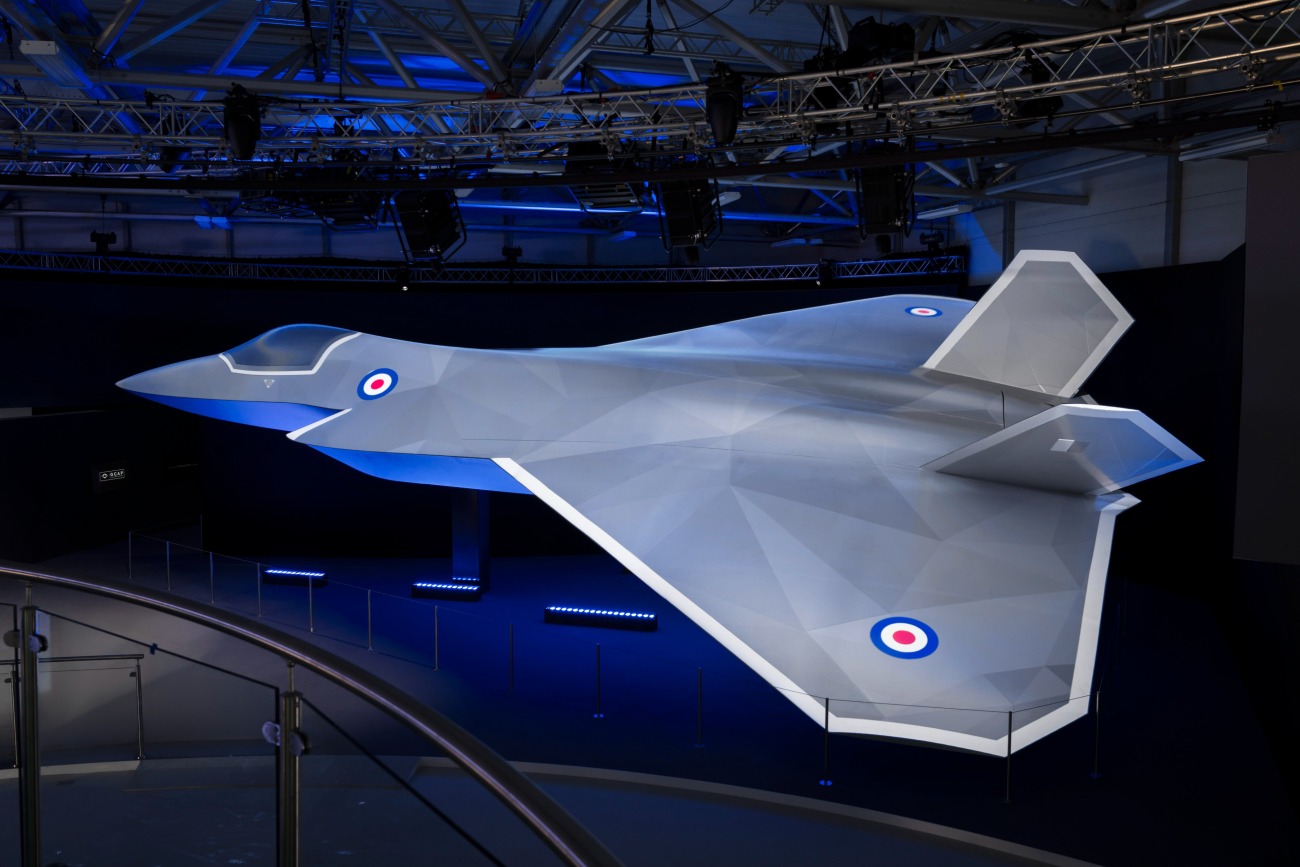
The second option is to join the UK-Japan-Italy trilateral GCAP program.
However, Germany could face the same issues it faced with France in the FCAS program.
As Franco-German tensions over leadership, workshare, intellectual property, and industrial control intensified throughout 2025 and early 2026, Germany actively began exploring the possibility of joining the GCAP.
Italian Defense Minister Guido Crosetto publicly stated as early as December 2025 that Germany could join GCAP in the future, while the UK signaled openness to additional partners.
German officials and industry quietly probed the trilateral program as a realistic alternative to the increasingly deadlocked FCAS project, with Leonardo’s CEO later welcoming Berlin as a strong potential partner after the formal collapse of the Franco-German-Spanish fighter effort in June 2026.
However, the program has already progressed, and at this stage, Berlin could only join as a junior partner, with little industrial say in the fighter jet’s design, development, and specifications.
Option 3
The third option is launching a new indigenous combat aircraft project under full German leadership, with Airbus and other domestic partners at the forefront. However, Germany has not independently developed and produced a fighter jet since the end of World War II.
Germany has been part of many fighter jet development programs, such as the Alpha Jet, the Panavia Tornado, and the Eurofighter Typhoon. However, all of these have been joint ventures.
Panavia Tornado was developed with the UK and Italy, and Eurofighter Typhoon was developed with the UK, Spain, and Italy.
The lack of experience in developing a fighter jet independently means it is unlikely that Germany will be able to produce a sixth-generation fighter jet in a short timeframe.
Therefore, while all these three options are “on the table,” none of them seems practical and feasible.
The Fourth Option
During the Berlin Air Show, German Air Force Chief Lt. Gen. Holger Neumann told reporters that whatever the new option is, the air force remains focused on a crewed platform that can connect with a combat cloud.
Neumann also said that whatever the new system is, it should be ready by 2035.
His comments suggest that Germany is clear about having a next-generation crewed fighter jet in its air force by 2035.
To achieve this target, in addition to the three options discussed, Germany has two more options.
One of them is to replace France’s Dassault Aviation with Sweden’s SAAB and continue with the “new” FCAS program. The other is to procure the US-developed Next-Generation Air Dominance fighter jet, the F-47.
SAAB has developed fighter jets on its own, its latest being the 4.5-generation Gripen-E/F. By joining hands with SAAB, Sweden, Germany, and Spain can pool resources and share expertise.
As EurAsian Times reported earlier, Airbus hinted it could partner with SAAB to develop its sixth-generation fighter. Michael Schoellhorn, the head of Airbus Defense, stated recently that he was eager to work with Sweden and Saab on a next-generation fighter.
When asked if Airbus was looking to develop a manned tactical next-generation fighter with SAAB, the CEO said, “We are open to a number of things. For Airbus, the crewed fighter aircraft is still an open question.” Schoellhorn emphasized that the company “will be involved in the development of a sixth-generation fighter aircraft.”
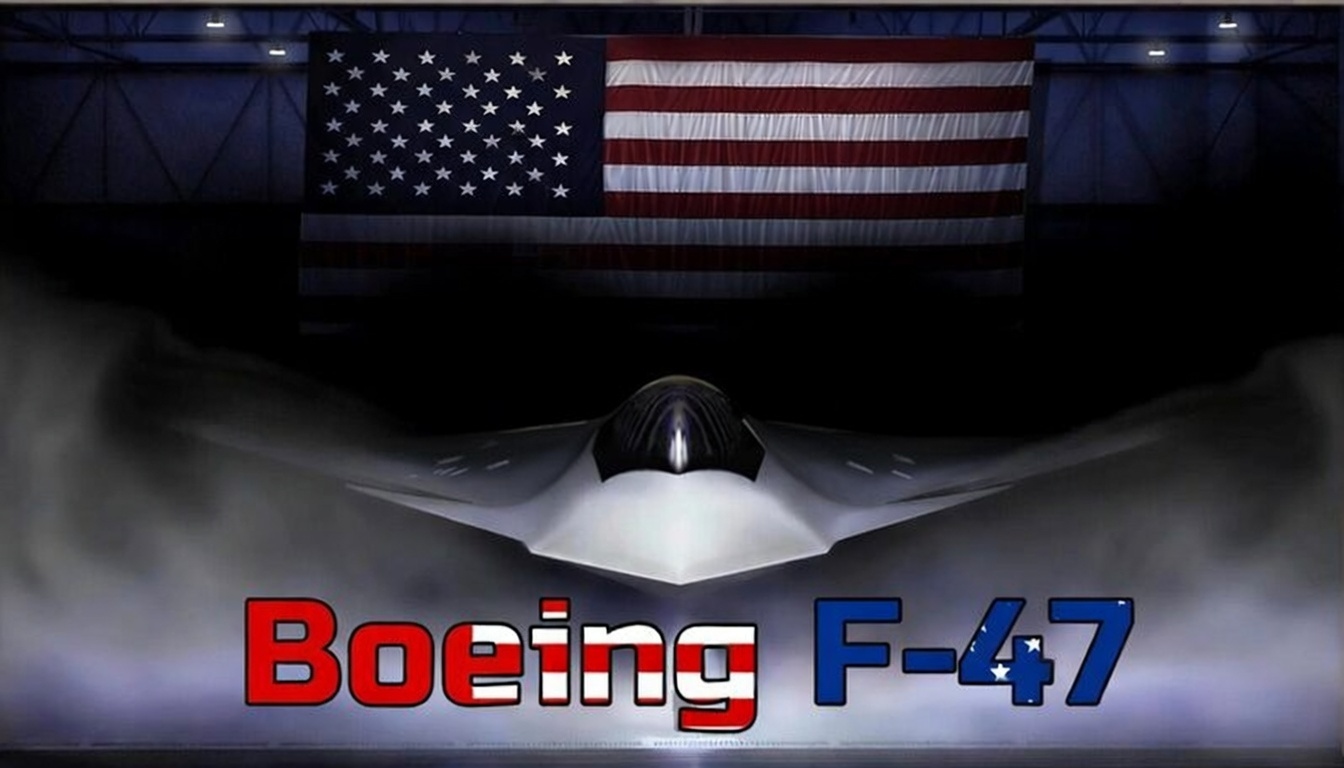
Another option is the U.S. F-47.
The fighter jet is already under development. Its flight test could begin by 2028, and could be integrated into the US Air Force (USAF) by the early 2030s.
Notably, the US has already expressed openness to exporting a scaled-down version of the jet to its partners.
During the announcement of Boeing winning the contract for the F-47 in March last year, President Trump said, “Our allies are calling constantly. They want to buy them also. And certain allies — we’ll be selling them perhaps toned-down versions. We’d like to tone them down about 10%, which probably makes sense, because someday, maybe they’re not our allies, right?”
Germany is a member of NATO, and the US has already approved the sale of F-35s to Germany under the Foreign Military Sales (FMS) program. Therefore, the US should have little objection to selling the F-47 to Germany.
Though Trump called it “toned-down versions,” the final aircraft to be sold to Germany could be called a ‘customized version.’
The German Defense Minister’s reluctance to publicly name the fourth option, it seems, could be either Saab or Boeing. Then again, the F-35 “Ferrari” version cannot be completely ruled out.
- THIS IS AN OPINION ARTICLE
- Nitin J Ticku holds a double master’s degree in Journalism and Business Management from the University of Glasgow. He has over 20 years of global experience in MARCOM, Journalism, and Digital Marketing, and has worked & traveled widely across Europe, the Americas, and Asia. Nitin is the Editor of the EurAsian Times.
- He can be reached at editor (at) eurasiantimes.com