British Defense Secretary John Healey resigned on Thursday, blaming Prime Minister Keir Starmer and the Treasury for failing to provide adequate funding for defense investment, including critical support for the sixth-generation GCAP fighter program.
Interestingly, just a few days ago, France and Germany scrapped their 6th-Gen Future Combat Air System (FCAS) program after years of disputes between Dassault Aviation and Airbus. With FCAS effectively dead, pressure is now mounting on GCAP to succeed, even as UK’s own funding uncertainties threaten to undermine the trilateral UK-Japan-Italy program.
Healey’s announcement is a fresh blow to Starmer and comes at a politically charged juncture for the embattled Labour leader, a week before a by-election which could prompt a bid to topple and replace him.
Healey’s sudden departure comes after months of delays in the long-awaited Defense Investment Plan (DIP) to fund the military over the next decade, which he has said would fall far short of what had been requested.
Starmer has pledged to raise defense spending to 2.5 percent of gross domestic product from next year, increasing it to three percent in the next parliament.
“You have been unable, and the Treasury has been unwilling, to commit the resources that the nation needs to defend the country at this time of rising threats,” Healey wrote in a resignation letter to Starmer posted on his X account.
“After explaining to you that I would not be able to accept a DIP settlement that does not give our Forces the resources they need, I am now left with no other option than to submit my resignation.”
Starmer is facing political risk in next Thursday’s contest, when Greater Manchester mayor Andy Burnham is standing for the Makerfield parliamentary seat and has said he would participate in any Labor leadership race, although none has yet been triggered.
Healey has previously been mentioned as another potential contender, but there has been no suggestion that his resignation is linked to the leadership speculation. The British media has been reporting for weeks on behind-the-scenes battles within the government over the DIP settlement.
Starmer’s center-left government, elected in July 2024 following 14 years of Conservative rule, has kick-started its pledge to ramp up defense spending, with priority given to NATO commitments.
But the publication of its defense investment plan to plug a longer-term shortfall in investment was originally expected in late 2025 and has been delayed—to the frustration of industry and others. It was expected to be announced next week, according to reports earlier Thursday.
In his letter, Healey said he was first given full sight of the DIP on Monday, revealing that it “falls well short of what is required for defence and the country at this dangerous time”.
“Without a DIP that meets the moment in this way, I am being forced to make decisions that would reduce the readiness of our forces and increase the risk to personnel on operations, and could make the country less safe.”
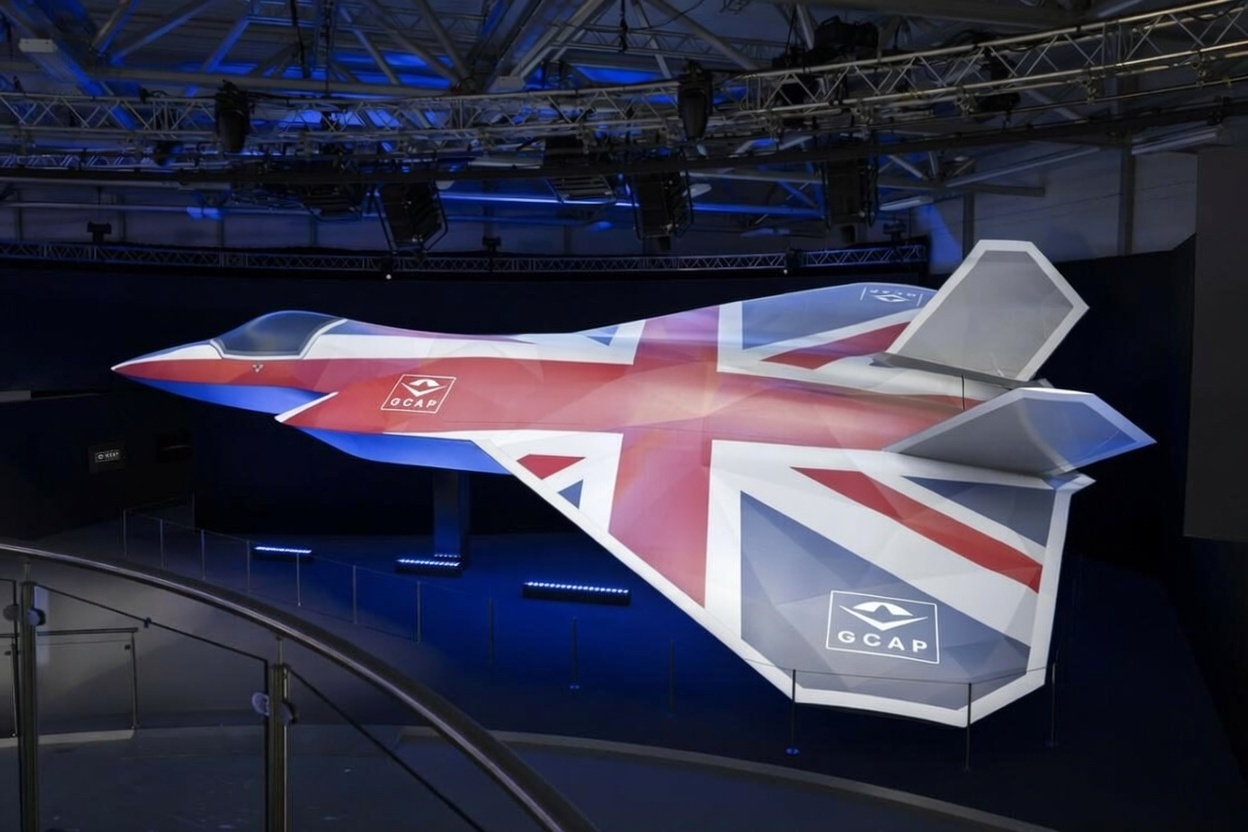
Impact on the Sixth-Generation GCAP Program
Healey’s resignation over inadequate funding could be a heavy blow to the Global Combat Air Program (GCAP) — the ambitious UK-Japan-Italy project to develop a sixth-generation fighter jet by 2035.
GCAP, which aims to replace the Eurofighter Typhoon and Japan’s F-2, is already facing massive delays due to London’s failure to publish its Defence Investment Plan (DIP).
A £686 million bridge contract awarded to the industrial joint venture Edgewing (BAE Systems, Leonardo, and Japan Aircraft Industrial Enhancement) in April 2026 was designed only to keep design work alive until the end of June. With that deadline now looming and the DIP still unsettled, the GCAP program risks stalling at a critical phase.
As EurAsian Times reported earlier, Japan has grown increasingly frustrated with the delay in the 6th-gen aircraft program.
Tokyo views GCAP as critical to countering China’s burgeoning military might and has repeatedly expressed concern that UK budgetary indecision could delay the program. Senior Japanese officials have warned that further delays would erode the program’s credibility and raise costs — a familiar and expensive pattern in multinational fighter projects.
The British PM Sir Keir Starmer attempted to reassure his Japanese counterpart, Sanae Takaichi, of Britain’s commitment during a visit to Japan earlier this year. However, these assurances have had little impact.
Industry sources warn that without firm long-term funding commitments in the DIP, BAE Systems and its partners may be forced to reassign hundreds of engineers, breaking momentum and triggering expensive restarts later. The £28 billion capability gap highlighted in recent assessments makes GCAP — estimated to cost Britain over £12-15 billion in the coming decade — an obvious target for cuts or deferrals.
Healey’s departure removes one of GCAP’s strongest advocates in Cabinet.
As a vocal supporter of the trilateral partnership, he had pushed to ring-fence funding and even floated the idea of expanding the program to include new partners such as Poland or Canada. His exit leaves a leadership vacuum at a moment when decisive action is needed.
Italy has already committed €8.8 billion to the program, and any perception that the UK is backsliding risks damaging trust among the partners. Without rapid resolution under a new Defence Secretary, GCAP risks becoming another symbol of Britain’s transition from NATO architect to alliance laggard.
- By AFP & ET Online Desk
- Mail us at editor (at) eurasiantimes.com