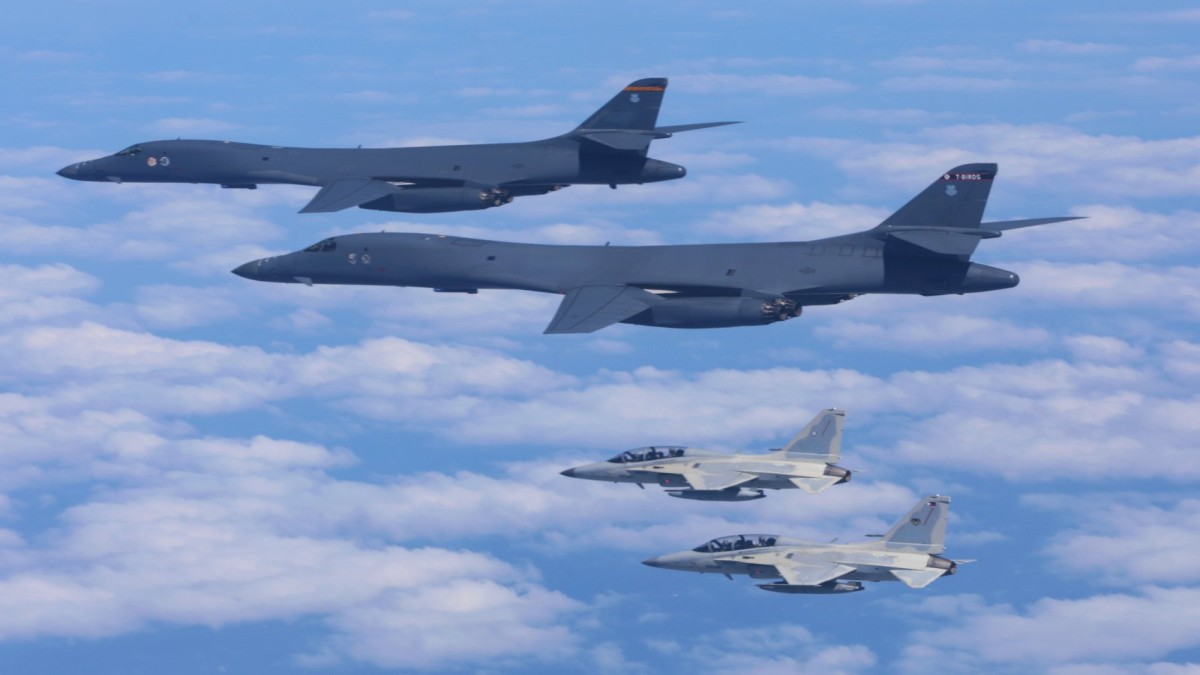
By 2047, India aims to command a ₹8.8 trillion defense economy — six times its current size — and emerge as a true global military power capable of designing, developing, and exporting advanced weapons systems at scale.
Future wars demand “technological superiority”, rapid innovation, with a strong focus on AI, cyber warfare, autonomous systems, and space-based defense solutions. The Indian government is aggressively moving towards this goal by opening high-end manufacturing, including ballistic missiles, to the private sector.
War Fighting – A Whole of Nation Approach
Modern wars begin at short notice, often through trigger incidents like those that happened in Op Sindoor. Systems will be penetrated, and missiles and drones will be launched.
In Op Sindoor, and later to a more elaborate extent in the Iran War, the focus was on targeting command-and-control networks, airbases, air defense systems, missile infrastructure, defense-industrial and manufacturing hubs, R&D centers, and electronics hubs; once considered rear areas, they were treated as frontline targets.
The logic was that if a nation cannot produce, repair, or communicate, it cannot fight. Modern kill chains are no longer linear. They are AI-assisted, data-driven, and continuously adaptive.
The most important, yet underappreciated, dimension is not physical but psychological. Modern conflict is increasingly fought in the cognitive domain. Information discipline, societal cohesion, and narrative stability are no less important, where wars are fought as much on screens as on borders. The national mindset and resilience become strategic assets.
The war is now a whole-of-nation approach, with industry capable of designing and producing weapons and platforms with surge capacity. We have seen how Iran’s resilience has brought the US to the negotiation table.
Alliances or partnerships have become transactional. India has to prepare beyond just the military. Foreign dependence on platforms, sub-systems, semiconductors, special materials, and communications equipment is a strategic vulnerability.
The message for India is to adapt early. India’s goal is to attain strategic autonomy through indigenization and to build a credible, modern deterrent by developing advanced indigenous platforms and seamlessly integrating and adopting multi-domain operations to achieve regional dominance.
India’s Defence Production
India’s defense manufacturing output is currently ₹1.54 lakh crore ($18.5 Billion), and exports have surged by over 62 percent to an unprecedented ₹38,424 crore ($4.6 Billion) in one year.
Defence production is projected to surge to ₹8.8 trillion ($105 Billion) by 2047, with significant investments in indigenous platforms like the Tejas LCA, AMCA fifth Generation fighter, INS Vishal (Indigenous Aircraft Carrier 65,000 ton IAC-III), Project 75I (Conventional Stealth Submarines with Air-Independent Propulsion), Project 77 (Nuclear Attack Submarines – SSN), the Zorawar Light Tank (25-ton class for mountain warfare) slated for induction by 2027, and the Future Main Battle Tank (FMBT), among others.
India is fast emerging as a global defense manufacturing hub, with exports targeting a nine-fold increase to ₹2.8 trillion ($33.6 Billion) by 2047, supplying to over 80 nations.
India’s Evolving Transformation and Challenges
From a nation in fiscal crisis a few decades ago, India is today the fastest-growing economy. India has nearly one-third of the global STEM (Science, Technology, Engineering and Math) workforce, and a massive startup ecosystem, a trend that is accelerating.
Yet economic growth on its own does not guarantee security or sovereignty. Despite being the world’s fifth-largest defense spender ($86 billion), India’s domestic defense ecosystem still relies on foreign defense technologies and platforms, limiting agility and innovation and driving heavy imports.
Nearly 30 percent of inputs for automotive, electronics, semiconductors, pharmaceuticals, and chemicals come from China, which otherwise is an adversary nation. Simultaneously, the country faces an urgent need to generate millions of new jobs and redeploy technical talent as AI disrupts traditional IT services, making strategic autonomy both a security and economic imperative.
A Confederation of Indian Industry (CII) assessment suggests that to bolster Indian resilience, there are opportunities for entrepreneurs in defense modernization through innovation, domestic production of software-defined systems, and advanced manufacturing, which could transform India into a global strategic industrial partner.
Doing so requires a renewed innovation ecosystem that incentivizes and rewards those who are willing to take on the country’s most critical challenges. In this era of technological disruption and geopolitical restructuring, it’s the most consequential investment opportunity for India.
Building Indigenous Defense Capabilities
India’s defense sector offers untapped opportunities for modernization. Government policies are spearheading the Make-in-India effort. Policies like spending 75 percent of the capital budget on buying Indian, constantly growing Positive Indigenization List (PIL) with over 5,000 items already, incentivizing R&D, supporting ease of doing business, and allowing easier Foreign Direct Investment (FDI) are all supporting.
Domestic procurement for defense systems has increased considerably in the last decade. This growth has largely been fuelled by state-owned enterprises producing large, high-capability platforms like combat aircraft, missiles, radars, and artillery. The private sector has now pitched in big.
Let India Selectively Bridge Gaps
The clear gap in India’s defense industry posture is innovation. Much of India’s advanced defense equipment is imported, and this equipment is further constrained by export controls on defense and dual-use technologies. India is invariably offered older-generation technology, has to pay an excess cost, and has to live with untenable dependence.
To enable Indian resilience and sovereignty, the country must concentrate on a few foundational technologies, autonomous systems, electronic capabilities, and aero-engines.
Indigenous Autonomous Systems
The present and future of warfare is in autonomous military systems that operate across all warfare domains, air, land, sea, and space, and enhance speed, precision, and survivability while reducing risk to human lives. These systems are designed to operate with varying degrees of independence.
Building unmanned aerial systems (UAS), unmanned surface and subsurface vehicles/vessels, integrating with local control networks, and producing at scale are strategic necessities. These platforms must be engineered for India’s challenging geospatial conditions (high altitude, heat, dust) and improve through rapid domestic iteration. India also needs Counter-UAS systems and loitering munitions.
India’s top UAS companies include Bharat Forge, IdeaForge Technologies, Garuda Aerospace, Zen Technologies, Hindustan Aeronautics Ltd (HAL), Tata Advanced Systems Limited (TASL), Adani Defence and Aerospace, Newspace Research Technologies, Paras Defence and Space Technologies, Sagar Defence Engineering, Dhaksha Unmanned Systems, Asteria Aerospace, and DroneAcharya Aerial Innovations. Companies like Solar Industries and ZMotion Autonomous Systems are leading the development of indigenous loitering munitions such as the Nagastra.

Electronic Warfare and Cyber Capabilities
As conflict becomes increasingly digital, control of the electromagnetic spectrum will be as decisive as firepower. Cyber warfare will now be a year-round activity.
India has capable missile defense systems, but using expensive munitions against small, cheap drones is economically unsustainable. Scaling protection requires electromagnetic capabilities embedded in radars, software-defined radios, mission computers, lasers, and edge-AI modules that can neutralize threats without kinetic kill. Building these capabilities at home through a new generation of defense lead-contractors (primes) is crucial.
Aero Engine Development
India has a multipronged plan to develop and manufacture aero-engines. The key efforts include the 110kN Advanced Aero Turbofan Combat Engine (AATCE) and the Kaveri Derivative Engine (KDE) (48-52kN) for drones, aiming to reduce dependency on foreign suppliers. Through the AATCE project, the Gas Turbine Research Establishment (GTRE) is developing a 110 kN high-thrust engine, with plans for private industry partnership in design, manufacturing, and certification. KDE, a dry (non-afterburning) variant, has completed significant testing and is planned to power the DRDO’s Ghatak UCAV.
Currently, indigenous development without foreign expertise is difficult within the set timeframe. The deal with General Electric to co-produce F414 engines in India remains on track, with a focus on transferring critical technologies for the LCA Mk2.
For the 5th-generation AMCA engine, India plans to collaborate with foreign partners (France’s Safran or the UK’s Rolls-Royce) through a 10-year roadmap initiated for prototype development. India is negotiating for a total technology transfer of the 110 kN engine. Future plans include a 120kN engine certified by the late 2030s, followed by a 6th-gen adaptive version by the mid-2040s.
The push aims to transition from assembling imported parts to total technological sovereignty, addressing challenges in hot-section materials and design. The key challenges remain high capital requirements, technology transfer bottlenecks, and the need for significant increases in R&D budgets (up to 15 percent of the defense budget).
India’s AMCA Approach
India’s Advanced Medium Combat Aircraft (AMCA) approach is an indigenous, 25-ton, twin-engine fifth-generation stealth fighter program managed by the Aeronautical Development Agency (ADA). It employs a public-private partnership model to foster domestic manufacturing and self-reliance (Aatmanirbharta).
The program is aimed at achieving air superiority with projected service induction by 2035. The AMCA approach distinguishes itself from previous Indian defense programs through a highly structured and open framework.
The model leverages and scales up the capacity of private-sector giants (such as Tata, L&T, and the Kalyani Group) to build the fighter prototypes. By standardizing components and inviting competitive bids, the government aims to keep the aircraft highly cost-efficient compared with similar jets globally while simultaneously building a localized aerospace hub.
Prototype development funding is already underway, with initial full-scale structural tests slated for 2027 and the first flight tests targeted for 2029–2030.
Advanced Manufacturing
It is time for India to invest in next-generation manufacturing capabilities by resolving persistent productivity and quality issues across its 65 million small and mid-sized enterprises. Innovative business models aimed at scaling productivity can unlock this capacity.
India’s advanced manufacturing initiatives are anchored by the flagship Make-in-India program, aiming to transform the country into a global design and production hub. Government efforts focus on scaling up frontier technologies, boosting supply-chain resilience, and localizing high-tech components through targeted, multi-billion-dollar incentive frameworks.
Spanning 14 key sectors, including advanced chemistry cells, semiconductor packaging, drones, and medical devices, these schemes provide financial incentives directly linked to incremental production sales, driving massive investment and global supply chain integration. SAMARTH Udyog Bharat 4.0 is an initiative by the Ministry for Heavy Industries to boost competitiveness in the capital goods sector by accelerating Industry 4.0 adoption.
The National Manufacturing Mission (NMM) is a long-term strategic policy that promotes advanced manufacturing, the establishment of the Global Frontier Technology Institute (GFTI), and the planned construction of 20 “Plug & Play Frontier Technology-enabled Industrial Parks” nationwide.
The Department of Science & Technology (DST) operates an Advanced Manufacturing Technologies program that focuses on thrust areas including nanomaterials, precision manufacturing, biomanufacturing, and advanced forming processes. The Defense Production and Export Promotion Policy (DPEPP) leverages smart factories, predictive maintenance, and robotic automation to advance precision engineering in aerospace, weaponry, and military electronics.

Innovation Ecosystem for Resilience
India is rapidly building an indigenous, tech-driven defense innovation ecosystem to shift from platform-based warfare to ‘system of systems’ combat. By nurturing startups, streamlining procurement, and integrating Artificial Intelligence (AI) and drones, the nation is actively engineering self-reliance against hybrid and cyber-warfare threats.
As a core initiative driving resilience, the Ministry of Defense (MoD) has established targeted programs to fund R&D and bridge the gap between academic research and commercial deployment. iDEX (Innovations for Defense Excellence) fosters a dynamic ecosystem by engaging Micro, Small, and Medium Enterprises (MSMEs), individual innovators, and academia to solve specific military problem statements.
ADITI scheme targets critical and strategic defense technologies, providing grants of up to Rs 25 crore per project to startups for early-stage product development. The Technology Watch Tool aligns the Armed Forces’ precise capability requirements with ongoing industry innovations to prevent duplication and accelerate deployment. Technological focus areas to achieve absolute self-reliance by 2047 include AI & Machine Learning; developing algorithms for autonomous combat systems and real-time sensor data fusion; expanding production of loitering munitions, micro ROVs, and anti-drone jammers; and mastering Quantum communication, cyber-defense, space situational awareness, and hypersonic technology.
Success requires the right combination of patient capital, deep partnerships among entrepreneurs, industry players, and policymakers, and a network of founders supported by those who have navigated similar challenges worldwide.
Key Initiatives for Resilience
The Defense Acquisition Procedure 2020 (DAP) is being updated to streamline procurement and encourage indigenous research and development (R&D). MSMEs are being encouraged to move beyond vendor roles to become key partners in the national security ecosystem, with a massive potential opportunity of ₹10 lakh crore ($120 Billion).
Operation Sindoor exemplified the integration of military, industry, and laboratories, emphasizing collaborative innovation and “Jointness” across air, sea, land, space, and cyber domains. Collaborations with nations like Russia, France, Israel, and Greece are being deepened to strengthen indigenous production capabilities. USA (GE, Honeywell) continues to be a significant source of aero-engines.
By 2047, India aims to become a fully self-reliant, all-domain military power. The focus is on building a “productive strategic shield” to support rapid indigenization, such as the Mission Sudarshan Chakra for layered missile defense, which is expected to mature between 2030 and 2040.
To Summarise
India’s strategic approach is defined by a policy of multi-alignment and strategic autonomy, with the ambition of emerging as a significant pole in its own right, supported by military power commensurate with its growing economic strength. The nation faces a complex two-front security challenge that necessitates the development of credible deterrence capabilities and a robust defense industrial base.
Supply Chains and Strategic Resilience are the new imperatives for the defense industry. Understanding the evolving global landscape and its profound implications for India’s defense and industrial capabilities is important.
Enhancing indigenous manufacturing prowess and establishing robust supply chains are critical to effectively navigating complex geopolitical challenges and fostering both national security and economic growth. All this is imperative for a “Strong India” to underpin the national vision of a “Developed India” by 2047.
Indian defense forces must transition towards a technologically advanced, fully integrated, and multi-domain military force by 2047. This ambitious roadmap includes a crucial period of consolidation between 2030 and 2040, ultimately leading to an era of unparalleled excellence by 2040.
India is fast transforming into a global defense manufacturing hub. The ‘Self-Reliant India Initiative’ is central to this strategic posture. The aim is to achieve a defense production output by 2047 that is a six-fold increase from current levels.
The overarching vision includes developing an ecosystem dominated by agile deep-tech unicorns that operate in synergy with established industry players. A steadfast focus on improving quality, prioritizing innovation through dedicated R&D efforts, and ensuring speed in delivery. A critical imperative is reducing dependence on China for base materials. Strategic partnerships are crucial for navigating global complexities.
Ensuring a level playing field for the private sector and facilitating the effective transfer of technologies developed by the DRDO to Indian industry. To date, over 2,200 technologies have been successfully transferred, generating significant production value.
The Defense Acquisition Procedure (DAP) 2020, under revision, is designed to accelerate modernization efforts, propel Jointness across different defense services, and seamlessly integrate national security objectives with technological advancement. There is a strong emphasis on ownership of Indian technology, design, and Intellectual Property Rights (IPR).
Priority is to “Buy Indian IDDM” (Indian Designed, Developed, and Manufactured) categories, with an enhanced indigenous content requirement, increased from 50 to 60 percent.
Contracts valued at approximately ₹4.5 lakh crore ($54 Billion) have been awarded in the last 1.5 to 2 years. Notably, over 90 percent of the contracts (70 percent by value) have been awarded to the domestic industry, even during periods of emergency procurement.
The government is to fast-track procurement decisions for readily available equipment, with completion expected within 6 months.
Indian manufacturers must significantly enhance their capabilities to leverage Artificial Intelligence (AI) for planning, forecasting, and predictive analytics. Scaling up by MSMEs is a national imperative. Collaborative public-private partnerships are here to stay.
Consistent and predictable government policies are deemed essential for attracting and sustaining long-term industry investment. A cohesive and integrated approach to skilling initiatives across the entire defense ecosystem is required to drive sustainable industry growth.
The nation has to prepare for rapidly scaling drone production, driven by necessity and collaborative efforts. The country must identify and focus on niche technologies and try to become a global leader. The unwavering emphasis is on indigenous design and development, and the resolute drive towards self-reliance.
The overarching vision is to forge an ‘Aatmanirbhar, Agrani, and Atuliya Bharat’ through strategic partnerships, the attainment of technological sovereignty, and the development of a robust, integrated defense industrial base.
- Air Marshal Anil Chopra (Retired) is an Indian Air Force veteran, fighter test pilot, and ex-director-general of the Center for Air Power Studies. He has been decorated with gallantry and distinguished service medals during his 40-year tenure in the IAF.
- He can be reached on X: @Chopsyturvey
- Follow EurAsian Times on Google News