Pakistan said it was “deeply concerned” by attempts to pull Saudi Arabia into the Iran war and condemned the threats by Houthis against the Kingdom and Red Sea shipping.
“Pakistan is also deeply concerned over attempts to drag the Kingdom of Saudi Arabia into the conflict in the Middle East and reiterates its unwavering support for the security, sovereignty, territorial integrity and prosperity of the brotherly Kingdom of Saudi Arabia,” said the foreign ministry of Pakistan.
“Such actions threaten regional security, undermine freedom of navigation, challenge the rules-based maritime order and jeopardize uninterrupted flow of global commerce,” the statement emphasized.
Additionally, it declared that “any hostile act against Pakistani-flagged vessels or Pakistani maritime interests will be regarded as a grave threat to Pakistan’s national security and sovereign interests”.
It warned that Islamabad reserved its right to “take all necessary measures, including lawful use of force, in the exercise of self-defense to protect its maritime assets and national interests”, consistent with the United Nations Charter and international law.
When Pakistan Denied Joining the War on Houthis
In 2015, when Saudi Arabia launched Operation Decisive Storm, one country that was absent from the grouping was Pakistan. At that time, Riyadh tried hard to convince Pakistan to join the coalition against the Houthis, but in vain.
Riyadh even made a direct request from the Saudi leadership, including King Salman, to Prime Minister Nawaz Sharif. Saudi officials also reportedly underscored that Pakistan had previously sent troops to help Saudi Arabia, including the 1990–91 Gulf War.
Saudi Arabia also reminded Pakistan how Riyadh had helped Islamabad during its financial crises, over and over again.
Pakistan witnessed a strong internal debate in both political and military circles; however, in the end it decided not to join the Saudi-led coalition.
The Pakistani military in 2015 was already stretched due to the Afghanistan War and rising terror incidents in the country. Public opinion in the country did not favor sending troops to a foreign country.
Pakistan also feared offending Iran, with whom it shares a long border, and Islamabad feared that joining the war against Houthis could inflame sectarian tensions in the country.
While Pakistan is overwhelmingly Sunni-majority, it still has the world’s third-largest Shia population after Iran and Iraq. Pakistan’s Shia population is believed to be between 20–25 million.
On 10 April 2015, Pakistan’s National Assembly unanimously passed a resolution stating that Pakistan would maintain neutrality in the Yemen conflict and would not send troops to join the Saudi-led military operation.
Infuriated, Riyadh delayed and reduced financial packages and oil support to Pakistan, postponed joint military drills, and reduced high-level engagement with Islamabad.
However, despite their partially acrimonious past, Pakistan and Saudi Arabia signed the Strategic Mutual Defense Agreement (SDMA) in September 2025. The most noteworthy clause of the agreement states, “Aggression against one country shall be considered aggression against both.”
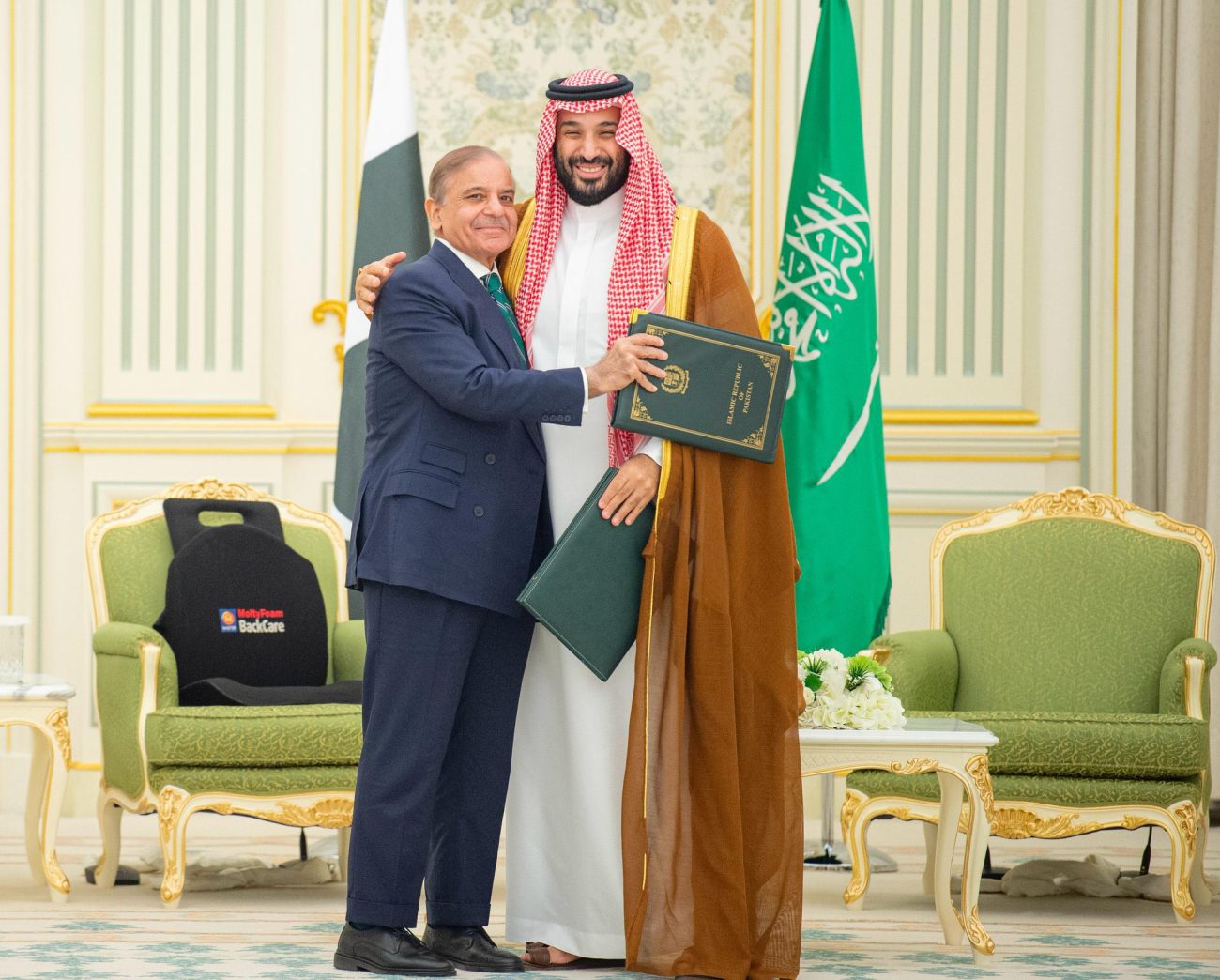
During the ongoing Iran War, Pakistan has reportedly deployed 8,000 troops, a squadron of fighter jets, and an air defense system to Saudi Arabia under the mutual defense pact.
In all likelihood, these Pakistani troops, fighter jets, and air defense assets are still inside Saudi Arabia and can be called into action if Saudi Arabia comes under Houthi attack.
UAE, Saudi Signal Rapprochement
Meanwhile, amid the ongoing Iran war, Saudi Arabia and UAE have hinted at realignment after a public fall-out between the two largest Arab economies.
On Tuesday evening, Saudi General Entertainment Authority chairman Turki Alalshikh posted a picture of the kingdom’s defense minister Khaled bin Salman, alongside Emirati Vice President Mansour bin Zayed, that he said was taken a few days ago.
“Saudi Arabia and the UAE: A story of brotherly relations and a strong partnership,” he wrote in his post on X.
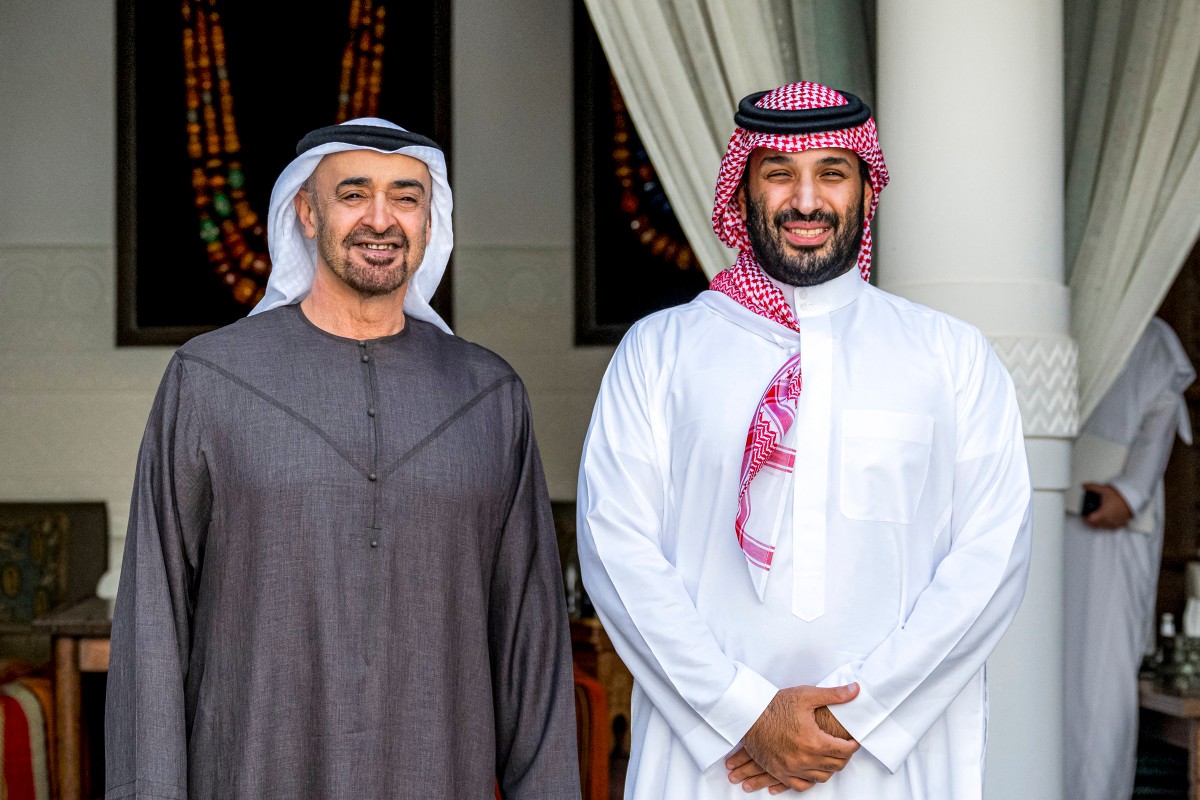
UAE presidential advisor Anwar Gargash also shared the picture, with the caption: “The biggest story in the Gulf is captured in a single photograph.”
For months, pundits from both sides had engaged in virulent debate online, with Saudi Arabia also launching earlier this year a media campaign against its smaller neighbor.
The two allies-turned-rivals had a public falling out in December when the kingdom accused Abu Dhabi of threatening its national security by supporting Yemeni separatists who orchestrated a brief offensive.
The pair have been at odds in their foreign policy from Yemen and Sudan to the Horn of Africa, where they have supported rival forces.
Their differences have spilled over into the Iran conflict, with the kingdom backing Pakistani mediation efforts, while the UAE initially took a more hawkish stance on Tehran before signing a US-Iran memorandum of understanding last month.
UAE Chairman of the National Media Authority Abdulla Alhamed and Saudi Media Minister Salman Aldosary posted very similar messages on X on Tuesday, lauding relations between the two countries and their leaders, while stating that “responsible media” must reflect this bond.
“The role of responsible media is to counter anyone attempting to portray a misleading image of the relationship between the two countries and to ensure accuracy in all published information,” Aldosary said in his post, praising the “wise leadership in both countries”.
By ET Online Desk with AFP Inputs