When Prime Minister Modi visited Indonesia in July, interest in developing the Sabang port in Sumatra reached a crescendo.
Analysts believe the revived discussion of this strategic port comes as the strategic importance of the eastern Indian Ocean is receiving attention. Given the discussions, it is evident that Indonesia is keen for India to play a leading role in developing Sabang, even as India has announced the development of the Great Nicobar Island Project.
Given these parallel interests, does Sabang still have the geostrategic significance that made it the subject of discussion in 2018, when India and Indonesia upgraded their relationship to a Comprehensive Strategic Partnership?
Sabang is a small port town, mainly undertaking dhow-type local trade between southern Myanmar, Western Thailand and the Indonesian province of Aceh, which has only a limited hinterland.
Its value has grown, not because it is viewed as a major strategic port or a container competitor to Singapore, but because it could become an important location if maritime infrastructure in the region develops to support economic security, maritime domain awareness (MDA), humanitarian assistance and disaster relief (HADR), and resilient supply chains.
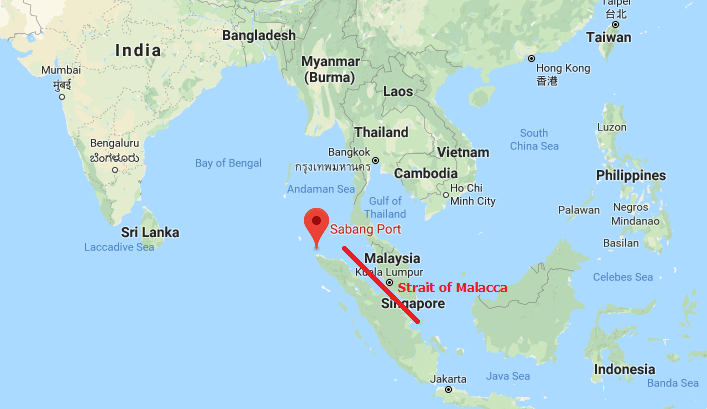
At present, other than its location, Sabang is not in a position to offer substantial support in these areas. Its geographical advantage lies in its location on Weh Island at the northern edge of Aceh Province, beyond the western entrance to the Strait of Malacca, one of the world’s busiest sea lanes. Nearly one-quarter of global maritime commerce and a significant proportion of East Asia’s energy supplies transit these waters.
Sabang therefore remains a silent witness to any disruption in the region. It overlooks maritime traffic before and after ships transit the Malacca Strait and could provide logistics support, repair and refueling facilities, and maritime surveillance.
From the Indian perspective, Sabang could become the western counterpart to India’s strategic plans in the Andaman and Nicobar Islands. India’s presence at Port Blair, Campbell Bay, and elsewhere in the islands already overlooks the eastern approaches to the Strait of Malacca.
As the Great Nicobar Project develops, with its transshipment port, airport and related infrastructure, it will significantly enhance India’s strategic capacity in the area.
Located in the same maritime neighborhood, Sabang can either be viewed as a competing outpost or as a complementary development supporting the Great Nicobar Project.
Indonesian analysts opine that Sabang has greater relevance precisely because of India’s plans for Great Nicobar. The idea of collaborative maritime governance across both approaches to the Strait of Malacca could well reflect the maritime vision that India and Indonesia shared in 2018, when the Sabang project was first highlighted.
If Sabang is developed, significant opportunities could emerge for the region. International investment in the port would be consistent with Indonesia’s efforts to improve connectivity across its vast archipelago.
Indonesia remains resistant to foreign military bases. Accordingly, Sabang has never been offered as a naval base. Instead, Jakarta wishes India to invest in the port’s commercial development so that the region derives economic benefits. Indonesia also believes that, having already permitted Chinese participation in the development and operation of other ports in Sumatra, an Indian role in Sabang would contribute to its strategic autonomy.
India understands and respects this Indonesian approach. However, despite two meetings of the Joint Task Force and a Detailed Project Report, there have been few concrete takers for investment in Sabang. Investment in port infrastructure, coastal connectivity, HADR facilities and maritime services could strengthen regional resilience without becoming part of superpower rivalry. The question remains: who will bear the cost?
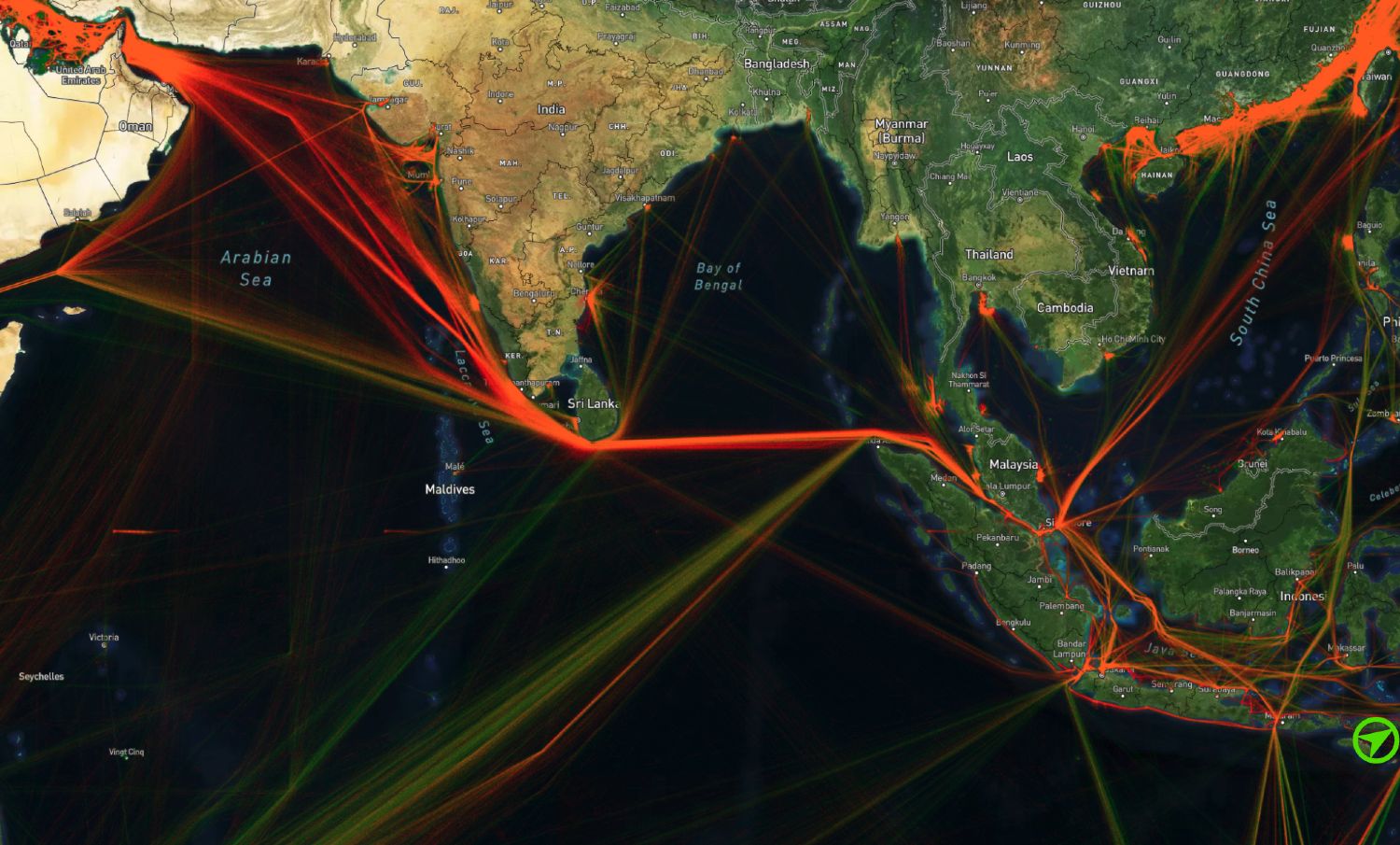
Sabang has the potential to become an important logistics node supporting commercial shipping through maintenance facilities, storage capacity and emergency diversion options.
An important question frequently raised is this: if India is already investing heavily in the Great Nicobar Project, why should it also invest in Sabang, located barely 90 nautical miles away? Is the objective to deny China strategic access, or to create complementary infrastructure that strengthens the utility of Great Nicobar?
India and Indonesia broadly share similar approaches to the Indian Ocean, although their perspectives on Sabang differ. India sees Sabang as a facility that could complement the Great Nicobar Project and would prefer Indonesia, supported by friendly partners, to develop it. Indonesia, however, expects India itself to become a major investor in the port. As the Great Nicobar Project progresses, this difference in expectations will need to be resolved.
The relationship between the Great Nicobar and Sabang projects also requires greater clarity. Some analysts regard them as competitors, while others see them as complementary ports serving different functions.
The Great Nicobar Project is essentially an Indian initiative designed to improve connectivity, logistics, defense preparedness and economic security within India’s own island territories. Sabang, by contrast, is a modest commercial port serving Indonesia’s remote Aceh Province.
After nearly eight years of limited progress, the Sabang project has once again attracted Indonesian attention, largely as a complement to the Great Nicobar Project rather than as an attempt to replicate it.
Would other countries have an interest in the project?
Japan, for instance, is already a major investor in infrastructure throughout ASEAN and could emerge as a valuable long-term partner. Australia shares similar strategic concerns in the region and could also participate. However, neither country currently appears willing to lead the project, nor has Indonesia actively sought such involvement.
Many analysts also place Sabang within the broader context of China’s expanding naval and commercial presence in the Indian Ocean. Beijing’s investments in ports across Asia and Africa have generated considerable discussion regarding dual-use infrastructure.
Indonesia, however, seeks to present Sabang as a different model: cooperative, commercially driven, and consistent with ASEAN centrality. Jakarta does not wish either China or the United States to dominate the project. Rather, it believes that cooperation with neighboring India would strengthen regional infrastructure while contributing to economic development in Aceh.
If Sabang becomes commercially viable, investment in the region could increase. At present, however, economic activity remains concentrated elsewhere in Sumatra rather than in Aceh itself.
The challenges remain considerable. Since the 2018 India–Indonesia announcement, progress has been slow. Financing, commercial viability, environmental clearances and coordination among multiple stakeholders have all delayed implementation.
Sabang’s traditional dhow-based trading pattern would need to evolve substantially through larger investments, well-defined business plans, integration with regional shipping networks, and stronger economic links with southern Myanmar, southern Thailand and India’s Andaman and Nicobar Islands.
For Jakarta, it is important that Sabang is not perceived as a naval base or a militarised port. Indonesia wishes to develop it as commercial infrastructure that contributes to regional development, maritime security, HADR and logistics.
Therein lies Sabang’s greatest value, not as a military outpost, but as an infrastructure and commercial bridge between India and Indonesia. Like the coordinated patrols already undertaken by the two countries, cooperation at Sabang could strengthen regional security without provoking confrontation.
Sabang therefore has the potential to become an important anchor for a cooperative maritime architecture in the eastern Indian Ocean and at the approaches to the Strait of Malacca.
- Gurjit Singh is a former Ambassador to Germany, Indonesia, and Ethiopia; ASEAN; and the African Union Chair; a member of the CII Task Force on Trilateral Cooperation in Africa; and author of The Durian Flavour
- Follow the author on Twitter (Now X)