In the skies over eastern Ukraine, an aging F-16 fighter jet has reportedly scored a rare victory against one of Russia’s most advanced warplanes, the Su-35.
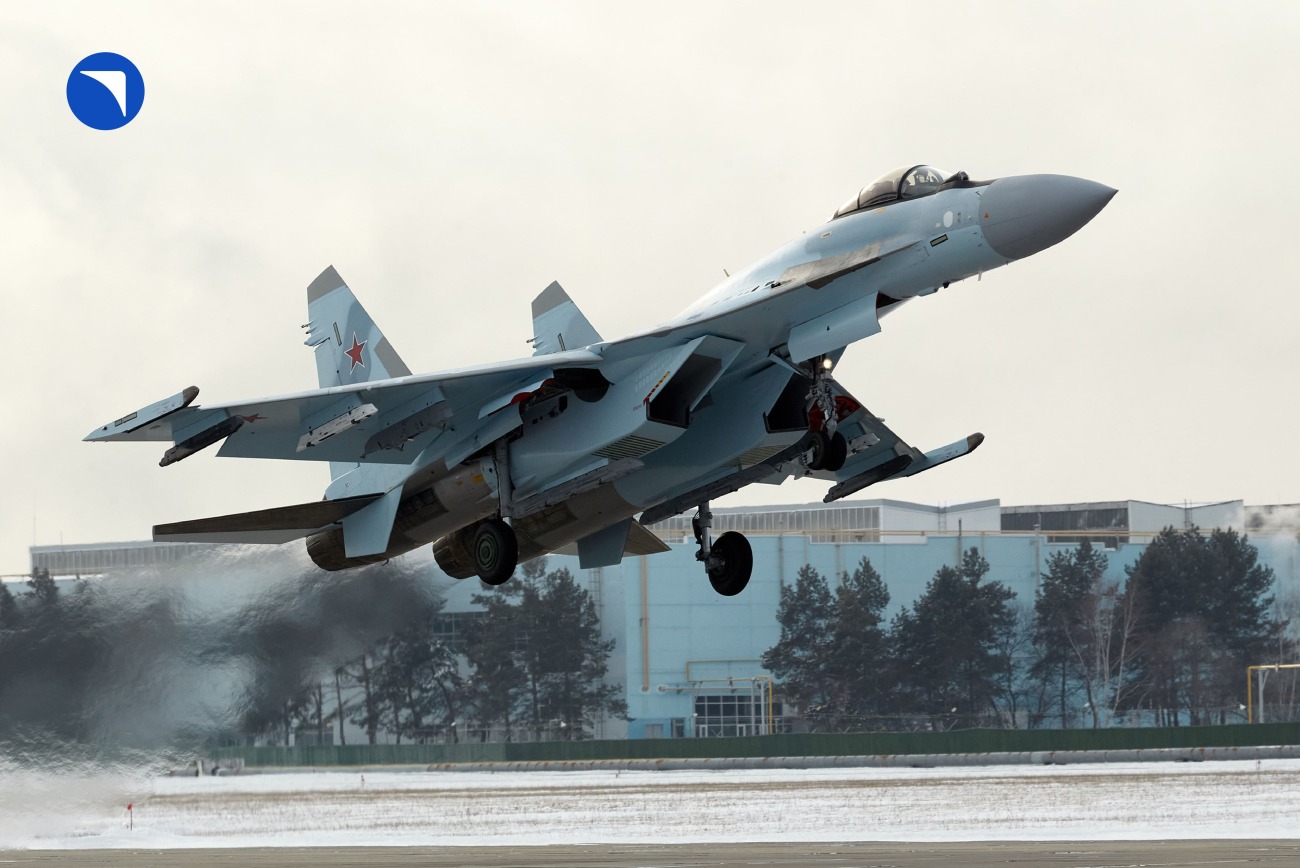
The US has finally confirmed what the Ukrainians claimed earlier this month: a Ukrainian F-16 fighter, donated by NATO, may have downed a Russian Su-35 Flanker-E, the backbone of the Russian Aerospace Forces (VKS).
“I want to highlight the incredible work that the Ukrainian industrial base is doing. It ranges from their surface-to-air capabilities to their air-to-air capabilities. I’ll note that recently we had the first air-to-air kill where a Ukrainian F-16 shot down a Russian fighter,” Air Force General Dan Caine, Joint Chiefs of Staff, told the Senate Appropriations Committee. A video clip of his testimony was posted on social media and has since gone viral.
Notably, General Caine did not name the Russian aircraft type, but observers believe that the timing and context “almost certainly” point to the claimed Su-35 kill earlier this month.
The Ukrainian Air Force claimed to have shot down a Russian Su-35 multirole fighter jet on the eastern front on July 8, 2026. “Today, another Russian air terrorist was eliminated,” the service said in a post on Telegram at the time.
U.S. General John “Dan” Caine, Chairman of the Joint Chiefs of Staff:
“Recently we had the first air-to-air kill where a Ukrainian F-16 shot down a Russian fighter.”
This almost certainly refers to the July 8, 2026 shootdown of a Russian Su-35 on the eastern front. https://t.co/nuoqscFLAB pic.twitter.com/eXr6pOSMhU
— Special Kherson Cat 🐈🇺🇦 (@bayraktar_1love) July 21, 2026
Subsequently, it published footage purportedly showing the burning wreckage of a Russian Su-35 fighter jet, along with a caption that read: “A Russian Su-35 fighter jet is still burning within the area of responsibility of the Third Army Corps!”
Popular Russian military bloggers, including FighterBomber, seemingly acknowledged the loss, noting that the pilot ejected and returned to Russian-held territory. However, Ukraine-linked military channels claimed that a highly skilled Russian pilot was killed.
Historic Air-To-Air Kill Or Coordinated Ambush?
It is pertinent to note that Ukraine has claimed to have downed a Su-35 in the past, as also reported by the EurAsian Times. However, this is the first air-to-air kill using an F-16, and is now being hailed as “historic” by Ukraine and its media.
Ukraine is celebrating the shoot-down as historic because its F-16 fighters are older-generation aircraft donated by NATO partners, whereas Russia’s Su-35 is a cutting-edge 4.5th-generation jet with thrust-vectoring engines, powerful radar, and long-range missiles.
However, as aviation analysts have told the EurAsian Times on several occasions, real-world air combat outcomes depend far more on pilot training, tactics, sensor integration, electronic warfare, missile quality, and overall system-of-systems coordination than on the platform’s age and capability taken in isolation.

Interestingly, several Ukraine-linked OSINT (Open-Source Intelligence) channels earlier claimed that the kill was achieved as a result of a coordinated ambush involving three F-16s, as well as a Patriot surface-to-air missile.
According to claims, one F-16 reportedly flew lower and acted as bait for the Russian Su-35. It allegedly simulated an attack to draw the Russian pilot into a vulnerable position, while the other two F-16s partaking in the operation provided cover from a higher altitude.
Meanwhile, the Patriot system, positioned relatively close to the line of contact, played a key supporting role by illuminating the target with its radar. This essentially enabled the Ukrainian F-16s to engage effectively, potentially by exploiting blind spots or limitations in the Su-35’s radar awareness.
The Russian pilot allegedly walked into the trap and was subsequently shot down in an air-to-air engagement, most likely by an AIM-120 AMRAAM fired from the F-16.
These claims could not be verified because even though the Ukrainian officials confirmed the Su-35 kill and released drone footage of the burning wreckage, they did not say anything about an ambush, likely for operational security reasons.
On the tactical front, the claims of air-to-air kills suggest Ukraine is evolving its air operations from purely air defense missions to more offensive and integrated missions, potentially shifting the balance over the front lines where Russian aircraft have often operated with relative impunity.
The Su-35 has been heavily tasked with air superiority missions, escorting strike aircraft, and conducting offensive operations against Ukrainian air defenses and ground targets. It regularly operates in tandem with the Su-34, dropping devastating glide bombs on Ukrainian targets, as the EurAsian Times explained in the detailed report. Additionally, the jet is regularly deployed to launch long-range air-to-air missiles, such as the R-77, at Ukrainian fighter jets operating on the frontline.
Interestingly, Russia’s state arms conglomerate Rostec claimed in November last year that its Su-35S Flanker has effectively pushed Western-supplied F-16s and Mirage 2000s into low-altitude, rear-area operations by dominating beyond-visual-range combat.
“The Su-35S has driven enemy aircraft low, forcing them to fly at minimal altitudes and in rear areas. Meanwhile, the Su-35S engages targets at distances of hundreds of kilometers. That is why enemy aircraft cannot approach the frontlines to launch air-to-air missiles. This includes American F-16s and French-made Mirages, Sergey Chemezov, CEO of the state arms conglomerate Rostec. Furthermore, he emphasized that Su-35S fighters “effectively engage enemy surface-to-air missile systems in Ukraine. “
Having said that, the air-to-air kill represents a major symbolic and big milestone for a country that had been operating Soviet-era fighter jets until the first batch of F-16s was delivered in August 2024. It signals that Western aircraft and munitions can compete successfully when properly integrated.
Moreover, it is likely to boost Ukrainian morale and even prompt NATO states to expedite the delivery of additional F-16s as promised.
The confirmation comes as the latest reports suggest that Ukrainian Armed Forces struck a Russian MiG-29 fighter jet at the Khalino airfield in Russia’s Kursk Oblast. Before this, a MiG-29 was struck and destroyed during a June 26 strike on Belbek airfield, Crimea.
In addition to targeting Russian fighter jets, Ukraine is bolstering its own air force with major new purchases.
The embattled country signed a contract on June 30 to deliver 16 Gripen fighter aircraft, valued at about $2.54 billion. The aircraft, along with spare parts and associated equipment, will be delivered between 2029 and 2039, according to Saab. In addition to the new Gripen-E jets, it will also receive 16 older Gripen C/D aircraft starting in 2027.
Additionally, Kyiv is poised to acquire 16 Rafale fighter jets, along with a range of other weapon systems, as French President Emmanuel Macron outlined on July 13. Meanwhile, Ukrainian President Volodymyr Zelensky announced that pilot and mechanic training for operating Rafale fighter jets will begin in France this year.
Once training is complete, the first four Rafale jets will be delivered to the Ukrainian Armed Forces, Zelensky said.
- Contact the author at sakshi.tiwari13 (at) outlook.com
- Follow EurAsian Times on Google News