Amid global demand for Patriot interceptors, Lockheed Martin recently unveiled its most advanced interceptor, the PAC-3 Edge, which could offer improved performance against ballistic missiles and hypersonic threats.
EurAsian Times takes a deep dive into the evolution of Patriot Air Defense Systems, but before that, let’s start with the news.
PAC-3 EDGE
The new interceptor missile builds on the combat-proven PAC-3 MSE technology, which has proven its worth in multiple conflicts, including Ukraine and the Middle East.
The new PAC-3 Edge incorporates a new seeker, an upgraded control system, and a more advanced solid rocket motor developed with Northrop Grumman.
These new features will improve the missile interceptor’s range, altitude, speed, and precision.
It is part of the US Army’s Future Interceptor program, which is currently in competition.
“The Army’s decision to progress Lockheed Martin into the next stage of development affirms its confidence in Lockheed Martin’s proven Integrated Air and Missile Defense (IAMD) experience and the company’s ability to deliver an advanced, layered defense,” the company said in a statement.
Lockheed Martin will advance development and begin testing PAC-3 Edge in 2027 to prepare for rapid deployment by 2031, it added.
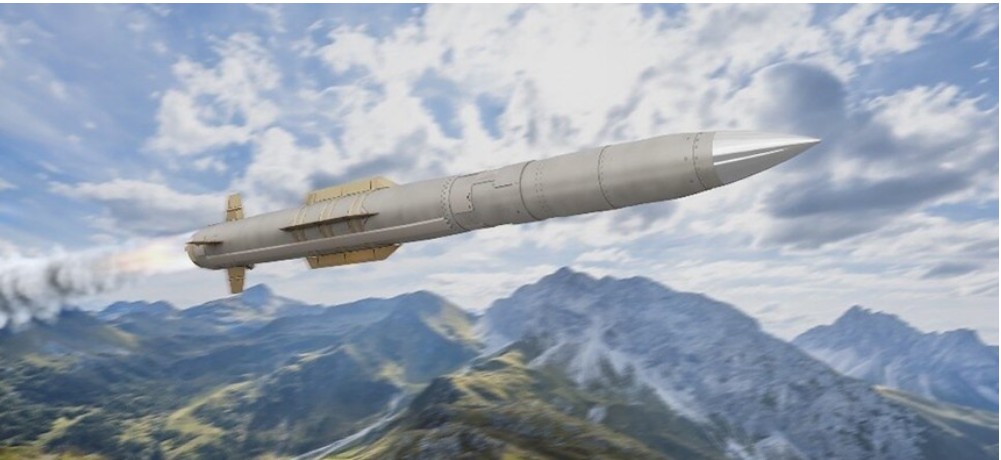
“Lockheed Martin’s PAC-3 Edge interceptor leverages the combat-proven PAC-3 MSE, delivering even greater maneuverability, power and velocity to ensure the Army’s layered defensive architecture remains the most advanced in the world,” said Tim Cahill, Lockheed Martin Missiles and Fire Control president.
PAC-3 interceptors come in three variants: the lower-cost PAC-3 ACE, legacy PAC-3 CRI, and the prestigious PAC-3 MSE.
The company said it invested US$250 million in the Strigo Product Center to fund new, industry-leading seeker technology that increases precision and maneuverability against evolving threats.
PAC-3 Edge is designed to be integrated with existing and future Integrated Air and Missile Defense (IAMD) capabilities, including the Integrated Battle Command System (IBCS), the M903 launcher, containerized launchers, and HIMARS Flex.
The US Army’s selection of Lockheed Martin’s PAC-3 Edge program highlights the service’s efforts to improve its existing layered air defense systems to address evolving aerial threats.
While the company did not provide technical details of the new seeker technology, analysts believe that it could be a dual-mode or multimode configuration that integrates multiple sensors to better detect, track, and intercept evolving threats such as hypersonic cruise missiles, hypersonic glide vehicles (HGVs), maneuvering ballistic missiles, and the ability to distinguish real threats from decoys.
In the war in Ukraine, while the PAC-3 MSE interceptors have proved highly effective in countering ballistic missiles and aircraft, they have struggled to intercept Russia’s hypersonic missiles, such as Oreshnik, Zircon, and Kinzhal.
Furthermore, while PAC-3 MSE interceptors were highly effective against ballistic threats in the initial phase, their performance gradually declined as Russia adapted its missiles to perform increasingly complex terminal maneuvers.
According to a Financial Times report based on Ukrainian Air Force data compiled by the Center for Information Resilience, Patriot interceptors’ ballistic interception rate reached 37% in August 2025 but fell to a low of 6% in September.
This decline was linked to Russian tactical improvements, such as missiles changing trajectory and missiles capable of performing terminal maneuvers.
However, despite this drop in interception rates, Patriot batteries remain Ukraine’s only defense against Russian ballistic threats.
The new PAC-3 Edge interceptors will provide increased protection against such maneuvering missile threats and hypersonic missiles.
Notably, the unveiling of new PAC-3 Edge interceptors comes as global demand for PAC-3 interceptors has increased, and Lockheed Martin is establishing new facilities to raise its interceptor production rate.
Lockheed produced nearly 620 interceptors in 2025; however, it plans to triple Patriot interceptor production to 2000 by 2030.
Patriot PAC-3 interceptors are also included in the Pentagon’s Munitions Acceleration Council (MAC), which is targeting 12 legacy and two “emerging” munitions as part of its ambitious plan to ramp up production and ink a series of agreements with key vendors to ensure cost efficiency while maintaining production stability, according to fiscal 2027 budget documents.
Rising global demand for PAC-3 interceptors, requests from multiple countries to establish Patriot interceptor production facilities, and the unveiling of the advanced PAC-3 Edge interceptors underscore the Patriot air and missile defense system’s continued relevance more than four decades after it first became operational.
The Evolution Of Patriot Air Defense Systems
The MIM-104 Patriot is the US Army’s primary air-and-missile defense system.
Although it was initially designed as an anti-aircraft system, newer Patriot variants can engage ballistic and cruise missiles, drones, loitering munitions, and aircraft.
A typical Patriot battery includes a radar set, an engagement control station, power generation, other support vehicles, and several launch stations.
The US Army Missile Command first developed the Patriot concept in 1961 as the Army Air Defense System for the 1970s (AADS-70s).
The AD system was meant to be mobile and replace the static HAWK and Nike Hercules emplacements.
In 1964, the US Army renamed it Surface-to-Air Missile, Development (SAM-D).
Three years later, in 1967, the Department of Defense selected Raytheon as the prime contractor. SAM-D’s first flight test took place in November 1969.
Although Raytheon won the prime SAM-D contract in 1967, it did not build everything alone. Martin Marietta joined early as a major subcontractor to handle missile assembly, launcher vehicles, and canister production.
In 1974, the Department of Defense reoriented the SAM-D program to support a Track-Via-Missile (TVM) guidance system and a simplified concept of operations.
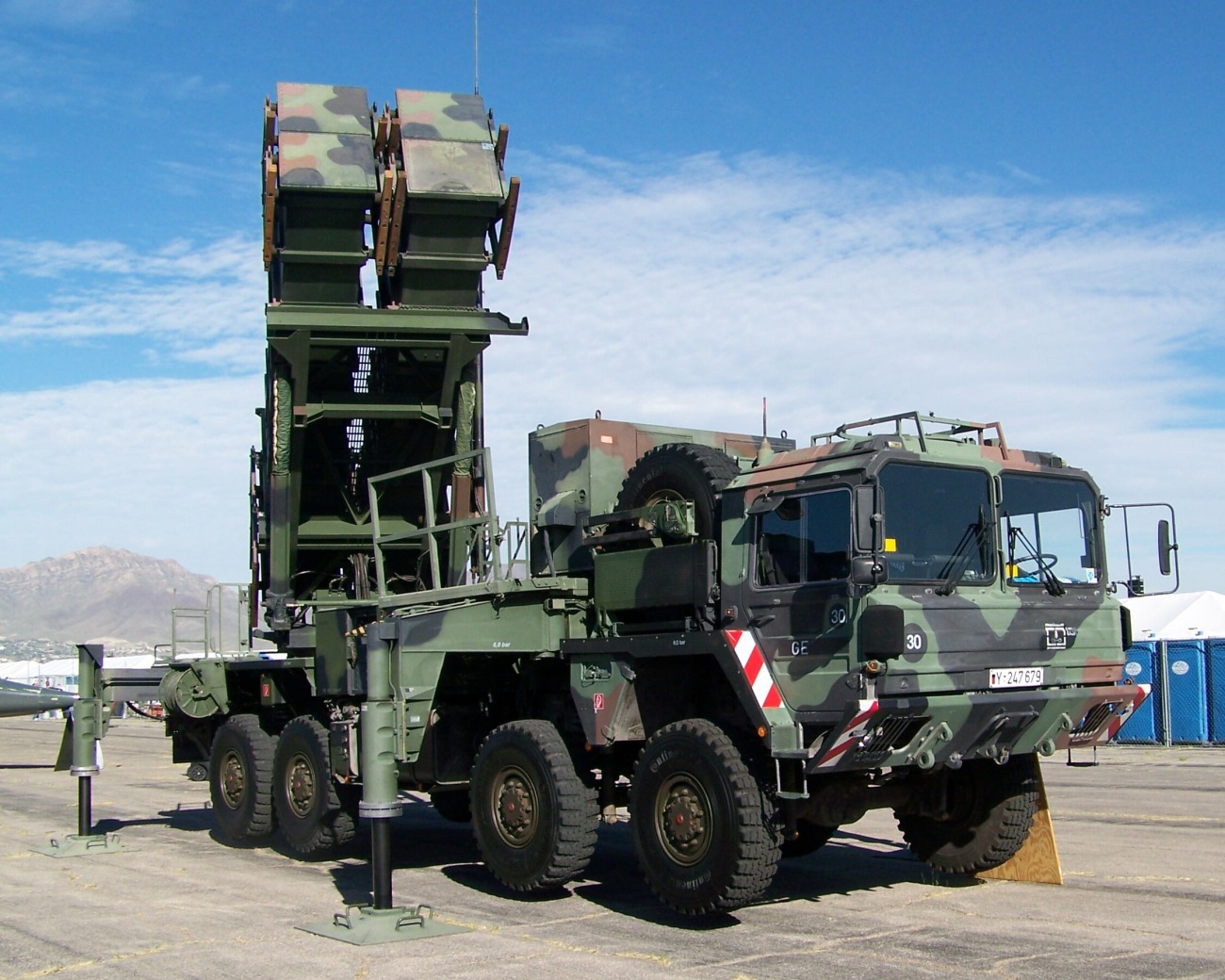
The revised and re-engineered system was renamed PATRIOT (Phased Array Tracking Radar to Intercept On Target) in 1976.
Patriot entered full-rate production in September 1980, and the US Army activated its first Patriot missile battalion in May 1982.
The Army added significant upgrades to the Patriot system throughout the 1980s and 1990s.
In 1985, the Department of Defense (DoD) started efforts to add a ballistic missile defense capability to the system.
In 1986, the Army upgraded Patriot to the Patriot Advanced Capability-1 (PAC-1) standard, which included software changes that allowed it to engage tactical ballistic missiles.
The PAC-1 was deployed by 1988.
Soon, the US Army began efforts towards the PAC-2 standard, which involved modifications to the missile fuze, warhead, and guidance to engage more capable ballistic missiles like the Soviet OTR-23.
The Patriot system first saw combat service during the 1991 Gulf War, defending critical assets in Saudi Arabia, Kuwait, and Israel. The PAC-2 missiles were used to intercept Iraq’s Scud missiles.
Martin Marietta built the PAC-2 interceptors.
In 1993, the US Army added remote launch capability to Patriot systems, allowing missile launchers to be deployed over 10 km from the radar. This also more than tripled the system’s defended area.
Later, the US Army also developed the PAC-3 standard.
The most significant PAC-3 upgrade was a new interceptor with hit-to-kill technology, developed by Lockheed, which defeats targets by striking them directly rather than using a blast-fragmentation warhead.
Lockheed achieved the first-ever hit-to-kill intercept in 1984 with the Homing Overlay Experiment, using impact force alone to destroy a mock warhead outside Earth’s atmosphere. Further development and testing produced today’s PAC-3 missile, which won a 1993 competition to become the US government’s first hit-to-kill interceptor.
In 1995, Lockheed Corp merged with Martin Marietta to create one of the US’s largest defense aerospace companies, combining two key components of the Patriot program: Martin Marietta’s established Patriot infrastructure and production facilities and Lockheed’s cutting-edge hit-to-kill technology.
This newly formed mega-contractor rolled out the PAC-3 missile interceptor.
The PAC-3 standard itself included three distinct configurations, Configuration 1, 2, and 3, which improved its radar, seeker, and range.
The US declared PAC-3 Configuration 3 combat-ready in August 2002.
PAC-3 Configuration 3 had its first combat test in 2003 during Operation Iraqi Freedom.
In 2010, the US Army successfully tested an upgraded PAC-3 interceptor, the PAC-3 Missile Segment Enhancement (MSE).
According to CSIS’s Missile Threat, the PAC-3 MSE features an enlarged motor and other enhancements to nearly double the PAC-3’s range. It achieved initial operational capability in late 2016.
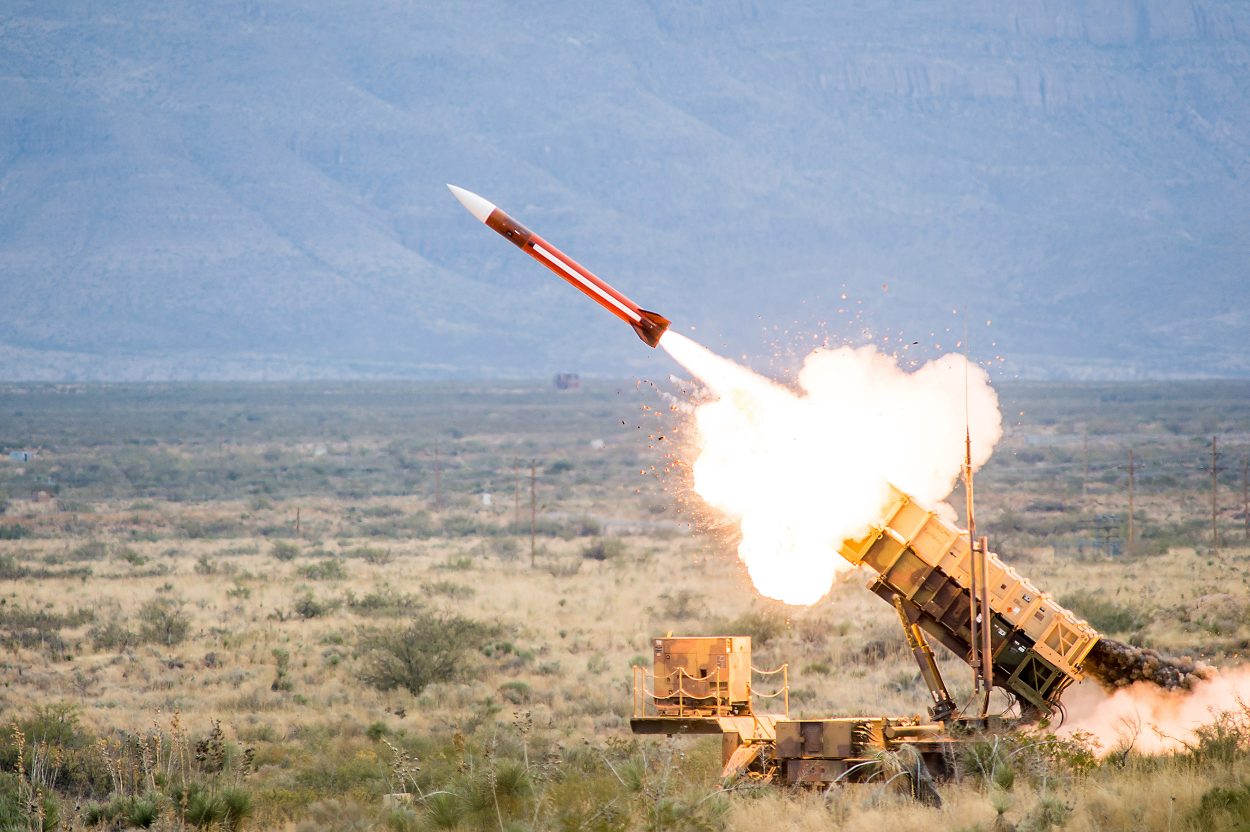
The PAC-3 also features an active Ka-band radar seeker for endgame guidance. With its lighter weight and newer propulsion system, the PAC-3 can reportedly defend an area seven times greater than the PAC-2.
Patriot currently employs a single AN/MPQ-53, AN/MPQ-65, or AN/MPQ-65A radar set to detect and engage targets. Unlike other air defense systems, the Patriot radar combines surveillance, tracking, and engagement in a single unit.
The AN/MPQ-53 was the world’s first phased-array air defense radar and was employed with legacy PAC-2 systems.
The AN/MPQ-65A is the most advanced Patriot radar; however, the US Army is currently transitioning to use the new Lower Tier Air and Missile Defense Sensor (LTAMDS) radar, which offers 360-degree coverage and significantly greater detection range.
Furthermore, while the AN/MPQ-53 and -65-series radars are passively scanned arrays, LTAMDS is an active electronically scanned array (AESA) that uses gallium nitride (GaN) power amplifiers, offering greater jamming resistance, beam agility, and power efficiency than previous systems.
360-degree coverage is essential to counter Russia’s evolving “wolf-pack tactics,” which involve launching dozens of aerial targets simultaneously, including drones and ballistic and cruise missiles, that approach from different directions and strike at once.
Only the US and Poland are procuring the LTAMDS at present. In September, the US awarded a US$1.7 billion contract to produce nine radars for the two users.
Currently, 18 countries operate the Patriot AD system. These include the Netherlands, Germany, Japan, Israel, Saudi Arabia, Kuwait, Taiwan, Greece, Spain, South Korea, the UAE, Ukraine, Qatar, Romania, Sweden, Poland, and Bahrain.
In 2023, the US allowed countries to transfer Patriot batteries to Ukraine, where they have repeatedly intercepted Russian ballistic and hypersonic missiles.
For instance, on May 16, 2023, the Ukrainian Air Force claimed it used Patriot to intercept a salvo of six Kinzhal missiles over Kyiv.
However, rising global demand for PAC-3 MSE interceptors and Russia’s adaptive missile technology, which involves terminal-phase maneuvers, have necessitated a two-pronged strategy: boosting PAC-3 interceptor production and developing more advanced interceptors.
The PAC-3 Edge will keep the Patriot AD system relevant amid evolving aerial threats.
- Sumit Ahlawat has over a decade of experience in news media. He has worked with Press Trust of India, Times Now, Zee News, Economic Times, and Microsoft News. He holds a Master’s Degree in International Media and Modern History from the University of Sheffield, UK.
- He can be reached at ahlawat.sumit85 (at) gmail.com