Living entirely in the shadows, the Ukrainian soldiers behind some of Kyiv’s most audacious long-range drone strikes on Russia operate under extreme secrecy.
They communicate only through encrypted channels, keep their wives and children completely in the dark about their work, and conduct their daily lives using nothing but cash. Even their names are closely guarded, and any public trace of their true identities is strictly forbidden.
Joey, whose name has been changed, has been taking part in the strikes since 2025.
But his friends and even parents have no idea, thanks to the ultra-strict rules in his unit.
“Don’t draw attention to yourself, don’t brag. You’ll never be able to talk about what you’ve done, even after the war,” he told AFP in a rare interview by a member of the top-secret team.
A former Marine, he serves at Center No. 1 of Ukraine’s drone forces.
His unit has carried out major attacks on Russia, including a June strike on a Moscow oil refinery that released thick black smoke over the Russian capital, and on Saint Petersburg as a landmark international conference opened there.
Kyiv calls the hits fair retribution for Moscow’s nightly barrages of its own cities and is targeting fuel depots and refineries on a weekly basis, trying to cut off Moscow’s energy revenues.
The stakes, Joey said, mandate the secrecy.
“We are a very high-value and priority target for the enemy.”
The names and ages of those in the unit are kept secret.
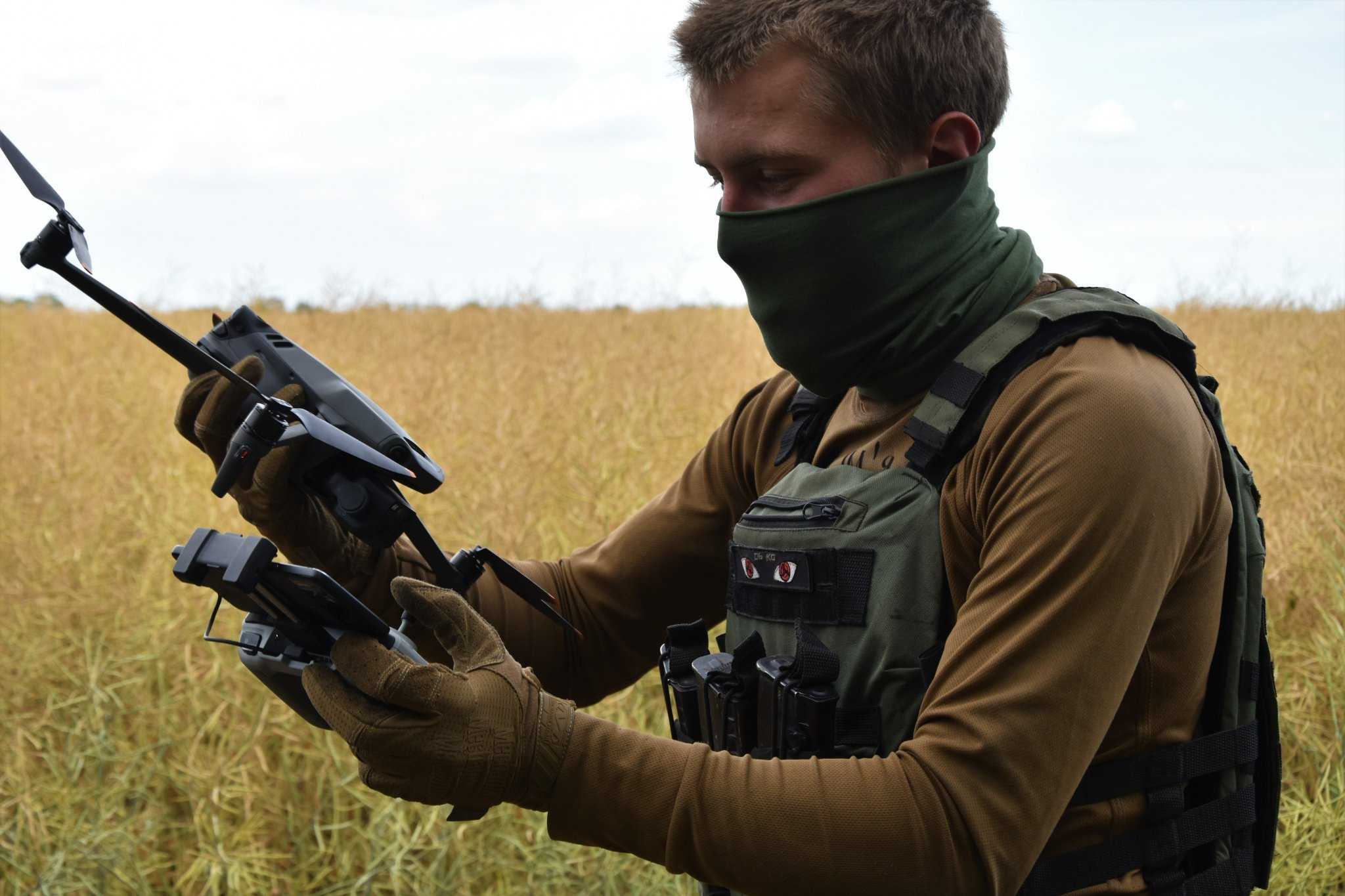
It is impossible to photograph or film them except with their faces hidden.
“We ourselves understand how high the price can be for our loved ones and for us — that’s why the primary, conscious decision we make is to stay as much as possible in the shadows,” said a soldier at Center No. 1 who went by Voron, the Ukrainian word for raven.
Russia will do “everything possible to hunt down at least one of these deep-strike groups”, he added.
He was once part of a unit that did the same for the Ukrainians — trying to find and target Russia’s long-range drone teams.
Before the invasion, he was a painter and martial arts trainer.
Married and with a child, he thinks his wife “suspects” what he does—but she “doesn’t ask questions”.
Even remote public association with his unit is banned.
On social media, Voron posts on the page of his former army unit and shares photos with its insignia — all to suggest he serves there.
“All my relatives and friends think I’m still in the special forces,” he told AFP.
“In daily life, you wouldn’t recognize us,” a GUR military intelligence officer who gave the call sign Wolf told AFP.
“We maintain discretion… to pass for ordinary people,” he added.
“People picture us as some kind of commando in camouflage, but in reality we go around in shirts and jeans,” said Voron.
While in public, there is no talk of missions, and even words like “takeoff” or “wing” are banned.
Everything is bought with cash — with care taken to mix up the ATMs they use for withdrawals.
They are even prohibited from joining petrol station loyalty programs.
Lie Detectors
The Ukrainian strikes have triggered a fuel crisis across much of Russia, but its impact on Moscow’s war chest is hard to assess.
Whether on mission or not, the drone team’s phones must be kept permanently in flight mode and connected only to a personal portable router, three people AFP spoke to said.
For military communications, they have special encrypted phones, and any device with geolocation is strictly forbidden.
Lie detectors are used if there is suspicion that information has been leaked or to test new recruits.
As Ukraine’s campaign ramps up, the team is increasingly facing one significant constraint: not a lack of drones, but “hours in a day,” said Joey.
He hopes one day he can be behind a launch that hits the Kremlin, and dreams of the “total defeat of Russia”.
The long-range strikes, he said, are like “ice cracking under the Russians’ feet.”
“We are doing everything we can so that it gives way beneath them.”
By Agence France-Presse