China’s “combat-hardened” J-10C fighter jets have been dispatched to Thailand for the annual Falcon Strike 2026 military drills, where they will train with Thai JAS-39 Gripens.
The ninth iteration of the China-Thailand “Falcon Strike-2026” joint air force exercise kicked off at the Udorn Royal Thai Air Force Base.
China has sent a variety of aircraft, including fighter jets, fighter-bombers, early-warning aircraft, aerial refueling tankers, and ground-based air defense equipment for the joint drills between the People’s Liberation Army Air Force (PLAAF) and the Royal Thai Air Force (RTAF), the state broadcaster China Central Television (CCTV) reported on August 13.
This includes tactical fighters such as the J-11, J-10S trainer, and J-10C, as well as the Y-20 transport aircraft, KJ-500 early-warning aircraft, aerial refueling tankers, and ground-based air defense units. The two sides are expected to train in a variety of areas, such as force deployment, combined air defense, and humanitarian medical rescue.
Footage aired by CCTV showed the Thai Gripen fighter jet and Alpha Jet light-attack aircraft, as well as PLAAF’s Y-20 transport aircraft, J-10C fighter jet, and J-10S fighter-trainer, taking part in the drill.
Falcon Strike-2026:
The adaptation training for China-Thailand "Falcon Strike-2026" joint air force training exercise was kicked off at Udorn Royal Thai Air Force Base (RTAF) in Thailand.
This marks the ninth joint training conducted by two sides. China dispatched multiple… pic.twitter.com/t9Dqjt1zdF
— China Military Bugle (@ChinaMilBugle) August 14, 2026
Wang Yanan, editor-in-chief of Aerospace Knowledge magazine, said that the mix of fighter jets, early-warning aircraft, tankers, and large transport aircraft creates a comprehensive, small-scale foreign deployment and combat-validation system.
Speaking of the planned air defense missions, Wang said that low-altitude or medium-to-high-altitude, low-speed or high-speed targets pose serious risks to cities and certain protected assets, making joint air defense a major practical exercise issue in the current international setting. Furthermore, he added that China and Thailand can improve coordination among the participating troops and better coordinate task distribution and target identification throughout the combined air defense training.
China and Thailand have kicked off preparatory training for the "Falcon Strike 2026" joint air force exercise at Udorn Royal Thai Air Force Base.#ChinaDefense #militaryhttps://t.co/zaKw3NjnK9 pic.twitter.com/p34ebb8bTp
— CCTV+ (@CCTV_Plus) August 14, 2026
The first-ever joint drill between the PLAAF and the RTAF took place at Korat Royal Thai Air Force Base, and its details were not published until 2019. While the Chinese PLAAF brought J-11s to the wargame, the RTAF deployed the aging Saab JAS-39C/D Gripens, as previously reported by the EurAsian Times.
During the first two days of the 2015 wargame, the J-11s reportedly shot down 16 Gripens in a visual-range battle with no losses—a development that astonished military experts. However, as the training progressed, the Thai Gripens outclassed the comparatively younger Chinese J-11 aircraft in the beyond-visual-range (BVR) encounters.
Military analysts said the Gripens outperformed the J-11s in range. Only 14% of Chinese kills occurred at distances of at least 19 miles, compared with approximately 88% of Thai kills.
Furthermore, the Gripens had 10 kills at a distance of more than 31 miles, while the J-11s had zero kills overall.
However, more than a decade has passed, and the J-10Cs have since become combat-hardened after the India-Pakistan clash during Operation Sindoor. Before this, the PLAAF had deployed the J-10C to the UAE for the first time to participate in “Falcon Shield” military drills in December 2025.
Chinese J-10C Dominate Headlines
The J-10Cs have remained in the headlines since Pakistan deployed them in the Indo-Pakistan conflict in May 2025. At the time, the Pakistan Air Force (PAF) claimed that these Chinese-origin jets had downed multiple Indian Air Force combat jets, including Rafales.
New Delhi outrightly rejected these claims, and the Indian Air Force chief called them “Manohar Kahaniyan,” translating to “Entertaining Stories.”
Notably, the jet’s participation in military drills across Asia is noteworthy, as Beijing is actively marketing the aircraft, leveraging its superior combat performance, competitive pricing, and fewer political restrictions.
While Pakistan is currently the only foreign operator of the aircraft, Bangladesh is reportedly eyeing the purchase of about two dozen J-10CE fighter jets.
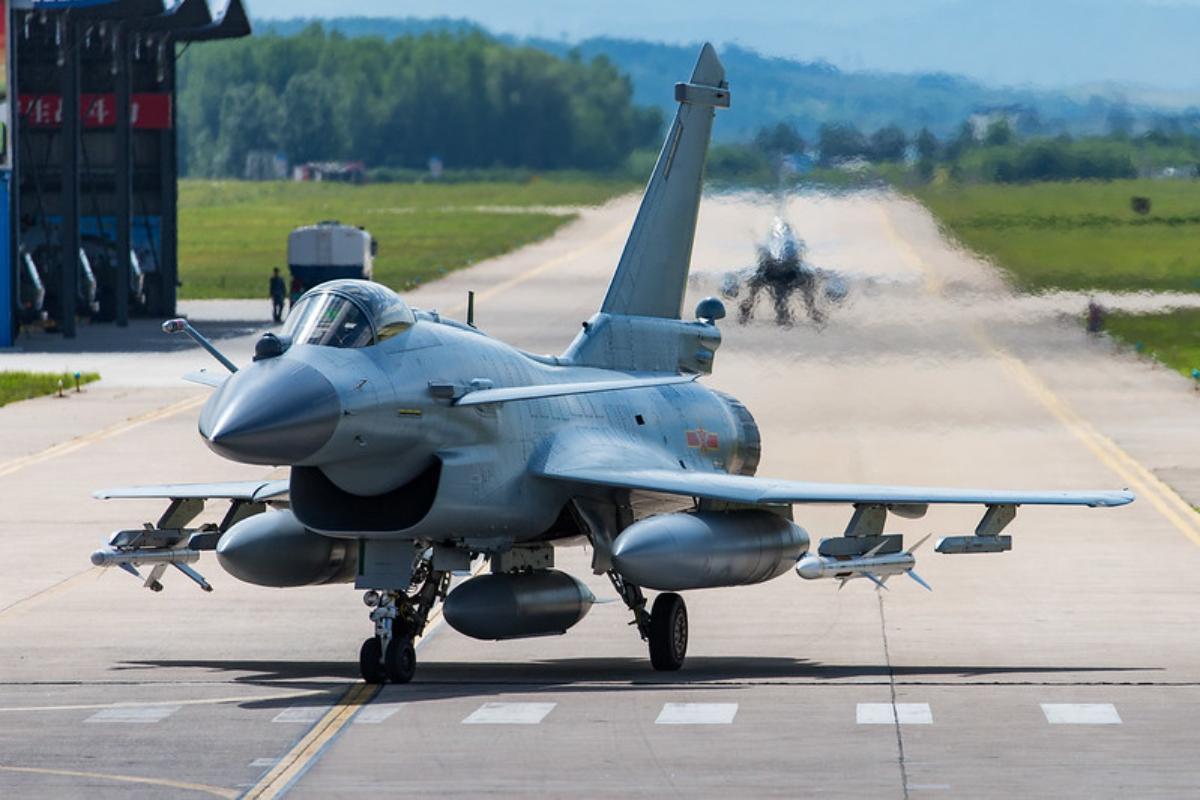
Meanwhile, Indonesia is believed to be interested in buying the aircraft, which was reportedly offered just a month after the Indo-Pakistan conflict, as previously reported by the EurAsian Times.
Indonesia has publicly said it was considering purchasing 42 J-10C fighters, but that a decision had not yet been made. “At the moment, we are considering all platforms that can fulfill our need to help guard our sovereignty and territorial integrity,” ministry spokesman Brigadier General Frega Wenas Inkiriwang said last year.
Notably, most of the J-10C export pitches remain in the pipeline. In fact, experts have repeatedly flagged Beijing’s inability to finalize a deal for the J-10C despite aggressively pitching the aircraft to Asian, African, and Southeast Asian countries in recent years.
In May, for instance, China Daily reported that the J-10CE will receive upgrades to make the aircraft more lethal and attractive.
Speaking at a news meeting in Chengdu, Li Jun, a senior researcher at the Chengdu Aircraft Design and Research Institute and the principal designer of the J-10C, stated that AVIC would continue upgrading its advanced fighter jet to meet the requirements of foreign operators and prospective buyers.
“The aircraft’s avionics system has received a generational upgrade. Its Active Electronically Scanned Array radar system can rapidly detect and track targets, far outperforming traditional mechanically scanned radars,” Li highlighted at the event. “The jet boasts powerful features, including network-centric cooperative combat, beyond visual range multiple target engagement in intense electromagnetic scenarios, and multimodal precision strikes. It can also prevail in medium- and low-altitude dogfights,” he added.
J-10C’s AESA radar offers superior multi-target tracking, jamming resistance, and range compared to earlier PESA systems.
Notably, though, Li praised the J-10C’s capability and versatility without revealing any upgrades the institute had planned.
Open-source reports, however, suggest that GaN-based upgrades for increased power and efficiency may be part of future plans.
Some earlier unconfirmed reports suggested that newer batches of the J-10C may include surface treatments, revised panel and edge treatments, and radar-absorbing material (RAM) coatings to reduce radar cross-section (RCS) and make the aircraft more difficult to detect. There may also be attempts to reduce the infrared (IR) signature through exhaust or engine nozzle coatings and modifications.
- Contact the author at sakshi.tiwari13 (at) outlook.com
- Follow EurAsian Times on Google News