The U.S. Air Force (USAF) conducted an Agile Combat Employment exercise with its two Collaborative Combat Aircraft (CCA), moving these uncrewed systems into a realistic operational environment and advancing their induction in service.
USAF’s Collaborative Combat Aircraft Experimental Operations Unit (EOU)—established to accelerate Manned-Unmanned Teaming (MUM-T) concepts and expedite induction of these CCAs—conducted the Agile Combat Employment exercise at Creech Air Force Base, a facility that reportedly hosts MQ-9A Reapers and RQ-170 Sentinel drones.
The USAF’s CCA program envisions deploying a significant number of modular, reasonably priced, and operationally useful unmanned aircraft that can fly alongside manned aircraft to add “affordable mass” in contested environments. These aircraft, also known as “loyal wingman drones,” are designed to enhance air superiority by serving as force multipliers.
Increment 1 of the USAF’s CCA program centers on the General Atomics YFQ-42A (also referred to as Dark Merlin) and the Anduril YFQ-44A Fury. Both aircraft were deployed to Creech for the exercise, as seen in the images released by Nellis Air Force Base.
“Air superiority in today’s increasingly contested environments requires the rapid fielding of affordable mass,” Air Force Chief of Staff Gen. Ken Wilsbach was quoted as saying in the official statement, as he emphasized the strategic driver for the platform.
“CCAs are essential to this effort. By integrating uncrewed systems to fly alongside our Airmen, we extend reach and increase lethality,” the USAF top boss added.
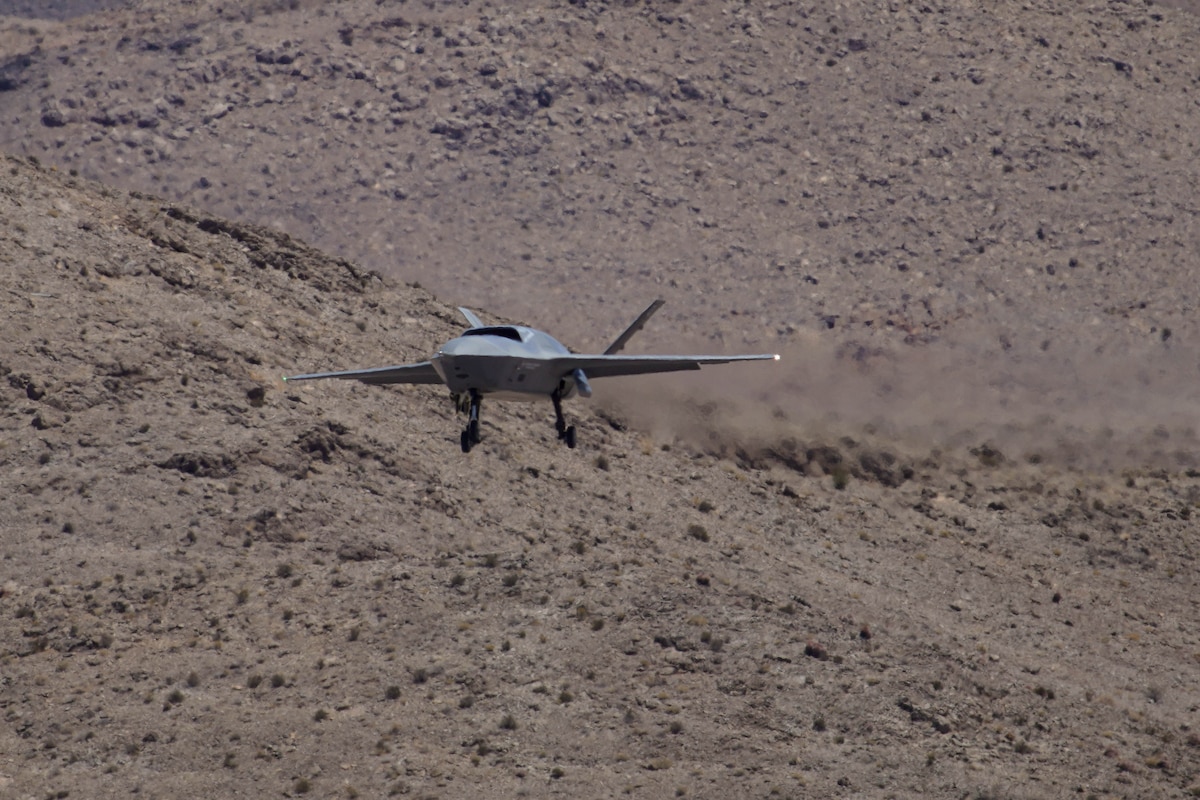
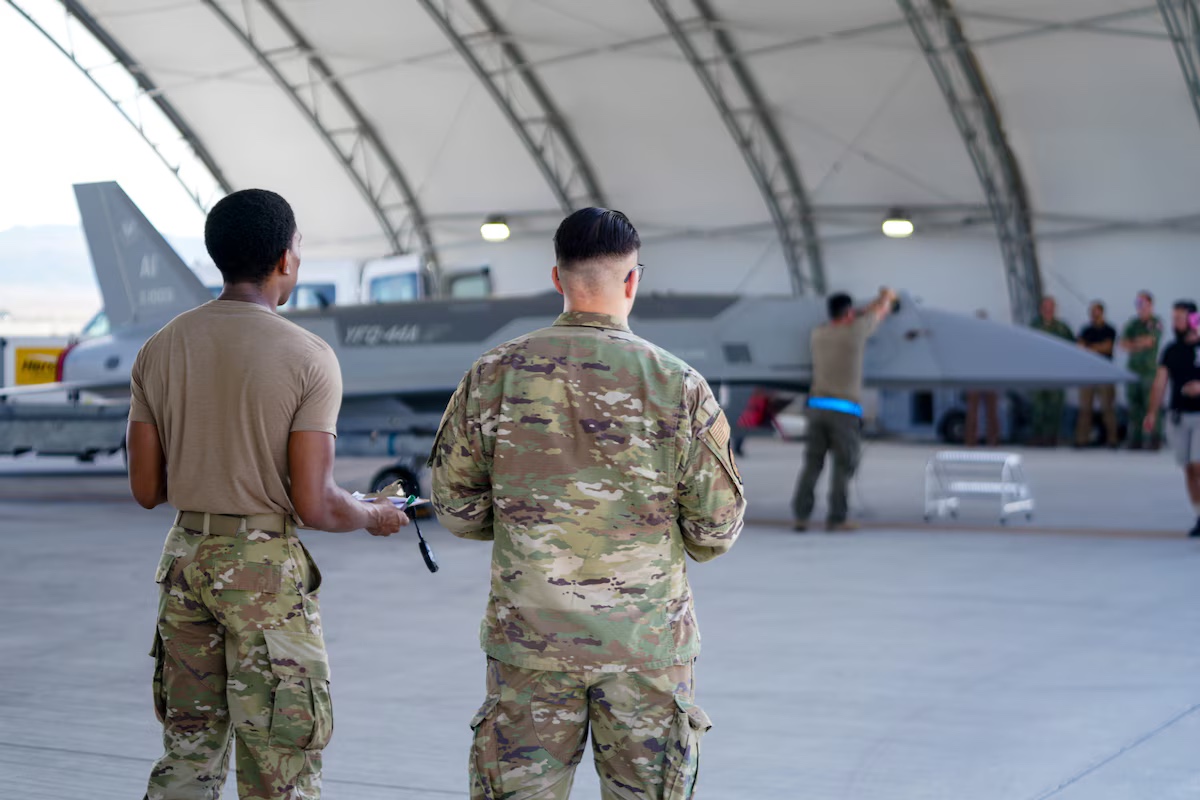
The objective was to move the CCA out of traditional sterile test settings and into the hands of warfighters in a more realistic environment, and to develop the fundamental strategies, methods, and processes for specifying how these unmanned aircraft could be incorporated into the force in the future.
“We are focused on operating CCA outside of a traditional test environment so we can continue to learn, inform, and rapidly iterate,” Lt. Col. Matthew Jensen, Experimental Operations Unit commander, stated.
The EOU “generated multiple sorties demonstrating reliability and extended range; integrated with manned platforms in the local airspace to project power across distributed battlefields; and simulated scenarios that will inform future requirements for the platform,” according to the official statement.
The service has emphasized Agile Combat Employment (ACE) in recent years as a response to anti-access/area-denial capabilities fielded by near-peer adversaries, such as China and Russia. ACE prioritizes the ability to rapidly disperse aircraft across a network of smaller airfields to reduce vulnerability.
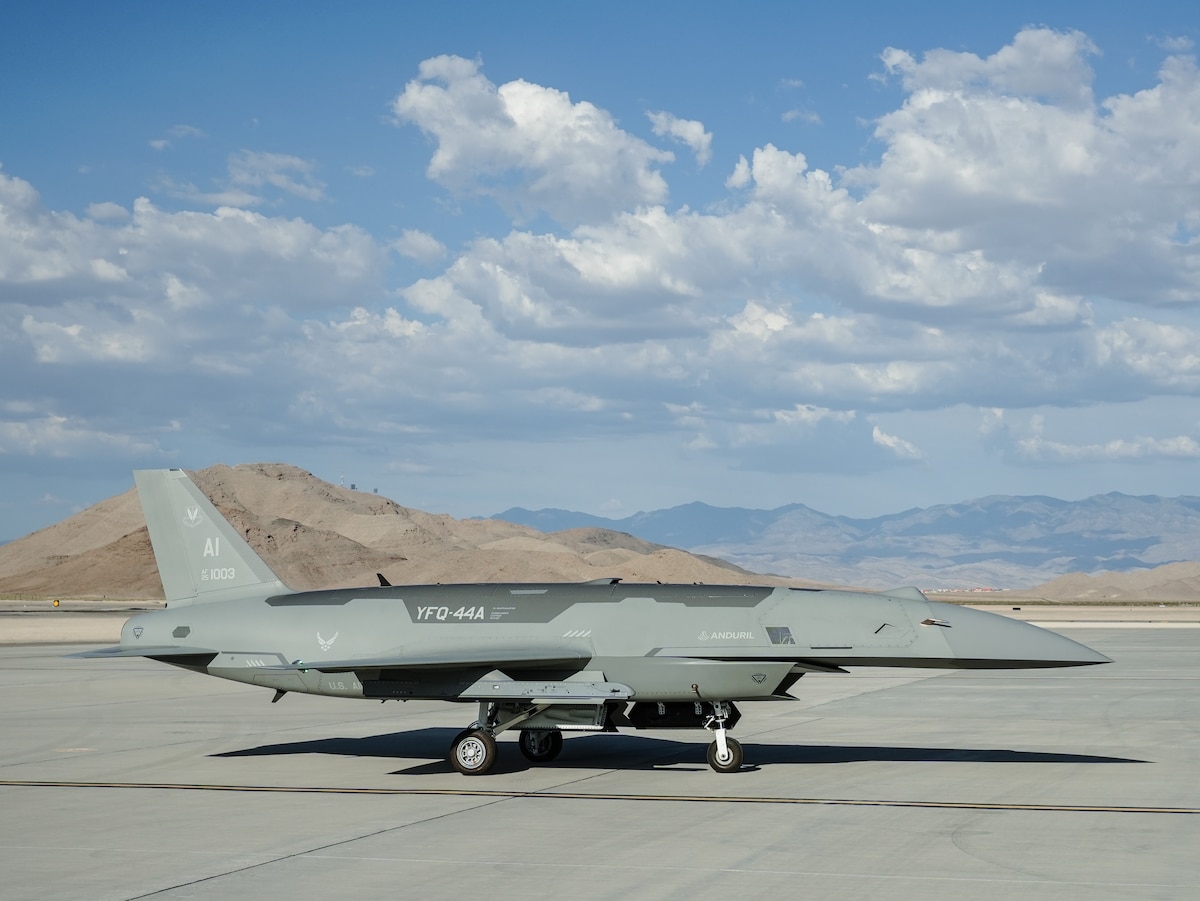
Both CCAs simulated distributed or dispersed operations consistent with ACE principles, with an emphasis on operating from different locations and on validating a reduced logistical footprint suitable for remote or forward-deployed sites.
“Operating CCA across different locations is a significant learning objective in itself, challenging teams to adapt and operate with the agility required in a contested environment,” the statement noted. Throughout the exercise, operators worked to integrate advanced autonomous capabilities, a key step toward achieving the program’s vision of effective human-machine teaming.”
Posting the link to the official announcement of the ACE exercise on X, General Wilsbach, who has been a proponent of integrating attritable platforms in combat, wrote, “Next step in CCA development!” on the social media site X.
US CCA Effort In Full Swing
The CCA program is a component of the broader “affordable mass” concept, which focuses on acquiring low-cost platforms—such as drones—to overpower the adversary in combat.
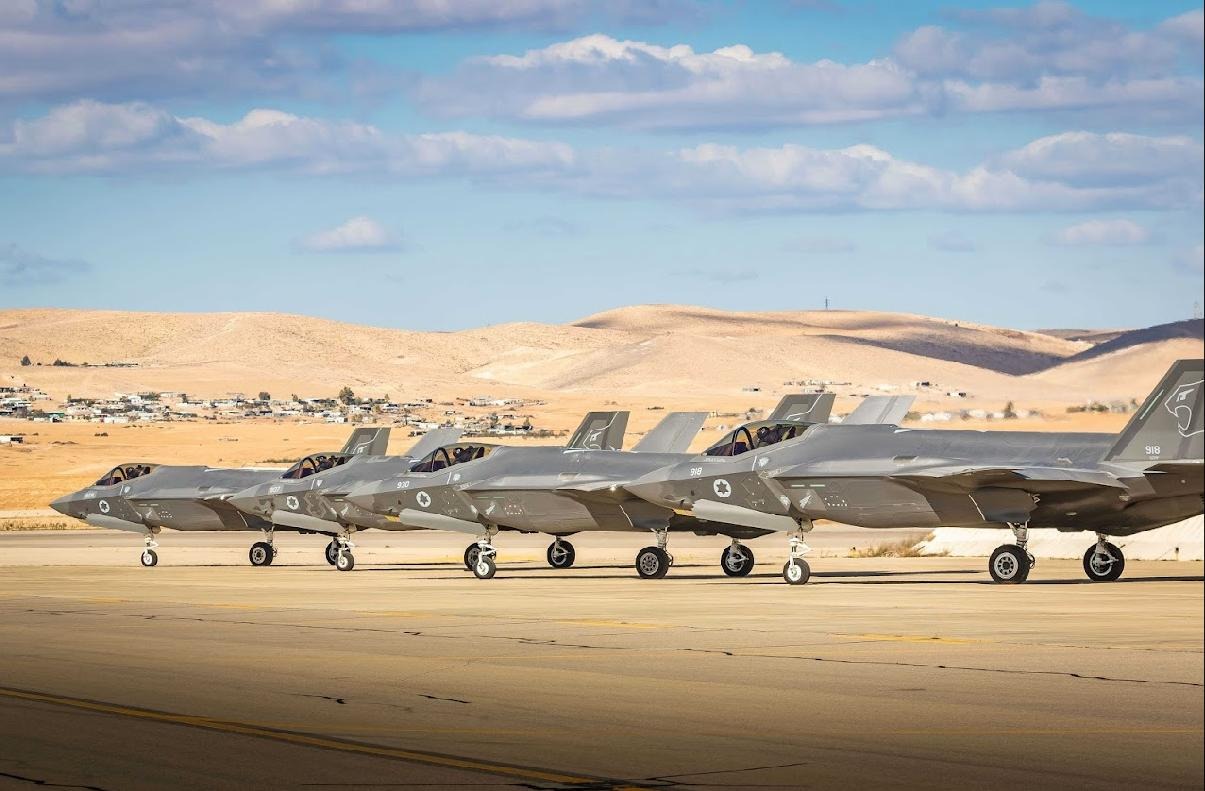
For instance, the CCA drones the USAF is developing are estimated to cost between US$25 million and US$35 million each, which is one-third the cost of an F-35 Lightning II aircraft, which ranges from US$80 million to US$115 million, depending on the variant.
The idea is that using low-cost, attritable drones to support expensive, manned aircraft will increase the manned platform’s survivability and mission success, especially when confronting near-peer adversaries such as China and Russia in a contested environment.
According to earlier reports, these CCAs will mostly function as airborne “missile trucks” during their initial deployment, flying in formation with crewed jets to provide extra firepower. However, discussions are currently underway to broaden its mission to encompass electronic warfare, intelligence collection, surveillance, reconnaissance, and, eventually, fully autonomous operations.
The USAF had previously stated that it would build at least 1,000 CCA to fly alongside sixth-generation F-47 and fifth-generation fighters such as the F-22 Raptor and the F-35 Lightning II. These drones will bolster combat capability by supporting crewed aircraft by carrying extra air-to-air munitions, extending sensor coverage, and executing missions that would otherwise put human pilots at risk.
Last month, the Department of the Air Force awarded engineering, manufacturing, and development (EMD) and production contracts to both General Atomics for the YFQ-42A prototype and Anduril for the YFQ-44A Fury prototype. Both drones accentuate stealth, internal weapons bays, semi-autonomous air-to-air roles, and affordable mass production.
These contracts cover the first three production lots and support the procurement of over 150 combat-capable CCAs by the end of the decade.
Separately, the US Air Force’s Pacific commander, Gen. Kevin Schneider, commander of PACAF, said he was “impressed” with the Royal Australian Air Force’s MQ-28 Ghost Bat collaborative combat aircraft (CCA) program and indicated that as the current test partnership matures, the next step could involve examining how US operators could control the MQ-28s, as recently reported by the EurAsian Times.
Notably, the ACE exercise comes days after the Department of the Air Force conducted live-fire testing of a YFQ-44A CCA, firing an AIM-120 weapon at a digital target in secluded airspace over the Mojave Desert. “This live-fire test is an important next step in the development of Collaborative Combat Aircraft,” said Gen. Ken Wilsbach at the time. “We’re one step closer to delivering capabilities to the warfighter,” he added.
This suggests that the USAF’s CCA program is proceeding at breakneck speed as the US prepares for a potential military showdown with China in the Indo-Pacific.
The USAF is already refining plans for Increment 2 of the CCA program, which will launch a new generation of drones with enhanced capabilities. These next-generation CCAs are expected to be more sophisticated and possibly more costly, even though their exact mission profiles and technological developments remain unknown.
- Contact the author at sakshi.tiwari13 (at) outlook.com
- Follow EurAsian Times on Google News