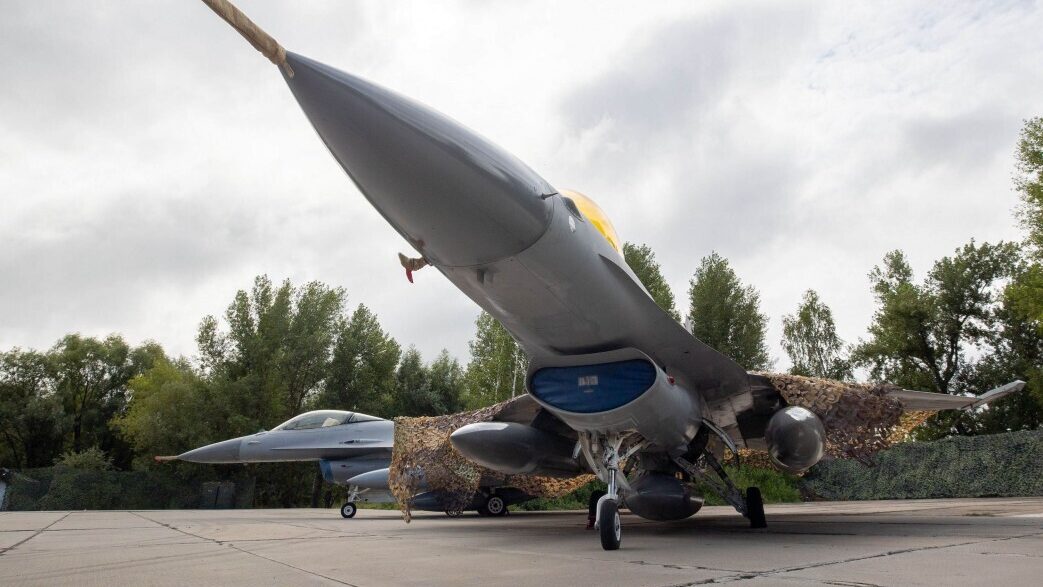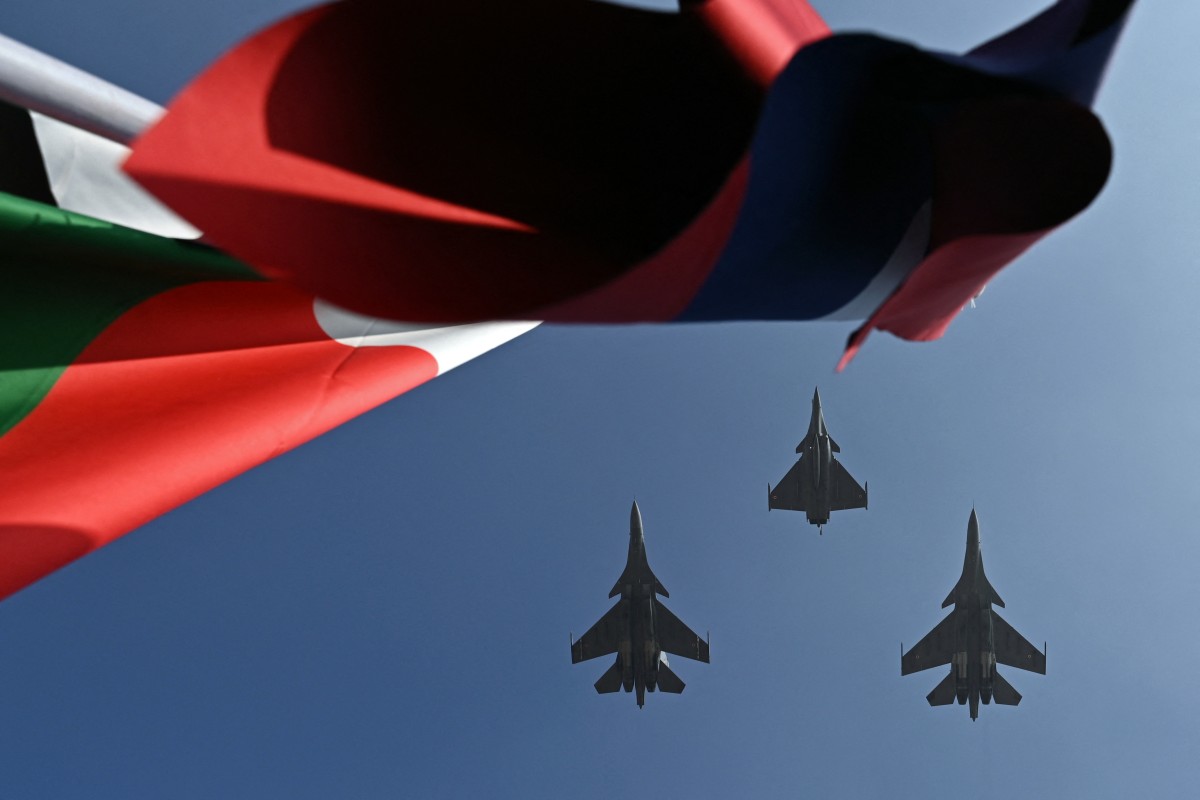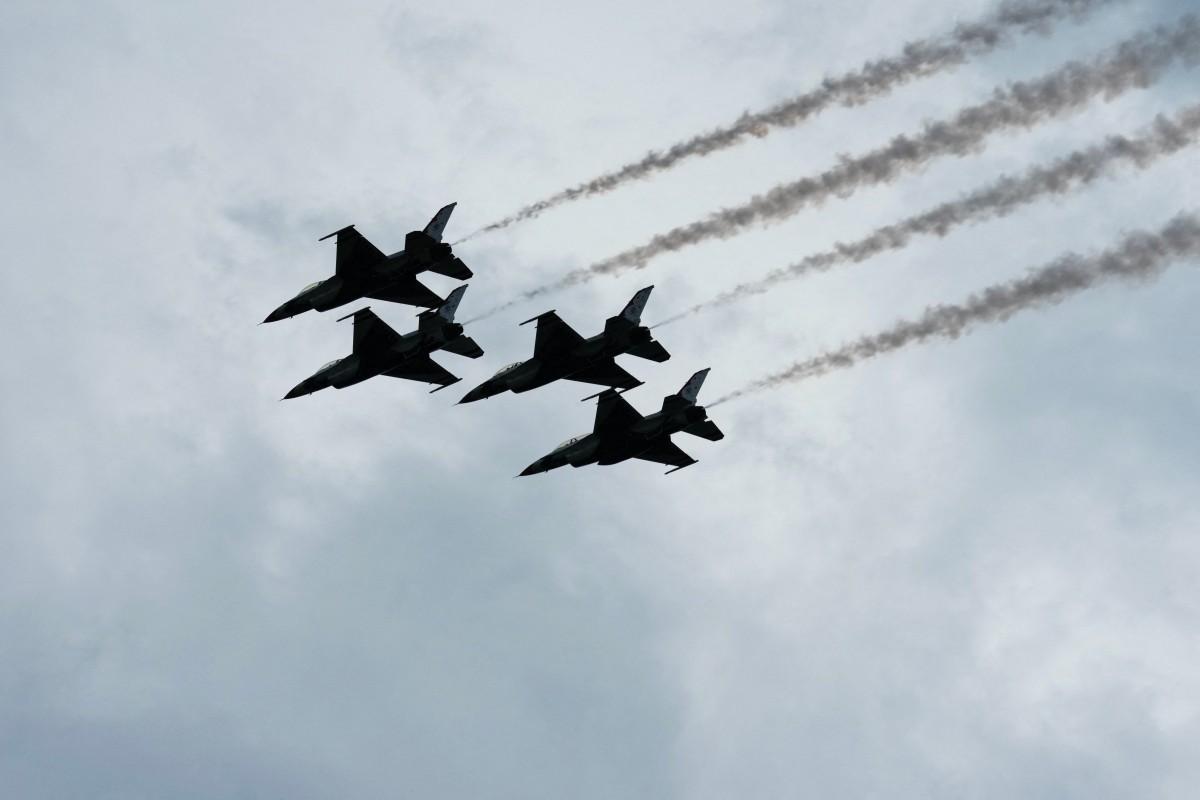


Over the past five years, the takeoff of any MiG-31 Foxhound or Su-34 Fullback from Russian airbases has often triggered air raid sirens across Ukraine to defend from hypersonic missile strikes and devastating glide bombs.
Now, Ukraine claims to have damaged five of these aircraft while they were still on the ground.
The General Staff of the Armed Forces of Ukraine announced that the Ukrainian forces struck one of the key airfields used by the Russian Aerospace Forces—Savasleyka Airfield in Nizhny—on 24th November and overnight into 25th November. It claimed at least three Russian MiG-31s and two Su-34s were hit.
“The extent of the damage and the exact number of aircraft affected are still being verified. There may be even better news to come,” the General Staff stated, without mentioning whether the airfield was struck in yet another asymmetric attack using drones, or if precision missiles were used in the attack.
Earlier, Ukrainian sea drones struck the Russian corvette Merkury off the Libyan Coast, followed by another strike on a cargo vessel carrying arms to Moscow, as the EurAsian Times reported. Additionally, Ukrainian forces have launched multiple strikes on the strategic Kerch Bridge, which connects the Russian mainland to Crimea and is a crucial logistical link to the territory annexed in 2014.
The attack on Savasleyka, which is 600-700 kilometers from the frontline and located deep inside Russian territory, once again demonstrates that Russian jets are not safe anywhere.
The latest attack reinforces a broader strategic message: Russian combat aircraft are increasingly vulnerable even when parked at airbases far from the battlefield. Earlier this year, for instance, the Security Service of Ukraine (SBU) published a video compilation of strikes on five Russian military airfields throughout 2025, which purportedly damaged about 15 Russian aircraft and inflicted an estimated $1 billion in total damage.
Even temporarily grounding three MiG-31s and two Su-34s could be a big relief for Ukraine, as these high-value assets are expensive and slow for Russia to repair or replace quickly.
MiG-31 & Su-34 Jets: Ukraine’s Biggest Nightmares
The alleged damage to MiG-31s could be consequential for Ukraine, as the MiG-31K variant serves as a launch platform for Russia’s Kh-47M2 Kinzhal hypersonic missile, one of the hardest weapons to intercept.
To launch a Kinzhal, the MiG-31K accelerates to a precalculated speed and gains altitude, as the EurAsian Times explained. Launching the missile from a high-speed aircraft at altitude gives it substantial speed and range, giving Russia a long-range strike capability that Ukraine can’t consistently detect, track, and intercept.
The Kinzhal is reported to reach speeds of up to Mach 5 to 10 during parts of its flight, which gives Ukraine a limited window to identify and intercept the missile. It can even maneuver during mid-flight, making its trajectory less predictable than that of a conventional ballistic missile.
Moreover, it is large, about eight meters long and weighing around 4.3 tonnes at launch. Thus, a successful strike can severely damage military facilities, hardened structures, strategic infrastructure, and industrial and logistics installations.
The Kinzhal is not invincible, as Russian President Vladimir Putin had claimed. The Ukrainian Patriot system has intercepted the missile on multiple occasions.
However, Ukraine’s Patriot interceptors have virtually run out, leaving cities undefended against Kinzhals and other ballistic missiles. In fact, Ukrainian President Volodymyr Zelenskyy had earlier complained that Moscow was exploiting these gaps to pound the embattled country with ballistic and hypersonic missiles.
But even if Ukraine had enough interceptors, Patriot batteries cannot protect every Ukrainian city or every high-value target at the same time. This creates windows for the MiG-31K to launch Kinzhals at key targets.
For Russia, the alleged damage to the MiG-31 is painful because of its limited numbers and the fact that it can no longer build new MiG-31 airframes, as serial production ended in 1993. Therefore, every aircraft that is damaged, grounded for repairs, or destroyed reduces Russia’s ability to generate Kinzhal sorties.
Notably, Ukraine has struck the same field—a major base for MiG-31K operations—multiple times in the past two years and caused damage to the parked jets. By repeatedly hitting the same high-value node, Ukrainian forces have raised the cost of concentrating Kinzhal carriers there and forced greater dispersal and higher defensive readiness.
Loss of Su-34 Jets
That said, equally important for Ukraine is the loss of two Russian Su-34 Fullback fighter-bombers because these aircraft are among the most important platforms Russia uses to attack Ukrainian frontline positions with glide bombs.
The Su-34 has been an important component of Russia’s tactical air campaign. Russia has extensively modified conventional Soviet-era bombs by fitting them with guidance systems and deployable wings.
These conversion kits are commonly known as UMPK, and the resulting weapons are generally called guided glide bombs, as the EurAsian Times explained in a previous report.

Instead of dropping an ordinary bomb directly over a target, the Su-34 releases a weapon that can glide towards its target from a considerable distance. These bombs carry enormous explosive payloads—a FAB-500 carries a 500-kilogram-class bomb, while the FAB-1500 is a 1,500-kilogram-class weapon. Their destructive power makes them particularly dangerous against buildings, bunkers, and fortifications.
Russia has been able to convert large stocks of older conventional bombs into guided weapons relatively cheaply compared with manufacturing sophisticated cruise missiles. This has essentially allowed it to sustain high-volume attacks. These glide bombs have caused devastating losses in Ukraine, hitting residential buildings and causing civilian casualties. Zelenskyy recently noted that Russia launched 1,460 glide bombs in a week.
Last year, Russia disclosed that the Su-34 was operating alongside the Su-35, with the latter serving as an escort for the Fullback. These strike aircraft launch attacks from a stand-off distance, without risking their safety by entering Ukrainian airspace. The Su-34s typically climb high and fast, release UMPK-equipped bombs from roughly 60–70 kilometers behind the front line, and turn away quickly.

On its part, Ukraine has yet to find an effective counter to UMPK bombs because of their low radar and thermal signatures.
That said, the loss of two aircraft does not mean Russia’s glide-bomb campaign will stop, but it does reduce the number of available platforms if the damage is substantial.
Furthermore, it is a symbolic victory for Kyiv—while unable to cope with glide bombs, it has now begun targeting the carriers that launch them to stop Russian attacks.
Ukraine is already preparing to use the combination of Gripen jets that it is receiving from Sweden and Meteor long-range air-to-air missiles to destroy the Su-34 bombers launching glide bombs at the embattled country.
“It is important for us to receive the full set of weapons we need together with the aircraft, so that we can start using them in combat as soon as possible. The key priority is Meteor missiles. With them, Gripens will be able to destroy enemy carriers of guided bombs and protect frontline cities and troops’ positions,” Ukrainian Defense Minister Yevhenii Khmara said.
In the interim, however, Ukrainian forces have done the next best thing: destroying the glide bomb carriers even before they could take off.
- Contact the author at sakshi.tiwari13 (at) outlook.com
- Follow EurAsian Times on Google News